Most visitors to Osaka head first to Dotonbori, Osaka Castle, or Universal Studios Japan. However, in the southern part of the city, Sumiyoshi Taisha offers a quieter and much older side of Osaka.
Known for its steep vermilion bridge, National Treasure shrine buildings, and centuries-old rituals, Sumiyoshi Taisha is an ideal destination for travelers who want to explore beyond Osaka’s usual tourist route.
The shrine is easy to reach from Namba, Osaka Station, Tennoji, and Kansai International Airport. It can be visited in around 60 to 90 minutes, making it a convenient addition to an Osaka itinerary.
Table of Contents
Sumiyoshi Taisha at a Glance
- Location: Sumiyoshi Ward, Osaka
- Admission: Free
- Recommended visit: 60 to 90 minutes
- Nearest station: Sumiyoshitaisha Station on the Nankai Main Line
- Alternative stop: Sumiyoshi-Torii-mae on the Hankai tram
- Opening hours from April to September: 6:00 a.m. to 5:00 p.m.
- Opening hours from October to March: 6:30 a.m. to 5:00 p.m.
- Amulet and stamp office: Usually 9:00 a.m. to 5:00 p.m.
- Best time to visit: Weekday mornings
Some smaller attractions inside and around the shrine, including the Godairiki stones and Omokaru-ishi fortune stones, may close at around 4:00 p.m. Visiting before mid-afternoon is recommended if you want to explore the entire area.
Opening hours can also change during major festivals and the New Year period. Check the shrine’s official website before visiting on a special event day.
Why Visit Sumiyoshi Taisha?
Sumiyoshi Taisha is one of Osaka’s most important Shinto shrines. It is traditionally believed to have been founded in the third century and serves as the head shrine for approximately 2,300 Sumiyoshi shrines across Japan.
The shrine has long been associated with safe sea travel, fishing, transportation, and protection during journeys. This connection reflects Osaka’s history as a city that developed around waterways, ports, trade, and travel.
Local people often call the shrine “Sumiyossan,” an affectionate nickname that shows how closely it remains connected to everyday life in Osaka.
A Quieter Side of Osaka
Sumiyoshi Taisha feels very different from the bright signs, crowded shopping streets, and entertainment districts of central Osaka.
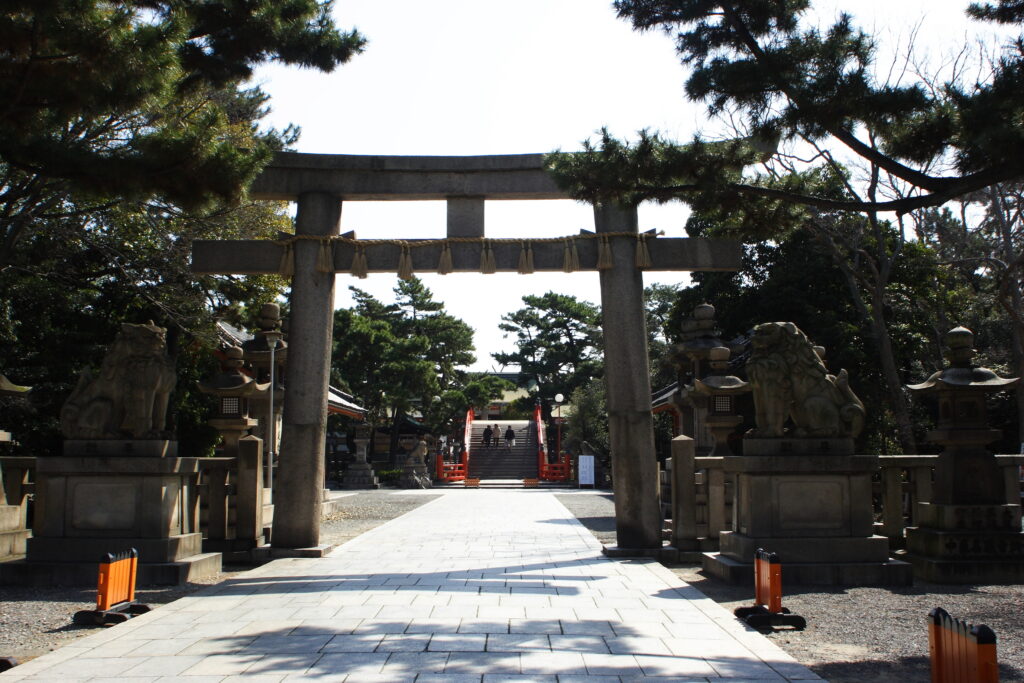
Once you enter the shrine grounds, the city quickly begins to feel more distant. Stone lanterns, mature trees, traditional buildings, and the large red bridge create a calm atmosphere that is difficult to find around Dotonbori or Umeda.
The shrine is popular with local worshippers, especially during festivals and New Year. On an ordinary weekday morning, however, the grounds can be surprisingly peaceful.
This makes Sumiyoshi Taisha particularly suitable for repeat visitors to Japan who have already seen Osaka’s most famous attractions and want to experience a more traditional part of the city.
Distinctive Japanese Shrine Architecture
Sumiyoshi Taisha is also important for its architecture. Its four main sanctuaries are built in a style known as Sumiyoshi-zukuri, which is regarded as one of Japan’s oldest shrine architectural styles.
The design is simple and powerful, with straight rooflines, vermilion pillars, white walls, and decorative elements that differ from the curved roofs commonly seen at Buddhist temples.
The four current main sanctuaries date from 1810 and are designated National Treasures of Japan.
A Good Stop for Repeat Visitors to Osaka
Sumiyoshi Taisha is not an unknown attraction, but it is usually less crowded with international tourists than Osaka Castle, Shinsekai, or Dotonbori.
It also works well as part of a wider southern Osaka itinerary. Travelers can combine it with Tennoji, Abeno Harukas, Shinsekai, Sakai, or a ride on the historic Hankai tram.
Visitors arriving from Kansai International Airport can also stop near the shrine while traveling toward central Osaka on the Nankai railway network, although carrying large luggage around the shrine is not recommended.
What to See at Sumiyoshi Taisha
The shrine grounds contain much more than the famous red bridge. The following places are the main highlights for a first visit.
1. Sorihashi Bridge
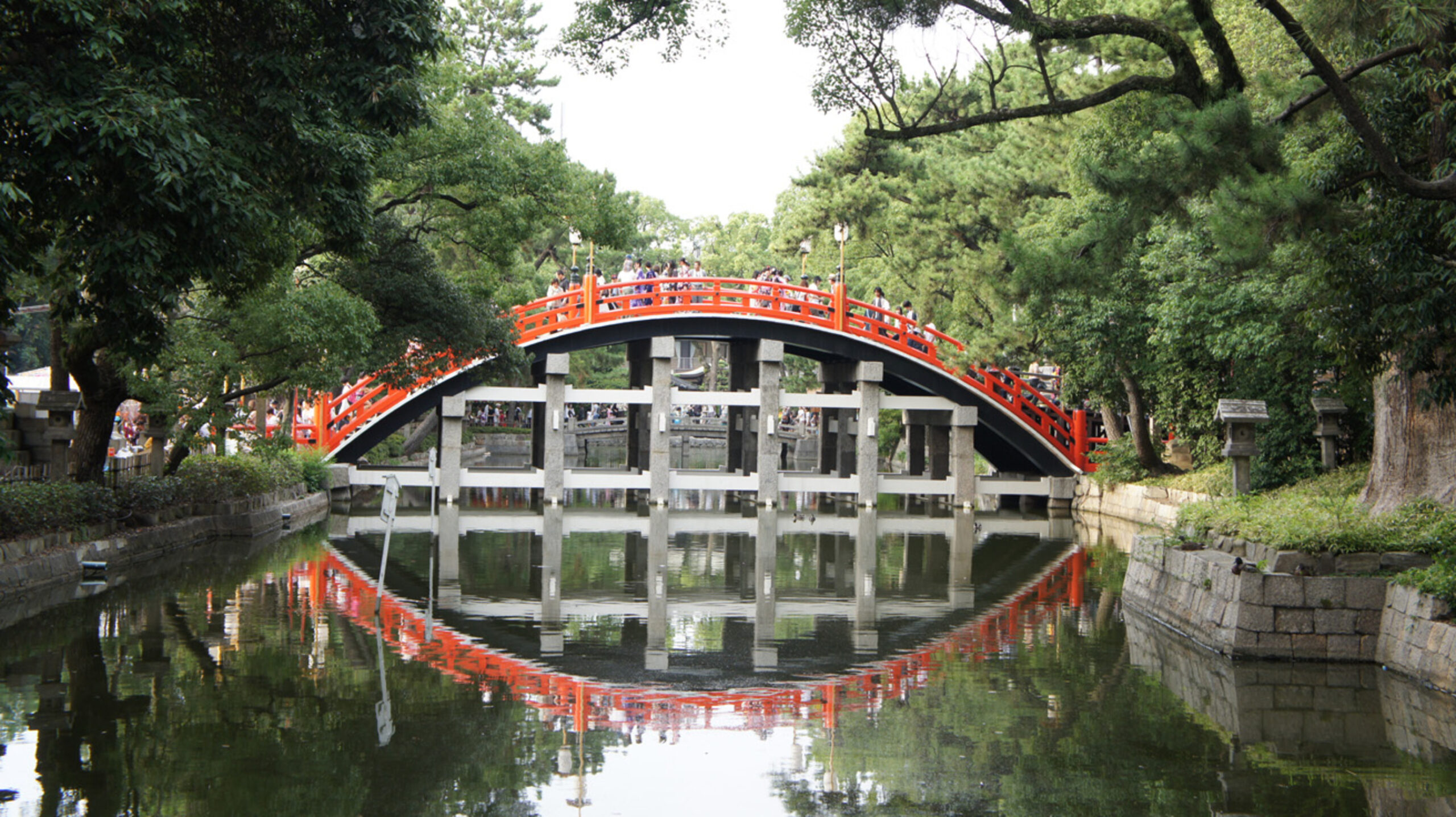
Sorihashi Bridge is the most recognizable landmark at Sumiyoshi Taisha. The steep vermilion bridge is also commonly called Taiko-bashi, meaning “drum bridge,” because its reflection in the water creates the shape of a round drum.
The bridge forms a dramatic entrance to the sacred area of the shrine. Its bright red surface, curved shape, and reflection in the pond make it one of the best photography locations in southern Osaka.
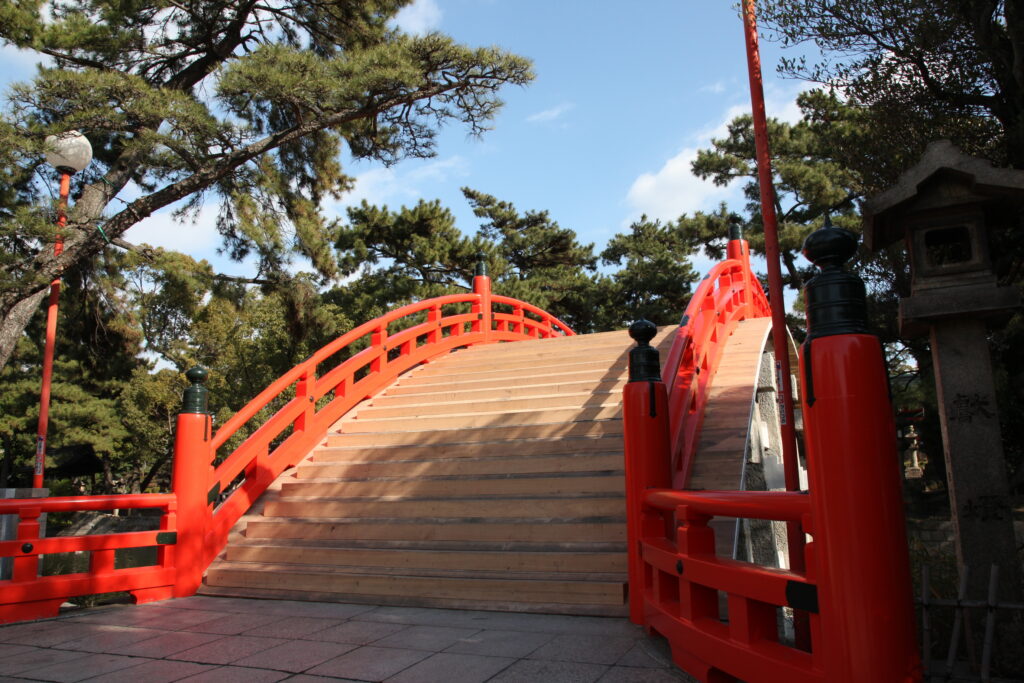
The steps are much steeper than they appear in photographs. Hold the handrail, take your time, and wear comfortable shoes, especially if the surface is wet.
Travelers with limited mobility, young children, or large luggage can avoid crossing the bridge and use the flatter route around the side of the pond.
Best Place to Photograph the Bridge
The classic photograph is taken from the side of the pond, where the entire bridge and its reflection can be included in the frame.
Morning usually provides a quieter atmosphere, while the softer light later in the afternoon can bring out the red color of the bridge. The area may become crowded during major festivals, weekends, and the New Year period.
Photography is generally possible in the outdoor areas, but visitors should avoid blocking pathways or photographing worshippers too closely.
2. The Four Main Shrines
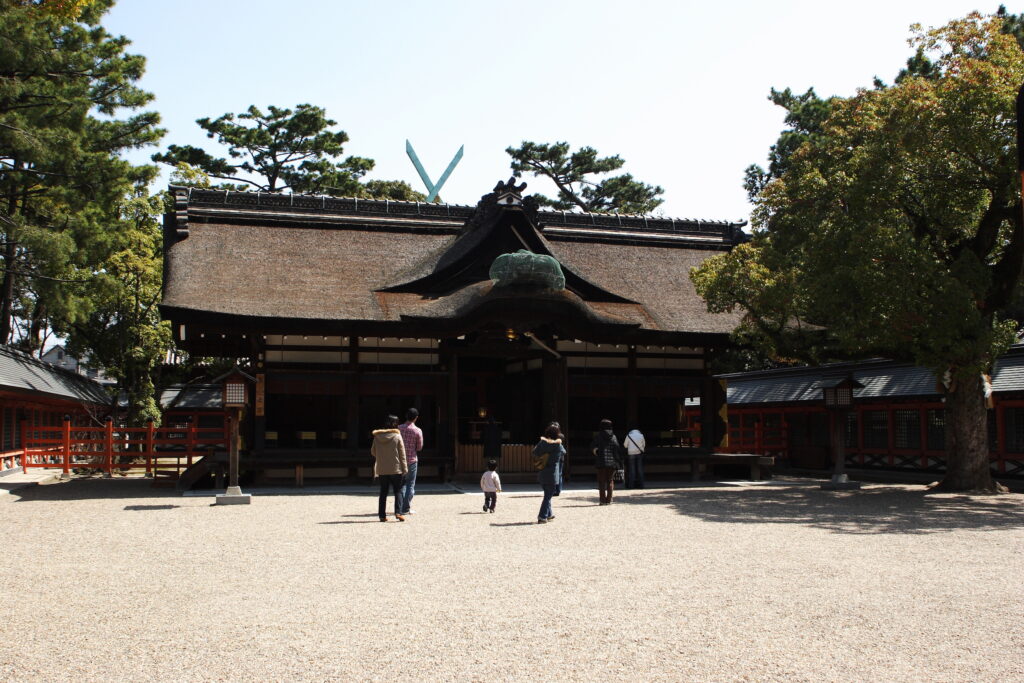
After crossing Sorihashi Bridge and continuing through the shrine grounds, visitors reach the four main sanctuaries.
The layout is one of the most distinctive features of Sumiyoshi Taisha. The First, Second, and Third Main Shrines are arranged in a straight line, while the Fourth Main Shrine stands beside the Third.
This unusual formation is sometimes compared to a fleet of ships moving across the sea, reflecting the shrine’s historical connection with sailors, ports, and safe voyages.
Who Is Enshrined Here?
The first three sanctuaries are dedicated to the three Sumiyoshi deities, who are closely associated with purification, the sea, and safe travel.
The Fourth Main Shrine is dedicated to Empress Jingu, a legendary figure connected with the shrine’s traditional history.
Visitors can approach each sanctuary separately. Even if you are not familiar with Shinto customs, you are welcome to enter the grounds quietly and respectfully.
How to Pray at the Shrine
A common way to pray at a Shinto shrine is:
- Place a coin in the offering box.
- Bow deeply twice.
- Clap your hands twice.
- Make your prayer silently.
- Bow once more before leaving.
You do not need to follow every step perfectly. Remaining quiet, avoiding restricted areas, and showing consideration to worshippers are more important than performing the ritual exactly.
Look Closely at the Architecture
Take a moment to notice the straight rooflines, white walls, red structural elements, and decorative wooden details.
Unlike many large religious buildings in Japan, the main sanctuaries are not designed around an enormous central hall. Their compact scale and repeated forms create a distinctive visual rhythm across the sacred area.
The main sanctuaries themselves are protected cultural properties. Visitors should observe them from the designated worship areas and avoid entering restricted spaces.
3. Goshogozen and the Godairiki Stones
Just south of the First Main Shrine is Goshogozen, one of the most sacred places within Sumiyoshi Taisha.
According to shrine tradition, this is where the Sumiyoshi deities first descended when Empress Jingu was searching for a suitable place to establish the shrine.
Today, visitors come here to search among the pebbles for three stones marked with the Japanese characters:
- 五 — Go: Five
- 大 — Dai: Great
- 力 — Riki: Power
Together, the characters form the phrase Godairiki, meaning “five great powers.” The stones are associated with five blessings: physical strength, wisdom, financial fortune, happiness, and longevity.
How to Collect the Godairiki Stones
- Look carefully among the pebbles inside the designated area.
- Find one stone marked 五, one marked 大, and one marked 力.
- Place the three stones in a small amulet pouch.
- Keep them with you while making your wish.
Special pouches for the stones are available from the shrine’s amulet office. If your wish comes true, return the three stones together with a second set of gratitude stones. Ask at the amulet office for the current return procedure.
If your wish comes true, the traditional custom is to return the three stones to Goshogozen together with three additional stones marked with the same characters. This represents returning twice what you originally received.
Local Tip: Goshogozen is a sacred worship area rather than an ordinary souvenir spot. Search quietly, take only one stone of each character, and avoid disturbing other visitors.
4. Omokaru-ishi Fortune Stones
The Omokaru-ishi are three fortune-telling stones used to find out whether a wish or personal goal is likely to come true.
They are located at Oitoshiboshi-sha, a small shrine beside Otoshi-sha. This area is slightly separated from the four main sanctuaries, so it is easy to miss if you only visit Sorihashi Bridge and the central shrine buildings.
How to Use the Omokaru-ishi
- Face the small shrine and bow twice.
- Clap your hands twice and bow once more.
- Choose one of the three stones.
- Lift it once and remember how heavy it feels.
- Return the stone and silently make your wish.
- Lift the same stone again.
If the stone feels lighter the second time, tradition says that your wish may come true. If it feels heavier, it is believed that more time and effort may be needed.
The result depends entirely on how the stone feels to you. There is no correct or incorrect answer, which makes the ritual a simple but memorable cultural experience.
Before You Go: The Omokaru-ishi area may become unavailable earlier than the main shrine grounds. Visit before late afternoon if this experience is important to you.
5. The Stone Stage and Sacred Rice Paddy
Many visitors leave after seeing the four main sanctuaries, but the southern side of the shrine grounds contains several important cultural sites.
The Stone Stage, known as Ishibutai, stands between the main sanctuaries and the South Gate. It was built in 1607 at the request of Toyotomi Hideyori, the son of Toyotomi Hideyoshi.
The stage is used for traditional performances connected with shrine ceremonies, including kagura sacred dance and gagaku court music. Together with the South Gate and the musicians’ galleries, it is designated an Important Cultural Property.
Nearby is the shrine’s sacred rice paddy, called Onda. A working rice field in the middle of urban Osaka is an unusual sight and reflects the shrine’s long connection with agriculture, food, and prayers for a successful harvest.
The paddy becomes the center of attention every June during the famous Otaue Shinji rice-planting ceremony.
Recommended 60–90 Minute Walking Route
Sumiyoshi Taisha can be visited quickly, but allowing at least one hour gives you time to see more than the bridge and main sanctuaries.
Complete 60–90 Minute Route
- Sumiyoshitaisha Station or Sumiyoshi-Torii-mae
Walk toward the main entrance and first torii gate. - Main approach
See the stone lanterns, guardian statues, and the approach leading toward the pond. - Sorihashi Bridge
Photograph the bridge from beside the pond before crossing it. - Purification fountain
Rinse your hands before entering the central worship area. - The Four Main Shrines
Visit the four sanctuaries and observe the Sumiyoshi-zukuri architecture. - Goshogozen
Search respectfully for the three Godairiki stones. - Stone Stage and Sacred Rice Paddy
Explore the quieter southern side of the shrine grounds. - Otoshi-sha and the Omokaru-ishi
Try the traditional fortune-telling stone ritual. - Sumiyoshi Park
Finish with a short walk through the park west of the shrine.
Suggested Time at Each Area
| Area | Suggested Time |
|---|---|
| Main approach and Sorihashi Bridge | 10–15 minutes |
| Four Main Shrines | 15–20 minutes |
| Goshogozen and Godairiki stones | 10–15 minutes |
| Stone Stage and sacred rice paddy | 10 minutes |
| Omokaru-ishi | 10–15 minutes |
| Walking and photography | 15–20 minutes |
Quick 45-Minute Route
If you are short on time, concentrate on the main entrance, Sorihashi Bridge, the four main sanctuaries, and Goshogozen.
This shorter route still includes the shrine’s most important architecture and its best-known photography spot. Skip the Omokaru-ishi and Sumiyoshi Park if you have a strict schedule.
Festivals and Seasonal Events at Sumiyoshi Taisha
Sumiyoshi Taisha is peaceful on an ordinary weekday, but during its major festivals the grounds become one of Osaka’s most important centers of traditional culture.
The three best-known events are the Otaue Shinji rice-planting ceremony, Sumiyoshi Matsuri in midsummer, and the autumn Kangetsu-sai moon-viewing festival.
| Festival | Usual Date | Main Highlight |
|---|---|---|
| Otaue Shinji | June 14 from 1:00 p.m. | Sacred rice planting and traditional performances |
| Sumiyoshi Matsuri | July 30–August 1 | Purification rituals, historical costumes, and mikoshi |
| Kangetsu-sai | Harvest Moon night from 6:00 p.m. | Poetry, dance, and court music on Sorihashi Bridge |
Otaue Shinji: Sacred Rice-Planting Ceremony
Date: Every year on June 14 from 1:00 p.m.
Otaue Shinji is one of Sumiyoshi Taisha’s most important and visually impressive ceremonies.
The ritual is held between the First Main Shrine and the sacred rice paddy. It is performed to pray for the healthy growth of rice and a successful harvest.
The ceremony begins with the purification of the rice seedlings and participants. The paddy is traditionally prepared, and women dressed as rice planters place sacred seedlings into the field.
At the same time, musicians, shrine maidens, dancers, local children, and performers in colorful costumes present a series of traditional arts around the paddy. These include the Yaotome sacred dance, warrior performances, rice-planting dances, and Sumiyoshi Odori.
Otaue Shinji has preserved many elements of an older Japanese rice-planting ritual and is designated an Important Intangible Folk Cultural Property of Japan.
Festival Tip: Arrive well before 1:00 p.m. if you want a good viewing position. Some areas may be restricted during the ceremony, and the shrine will be much busier than on an ordinary weekday.
Sumiyoshi Matsuri: Osaka’s Summer Purification Festival
Main festival period: Every year from July 30 to August 1
Sumiyoshi Matsuri is one of Osaka’s largest summer festivals. It is traditionally associated with purification from illness, misfortune, and spiritual impurity.
The festival is sometimes called Oharae, meaning “great purification.” Its rituals reflect the role of the Sumiyoshi deities as gods of purification and protection.
One of the best-known events is the Nagoshi no Harae ceremony on July 31. Shrine attendants, children, dancers, and other participants wear colorful historical costumes and pass through large rings made from woven grass.
Walking through the rings is believed to cleanse participants of the misfortunes accumulated during the first half of the year and prepare them for the months ahead.
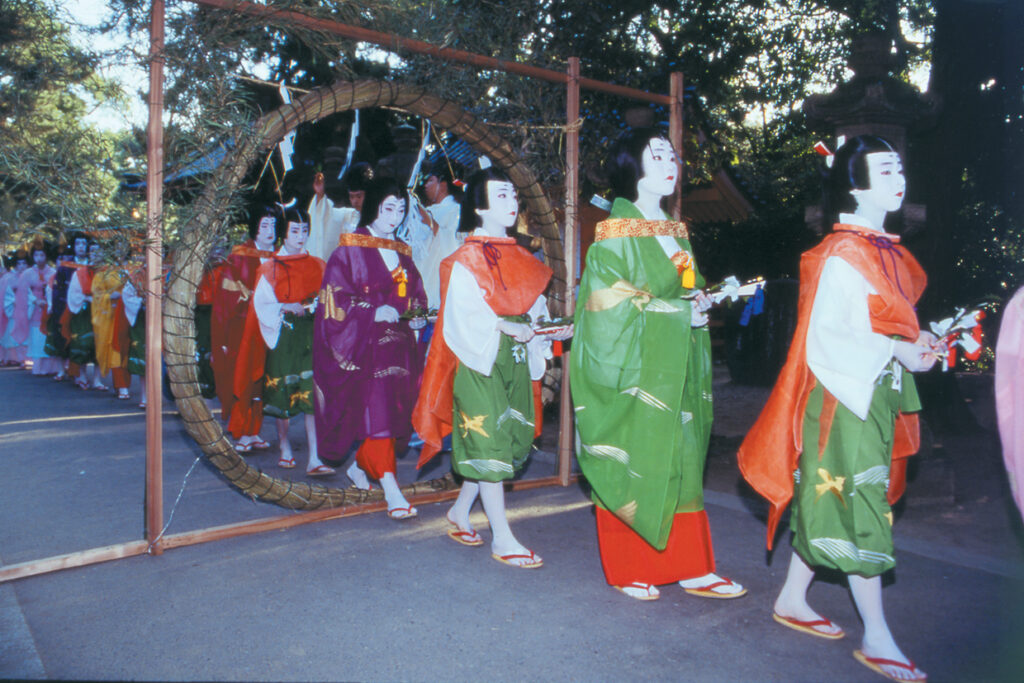
Other events connected with the festival include the purification of the portable shrine, evening ceremonies, a mikoshi procession, and rituals held at Shukuin Tongu in Sakai.
2026 Sumiyoshi Matsuri Schedule
The following schedule has been officially announced for 2026:
| Date and Time | Event |
|---|---|
| July 20 at 7:20 p.m. | Mikoshi Purification Ceremony at Sumiyoshi Park |
| July 26 from 3:40 p.m. | Mikoshi Procession toward Shukuin Tongu in Sakai |
| July 30 at 4:00 p.m. | Yoimiya Festival |
| July 31 from 5:00 p.m. | Nagoshi no Harae Ceremony, followed by the Annual Festival |
| August 1 from 6:30 p.m. | Tongu Festival at Shukuin Tongu, followed by a purification ritual |
Festival information last verified: July 20, 2026
Festival stalls are scheduled to operate inside the shrine grounds on July 31 and August 1 from 2:00 p.m. to 7:30 p.m.
The mikoshi procession on July 26 travels south from Sumiyoshi Taisha toward Shukuin Tongu in Sakai. Traffic restrictions are expected along parts of the route.
2026 Travel Notice: Ceremony times, closing times, road restrictions, and weather-related arrangements may change. Check the official Sumiyoshi Taisha festival announcement shortly before your visit.
Check the official 2026 Sumiyoshi Matsuri information
Kangetsu-sai: Moon-Viewing Festival
Date: The night of the traditional Harvest Moon, from 6:00 p.m. until shortly after 8:30 p.m.
Kangetsu-sai is an atmospheric autumn ceremony combining the full moon, traditional poetry, dance, music, and the illuminated Sorihashi Bridge.
Selected waka poems and haiku submitted from across Japan are recited by shrine priests on the bridge according to traditional customs.
The poetry readings are followed by performances of Sumiyoshi Odori and bugaku, a form of classical court dance accompanied by traditional music.
The red bridge, moonlight, ceremonial costumes, and music create a very different atmosphere from a daytime visit.
The exact date changes every year because it follows the traditional lunar calendar. It usually falls in September or early October, but visitors should confirm the date on the official shrine website.
Check official festival information from Sumiyoshi Taisha
Festival Travel Tip: Sumiyoshi Taisha can become extremely crowded during its major festivals. Arrive early, use public transportation, and avoid bringing large luggage. Outdoor events may also be changed or cancelled because of severe weather.
How to Get to Sumiyoshi Taisha
Sumiyoshi Taisha is easy to reach by the Nankai Railway or the Hankai tram. Choose the most convenient route based on where you are traveling from.
From the Airport
Kansai International Airport
Kansai-Airport Station
↓ Nankai Airport Express
Sakai Station
↓ Nankai Main Line Local
Sumiyoshitaisha Station
↓ 3-minute walk
Sumiyoshi Taisha
Approx. 45–50 minutes
Large suitcases may be inconvenient inside the shrine grounds.
From Central Osaka
Osaka Station or Umeda
Osaka Station
↓ JR Osaka Loop Line
Shin-Imamiya Station
↓ Nankai Main Line Local
Sumiyoshitaisha Station
↓ 3-minute walk
Sumiyoshi Taisha
Approx. 30–35 minutes
Direct Tram Route
Tennoji
Tennoji-ekimae
↓ Hankai Tram
Sumiyoshi-Torii-mae
↓ Directly in front
Sumiyoshi Taisha
Approx. 16–20 minutes
This route offers a pleasant ride through the neighborhoods of southern Osaka.
Fastest Central Route
Namba
Nankai Namba Station
↓ Nankai Main Line Local
Sumiyoshitaisha Station
↓ 3-minute walk
Sumiyoshi Taisha
Approx. 10 minutes by train
Important: Only local trains on the Nankai Main Line stop at Sumiyoshitaisha Station. Airport Express, express, and limited express trains pass through without stopping.
Travel times are approximate. Check a current transit app for the latest schedules, fares, and service information.
Best Time to Visit Sumiyoshi Taisha
The best time to visit depends on whether you prefer quiet surroundings, want to buy charms, or plan to attend a traditional festival.
Best Time for a Quiet Visit
For a peaceful atmosphere and photographs with fewer people, visit on a weekday morning between approximately 8:00 and 10:00 a.m.
The shrine grounds open at 6:00 a.m. from April to September and at 6:30 a.m. from October to March. Early morning is the quietest time, particularly around Sorihashi Bridge.
However, the amulet office does not normally open until 9:00 a.m. If you want to buy a charm, receive a goshuin stamp, or obtain a pouch for the Godairiki stones, arriving shortly after 9:00 a.m. is a better choice.
Best Time to See All the Attractions
Visit before 3:00 p.m. if you want to explore Goshogozen, the Godairiki stones, the sacred rice paddy, and the Omokaru-ishi fortune stones without rushing.
Some areas and facilities close at approximately 4:00 p.m., even though the central shrine precinct remains open until 5:00 p.m.
Best Time for Festivals
- June 14: Otaue Shinji sacred rice-planting ceremony
- July 30 to August 1: Sumiyoshi Matsuri
- Harvest Moon night: Kangetsu-sai moon-viewing festival
- January 1 to 3: Hatsumode New Year visits
Festival days offer a rare opportunity to see ceremonies, traditional clothing, music, and performances. They are also much more crowded than an ordinary visit.
Travelers who mainly want a quiet shrine experience should avoid New Year, major festival days, and the busiest weekend periods.
Seasonal Advice
Spring and autumn generally offer the most comfortable temperatures for walking around the shrine grounds.
Summer in Osaka can be extremely hot and humid. Bring water, use sun protection, and take regular breaks, especially if attending Sumiyoshi Matsuri.
After rain, the steps of Sorihashi Bridge may be slippery. Use the handrail or take the flatter path around the pond.
Practical Tips Before You Go
- Admission is free.
- Bring Japanese yen in cash. Credit cards are not accepted at the shrine’s souvenir and amulet counters.
- Wear comfortable shoes. Sorihashi Bridge is steep, and parts of the grounds contain gravel.
- Visit before late afternoon. The Godairiki and Omokaru-ishi areas usually close at around 4:00 p.m.
- Do not eat, drink, or smoke inside the shrine grounds.
- Drone photography is prohibited.
- Avoid blocking worship areas. The shrine remains an active religious site rather than only a tourist attraction.
- Keep large bags elsewhere when possible. Compact luggage makes walking and photography easier.
- There is no public Wi-Fi provided by the shrine.
- English brochures are available. A multilingual map can also be downloaded from the official website.
Accessibility
Visitors who cannot use the steep Sorihashi Bridge can follow the flatter path around the side of the pond.
Wheelchair-accessible toilets and diaper-changing facilities are available, although visitors may need to ask at the information desk for their exact locations.
Sumiyoshitaisha Station has elevators and accessible facilities. Nevertheless, some shrine paths have gravel, steps, or traditional thresholds, so allow additional time when moving through the grounds.
Photography Etiquette
Outdoor photography is generally possible, and Sorihashi Bridge is one of the most photographed places at the shrine.
Do not enter restricted areas, block people who are praying, or photograph individuals closely without permission. Ceremonies may also have special photography restrictions.
During festivals, follow instructions from shrine staff and avoid standing in procession routes.
Is Sumiyoshi Taisha Worth Visiting?
Sumiyoshi Taisha is worth visiting for travelers who want to experience a quieter, older, and more traditional side of Osaka.
The shrine is especially suitable for:
- Repeat visitors who have already seen Osaka’s major tourist attractions
- Travelers interested in Shinto traditions and Japanese architecture
- Visitors who prefer peaceful places away from large tour groups
- Photographers interested in the red Sorihashi Bridge
- Travelers attending traditional Japanese festivals
- Visitors staying around Namba, Tennoji, or southern Osaka
The shrine does not require an entire day. Most travelers can see the main highlights in 60 to 90 minutes, making it easy to combine with Tennoji, Abeno Harukas, Shinsekai, Sakai, or another destination in southern Osaka.
What makes Sumiyoshi Taisha special is the combination of National Treasure architecture, local religious traditions, distinctive rituals, seasonal festivals, and convenient access from central Osaka.
It offers something increasingly difficult to find in Japan’s most popular cities: a famous cultural site that still feels closely connected to the daily lives of local people.
Frequently Asked Questions
Here are quick answers to the most common questions about visiting Sumiyoshi Taisha.
Is Sumiyoshi Taisha free to enter?
Yes. Admission to the shrine grounds is free. Fees apply only to optional services such as prayers, charms, and parking.
How long should I spend at Sumiyoshi Taisha?
Allow around 60 to 90 minutes to see Sorihashi Bridge, the four main shrines, the Godairiki stones, and the Omokaru-ishi. A shorter visit covering the bridge and main shrines takes about 45 minutes.
Which station is best for Sumiyoshi Taisha?
Sumiyoshitaisha Station on the Nankai Main Line is best when traveling from Namba, Osaka Station, or Kansai International Airport. From Tennoji, use Sumiyoshi-Torii-mae on the Hankai tram.
What time does Sumiyoshi Taisha open?
The shrine normally opens at 6:00 a.m. from April to September and at 6:30 a.m. from October to March. It closes at 5:00 p.m., although some smaller areas close at around 4:00 p.m.
When is Sumiyoshi Matsuri?
The main festival is held every year from July 30 to August 1. Related ceremonies and processions may take place earlier, so check the official schedule before visiting.
Plan Your Osaka Trip
Sumiyoshi Taisha is easy to include in a southern Osaka sightseeing day. Visit the shrine in the morning, then continue to Tennoji, Abeno Harukas, Shinsekai, or Sakai.
Read our complete 3-day Osaka itinerary for more ideas beyond Dotonbori and Osaka Castle.
Official Information
- Sumiyoshi Taisha Official Website
- Official Opening Hours and Access Information
- Nankai Sumiyoshitaisha Station Information
- How to Ride the Hankai Tram
Last updated: July 2026. Opening hours, fares, festival schedules, and transportation services may change. Always check official information before traveling.