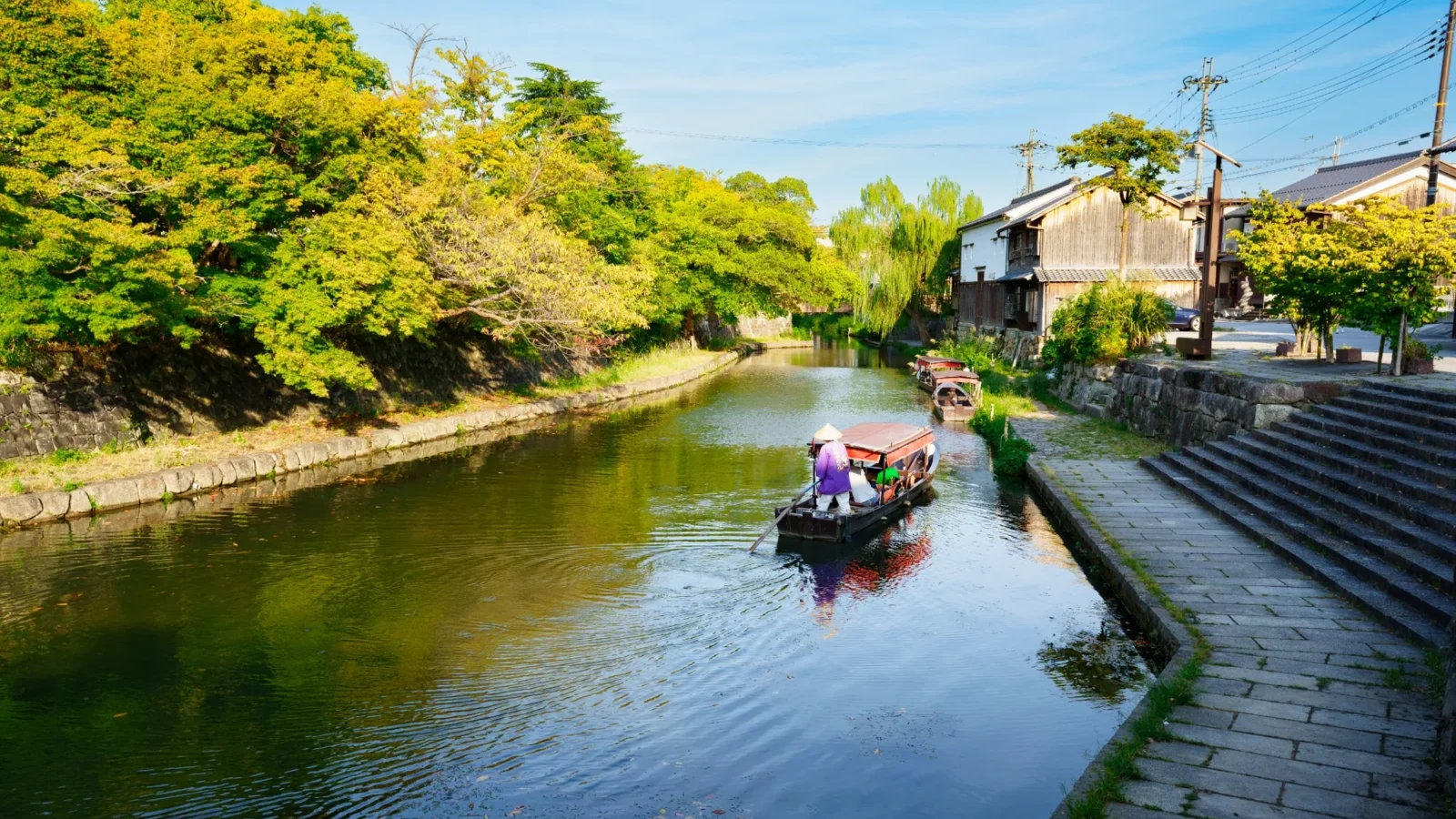
Just about an hour from Osaka, Omi Hachiman offers a very different side of Kansai:
quiet canals, preserved merchant streets, historic architecture, panoramic views,
and one of Shiga Prefecture’s most famous foods, Omi beef.
This one-day itinerary follows a practical route through the old merchant district,
starting around Shinmachi Street and Hachiman-bori before visiting Himure Hachimangu
and Mt. Hachiman. After an Omi beef lunch, the day finishes at La Collina Omi Hachiman.
It is a good choice if you want an easy day trip from Osaka without following the
usual Kyoto or Nara itinerary — and most of the main historic sights can be explored
on foot once you reach the old town.
If quiet canals and merchant streets sound appealing but you are still weighing your options, compare hidden-gem day trips from Osaka before choosing your route.
Is Omi Hachiman Worth a Day Trip from Osaka?
Yes — especially if you enjoy historic towns, local food and slower-paced sightseeing.
Omi Hachiman developed as a merchant town and is closely connected with the
history of the Omi merchants, who built trading networks across Japan.
That heritage is still visible around Shinmachi Street and Hachiman-bori,
where traditional buildings and waterways give the town a character quite
different from central Osaka.
It also works particularly well as a day trip because the major old-town sights
are concentrated within a relatively compact area. You can combine them with
Mt. Hachiman, an Omi beef lunch and La Collina without needing a rental car.
If you are comparing quieter historic destinations around Kansai, you may also like
our Uji day trip guide
or our
Iga Ueno day trip from Osaka.
Omi Hachiman Day Trip at a Glance
| Travel time from Osaka | About 1 hour by JR |
|---|---|
| Recommended duration | Full day |
| Best for | Historic streets, canals, local food and scenic views |
| Main highlights | Hachiman-bori, Shinmachi Street, Mt. Hachiman, Omi beef and La Collina |
| Getting around | Local bus + walking |
| Walking level | Moderate |
How to Get to Omi Hachiman from Osaka
The easiest way to reach Omi Hachiman is by JR from Osaka Station.
A Special Rapid service can get you to Omi-Hachiman Station in roughly one hour,
so you do not need an extremely early start for this itinerary.
Osaka Station → Omi-Hachiman Station
JR Special Rapid Service
Travel time: around 1 hour
Once you arrive, do not walk all the way from the station to the historic district
unless you specifically want the extra walk. Shinmachi is roughly 2 km north of
Omi-Hachiman Station, so taking a local bus saves time at the beginning of the day.
For the route below, take a bus from the north side of Omi-Hachiman Station toward
the old-town area and get off around Obatacho Shiryokan-mae for
Shinmachi Street. The bus ride itself is only a few minutes, followed by a short walk.
Why start here?
Shinmachi lies on the station side of the historic district. Starting here lets
you continue naturally toward Hachiman-bori, Himure Hachimangu and the ropeway
instead of backtracking later.
Another useful stop for the Hachiman-bori area is
Hachiman-bori (Osugicho) Hachimanyama Ropeway-guchi.
The ride from Omi-Hachiman Station takes about 7 minutes and costs around ¥260,
but for this itinerary Shinmachi comes first.
For more help with trains and transport before starting your day trip,
see our guide to
getting around Osaka by train.
Omi Hachiman Day Trip Itinerary
The route below is designed to keep backtracking to a minimum.
Start with the historic merchant streets, continue through Hachiman-bori and
the shrine area, then visit Mt. Hachiman before lunch. La Collina comes last
because it sits away from the main old-town cluster and works better as an
afternoon stop.
| Time | Stop |
|---|---|
| 9:00 AM | Arrive at Omi-Hachiman Station and take a local bus |
| 9:15 AM | Shinmachi Street & merchant district |
| 10:00 AM | Hachiman-bori Canal |
| 10:45 AM | Himure Hachimangu Shrine |
| 11:15 AM | Hachimanyama Ropeway & Mt. Hachiman |
| 12:20 PM | Omi beef lunch |
| 2:00 PM | La Collina Omi Hachiman |
| 4:00 PM | Return toward Omi-Hachiman Station |
| Around 5:00 PM | Depart for Osaka |
9:15 AM — Walk Through Shinmachi Street
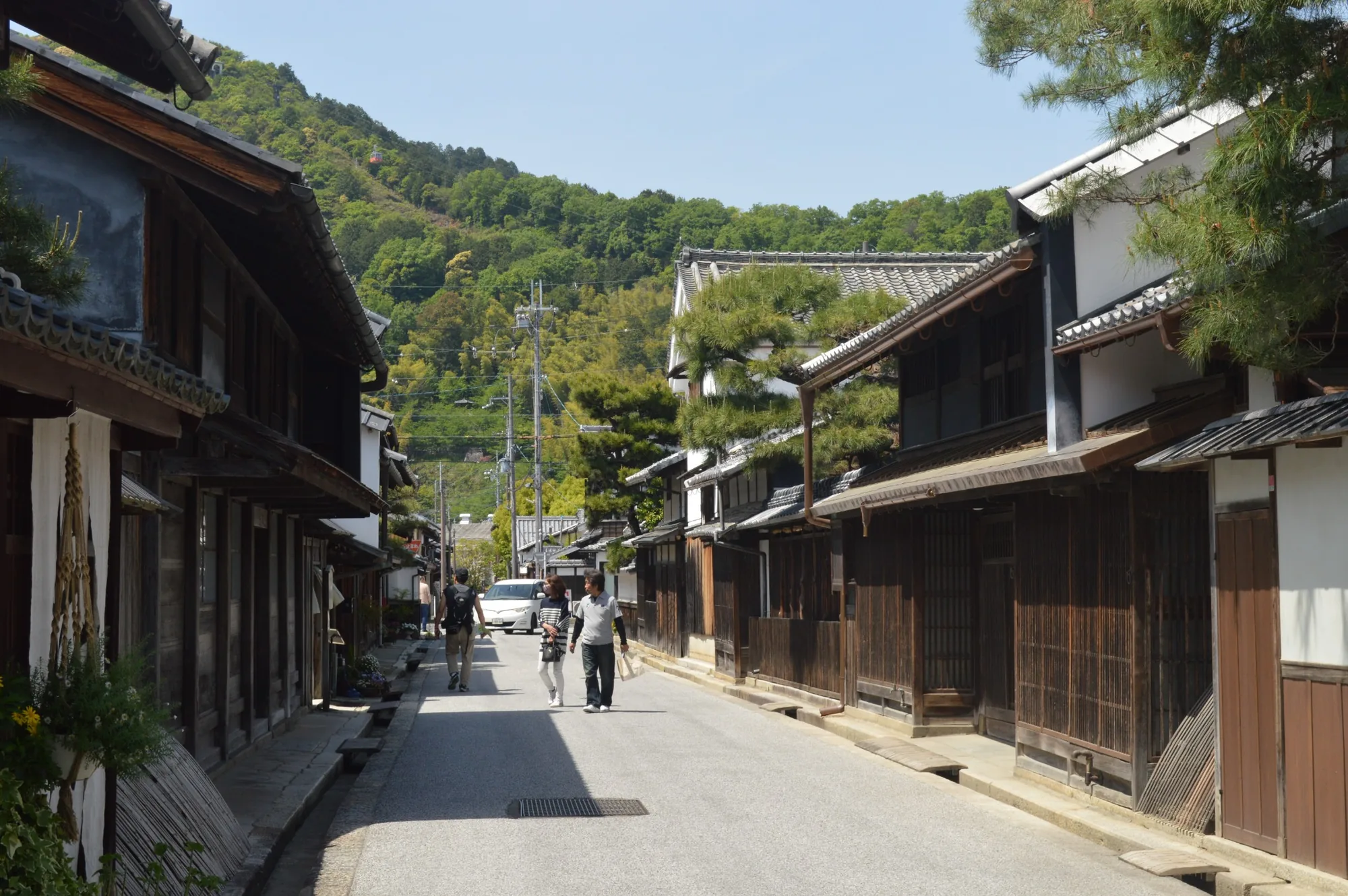
Photo: Asturio Cantabrio / Wikimedia Commons / CC BY-SA 4.0
Begin in Shinmachi, where rows of traditional houses provide one of the clearest
introductions to Omi Hachiman’s merchant history.
Omi merchants became known for doing business far beyond their home region while
maintaining strong connections with Omi. Walking through this district helps put
the rest of the day into context: Omi Hachiman was not simply a picturesque canal
town, but a place shaped by commerce, travel and wealthy merchant families.
You do not need to rush through the street. Allow around 30–45 minutes to wander,
look at the traditional facades and explore the surrounding lanes before moving
toward Hachiman-bori.
Spot the Old Hachiman Post Office
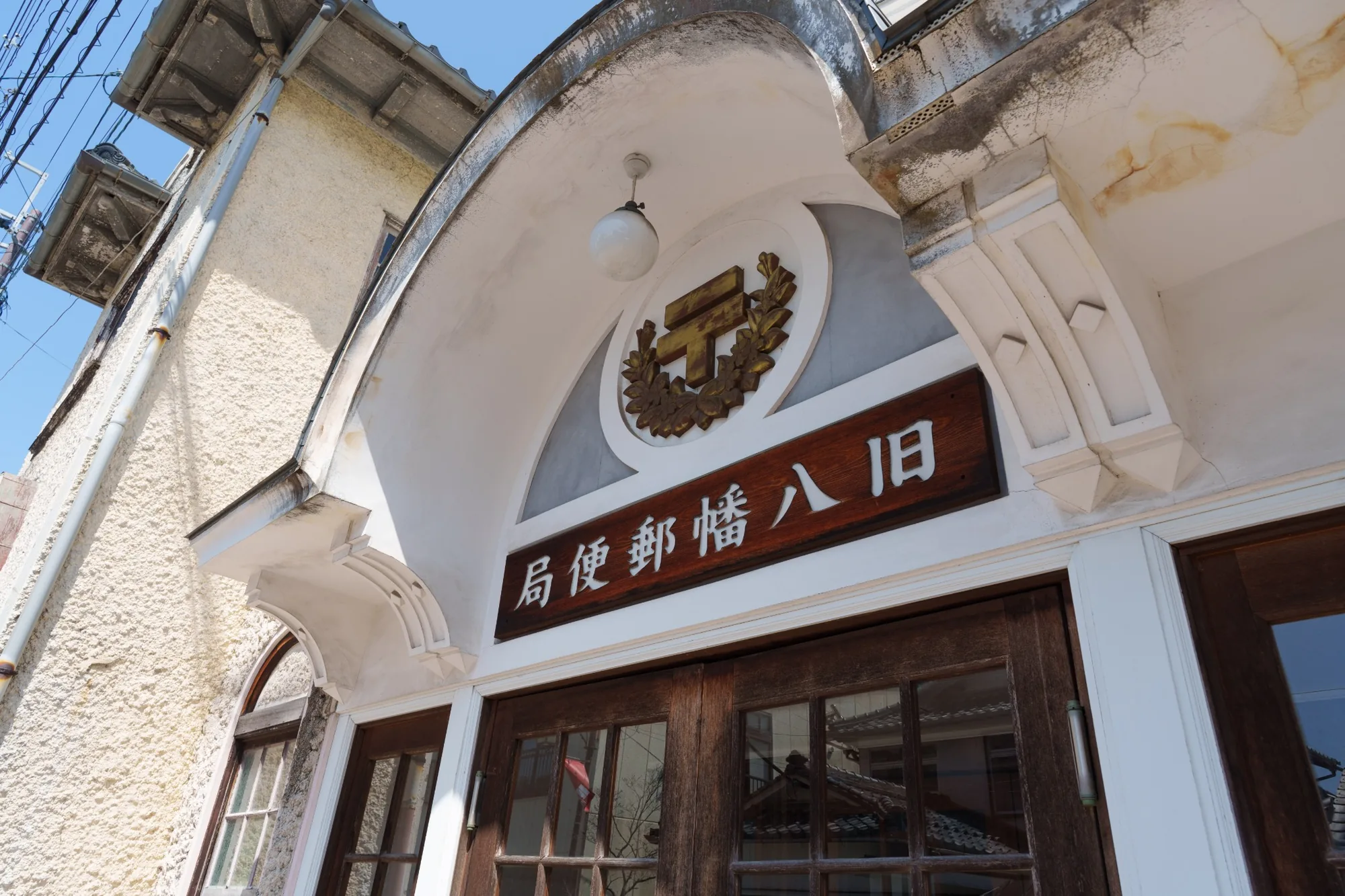
Photo: Omihachiman City (近江八幡市)
While exploring the old town, look out for the Old Hachiman Post Office.
The building was designed by architect William Merrell Vories in 1921 and is
now a Registered Tangible Cultural Property of Japan.
Vories left a particularly strong architectural legacy in Omi Hachiman, and
this Western-style former post office creates an interesting contrast with the
traditional merchant houses nearby.
For this itinerary:
Treat the Old Hachiman Post Office mainly as a quick architectural stop from
the outside. Public opening is limited and does not fit the 9:00 AM portion
of this route, so do not plan your morning around going inside.
If the building happens to be open later during your visit, you can adjust your
route if you are particularly interested in Vories architecture. Otherwise,
continue toward Hachiman-bori without adding extra waiting time.
10:00 AM — Explore Hachiman-bori Canal
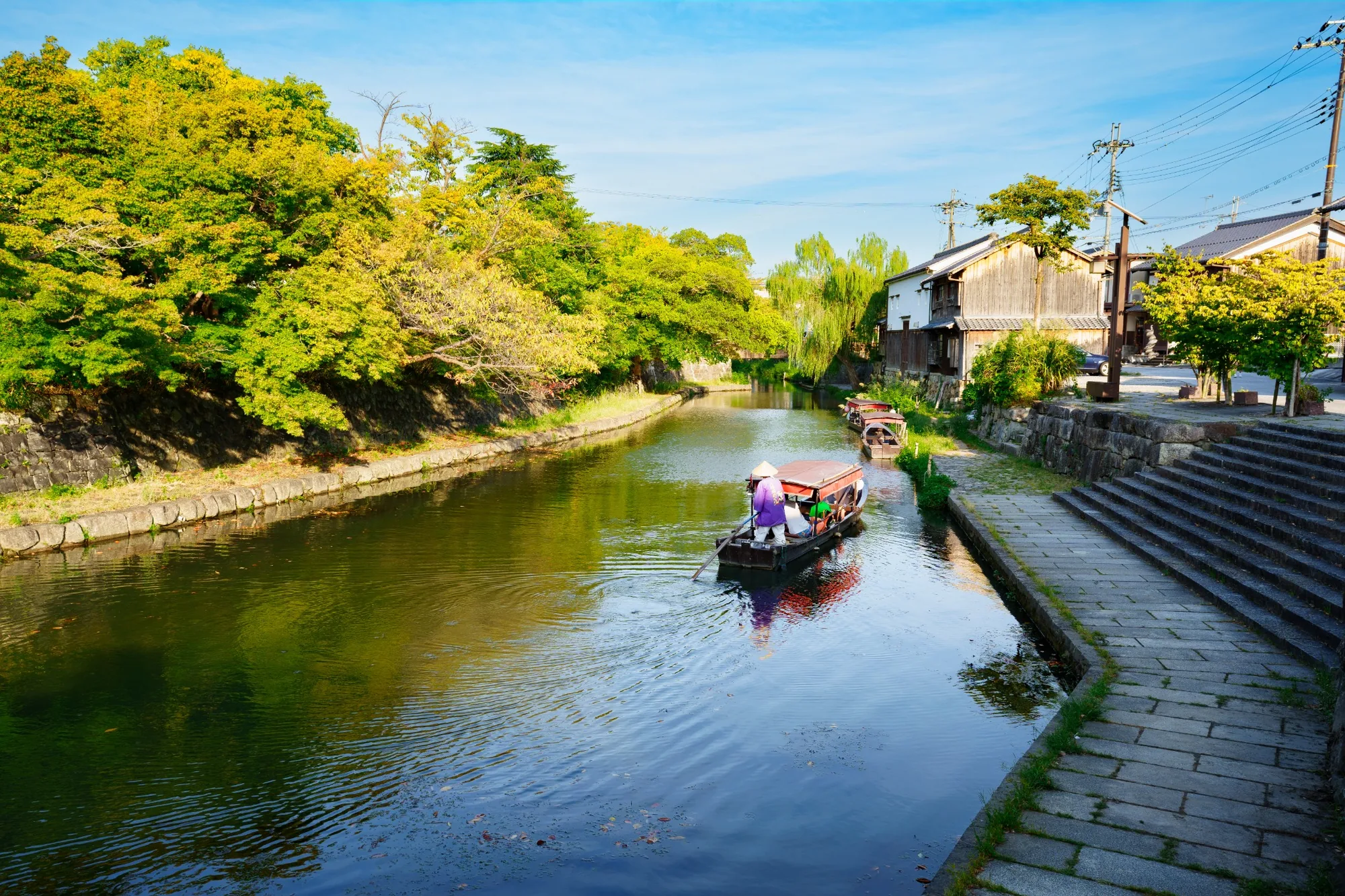
Photo: Omihachiman City (近江八幡市)
Hachiman-bori is the visual centerpiece of Omi Hachiman.
The canal once played an important role in the movement of goods and helped connect
the castle town with wider trading routes.
Today, the warehouses, traditional buildings and stone paths along the water make
this one of the most enjoyable areas in town to explore on foot.
Rather than treating it as a single photo stop, give yourself time to walk along
the canal and explore the surrounding streets.
Local Steps tip:
You do not need to add a boat ride to the main itinerary.
Walking Hachiman-bori gives you enough time to enjoy the historic district
while keeping the rest of the day comfortable. A longer Suigo boat experience
is included later as an optional addition for travelers with more time.
10:45 AM — Visit Himure Hachimangu Shrine
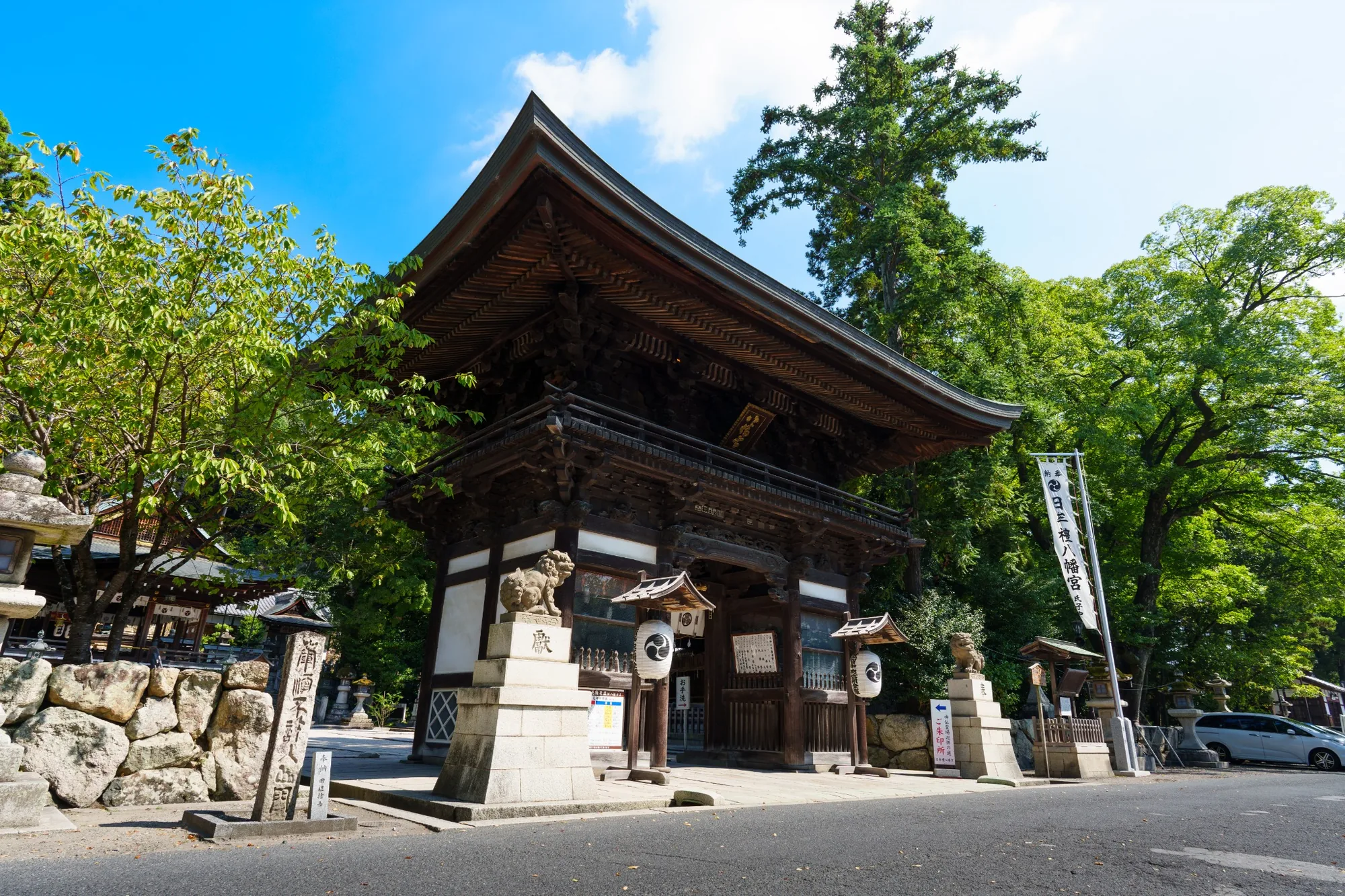
Photo: Omihachiman City (近江八幡市)
From Hachiman-bori, continue to Himure Hachimangu, one of the historic landmarks
at the foot of Mt. Hachiman. Because the shrine sits close to both the canal
and the ropeway, it fits naturally into the route without requiring a detour.
Take a little time to walk through the grounds before heading uphill.
The shrine is free to visit, and worship is possible throughout the day,
making this one of the easiest stops to fit into your Omi Hachiman itinerary.
Suggested time:
Around 20–25 minutes is enough for most day-trippers before continuing
to the ropeway.
11:15 AM — Ride the Hachimanyama Ropeway
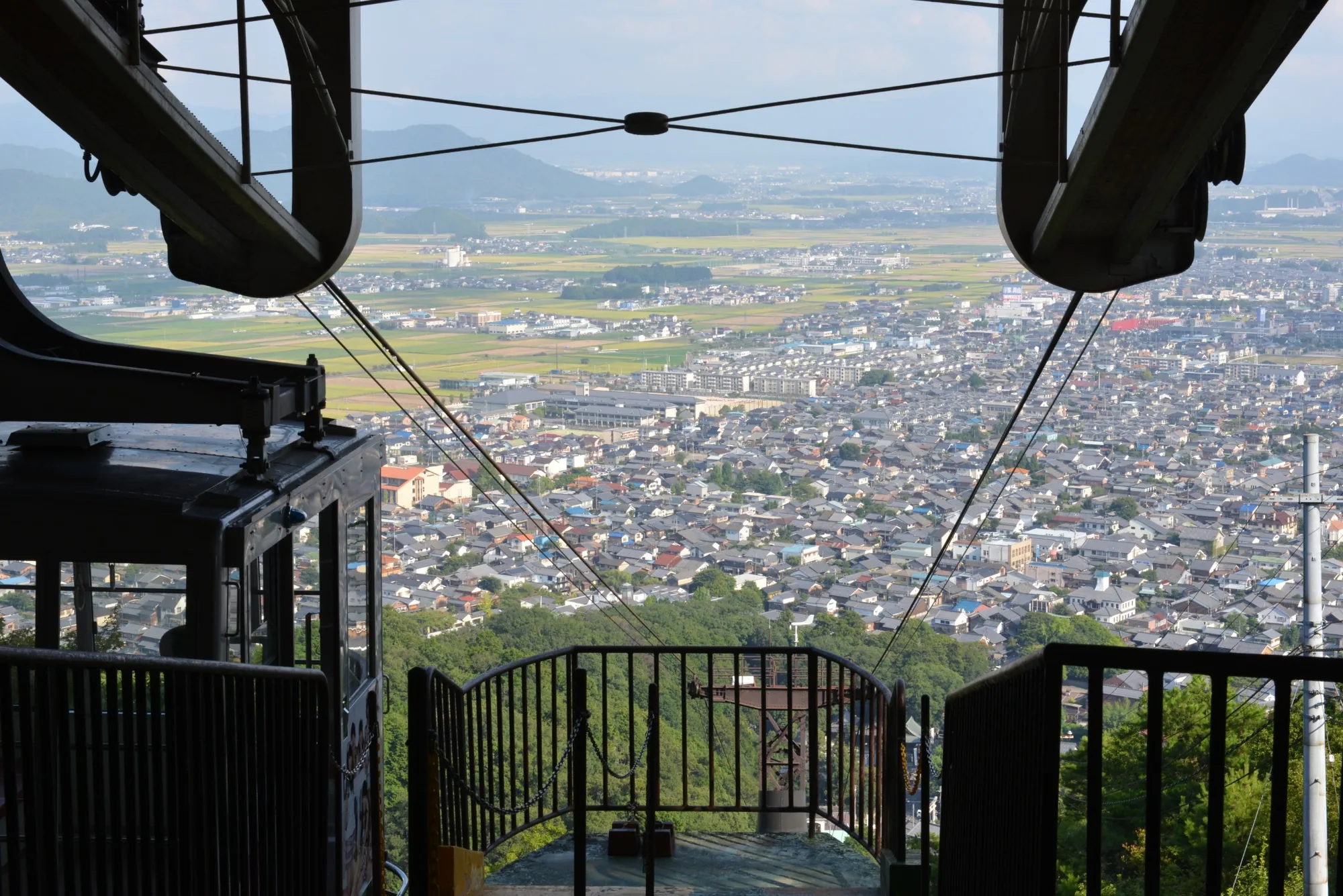
Photo: Ryosuke Yagi / Wikimedia Commons / CC BY 2.0
Next, take the Hachimanyama Ropeway up Mt. Hachiman.
The ride itself takes only about four minutes, but it quickly changes the
perspective from the narrow streets of the old town to the wider landscape
surrounding Omi Hachiman.
Hachimanyama Ropeway
Hours: 9:00 AM–5:00 PM
Last uphill departure: 4:30 PM
Ride: about 4 minutes each way
Adult round trip: ¥950
Departures: approximately every 15 minutes
For this itinerary, a round-trip ticket is the simplest option.
Allow about an hour for the ropeway and the mountaintop area rather than
planning around the four-minute ride alone.
The ropeway normally operates year-round, although maintenance closures
can occur. If the ropeway is important to your trip, check the latest
operating information before traveling.
Take in the View from Mt. Hachiman
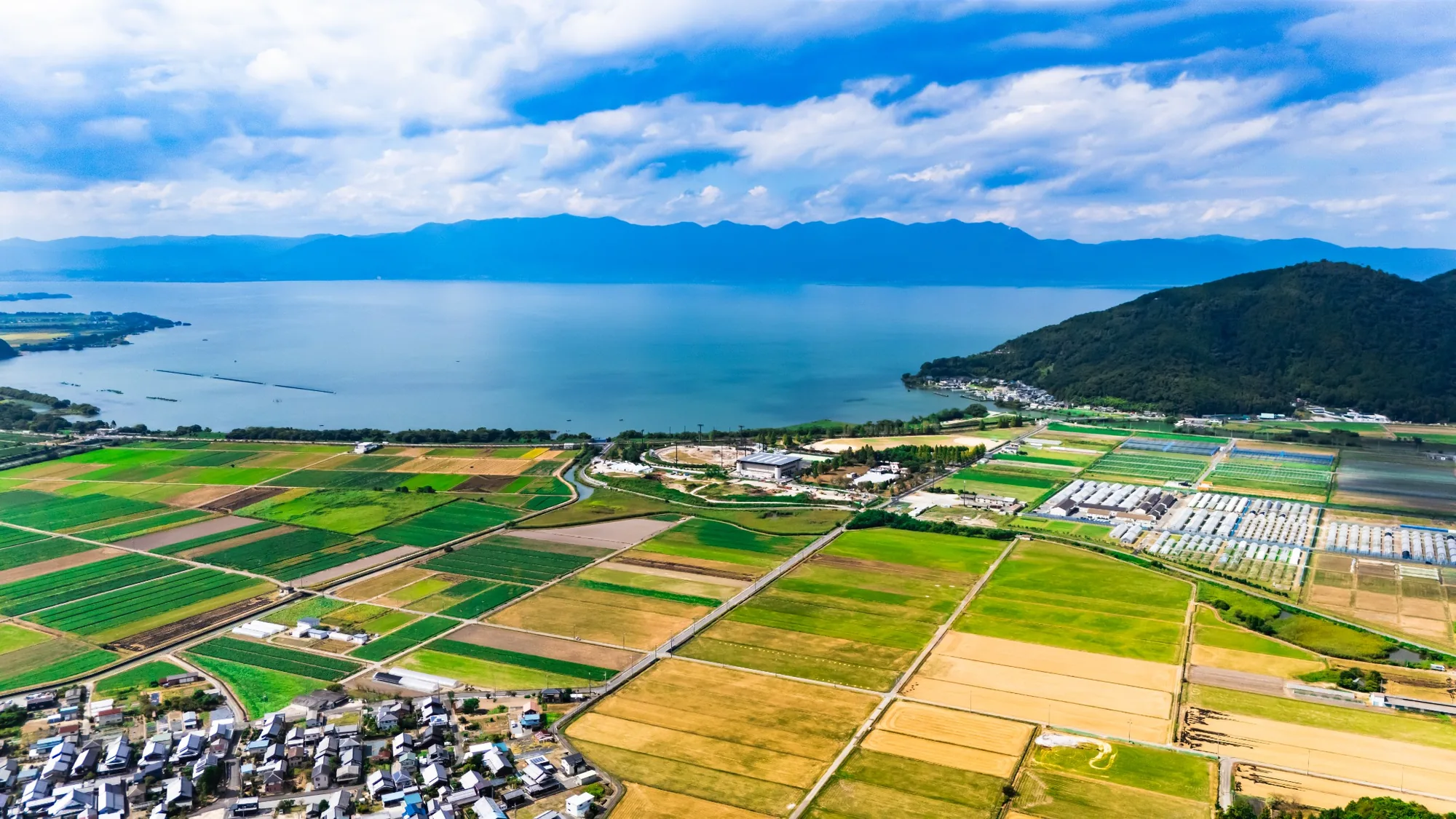
Photo: Omihachiman City (近江八幡市)
At the top, the reward is a broad view across Omi Hachiman and the surrounding
countryside, with Lake Biwa visible in the wider landscape.
This stop also provides a useful contrast with the first half of the morning.
After exploring canals and merchant streets at ground level, you can see how
the historic town sits within Shiga’s much larger lakeside landscape.
There is no need to turn the mountaintop into a long hike for this day trip.
Enjoy the viewpoints and surroundings, then take the ropeway back down for lunch.
12:20 PM — Try Omi Beef for Lunch
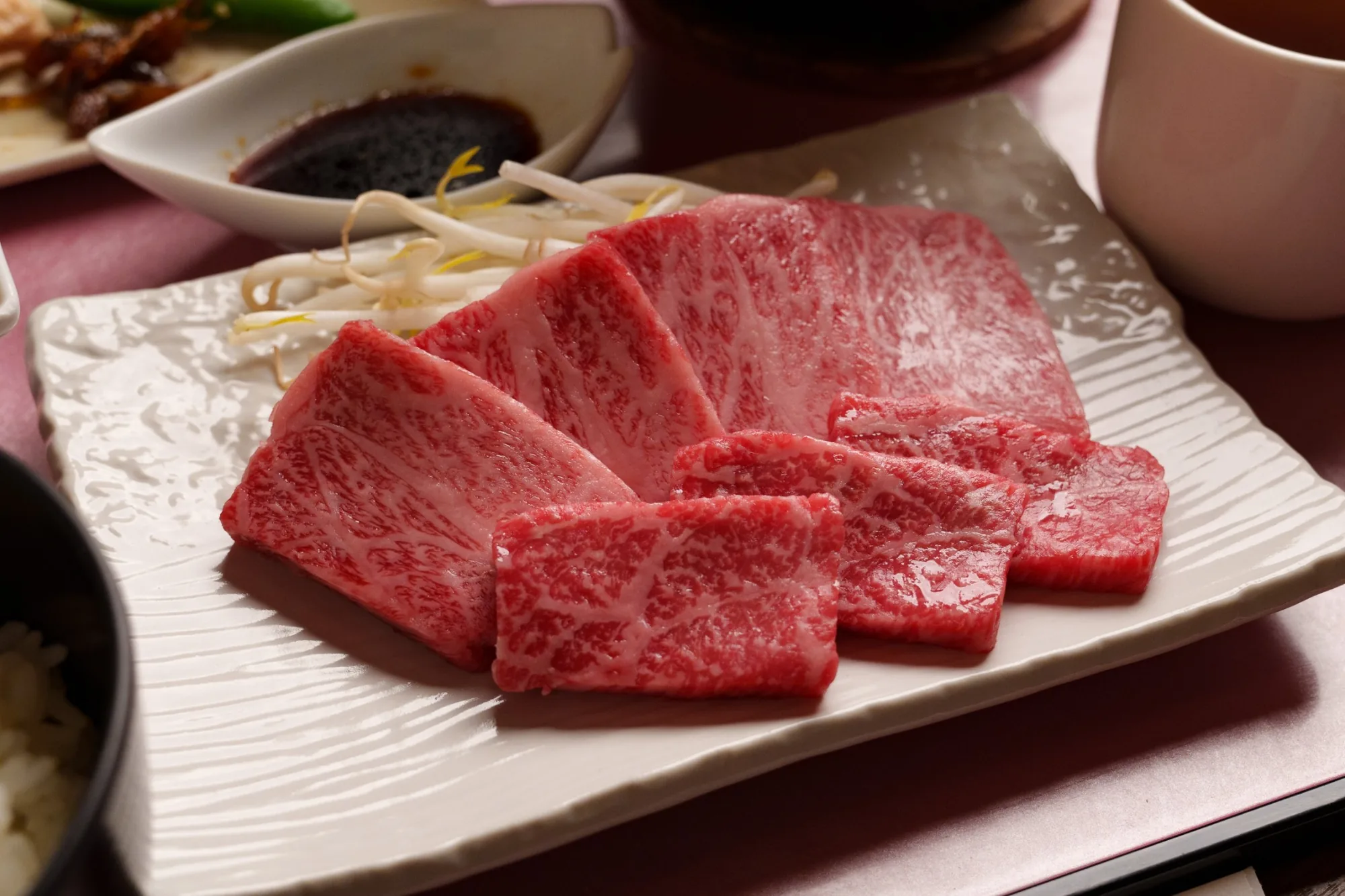
Photo: Omihachiman City (近江八幡市)
Lunch is one of the highlights of this itinerary.
Omi beef is one of Shiga Prefecture’s best-known regional foods,
so Omi Hachiman is a natural place to make it part of your day.
You will find several Omi beef restaurants around the historic district,
ranging from relatively casual meals to more expensive steak and sukiyaki.
For this route, our first choice is Kubotaya Himure-an.
Recommended: Kubotaya Himure-an
Best for:
A dedicated Omi beef lunch without leaving the Hachiman-bori and Himure area.
Kubotaya Himure-an is conveniently located near the historic district,
making it easy to visit after coming down from Mt. Hachiman.
Its menu offers several ways to try different cuts of Omi beef rather
than limiting the experience to a single preparation.
For a first Omi beef meal, the Hira (比良) set is a particularly
interesting option. At the time of our latest check, it combined loin,
lean meat and belly in a 100-gram set for around ¥3,380,
giving you a chance to compare three cuts in one meal.
Other options have included a more affordable combination of lean meat and belly,
a larger loin-and-lean-meat set, and an Omi beef hamburger.
Menus and prices can change, so treat these examples as a guide rather than
a guaranteed menu for the day you visit.
The restaurant also uses local ingredients such as Omi rice and Shiga’s
distinctive red konjac, which makes it a good fit for travelers who want
lunch to feel connected to the region rather than simply ordering wagyu
anywhere in Japan.
Kubotaya Himure-an
Typical lunch budget: around ¥2,000–¥4,000+
Latest checked hours: 11:00 AM–6:00 PM
Last order: 5:30 PM
Regular closing day: Friday
Opening days can change during busy periods, and temporary closures are
possible. Check the restaurant’s latest schedule before your visit rather
than relying on the regular closing day alone.
Other Good Lunch Options
Himure-an is our first choice for this itinerary, but having a backup is useful —
especially if your travel date falls on a closing day or you want a different
style or budget.
Sennaritei Hachimanbori — For More Omi Beef Choices
Sennaritei Hachimanbori is another convenient Omi beef option near the canal.
The first floor operates as a shop, while the second floor has a restaurant
specializing in Omi beef.
At the time of our latest check, options included a sukiyaki pot set from
around ¥2,480, a yakiniku set around ¥3,490,
and the Sanpo-yoshi set around ¥3,590.
Menus and prices can change, so check the latest menu if a particular dish
is important to you.
The name “Sanpo-yoshi” is especially fitting in Omi Hachiman.
The phrase is associated with the philosophy of the Omi merchants and is
commonly explained as business being good for the seller, good for the buyer,
and good for society.
Sennaritei Hachimanbori
1F shop: 10:00 AM–5:00 PM
2F restaurant: 11:00 AM–3:00 PM
Restaurant last order: 2:30 PM
Regular closing day: Tuesday
Hatsuyuki Shokudo — For a More Casual Local Lunch
If a full Omi beef meal is not a priority, Hatsuyuki Shokudo offers a very
different experience. This old-fashioned local eatery is better suited to
travelers looking for a simple, inexpensive lunch rather than a destination
wagyu meal.
It is a useful backup to keep on your map because it remains close to the
historic sightseeing area and gives the itinerary a more budget-friendly option.
Hatsuyuki Shokudo
Hours: 11:00 AM–2:30 PM
Regular closing days: Wednesday and Thursday
Best for: Casual and budget-friendly local food
Whichever restaurant you choose, pay attention to closing days.
Independent restaurants can change hours or close temporarily, so having
at least one alternative saved on your map is worthwhile.
2:00 PM — Visit La Collina Omi Hachiman
After lunch, leave the old-town cluster and continue to
La Collina Omi Hachiman, the flagship destination of
confectionery maker Taneya.
The site is known for its distinctive architecture, green landscape and
confectionery shops, creating a very different atmosphere from the merchant
streets and canal you explored in the morning.
That contrast is exactly why La Collina works well at the end of this itinerary.
Rather than interrupting the compact historic route earlier in the day,
you can finish the old-town sights first and then continue toward La Collina
for a slower afternoon stop.
La Collina Omi Hachiman
General opening hours: 9:00 AM–6:00 PM
Food Container: 10:00 AM–5:00 PM
Admission: Free
Access: Local bus via Kitano-sho La Collina-mae
Give yourself around 1.5–2 hours if you want time to walk around,
browse the shops and stop for sweets or a drink without rushing.
There is no admission fee simply to enter La Collina, although your actual
spending will depend on what you eat or buy.
Why visit La Collina last?
Hachiman-bori, Shinmachi, Himure Hachimangu and the ropeway form one compact
sightseeing area. La Collina sits outside that cluster, so visiting it after
lunch avoids unnecessary backtracking and keeps the historic part of the
itinerary together.
Around 4:00 PM, take a local bus back toward Omi-Hachiman Station.
This leaves some flexibility for the bus connection and should still make
a departure toward Osaka around 5:00 PM comfortable.
Have More Time? Take a Suigo Boat Ride
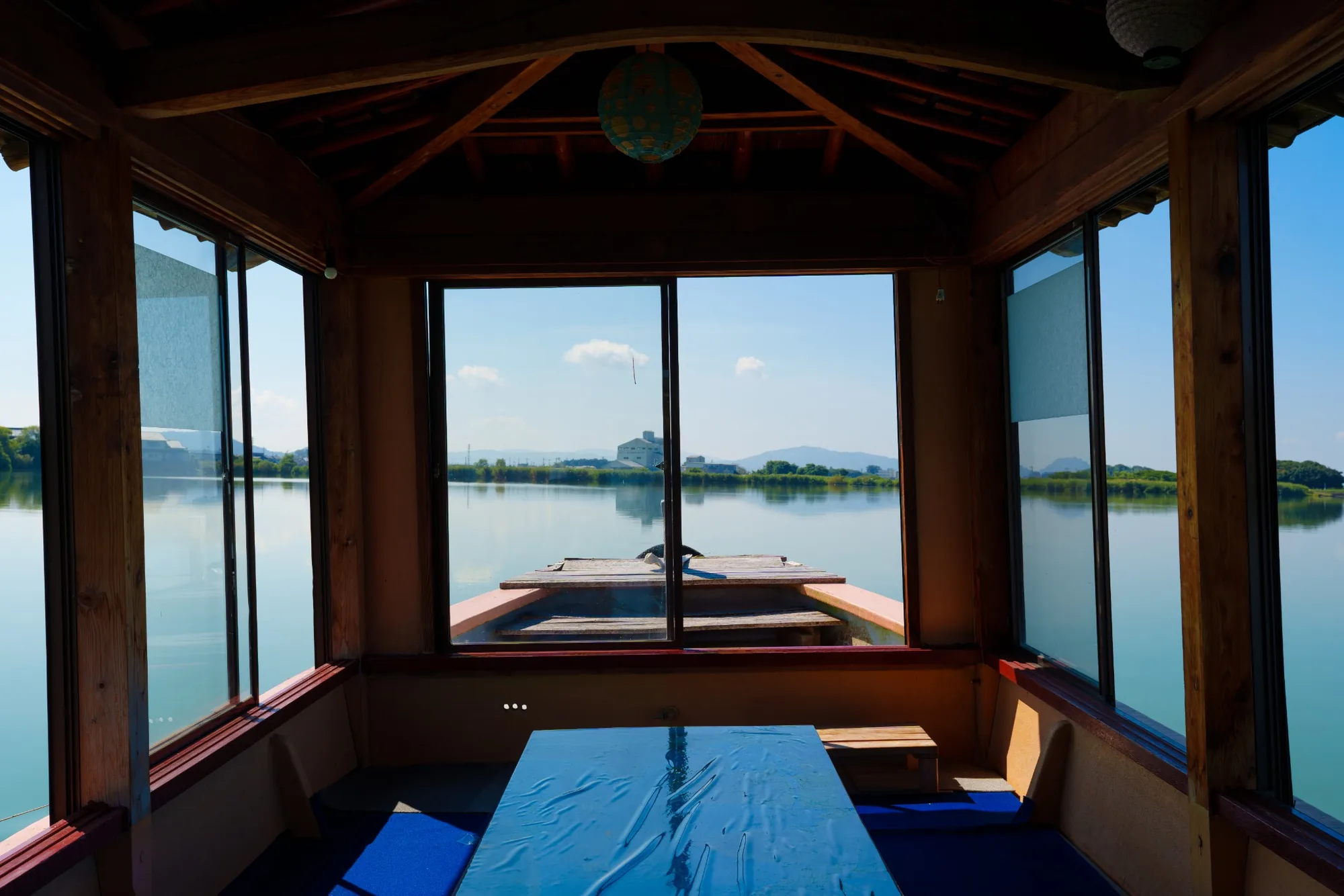
Photo: Omihachiman City (近江八幡市)
If you have more time, Omi Hachiman is also known for traditional
Suigo boat rides through the wetlands and waterways around
Nishinoko.
This is a different experience from simply walking along Hachiman-bori —
and also different from the shorter sightseeing boats that operate around
the historic canal. A Suigo cruise takes you into the wider waterside
landscape outside the compact old-town sightseeing area.
Should you add it to this itinerary?
Only if the boat ride is one of your priorities. Some traditional Suigo
cruises take around 80 minutes and operate with limited departure times.
Adding one to the itinerary above would mean shortening La Collina,
skipping another stop, or returning to Osaka later.
There are multiple boat operators around Omi Hachiman, with different
boarding points, schedules, prices and operating periods. For example,
one traditional hand-rowed service operates an approximately 80-minute
course with only a small number of scheduled departures.
Check the latest information for the specific operator you plan to use
before rearranging your day. For that reason, this guide keeps the Suigo
experience optional rather than building it into the main itinerary.
Visiting Omi Hachiman in Spring?
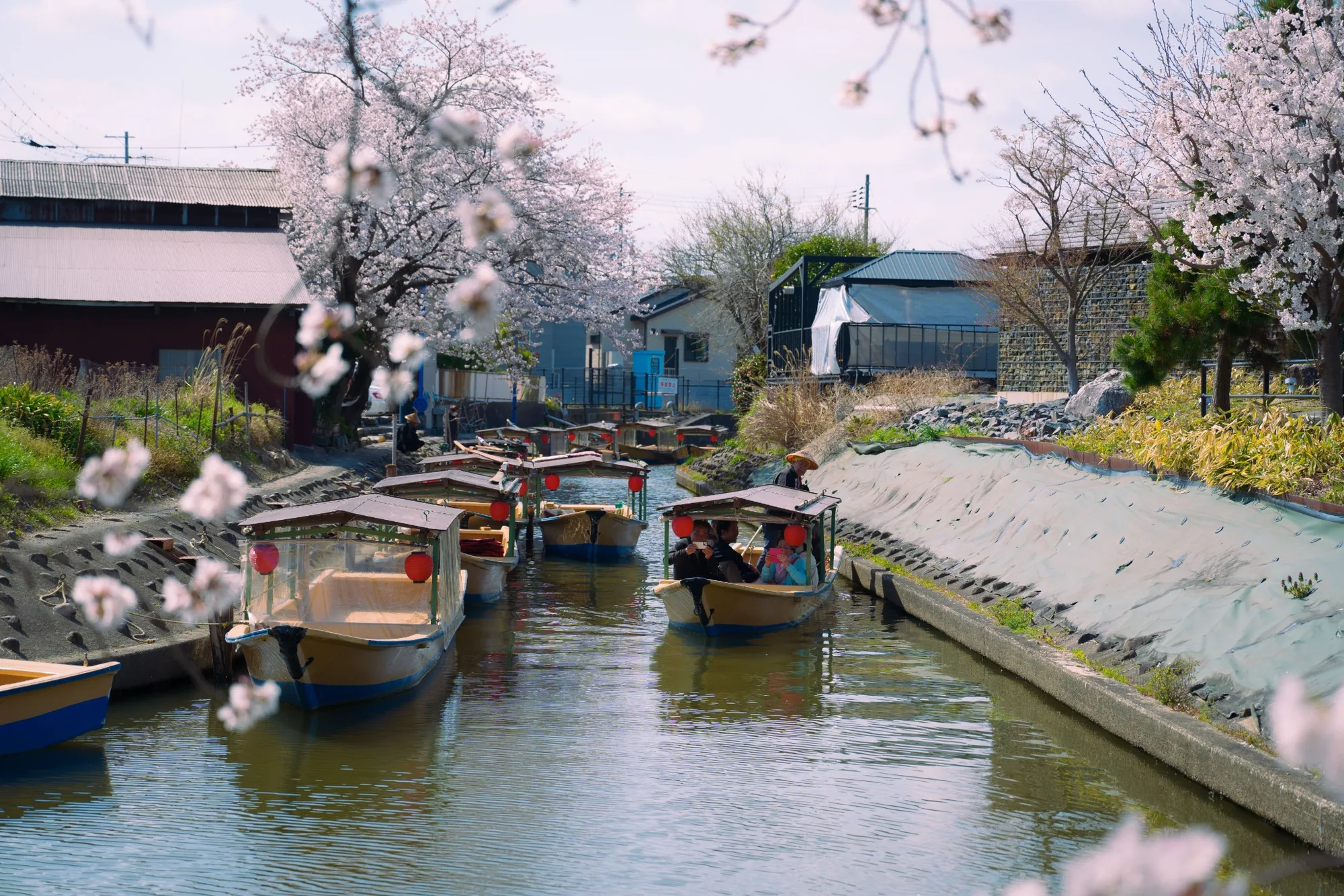
Photo: Omihachiman City (近江八幡市)
Spring can make the waterways especially scenic when cherry blossoms are
in bloom. The exact timing varies from year to year, so treat blossom
forecasts as a guide rather than planning around a guaranteed bloom date
far in advance.
Omi Hachiman Day Trip Map
Use the map below to see how the main itinerary fits together.
The historic sights are concentrated around the old town and Hachiman-bori,
while La Collina sits farther away from that cluster.
The main route includes Omi-Hachiman Station, Shinmachi Street,
Hachiman-bori, Himure Hachimangu, Hachimanyama Ropeway,
Kubotaya Himure-an and La Collina. Alternative lunch options are also
marked so you have a backup if your first choice is closed.
Map note:
The optional Suigo cruise is not pinned as a single stop because there are
multiple operators and boarding points. Choose an operator first, then add
its exact boarding location to your own route if you decide to include a cruise.
How Much Does an Omi Hachiman Day Trip Cost?
Your total cost depends mainly on your train ticket, lunch choice and how
much you spend at La Collina. Omi beef will usually be the largest optional
expense during the sightseeing portion of the day.
| Expense | Typical Cost | Notes |
|---|---|---|
| JR Osaka ↔ Omi-Hachiman | Check current JR fare | About 1 hour each way by Special Rapid; cost depends on your ticket or pass |
| Local buses | From around ¥260 per ride | Actual total depends on the stops and number of rides |
| Hachimanyama Ropeway | ¥950 | Adult round trip |
| Lunch | About ¥1,000–¥4,000+ | From a casual local meal to an Omi beef lunch |
| La Collina | Free admission | Allow extra for sweets, drinks and shopping |
| Suigo boat ride | Optional | Price varies by operator and course |
Budget tip:
Instead of trying to minimize every expense, consider leaving room in
your budget for an Omi beef lunch and something at La Collina.
Those two food experiences help distinguish this trip from simply
walking around a historic town.
When Is the Best Time to Visit Omi Hachiman?
Best overall: spring and autumn.
Both seasons are particularly well suited to an itinerary that combines
outdoor walking, Hachiman-bori and the views from Mt. Hachiman.
Spring
Spring is one of the most attractive times to visit, especially when cherry
blossoms add color to the canals and waterways. Temperatures are also
generally more comfortable for walking than in midsummer.
Autumn
Cooler temperatures make autumn another strong choice for exploring the
merchant district and Mt. Hachiman. Seasonal foliage can add extra color
to the mountain and surrounding historic areas.
Summer
Omi Hachiman is still visitable in summer, but expect heat and humidity.
Carry water, take breaks and avoid rushing between outdoor stops during
the hottest part of the day.
Winter
Winter can be quieter, but cold weather may make outdoor sightseeing less
comfortable. Check the latest ropeway operating information and weather
conditions before traveling.
Practical Tips for Your Omi Hachiman Day Trip
Take the Bus from the Station
Shinmachi is roughly 2 km from Omi-Hachiman Station.
Using the local bus at the beginning of the day saves time and energy
for walking around the historic district.
Start with the Old Town
Visit Shinmachi, Hachiman-bori, Himure Hachimangu and Mt. Hachiman
before La Collina. Keeping these nearby sights together minimizes backtracking.
Check Restaurant Closing Days
Independent restaurants often have different weekly closing days
and can close temporarily. Save at least one alternative lunch option.
Watch the Ropeway Time
The last uphill ropeway departure is normally at 4:30 PM.
This itinerary visits in the morning, leaving plenty of margin.
Wear Comfortable Shoes
Much of the old town is best explored on foot, so comfortable shoes
matter more here than on a station-centered city itinerary.
Keep Some Flexibility for Buses
Local buses are useful for reaching the old town and La Collina,
but they are not as frequent as urban trains in central Osaka.
Do Not Overload the Day
A Suigo cruise is worthwhile if it is a priority, but adding it to
every stop above can turn an otherwise relaxed itinerary into a rushed one.
Omi Hachiman Day Trip FAQ
Can you visit Omi Hachiman as a day trip from Osaka?
Yes. Omi-Hachiman Station is roughly one hour from Osaka by JR Special
Rapid service, and the main historic sights are close enough together
to explore comfortably in one day.
How long does it take to get from Osaka to Omi Hachiman?
A JR Special Rapid service from Osaka Station to Omi-Hachiman Station
takes roughly one hour. Actual journey times vary by service, so check
the timetable for your travel date.
What is Omi Hachiman famous for?
Omi Hachiman is known for its Omi merchant history, Hachiman-bori Canal,
traditional streets, waterside landscape and Omi beef. La Collina Omi
Hachiman has also become one of the area’s best-known modern attractions.
Is La Collina Omi Hachiman worth visiting?
Yes, especially if you enjoy architecture, sweets and food-related stops.
It offers a very different atmosphere from the historic center, which is
why it works well as the final stop rather than replacing Hachiman-bori
or Shinmachi.
Do you need a car to visit Omi Hachiman?
No. This itinerary can be completed using JR, local buses and walking.
A car may be useful for exploring farther outside the town, but it is
unnecessary for the route covered in this guide.
More Day Trips from Osaka
Omi Hachiman is only one option if you want to explore beyond Osaka.
These guides offer several very different ways to spend another day in Kansai.
If you are building a longer trip around the region, our
5-day Osaka and Kansai itinerary
can help you connect several destinations into one route.
Is Omi Hachiman Worth Adding to Your Kansai Trip?
Omi Hachiman works best for travelers who want to slow the pace down for a day.
Instead of moving between major temples or crowded shopping districts, you can
walk beside an old canal, explore streets shaped by merchant history, look across
the Shiga countryside from Mt. Hachiman and sit down for an Omi beef lunch.
La Collina adds a completely different final stop without taking over the itinerary,
while the Suigo waterways give you another option if you have more time.
For an easy day trip from Osaka that combines history, scenery and regional food
without requiring a car, Omi Hachiman is a rewarding alternative to Kansai’s
busiest sightseeing routes.