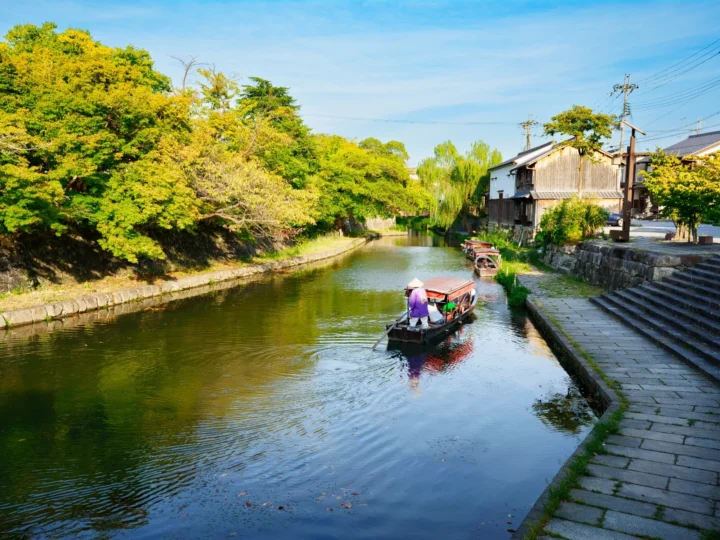
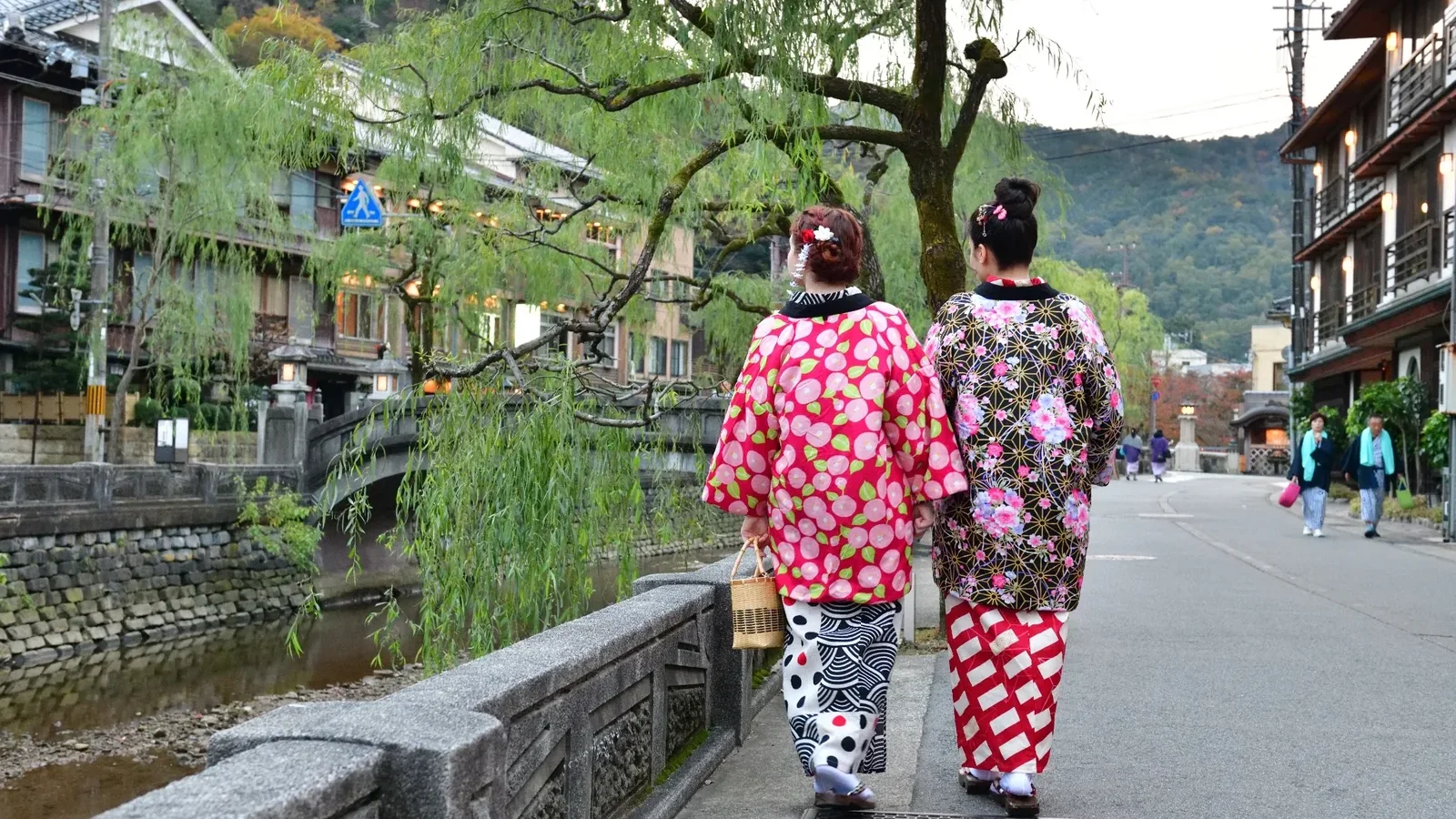
Kinosaki Onsen is one of the best places near Osaka to experience a traditional Japanese hot spring town rather than simply visit a single onsen.
Willow-lined canals, wooden ryokan, historic public bathhouses, yukata-clad visitors, Tajima beef, and mountain views are all packed into a compact town that is easy to explore on foot.
From Osaka, the Limited Express Kounotori makes Kinosaki possible as a day trip.
But if your schedule allows, staying one night changes the experience considerably: you can slow down for a ryokan dinner, walk through the illuminated streets in yukata, visit the public baths after dark, and wake up for another onsen the next morning.
This guide covers both options, with a realistic one-day itinerary from Osaka and a one-night plan for travelers who want the fuller Kinosaki experience.
Best Day Trips from Osaka: compare more destinations you can reach from an Osaka base.
Train fares, attraction fees, bath schedules, and temporary closures can change.
Check official information before your visit.
This article contains affiliate links. If you book accommodation through one of these links,
Local Steps Japan may earn a small commission at no extra cost to you.
Kinosaki Onsen from Osaka at a Glance
- Best for: Onsen, traditional townscapes, ryokan stays, Tajima beef, and a slower side of Japan
- From Osaka: About 2.5–3 hours by Limited Express Kounotori
- Day trip: Possible, but expect a long day
- Overnight: Recommended for evening and morning onsen
- Getting around: Mostly on foot
- Public baths: Choose from the baths open on your visit date
- Day-trip bath pass: Yumepa — ¥1,500 for adults
- Typical day-trip budget: Around ¥19,500–¥22,000 per person with regular JR tickets
- Useful rail pass: Kansai WIDE Area Pass for eligible overseas visitors
Is Kinosaki Onsen Worth Visiting from Osaka?
Yes — especially if you want an experience that feels very different from another day of sightseeing in Osaka.
Kinosaki is built around sotoyu-meguri, the tradition of walking between public bathhouses in yukata.
Instead of spending the entire visit inside one hot spring facility, you can move between baths, cross small bridges over the Otani River, stop for local food, and explore the town between soaks.
The trade-off is travel time.
Kinosaki is considerably farther from Osaka than
Arima Onsen
,
so travelers who only want a quick hot-spring escape may prefer Arima.
Kinosaki makes more sense when the onsen town itself is one of the main experiences of your trip.
If you only have one free day, Kinosaki can still work as a day trip.
If you can spare one night, stay overnight — the evening streets, ryokan experience, and next-morning bath make the extra time worthwhile.
Kinosaki Day Trip vs Overnight: Which Should You Choose?
| Experience | Day Trip | 1-Night Stay |
|---|---|---|
| Public baths | 1–2 baths is realistic | More time for evening and morning baths |
| Bath pass | Yumepa is useful for multiple baths | Many ryokan provide public-bath access for guests |
| Evening atmosphere | Limited by your return train | Enjoy the illuminated town after many day-trippers leave |
| Morning onsen | Not practical when traveling from Osaka that morning | Easy to enjoy before breakfast or check-out |
| Ryokan & dinner | Not part of the experience | A major reason to stay overnight |
| Ropeway & Onsenji | Possible with good timing | Easier to fit in without rushing |
| Best for | Travelers short on time | The fuller Kinosaki experience |
Guests staying at many Kinosaki ryokan receive a pass for the town’s public baths.
In many cases, this remains valid on the morning of check-out.
The exact expiry time varies by accommodation, so confirm the conditions with your ryokan at check-in.
How to Get from Osaka to Kinosaki Onsen
Best Option: Limited Express Kounotori
The easiest route is the JR Limited Express Kounotori from Osaka to Kinosaki Onsen Station.
Direct services make the journey practical even for a day trip.
Route: Osaka Station → Kinosaki Onsen Station
Train: JR Limited Express Kounotori
Travel time: Roughly 2.5–3 hours
Regular reserved-seat fare: About ¥6,140 one way
Round trip: About ¥12,280
Kounotori services use reserved seating, so for a day trip it is a good idea to reserve both your outbound and return trains rather than deciding on the return journey at the last minute.
For general train and transportation advice, see our
Getting Around Osaka guide
.
Should You Buy the Kansai WIDE Area Pass?
For eligible overseas visitors, the Kansai WIDE Area Pass can be particularly good value for Kinosaki.
The 5-day pass costs ¥12,000, while a regular reserved-seat round trip between Osaka and Kinosaki is approximately ¥12,280.
In other words, a Kinosaki round trip alone can already put you around the break-even point.
If you also use the pass for another covered journey during the five-day validity period, the value becomes much stronger.
JR West also offers a Kansai WIDE Area Pass + KINOSAKI MUST-VISITS PASS package for ¥13,000.
The Kinosaki pass includes selected sightseeing experiences such as the ropeway and Onsenji-related attractions, but it does not replace the public-bath Yumepa pass.
Check the
official JR West Kansai WIDE Area Pass page
for current eligibility and conditions.
Kinosaki Onsen Day Trip & Ryokan Map
Kinosaki’s biggest advantage is how walkable it is.
The station, public baths, restaurants, ropeway, and many ryokan are concentrated around the central onsen town.
The map below includes the main stops in this guide and our three recommended places to stay.
One-Day Kinosaki Onsen Itinerary from Osaka
A day trip works best when you leave Osaka early and avoid trying to visit every public bath.
The goal is to experience the town at a comfortable pace while still leaving enough time for the train back to Osaka.
Take an early Limited Express Kounotori from Osaka.
Walk from Kinosaki Onsen Station into the historic center.
Choose one of the public baths that is open that day.
Choose a sit-down Tajima beef lunch or snack your way through town.
Head up the mountain for a different view of Kinosaki and its onsen history.
Choose another open bath, or slow down beside the canal before returning to Osaka.
Kinosaki’s Public Baths: How Sotoyu-Meguri Works
Public bath hopping is the experience that makes Kinosaki different from simply visiting an onsen for a few hours.
The town is traditionally known for seven sotoyu, or public bathhouses, spread along the compact streets around the Otani River.
You do not need to stay at a ryokan to use the public baths.
Day visitors can pay for individual baths or buy the Yumepa day pass and move between the baths that are open that day.
Two baths, time to walk around town, a good lunch, and the ropeway make for a much more enjoyable day.
Yumepa: The Public Bath Day Pass
- Adult: ¥1,500
- Child: ¥750
- Individual bath: typically ¥800 for an adult
- Best value: Usually from your second bath onward
Since two individual ¥800 admissions would already cost ¥1,600, Yumepa makes sense if you plan to enter at least two baths.
Which Public Baths Are Open?
Kinosaki’s public baths have different weekly closing days.
Temporary maintenance and renovation closures can also affect availability.
| Public Bath | Regular Hours | Regular Closing Day | Adult Admission |
|---|---|---|---|
| Jizo-yu | 7:00–23:00 | Monday | ¥800 |
| Kono-yu | 7:00–23:00 | Tuesday | ¥800 |
| Ichino-yu | 7:00–23:00 | Wednesday | ¥800 |
| Mandara-yu | 15:00–23:00 | Wednesday normally | ¥800 |
| Goshono-yu | 7:00–23:00 | Thursday | ¥800 |
| Yanagi-yu | 15:00–23:00 | Thursday | ¥800 |
| Satono-yu | Closed for renovation | — | — |
2026 renovation notice
As of August 2026, Satono-yu remains closed for renovation.
Kono-yu is also scheduled to be closed from May 11 to October 30, 2026 for renovation work.
During the Kono-yu renovation period, Mandara-yu is operating on Wednesdays rather than following its normal Wednesday closing schedule.
Last admission is generally 30 minutes before closing.
These arrangements can change, so check current information before bathing.
Check the
official Kinosaki public bath status
on the day of your visit.
Can You Use the Public Baths with Tattoos?
Yes.
Kinosaki’s public sotoyu allow bathers with tattoos, making the town particularly straightforward for international visitors who may have difficulty using onsen elsewhere in Japan.
Standard Japanese onsen etiquette still applies.
Wash before entering the bath, do not wear swimwear, keep towels out of the bathwater, and do not take photos inside bathing areas.
Private ryokan baths may have their own policies, so check separately with your accommodation.
Goshono-yu: One of the Best Baths for a First Visit
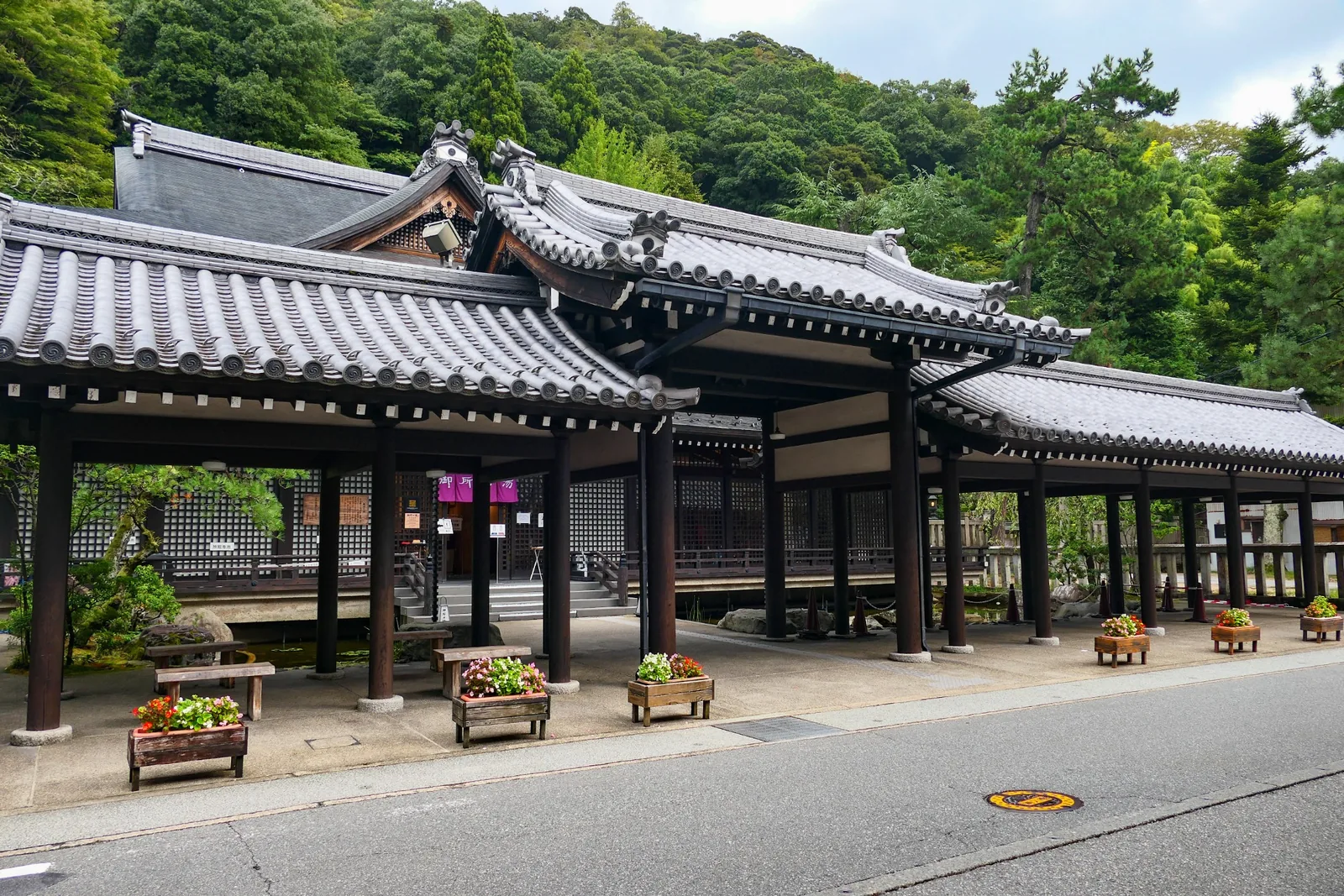
If you only have time for one or two baths, Goshono-yu is an easy one to put near the top of your list.
Its distinctive exterior makes it feel like a destination before you even step inside, and its central location fits naturally into a walk through the old onsen town.
Regular closing day: Thursday
Adult admission: ¥800
If you visit on a Thursday, simply choose another open bath and keep the rest of your itinerary unchanged.
Ichino-yu: A Classic Bath in the Center of Town
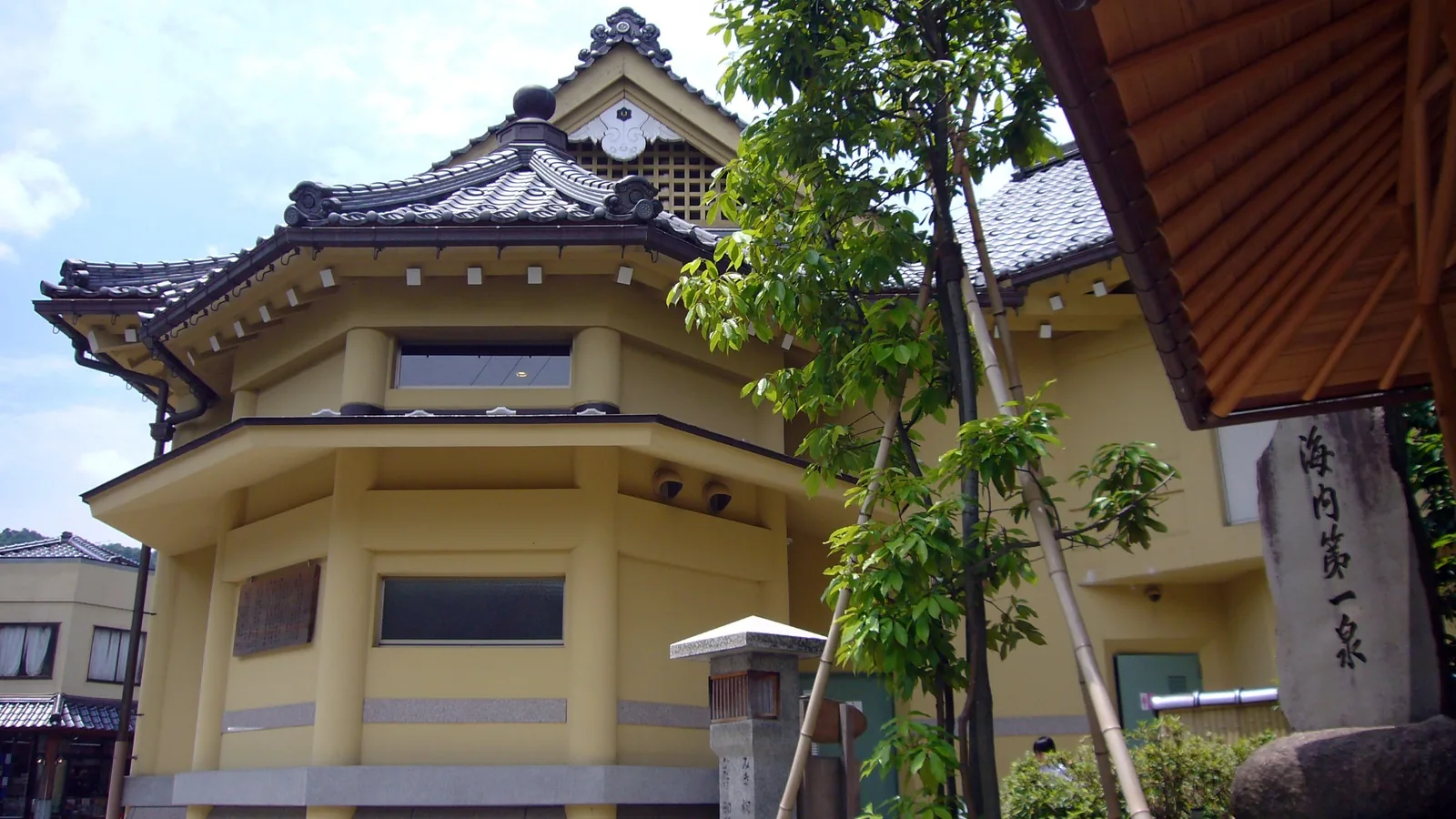
Ichino-yu is another convenient choice for a short visit because it sits right in the middle of the townscape most travelers picture when they think of Kinosaki.
It is easy to combine with lunch, shopping, or a walk beside the river.
Regular closing day: Wednesday
Adult admission: ¥800
Goshono-yu and Ichino-yu are recommendations rather than mandatory stops.
On Wednesday, skip Ichino-yu; on Thursday, skip Goshono-yu.
The best bath route is simply the one that matches the operating schedule on the day you visit.
Lunch in Kinosaki: Tajima Beef or Food Hopping?
Hot springs may be the main reason to visit Kinosaki, but this part of northern Hyogo is also closely associated with Tajima beef.
You can turn lunch into one of the day’s main experiences or keep it casual and eat between bath stops.
Option 1: Tajima Beef at Irori Dining Mikuni
For a proper lunch, Irori Dining Mikuni is a convenient option in central Kinosaki.
Its lunch menu focuses on Tajima beef and ranges from rice-bowl dishes to more expensive steak options.
- Tajima Beef Roast Beef Bowl Set: ¥3,500
- Tajimagen Daily Grilled Meat Set: ¥4,500
- Tajima Beef Comparison Set: ¥4,900
- Tajima Beef Steak Bowl: ¥6,700
For the budget calculations in this guide, allow around ¥3,500–¥5,000 for a typical sit-down Tajima beef lunch.
Check
Mikuni’s official lunch menu
for current prices.
Option 2: Prefer Street Food Instead of a Sit-Down Lunch?
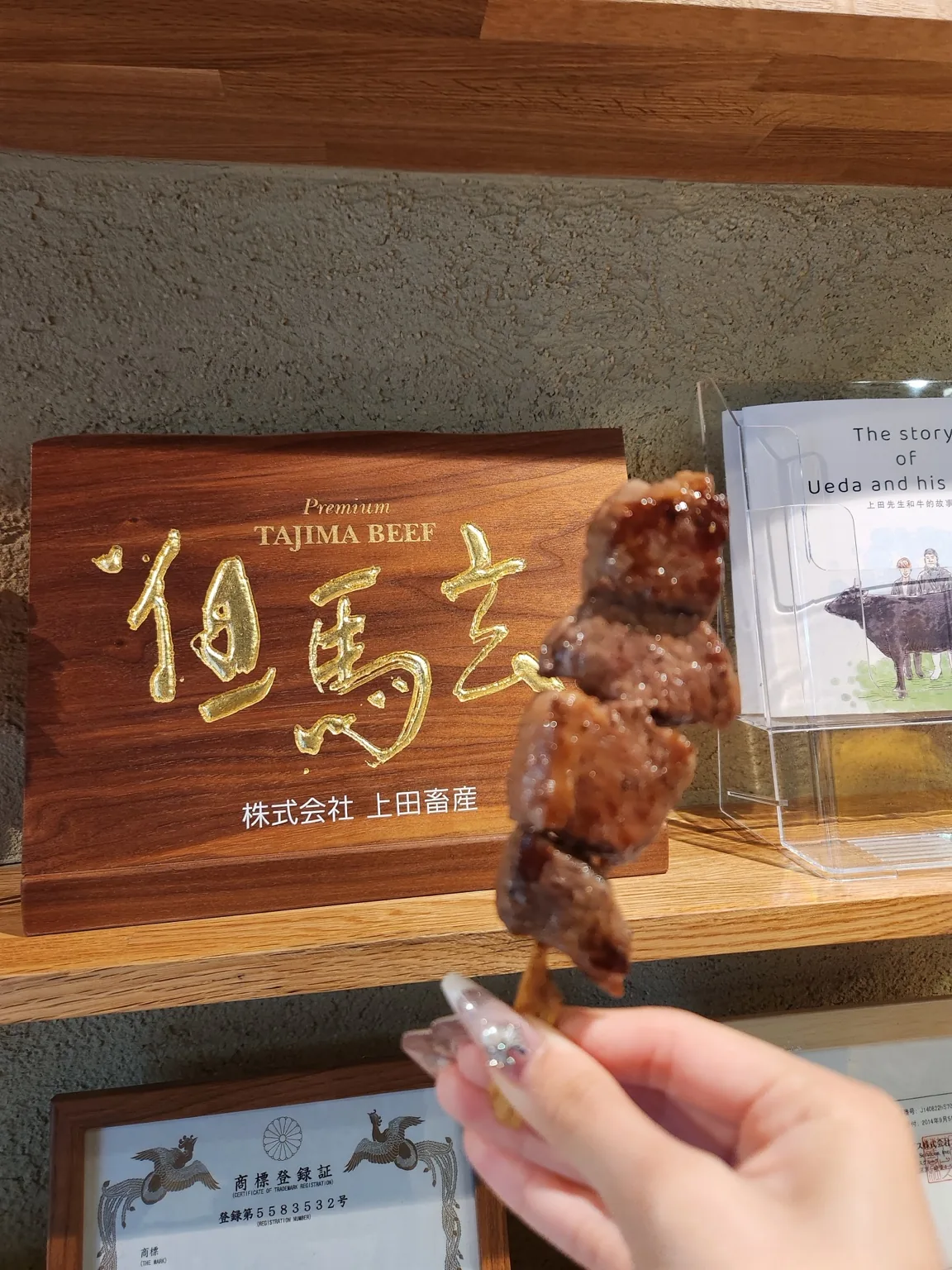
If you don’t want to spend an hour at a restaurant, Kinosaki is also great for casual food hopping.
The compact onsen town has plenty of small shops selling Tajima beef skewers, croquettes, crab snacks, sweets, and drinks, making it easy to eat between public-bath stops.
This approach works particularly well on a day trip.
Instead of committing a large block of time to lunch, grab something small, continue walking, and stop again whenever something catches your eye.
Choose Mikuni if Tajima beef is one of your priorities.
Choose food hopping if you would rather maximize your time for baths, the ropeway, and exploring town.
Around ¥2,000–¥3,000 is a useful flexible estimate for casual food hopping.
Kinosaki Ropeway: See the Onsen Town from Above
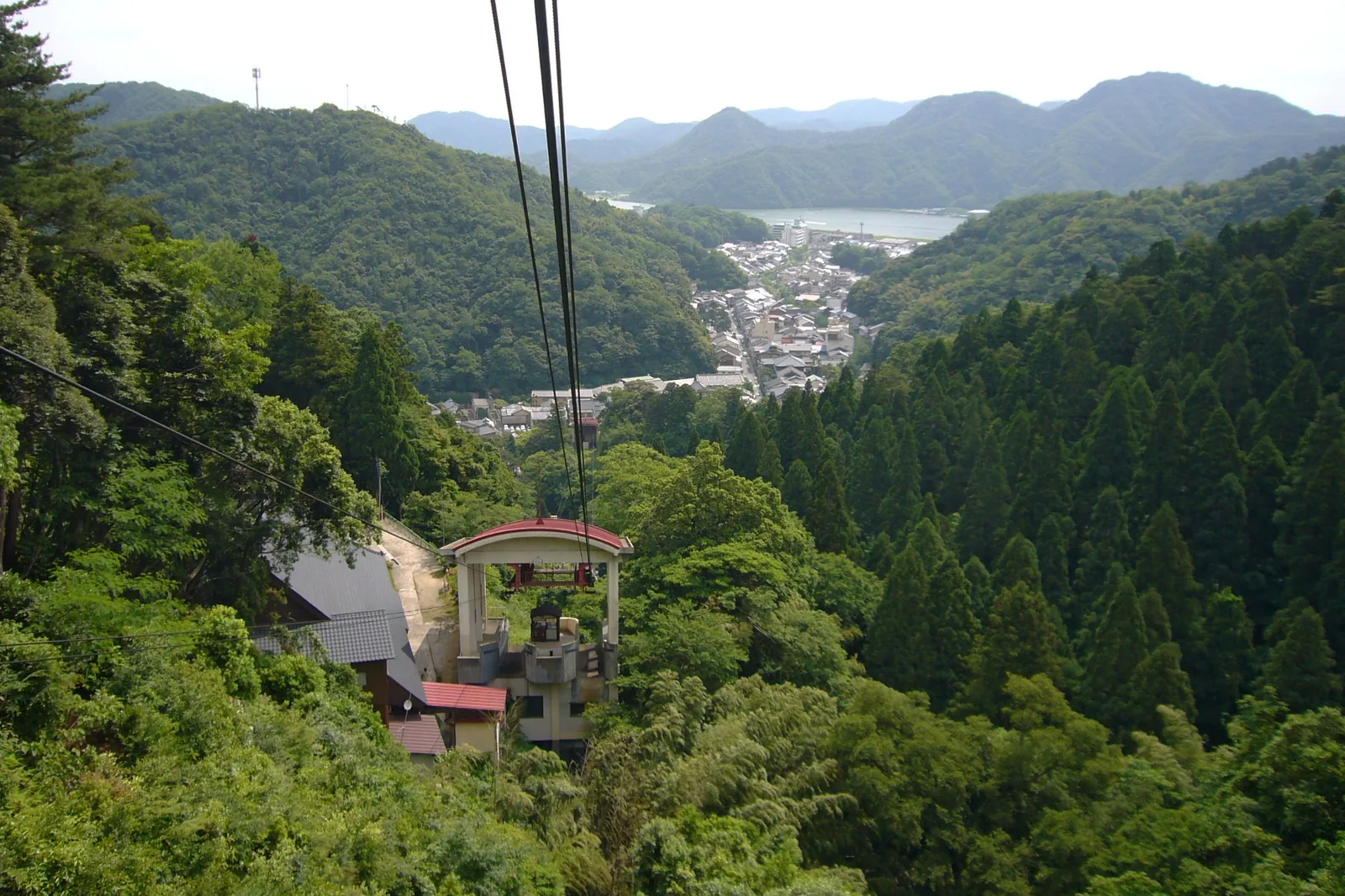
After lunch, head toward the western end of town for the Kinosaki Ropeway.
The ride gives you a different perspective on the valley and makes an easy sightseeing break between onsen visits.
- Summit round trip: ¥1,200 adult
- Onsenji Station round trip: ¥750 adult
- One way to the summit: ¥620 adult
Check current operating information on the
official Kinosaki Ropeway website
.
Onsenji Temple: The Spiritual Side of Kinosaki
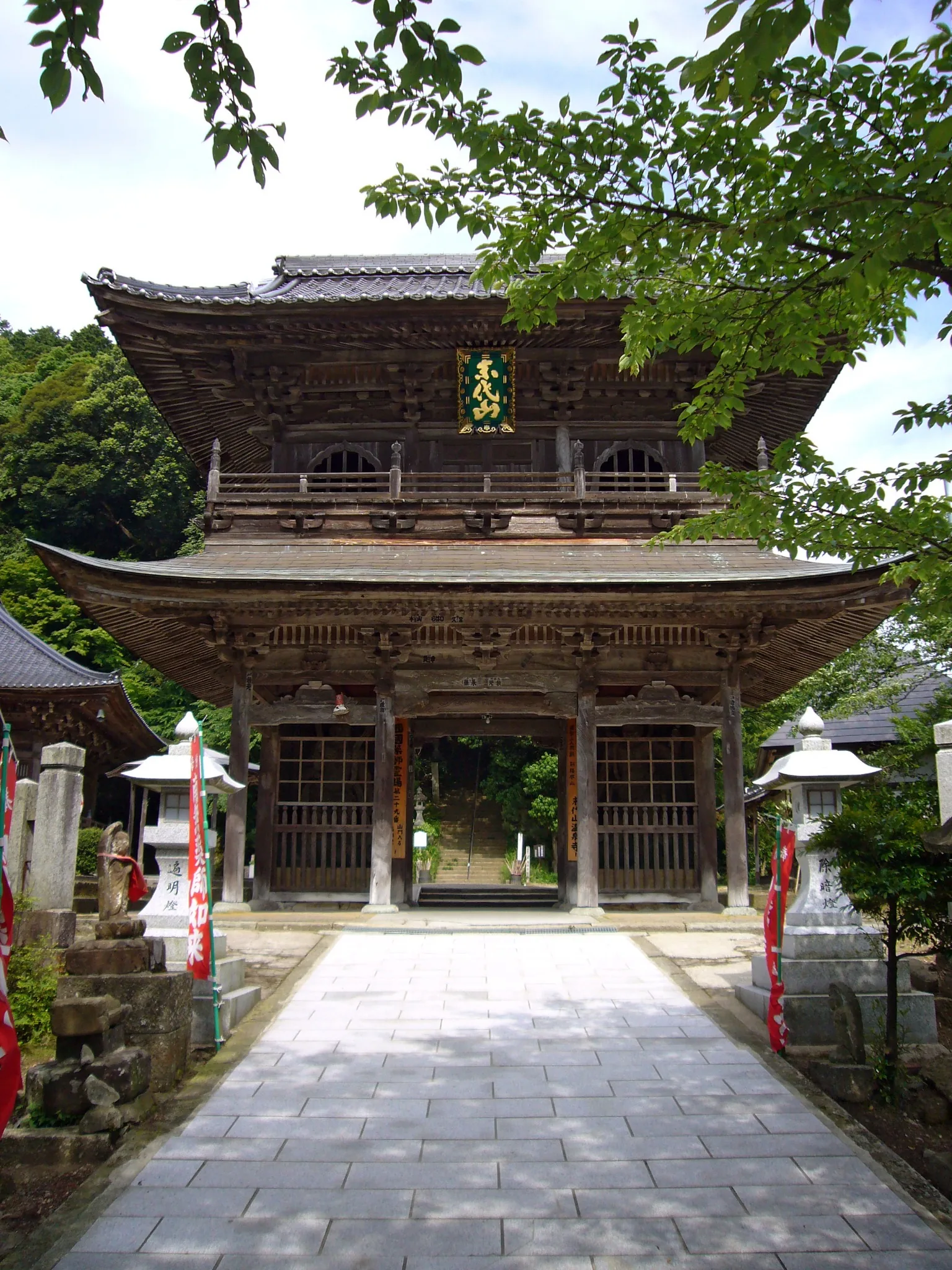
Onsenji is more than an extra stop beside the ropeway.
The temple is closely tied to Kinosaki’s hot-spring history and adds cultural context to a day otherwise centered on bathing and food.
The main temple area can be reached around the ropeway’s middle station, making it practical to combine Onsenji and the summit in the same afternoon.
Ropeway summit round trip + temple: approximately ¥1,500 per adult
Slow Down with a Coffee Break
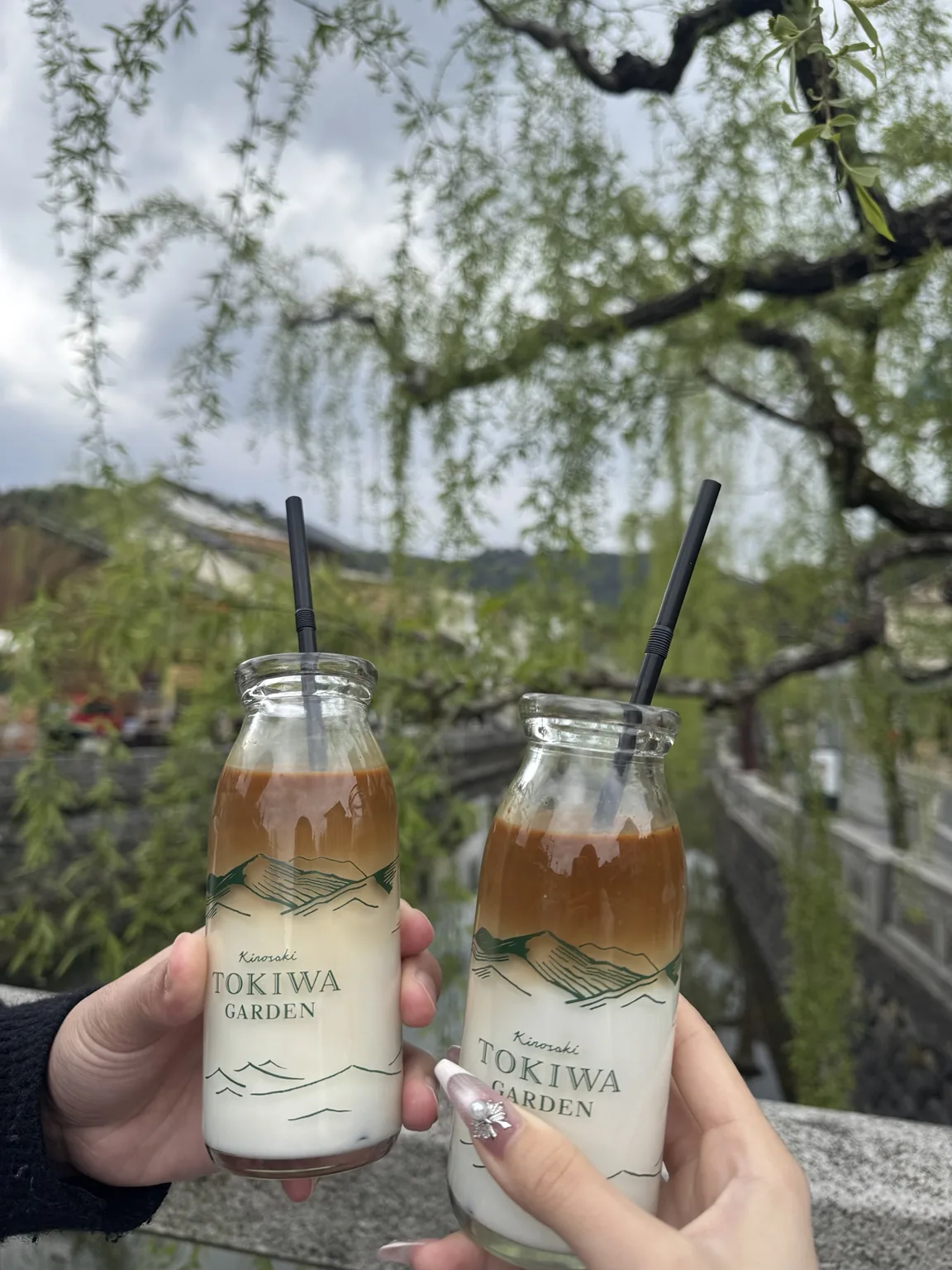
One of the easiest mistakes on a Kinosaki day trip is trying to fill every minute.
The town is compact enough that you do not need to rush continuously between attractions.
Leave a little time for a drink, a sweet, or simply a walk beside the willow-lined river.
This is also a useful buffer before your return train if a second bath feels too rushed.
How Much Does a Kinosaki Onsen Day Trip from Osaka Cost?
Kinosaki is not one of the cheapest day trips from Osaka, mainly because of the long-distance train journey.
A realistic budget depends on your train ticket and how you choose to eat.
| Expense | Typical Cost |
|---|---|
| JR Osaka ↔ Kinosaki Onsen | About ¥12,280 round trip |
| Yumepa | ¥1,500 |
| Ropeway round trip | ¥1,200 |
| Onsenji Temple | ¥300 |
| Tajima beef lunch | About ¥3,500–¥5,000 |
| Coffee / snack | About ¥700–¥1,500 |
Regular JR tickets + sit-down lunch:
About ¥19,500–¥22,000 per person
Food-hopping version:
About ¥18,000–¥20,000 per person
Already holding a Kansai WIDE Area Pass:
Allow roughly ¥5,000–¥8,000 in additional local spending.
Why Stay Overnight in Kinosaki Onsen?
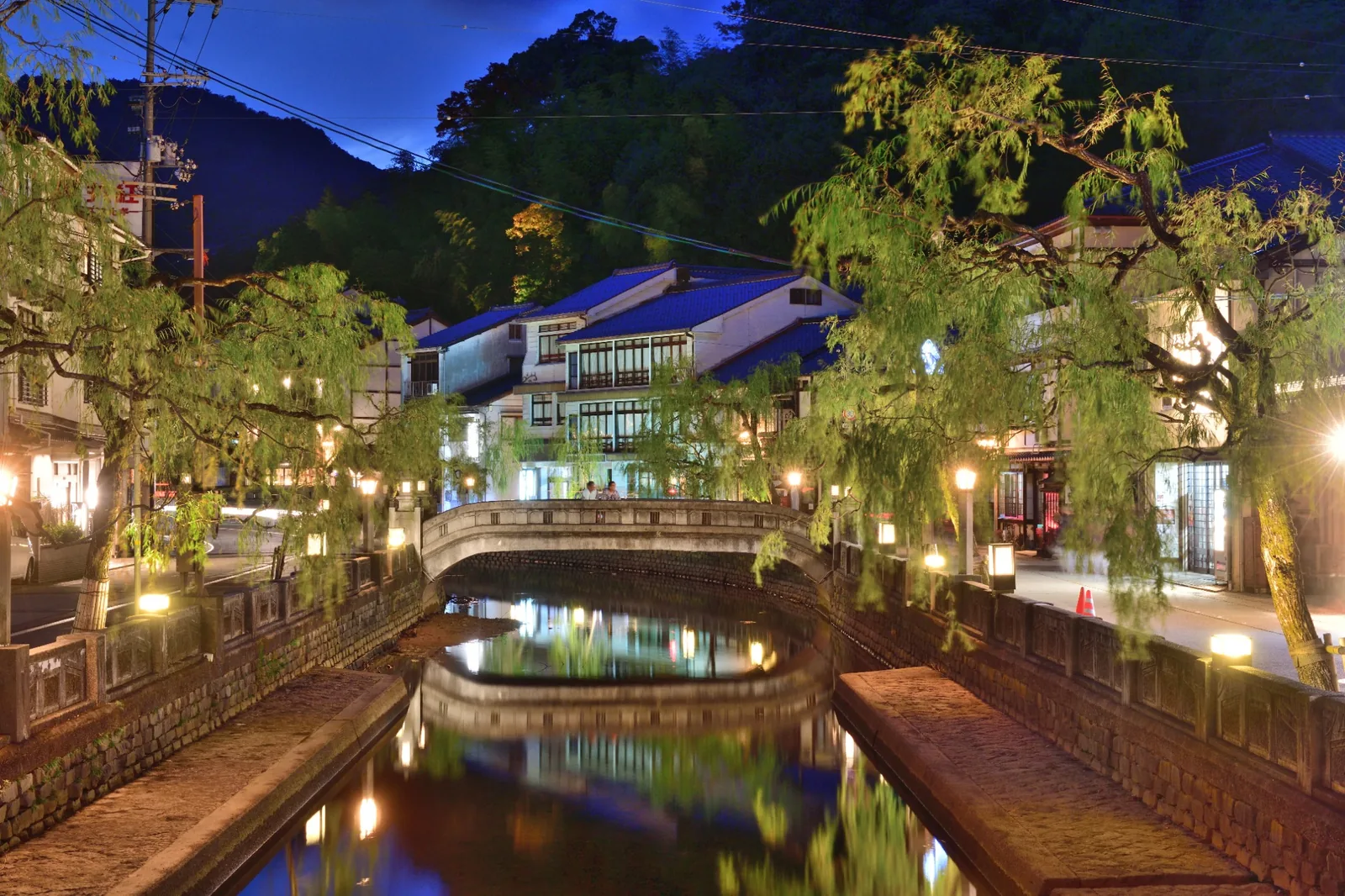
If your schedule and budget allow it, we recommend staying one night.
Kinosaki changes after many day-trippers begin leaving and the streets become quieter.
Ryokan guests walk between the baths in yukata, traditional buildings are illuminated around the river, and there is no need to watch the clock for a train back to Osaka.
What an Overnight Stay Adds
- An evening walk through Kinosaki in yukata
- More time for public-bath hopping
- A traditional ryokan stay
- Japanese dinner or kaiseki, depending on your accommodation plan
- No rush to catch an evening train to Osaka
- The chance to visit an open public bath again the following morning
Guests staying at many Kinosaki ryokan receive a pass for the town’s public baths.
In many cases, this remains valid on the morning of check-out.
The exact expiry time varies by accommodation, so confirm the conditions with your ryokan at check-in.
Where to Stay in Kinosaki Onsen
These three options cover three useful styles: a luxury historic ryokan, a traditional central stay, and a quieter ryokan experience.
Best Luxury Ryokan: Nishimuraya Honkan
Nishimuraya Honkan is the choice for travelers who want the ryokan itself to be one of the highlights of the trip.
It suits travelers looking for a traditional stay rather than simply somewhere to sleep.
Best for:
A special occasion and travelers who want the ryokan to be part of the destination.
Location:
Central Kinosaki, convenient for public-bath hopping.
Consider this if:
You want a higher-end traditional stay.

Best Traditional Stay in the Heart of Kinosaki: Morizuya
Morizuya is a good fit if you want a smaller traditional stay in the onsen town.
Its central location is particularly convenient for travelers who want to step outside and continue exploring on foot.
Best for:
Travelers prioritizing atmosphere and a central location.
Location:
In the heart of the onsen district.
Consider this if:
You want to spend the evening walking around Kinosaki.

Best for a Quiet Ryokan Stay: Onishiya Suishoen
Onishiya Suishoen is worth considering if you would rather stay slightly away from the busiest central streets.
It gives you a quieter base while keeping the onsen town accessible.
Best for:
Couples, slower trips, and travelers who value a quieter setting.
Location:
Outside the busiest central streets of Kinosaki.
Consider this if:
You want to balance bath hopping with time relaxing at your ryokan.

Check exactly what your room plan includes.
Ryokan rates can vary substantially depending on room type, season, and whether dinner and breakfast are included.
1-Night, 2-Day Kinosaki Onsen Itinerary
An overnight trip does not need twice as many attractions.
The point is to spread the experience over more time and enjoy Kinosaki when the town is quieter.
Arrive, Explore & Enjoy Kinosaki at Night
Travel from Osaka, explore the town, then settle into your ryokan for the evening.
Take the Limited Express Kounotori and arrive around late morning or lunchtime.
Enjoy a sit-down Tajima beef lunch or keep things casual with local snacks around town.
Explore the mountain side of Kinosaki without worrying about an early return train.
Confirm dinner time and ask how your accommodation’s public-bath pass works.
Enjoy dinner at your ryokan if it is included in your accommodation plan.
Walk through the illuminated town and visit one or two baths that are open that evening.
Start the Day with a Morning Onsen
The quieter morning atmosphere is one of the strongest reasons to stay overnight.
Choose a bath that opens from 7:00 and is operating that day.
Check your ryokan’s bath-pass validity before heading out.
Return for breakfast if it is included in your stay.
Use the quieter morning for coffee, shopping, photography, or another walk beside the river.
Check your ryokan’s check-out time and exact bath-pass expiry time.
Return by Limited Express Kounotori or continue elsewhere in Kansai.
Yanagi-yu and Mandara-yu normally open at 15:00, so they are not morning-bath options.
Choose from baths opening at 7:00 while also checking weekly closing days and temporary closures.
When Is the Best Time to Visit Kinosaki Onsen?
Kinosaki is enjoyable year-round, but the experience changes noticeably with the seasons.
The best time depends on whether you prioritize comfortable walking weather, winter atmosphere, or fewer crowds.
Best for Comfortable Walking
Mild temperatures make spring especially good for bath hopping, riverside walks, and exploring the town on foot.
Best for a Lively Onsen-Town Atmosphere
Summer brings a more energetic feel to Kinosaki, but the combination of hot weather and hot baths can be tiring.
Best Balance of Weather and Scenery
Cooler temperatures make walking between baths comfortable, while the surrounding mountains add more seasonal color.
Best for the Classic Kinosaki Experience
Cold air, steaming baths, traditional ryokan, and the possibility of snow make winter one of the most atmospheric times to visit.
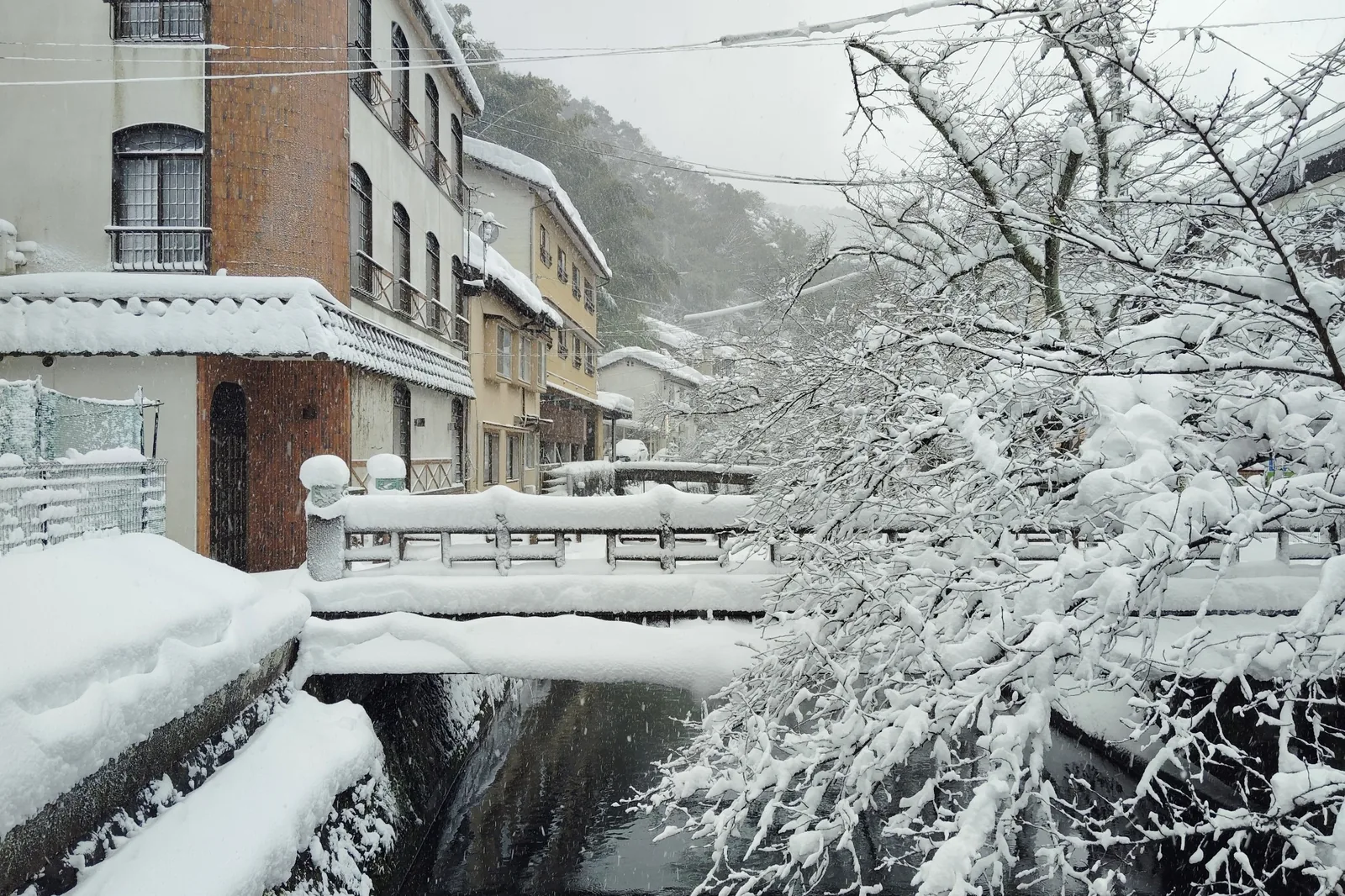
For the most atmospheric Kinosaki experience, choose winter.
For easier walking and a more flexible itinerary, spring or autumn are the safest choices.
Practical Tips for Visiting Kinosaki Onsen
Check the Baths That Morning
Weekly closing days differ and temporary closures occur.
Check the official bath status rather than relying on a fixed route.
Don’t Overplan a Day Trip
One or two baths, lunch, the ropeway/Onsenji, and time walking through town is already a full day.
Reserve Your Train
Having outbound and return Kounotori reservations makes a day trip easier to manage.
Tattoos Are Accepted at the Public Baths
Kinosaki’s public sotoyu allow tattoos.
Private ryokan facilities may have different rules, so ask your accommodation separately.
Pack Light
Kinosaki is easiest to enjoy on foot, so avoid carrying unnecessary luggage around town.
Ask About Your Ryokan Bath Pass
Confirm when guest bath access starts and ends, especially if you want another public bath on check-out morning.
Day Trip or Overnight: Our Recommendation
Kinosaki Onsen is possible as a day trip from Osaka, and it can be a very good one.
Take an early train, choose one or two open public baths, enjoy Tajima beef or casual food hopping, and add the ropeway and Onsenji if your timing allows.
But if Kinosaki is one of the places you are most excited about in Japan, stay overnight.
The town makes more sense when you stop treating the baths as attractions to check off and start treating the evening and following morning as part of the experience.
Choose a day trip if:
You are short on time and want to experience Kinosaki without changing hotels.
Stay overnight if:
You want a ryokan, dinner, the evening townscape, more bath hopping, and a morning onsen before leaving.
If the journey to Kinosaki feels too long for your itinerary, consider
Arima Onsen
for a much closer hot-spring trip from Osaka.
FAQ: Kinosaki Onsen from Osaka
Can you visit Kinosaki Onsen as a day trip from Osaka?
Yes. The Limited Express Kounotori connects Osaka and Kinosaki Onsen in roughly 2.5–3 hours.
Leave early to allow enough time for public baths, food, sightseeing, and a walk around town.
Is it better to stay overnight in Kinosaki?
If your itinerary allows it, staying overnight gives you a ryokan experience, the illuminated evening streets, more time for public baths, and the opportunity for another bath the following morning.
Can day visitors use the public baths in Kinosaki?
Yes. Day visitors can pay individual admission or use the Yumepa day pass for multiple public baths.
Can I visit a public bath the morning after staying in Kinosaki?
Often, yes. Many ryokan guests receive public-bath access that can remain valid the following morning.
Exact validity depends on your accommodation, and individual baths have their own opening hours and closing days.
Are tattoos allowed in Kinosaki Onsen’s public baths?
Yes. Kinosaki’s public sotoyu allow tattoos.
Private ryokan bathing facilities may have separate policies.
Is the Kansai WIDE Area Pass worth it for Kinosaki?
It can be excellent value for eligible travelers.
The five-day pass costs ¥12,000, while a regular reserved-seat Osaka–Kinosaki round trip is approximately ¥12,280.
It becomes even more useful if you make other covered journeys during the pass period.
Do Kinosaki’s public baths close on different days?
Yes. The baths have different regular closing days, and temporary maintenance or renovation closures can occur.
Check the official bath status on the day of your visit.