Most visitors use Osaka as a base for Kyoto, Nara, or Kobe. Sakai offers a more local day trip from Osaka just south of the city center, with one experience that changes how the ancient landscape makes sense: a tethered balloon flight above the Mozu Kofun Group.
From the Osaka Sakai Balloon, the forest-covered burial mounds become visible as deliberate shapes rather than ordinary green hills. Back on the ground, the same day can connect Sen no Rikyu’s tea culture, Sakai’s professional knife-making tradition, and a ride through neighborhood streets on the Hankai Tram.
This guide is designed for repeat visitors who value cultural context and practical planning. Allow at least half a day for the kofun area, or follow the full-day order below to combine the balloon, tea, knives, and tram without turning the trip into a race.
Table of Contents
Sakai at a Glance
Plan around the balloon, but keep a fallback. Check the official operating status on the morning of your visit. If flights are suspended, use the visitor center’s 8K aerial presentation, the worship area, Daisen Park, and Sakai City Museum as the weather-safe alternative.
One Day in Sakai: Balloon, Kofun, Tea, Knives and Tram
09:00
Visitor Center First
Learn the aerial layout before the balloon begins operating.
10:00
Reserved Balloon Flight
Use a morning slot when possible, then keep later plans flexible in case of weather delays.
11:00
Worship Area and Museum
See the mound from ground level and choose a focused museum visit if your schedule allows.
12:30
Lunch and Transfer to Shukuin
Keep lunch flexible, then move from the Mozu area to Sakai’s old town.
14:00
Rikyu and Akiko
Allow about one hour for the main exhibitions and tea-culture context.
15:30
Sakai Denshokan
See the knife museum and leave enough time for questions if you intend to purchase a blade.
16:45
Return on the Hankai Tram
Ride toward Sumiyoshi Taisha or Tennoji and adjust the endpoint to match your accommodation.
On weekends and public holidays from March 20, 2026 to March 28, 2027, a free World Heritage and Balloon shuttle bus is scheduled to link Daisen Park, Sakai Plaza of Rikyu and Akiko, and the old-port area. Treat this as a useful current service rather than a permanent part of the route, and confirm the latest timetable before relying on it.
Why Visit Sakai?
Sakai is one of the easiest places near central Osaka to connect several periods of Japanese history in a single day. The Mozu Kofun Group introduces the political scale of ancient Japan. The old town explains how an international trading city helped shape tea culture. The knife district shows how specialized craftsmanship continues as a working industry rather than a museum-only tradition.
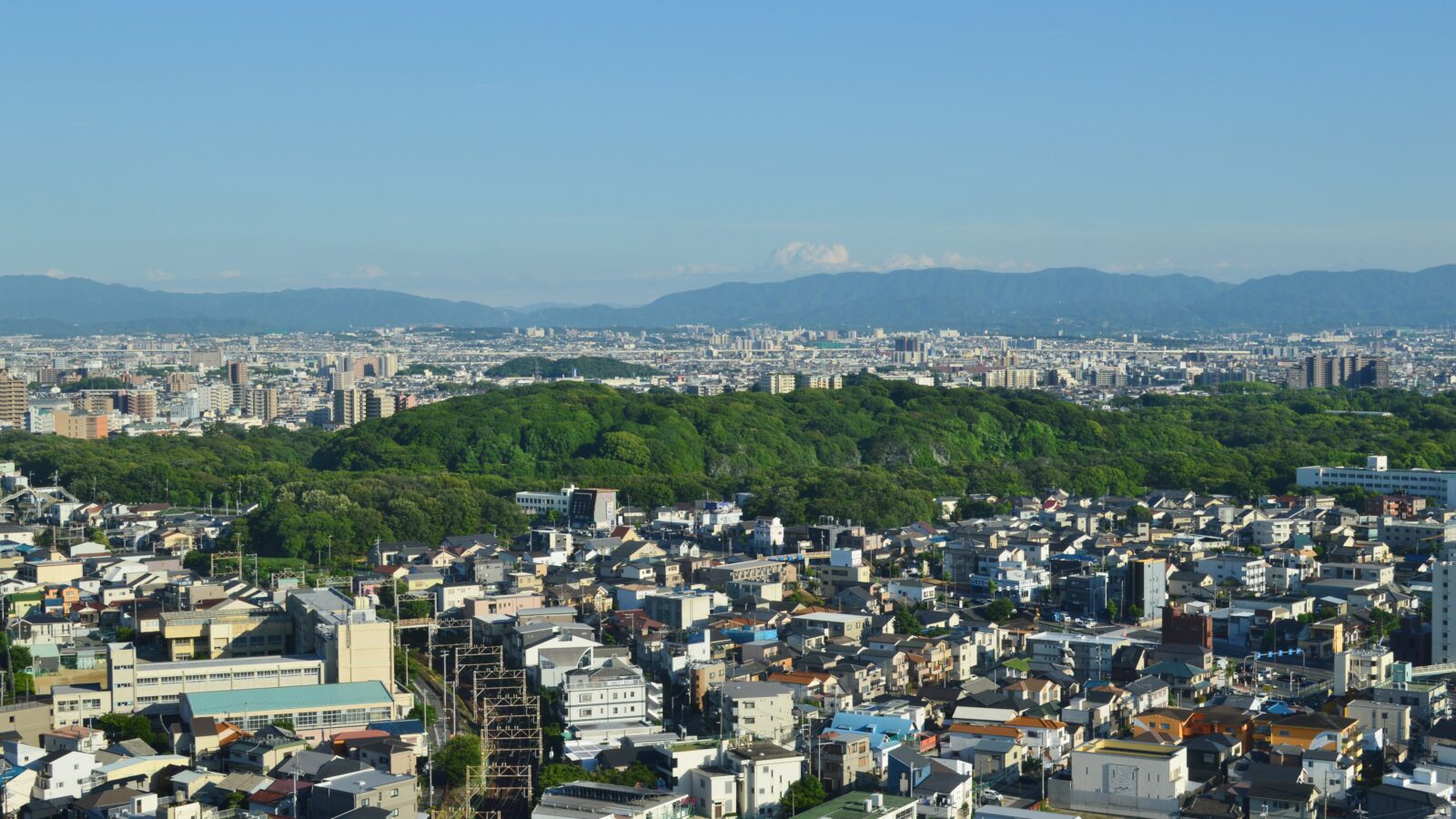
The balloon gives the destination a stronger visual center. From ground level, Nintoku-tenno-ryo Kofun appears mainly as a broad moat and a dense wall of trees. That view is still meaningful, but it does not reveal the overall form. A tethered ascent to as high as about 100 meters allows visitors to understand the size, shape, surrounding mounds, and relationship between the ancient landscape and modern Sakai.
The city also feels different from central Osaka. Daisen Park is open and green, while the Hankai Tram runs through ordinary streets rather than a polished entertainment district. Sakai is not a replacement for Osaka’s famous sights. It is the next layer for travelers who already know them and want a day with more context, slower movement, and local texture.
What to See in Sakai
1. See the Mozu Kofun Group from the Osaka Sakai Balloon
The Osaka Sakai Balloon began operating in October 2025 from Daisen Park, immediately south of Nintoku-tenno-ryo Kofun. It is a tethered helium balloon rather than a free-flying sightseeing balloon. The gondola remains connected to the ground, rises quietly, and provides a 360-degree viewing experience from a donut-shaped platform.
The official experience report describes an approximately 15-minute flight that can reach around 100 meters, depending on wind and operating conditions. From that height, the immense forested outline of Nintoku-tenno-ryo becomes easier to read, and several other mounds can be identified across the city. The value is not only the photo. It is the moment when a landscape that looked like scattered patches of greenery becomes an organized group of ancient monuments.
Operating hours are currently 10:00–18:00, with final reception at 17:45. The operator says the process from being called, watching the safety and history guidance, boarding, and completing the experience takes about 30 minutes. Reservations open at midnight ten days before the visit date. Walk-up reception is possible when space is available, but booked guests receive priority.
The post below is from the official Osaka Sakai Balloon Instagram account and shows the actual balloon experience. It is a standard Instagram post, not a Reel.
Book, check operations, and find the entrance: Verify the latest status before traveling, even when you have a reservation.
2. Learn the Aerial Layout, Then Visit Nintoku-tenno-ryo at Ground Level
The Mozu Mounded Tombs Visitor Center is the best first stop before a flight. It is about a five-minute walk west of JR Mozu Station, admission is free, and the current opening hours are 09:00–18:00. Its 8K projection uses wall and floor surfaces to show the burial mounds from above, giving you names and shapes to look for once the balloon rises.
After the flight, walk to the formal worship area on the southern side of Nintoku-tenno-ryo. Visitors cannot enter the protected mound. From the public approach, you see the moat, the forest-covered mound, and the ceremonial axis rather than a complete keyhole outline. This is not a weaker version of the aerial view; it is a different experience. The balloon explains the scale, while the worship area communicates distance, protection, and the site’s continuing cultural status.
Sakai City Museum inside Daisen Park is the optional deeper stop. Its exhibits connect ancient Sakai to the medieval trading city, tea culture, and traditional industry. General admission is normally ¥200, and it is usually open 09:30–17:15 with last entry at 16:30. Travelers following a full-day plan should include it; travelers with a fixed balloon time can keep it as a flexible add-on.
Official PR video for the Mozu Mounded Tombs Visitor Center, linked by Sakai City and Sakai tourism information.
Open the kofun-area stops in Google Maps:
3. Connect Sakai with Sen no Rikyu and Tea Culture
Sakai Plaza of Rikyu and Akiko explains why the city matters to the history of tea. Sen no Rikyu was born in Sakai, and the facility presents him alongside the poet Akiko Yosano, another major cultural figure from the city. The exhibitions are more useful than a generic tea-room photo because they connect objects and aesthetics to Sakai’s history as a prosperous trading center.
The Sen no Rikyu Tea Hall introduces tea history and culture, while the site also includes a recreation of the small Tai-an tea room associated with Rikyu. The main exhibitions are currently open 09:00–18:00, with adult admission of ¥300. The facility is one minute on foot from Shukuin stop on the Hankai Line, making it the natural first stop in the old-town half of the day.
Do not assume every tea experience shown in older media is available on your date. The official tourism listing currently marks the standard seated tea service as temporarily closed. Treat the exhibitions as the guaranteed core and check the facility website for reservations, special viewings, or restored tea-service options before visiting.
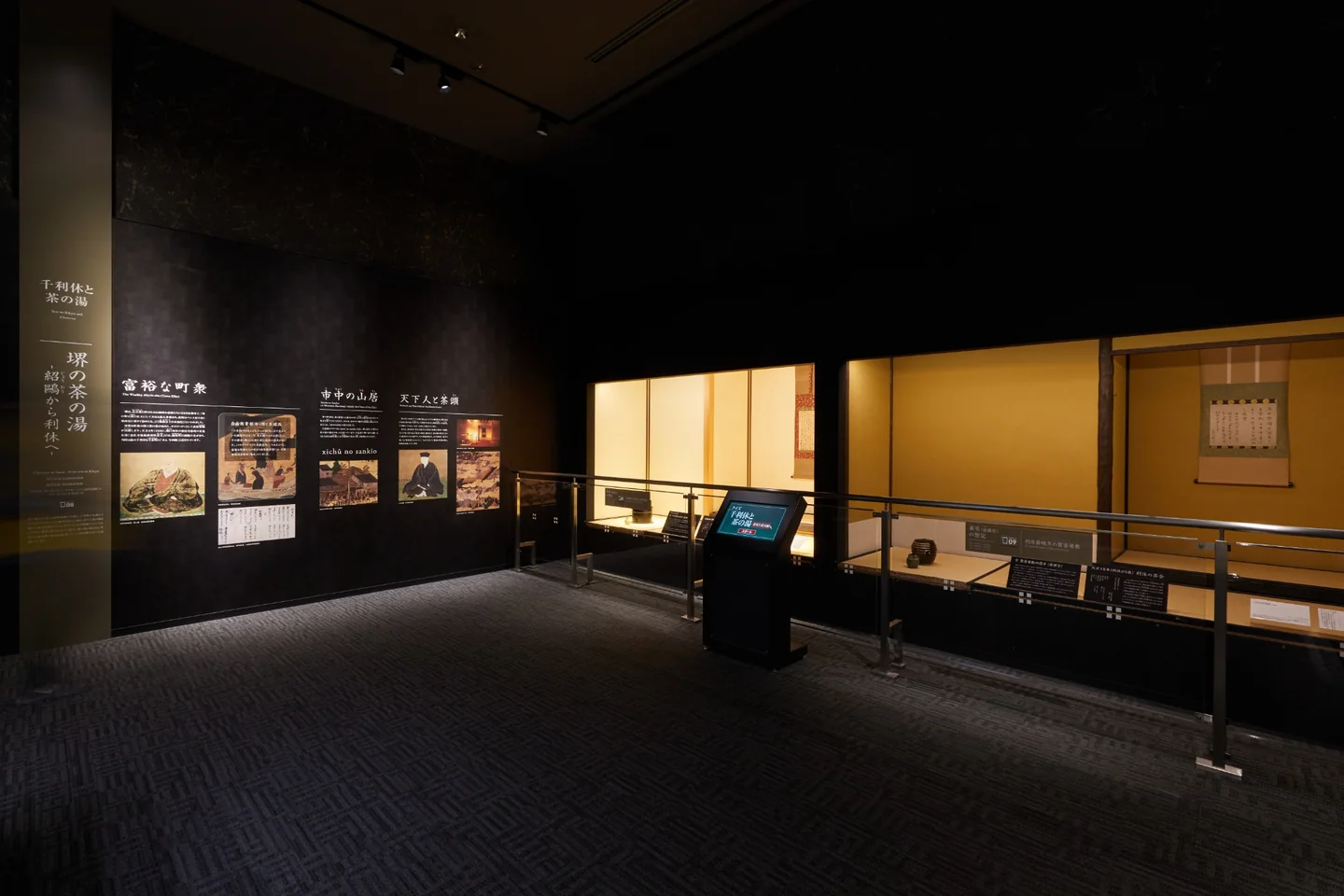
Photo courtesy of Osaka Convention & Tourism Bureau.
Tea-culture stop: The facility is beside Shukuin tram stop.
4. See Why Sakai Knives Are a Living Craft
Sakai Traditional Crafts Museum, commonly called Sakai Denshokan, is the most practical introduction to the city’s craft industries. Its Sakai Knife Museum “Cut” presents the history, production techniques, and tools behind Sakai blades, while the first-floor shop displays knives for different ingredients, materials, and professional uses.
The key idea is specialization. Traditional Sakai knife production is often divided among forging, sharpening, and handle attachment, with different craftspeople responsible for different stages. That system helps explain why a finished kitchen knife represents a network of skills rather than one maker simply producing the whole object alone.
Admission is free, and the current opening hours are 10:00–17:00. The museum is normally closed on the third Tuesday of the month and during the year-end period. If you plan to buy a knife, describe how you cook rather than choosing only by appearance. Ask about steel type, rust care, sharpening, handedness, blade length, packaging, and airline or destination-country transport rules.
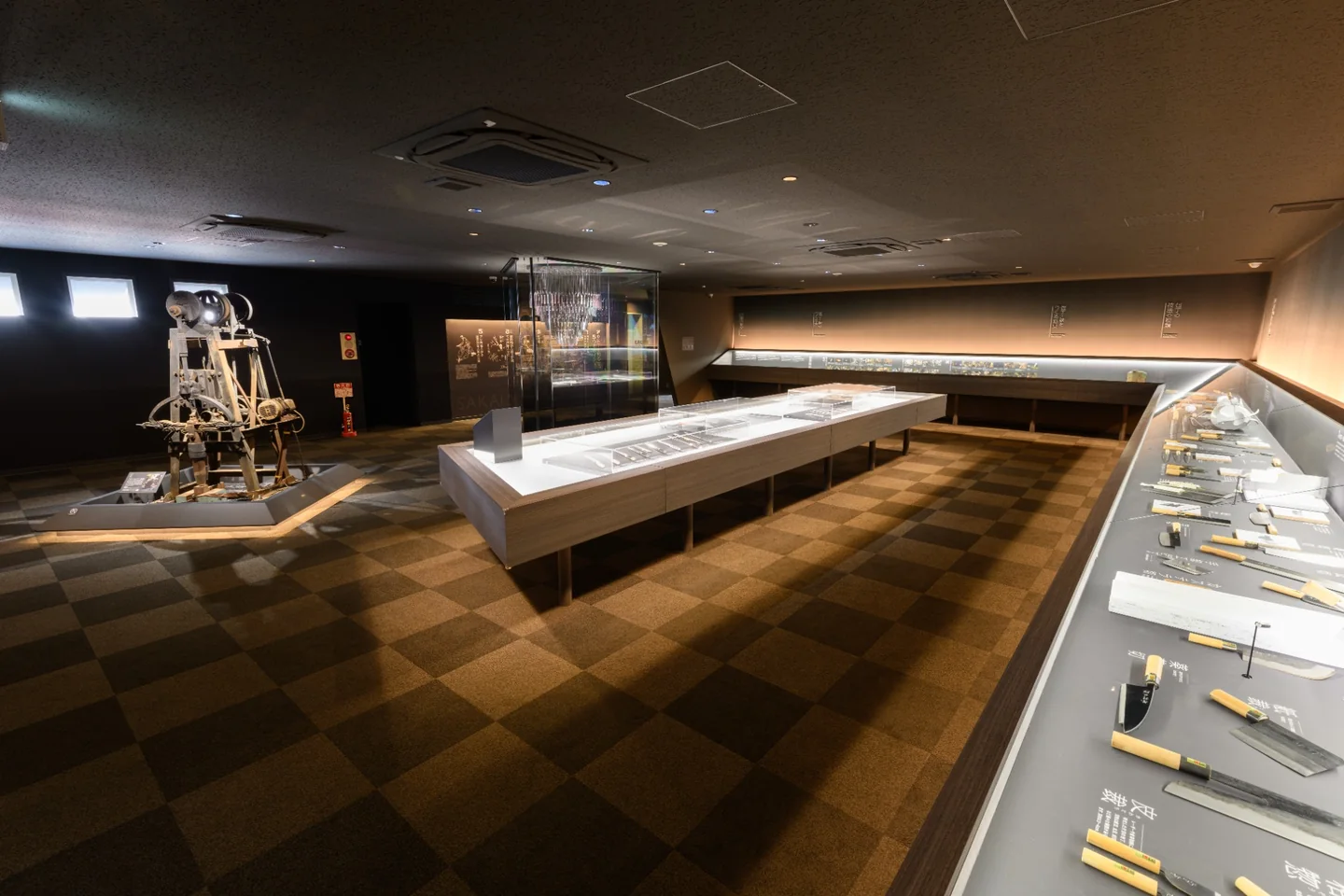
Photo courtesy of Osaka Convention & Tourism Bureau.
Knife and craft stop: Use Myokokujimae on the Hankai Line for the shortest tram-side approach.
5. Finish with a Ride on the Hankai Tram
The Hankai Tram turns the return journey into part of the destination. Myokokujimae is convenient for Sakai Denshokan, while Shukuin serves Sakai Plaza of Rikyu and Akiko. From either stop, the tram runs north through older streets toward Sumiyoshi and Tennoji.
The experience is ordinary in the best way. The tracks pass close to homes and small businesses, and the tram remains part of daily transport rather than operating only for tourists. The current flat fare is ¥240 for adults and ¥120 for children. Riders normally board through the rear door and leave through the front, paying or tapping a transport IC card according to the operator’s instructions.
Use the tram as the final chapter of the day rather than an isolated attraction. After looking at ancient political power, tea aesthetics, and workshop craftsmanship, the streetcar brings you back through the lived-in city that grew around those histories.
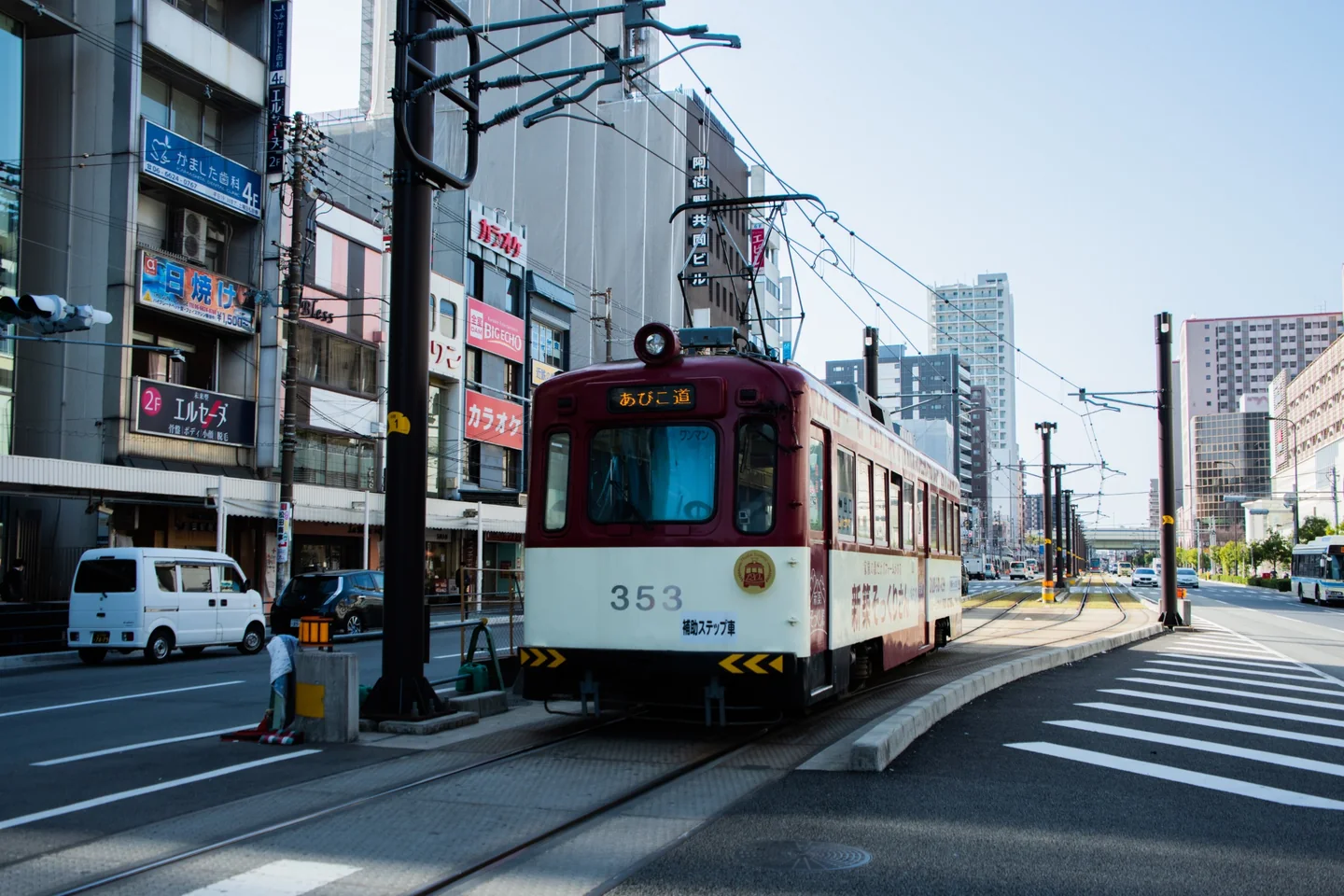
Photo courtesy of Osaka Convention & Tourism Bureau.
Hankai Tram map points: Open the stop nearest each old-town highlight.
Recommended 90-Minute Kofun Route
This compact route makes the balloon the central experience while adding enough context to understand what you see. It assumes a confirmed reservation and smooth check-in. Allow up to two hours when there is a queue, when you want more time in the visitor center, or when operations pause temporarily.
0:00–0:15
1. Mozu Mounded Tombs Visitor Center
Watch the aerial introduction and identify Nintoku-tenno-ryo and nearby mounds before going outside.
0:15–0:30
2. Walk Through Daisen Park
Head toward the balloon reception area and use the park landscape to orient yourself.
0:30–1:00
3. Guidance and Balloon Experience
Check in, follow the safety and history guidance, and complete the tethered flight.
1:00–1:15
4. Walk Toward the Worship Area
Compare the ground-level forest and moat with the form you saw from above.
1:15–1:30
5. Nintoku-tenno-ryo Worship Area
Finish with a quiet view of the formal approach and protected burial landscape.
If the balloon is cancelled: Spend 20–30 minutes at the visitor center, walk to the worship area, continue through Daisen Park, and add Sakai City Museum. You will lose the live aerial view, but the day still works.
Festivals and Seasonal Events
Sakai Festival and Grand Tea Ceremony
Sakai’s major autumn festival is normally associated with the third Sunday of October and the preceding Saturday, with parades, performances, and tea-related events forming part of the wider program. Detailed dates, venues, road closures, and ticketed activities can change each year. Check the official city or tourism schedule before building the trip around the festival.
Sakai Knife Festival
The 2026 Sakai Knife Festival was held on April 11–12 at the Sakai City Industrial Promotion Center near Nakamozu, not at Sakai Denshokan. It included knife sales, sharpening, craft demonstrations, and related activities. That edition has ended, so use it as a guide to the type of event rather than an upcoming date. Check the next official announcement before publishing future-year dates.
Weather, Greenery, and Balloon Visibility
Spring and autumn offer the best balance of comfortable walking and clearer views. Summer brings dense green scenery but also heat, humidity, and a higher risk of weather-related disruption. Winter can offer crisp visibility, though the open-air balloon experience may feel colder at altitude. Cherry-blossom season makes Daisen Park attractive, but crowds and wind still matter more than the calendar when planning a flight.
How to Get to Sakai
The kofun area and the old town use different stations. Start at JR Mozu for the visitor center, balloon, worship area, and Daisen Park. Use Shukuin or Myokokujimae for tea culture, knives, and the Hankai Tram.
From Tennoji
Tennoji to the Kofun Area
Tennoji Station
↓ JR Hanwa Line local train
JR Mozu Station
↓ Walk west
Visitor Center and Daisen Park
Approximately 20–30 minutes, depending on the train
From Namba
Namba to the Kofun Area
Nankai Namba Station
↓ Nankai Koya Line
Mikunigaoka Station
↓ Transfer to JR Hanwa local train
JR Mozu Station
Official balloon access guidance estimates about 20 minutes, excluding transfer time
From Umeda
Osaka Station to the Kofun Area
Osaka Station
↓ JR to Tennoji
Tennoji Station
↓ JR Hanwa Line local train
JR Mozu Station
Allow around 45–60 minutes with transfers
From Old Sakai
Shukuin to the Knife Museum
Shukuin Stop
↓ Hankai Tram
Myokokujimae Stop
↓ Short walk
Sakai Denshokan
Use the tram for the old-town section, not the balloon transfer
Important: Only local trains stop at JR Mozu Station. Rapid and other faster services may pass through. Check the stopping pattern before boarding.
Google Maps quick links for the day:
Travel times are approximate. Check a current transit app for schedules, fares, platform changes, and service information.
Best Time to Visit and Practical Tips
Reserve a morning balloon slot when possible. Morning conditions are not guaranteed, but an early slot leaves more time to wait, switch to the fallback route, or rearrange the old-town section if operations pause.
Check operations on the day, not only the night before. The operator states that strong wind, rain, and lightning can stop flights. The official site and information line provide the latest status, generally updated around the start of the operating day.
Use the visitor center before the balloon. Fifteen focused minutes with the map and aerial images will help you identify what you are looking at from the gondola. Without that context, the city view is impressive but harder to interpret.
Carry only manageable items. Small bags and cameras are subject to operating rules, and items should not be taken in and out during the flight. Large luggage can be left at designated areas or stored through nearby services; confirm the current arrangement.
Keep museums as flexible blocks. Sakai City Museum is normally closed on Mondays, while Rikyu and Akiko and Sakai Denshokan normally close on the third Tuesday. Do not assume the same closure pattern across the city.
Ask before photographing craft demonstrations or shop interiors. Public exhibitions, retail areas, and working craft spaces may have different rules.
Plan knife transport before purchase. Keep the original packaging and receipt. Check airline carry-on and checked-baggage rules, as well as restrictions in your destination country.
Accessibility and Visitor Etiquette
The balloon operator states that wheelchair users can board with assistance from ground staff and may be asked to transfer to a dedicated wheelchair. Contact the operator or speak to staff at reception about individual requirements. The official guidance also states that people with heart conditions, severe fear of heights, pregnancy, or any condition staff judge unsafe may not be permitted to board.
The wider day still includes outdoor paths and transfers between rail, tram, and museum facilities. Sakai Plaza of Rikyu and Akiko lists accessible toilets, wheelchair loans, tactile paving, and disabled parking. Travelers with limited stamina should confirm elevator routes and consider reducing the day to the kofun area plus one old-town stop.
The kofun are protected burial sites. Stay on public paths, do not attempt to enter restricted areas, and keep the formal worship approach calm. Inside tea spaces, follow staff instructions and avoid touching displays. At the knife museum or shop, handle blades only when invited and under staff guidance.
Frequently Asked Questions
Quick answers for planning a Sakai day trip from Osaka.
Is the Osaka Sakai Balloon worth the price?
For visitors whose main reason for coming is the kofun, it is the strongest visual experience in the area because it reveals shapes and scale that are difficult to understand from ground level. The value is lower when visibility is poor, so check conditions and keep a flexible schedule.
How long should I allow for the balloon and kofun area?
Allow at least 90 minutes for the visitor center, balloon process, park walk, and worship area. Two hours is safer when there is waiting time or when you want a longer museum visit.
Can I see the complete keyhole shape from the ground?
No. The worship area mainly shows the moat, trees, and ceremonial approach. The balloon and visitor center provide the clearest understanding of the overall shape.
What happens if the balloon is cancelled?
Use the visitor center’s aerial presentation, visit the worship area, walk through Daisen Park, and add Sakai City Museum. Reservations can still be cancelled through the official booking system; check the current operator rules.
Can I buy a Japanese kitchen knife in Sakai?
Yes. Sakai Denshokan sells a range of knives and sharpening products. Ask staff about the blade’s intended use, maintenance, sharpening, packaging, and international transport.
Can I combine Sakai with Sumiyoshi Taisha?
Yes. The Hankai Tram links old Sakai with the Sumiyoshi area. Add the shrine only when you are comfortable with a long day, or make it a separate southern-Osaka outing for a slower pace.
Plan Your Trip
Sakai now works best as a destination with a clear main event. Reserve the balloon first, build the visitor center and ground-level kofun route around that time, then use the afternoon for tea, knives, and the tram. This order keeps the history understandable while protecting the day from unnecessary backtracking.
Continue planning Osaka:
For a short visit, do the 90-minute kofun route and return to Osaka. For a full day, finish at Sakai Denshokan and ride the Hankai Tram north. The result is a local journey that moves from ancient monumental power to tea aesthetics, working craft, and everyday streets.
Official Information Sources
- Osaka Sakai Balloon — Official Website
- Osaka Sakai Balloon — Prices and Booking Guidance
- Osaka Sakai Balloon — Official FAQ and Operating Conditions
- Official Osaka Sakai Balloon Experience Report — Sakai Tourism
- Mozu Mounded Tombs Visitor Center — Sakai Tourism
- Sakai City Museum — Sakai Tourism
- Sakai Plaza of Rikyu and Akiko — Sakai Tourism
- Sakai Denshokan — Sakai Tourism
- Hankai Tram — Official Riding Guide
- 2026 Sakai Knife Festival — Sakai City
Balloon prices, hours, reservation rules, and operating conditions last verified: July 20, 2026
Facility and admission information last verified: July 20, 2026
Transportation and festival information last verified: July 20, 2026
Last updated: July 2026