Introduction
Osaka has subways, JR trains, private railways, streetcars and buses. The map looks dense because several companies operate in the same city, sometimes with stations that have similar names. You do not need to memorize the entire network.
For most visitors, an IC card and Google Maps are all you need. Use Osaka Metro for central sightseeing, JR for the Osaka Loop Line and Universal Studios Japan, and private railways when they provide a more direct route to places such as Sumiyoshi Taisha, Sakai, Kyoto, Kobe or Nara.
The simple answer: Use an IC card for everyday journeys. Consider a transport pass only on a day when you expect to take several eligible rides on the same network.
Osaka Transportation at a Glance
| Transport | Best used for |
|---|---|
| Osaka Metro | Namba, Umeda, Tennoji, Osaka Castle and central Osaka |
| JR | Osaka Station, USJ, the Osaka Loop Line, Kyoto and Kobe |
| Nankai Railway | Namba, Sumiyoshi Taisha, Sakai and Kansai Airport |
| Hankyu Railway | Travel from Umeda toward Kyoto or Kobe |
| Hanshin Railway | Travel from Umeda or Namba toward Kobe |
| Kintetsu Railway | Travel from Namba or Osaka-Abenobashi toward Nara |
| Keihan Railway | Travel toward Kyoto from Kyobashi, Temmabashi and eastern central Osaka |
| Hankai Tramway | A local journey through Sumiyoshi and old Sakai |
| Osaka City Bus | Short connections to places that are not close to a railway station |
Which Transport Should You Use in Osaka?
Osaka Metro — Best for Central Osaka
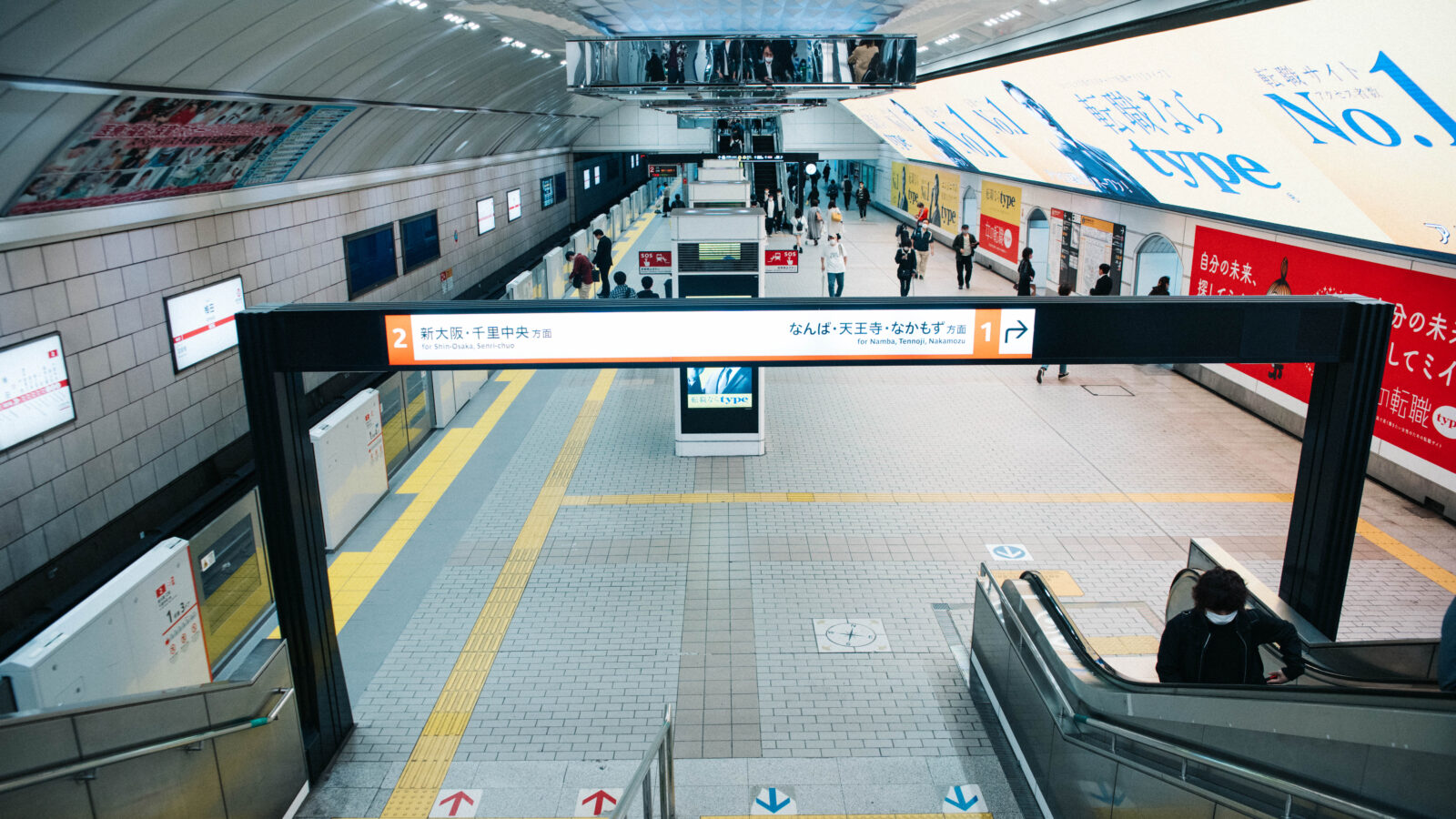
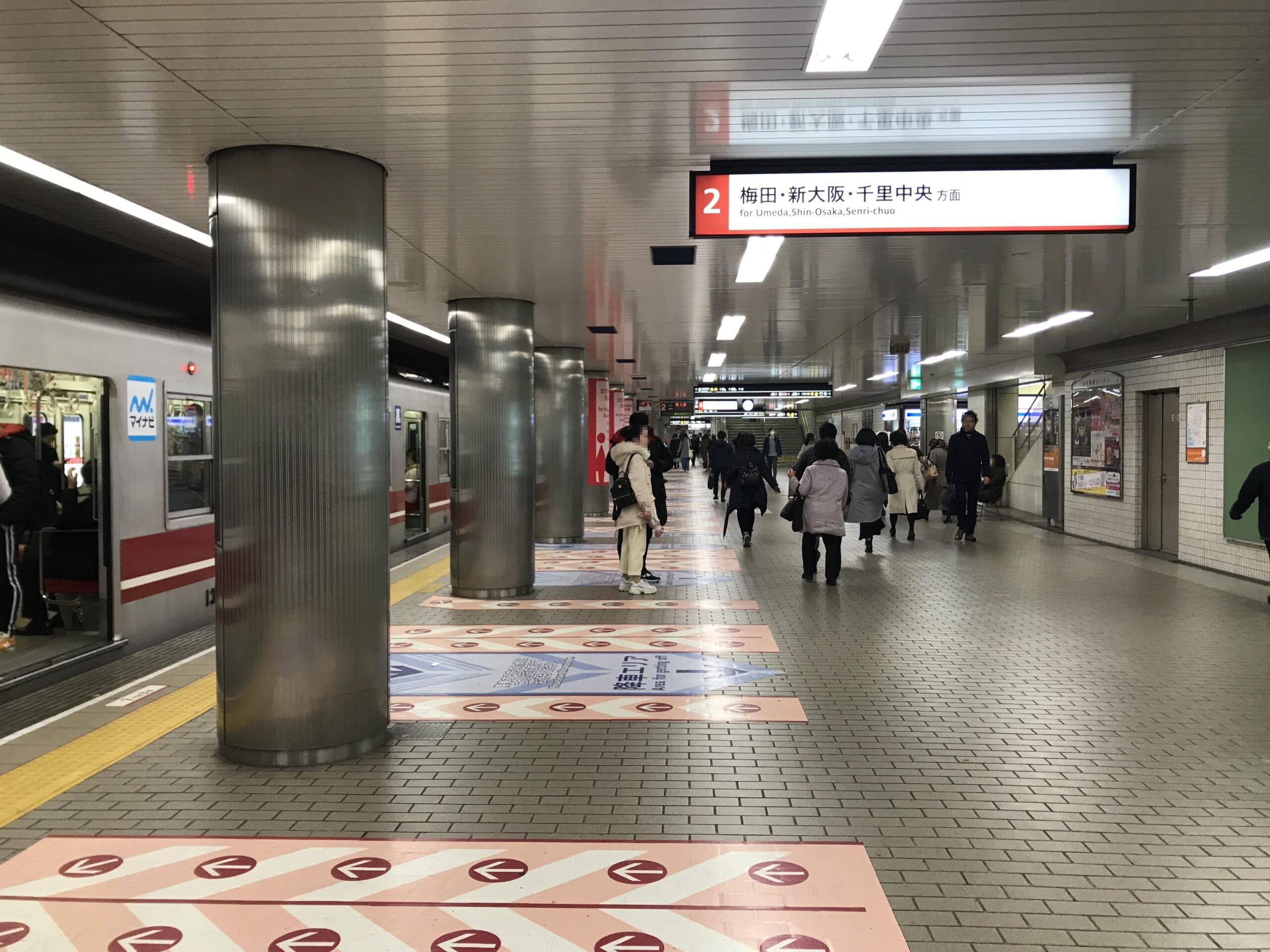
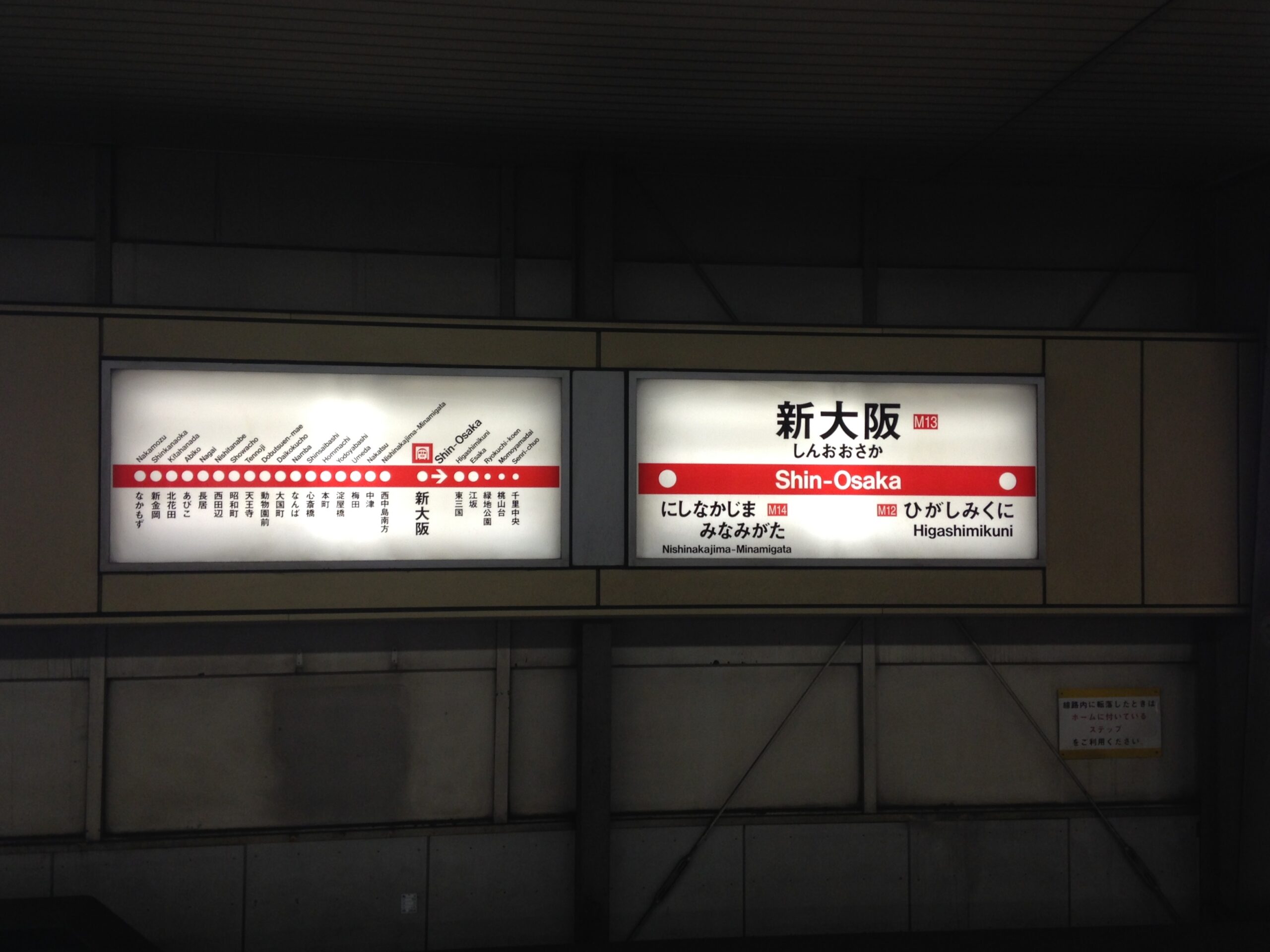
Osaka Metro is the simplest choice for many trips within central Osaka. The most important line for visitors is the red Midosuji Line, which connects Shin-Osaka, Umeda, Shinsaibashi, Namba and Tennoji. If you learn only one Osaka subway line before arriving, make it this one.
The Midosuji Line is especially useful because it links the city’s two major downtown areas: Kita around Osaka and Umeda, and Minami around Shinsaibashi and Namba. It also connects directly with Shin-Osaka, where the Tokaido and Sanyo Shinkansen stop.
Other Osaka Metro lines become useful for specific places. The Tanimachi Line can help with Osaka Castle and Higashi-Umeda. The Chuo Line serves the bay area and Yumeshima. The Sakaisuji Line connects central neighborhoods with parts of the Hankyu network. You do not need to study these in advance; let your navigation app choose them when they make sense.
JR — Best for the Osaka Loop Line and USJ
JR is the natural choice for Osaka Station, Tennoji, Osaka Castle Park, Universal Studios Japan and many longer trips beyond Osaka.
The Osaka Loop Line circles the central part of the city and serves major stations such as Osaka, Kyobashi, Tsuruhashi, Tennoji and Shin-Imamiya. It is useful, but do not assume that every train simply continues around the loop forever. Some services join other JR lines or have different stopping patterns. Check the destination shown in Google Maps and on the platform display.
For Universal Studios Japan, use JR and change to the JR Yumesaki Line when required. Universal City Station is the stop for USJ. JR is also convenient for day trips toward Kyoto and Kobe, especially when your hotel is near Osaka Station or another JR hub.
A Japan Rail Pass or JR West pass may cover eligible JR services, but it does not cover Osaka Metro, Nankai, Hankyu, Hanshin, Kintetsu or the Hankai Tramway.
Private Railways — Often Faster for Local Trips
One of the biggest mistakes visitors make is treating JR as the default for every journey. Osaka’s private railways are often the fastest or simplest way to reach local destinations.
Nankai Railway is particularly useful for southern Osaka. From Nankai Namba, local trains reach Sumiyoshitaisha Station in about 10 minutes. Nankai also serves Sakai and Kansai International Airport. Make sure you check the train type: only local trains stop at Sumiyoshitaisha Station.
Hankyu is useful from Osaka-Umeda toward Kyoto and Kobe. Hanshin connects Umeda and Osaka-Namba with Kobe. Kintetsu is often the most practical railway from Osaka-Namba or Osaka-Abenobashi toward Nara. Keihan is convenient for parts of Kyoto when starting near Kyobashi, Temmabashi or the eastern side of central Osaka.
Hankai Tramway — Osaka’s Local Streetcar
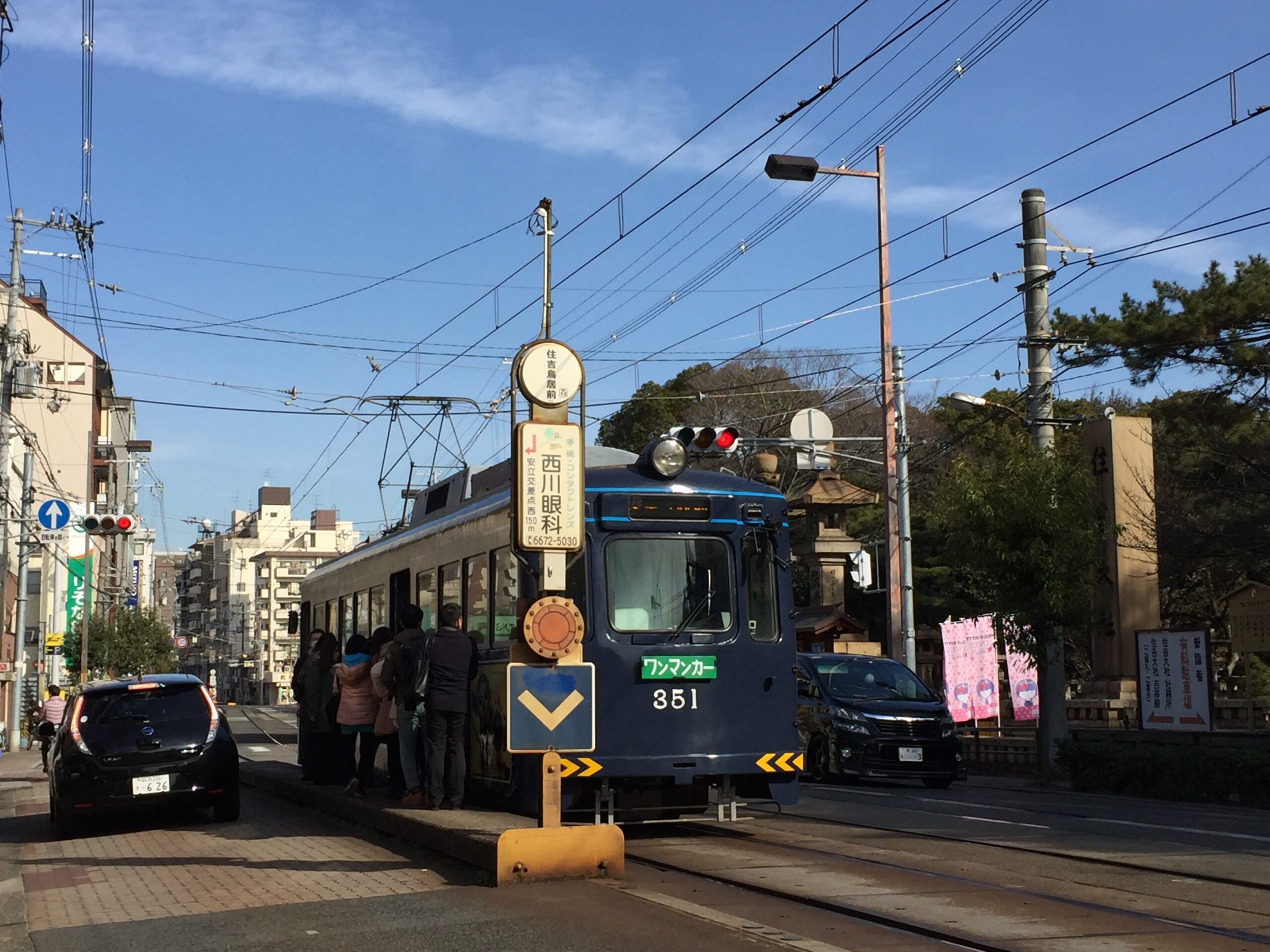
The Hankai Tramway offers a slower, more local journey through southern Osaka and Sakai. It is not usually the fastest way to cross the city, but it turns the journey into part of the experience.
From Tennoji-ekimae, the tram runs through ordinary neighborhoods toward Sumiyoshi and Sakai. Sumiyoshi-Torii-mae is directly in front of Sumiyoshi Taisha, while stops such as Shukuin and Myokokujimae are useful for Sakai’s tea culture and traditional craft areas.
The tram is a good choice when you want to connect Sumiyoshi Taisha with old Sakai at a relaxed pace. For a faster trip from Namba, Nankai is usually more efficient.
ICOCA, Suica or Paper Tickets?
For most visitors, an IC card is the easiest way to pay for everyday transport in Osaka. ICOCA is the IC card issued by JR West, but you do not need to buy a new ICOCA if you already have a compatible Suica, PASMO or another nationwide interoperable IC card.
You tap the card or phone at the ticket gate when entering and tap again when leaving. The correct regular fare is deducted automatically. ICOCA can also be used on participating buses and at many convenience stores, vending machines, lockers and shops displaying the relevant IC mark.
What Is ICOCA?
ICOCA is a rechargeable stored-value card. It is not automatically a discount pass. Its main advantage is convenience: you can move between participating JR, subway and private railway networks without buying a separate paper ticket for every trip.
Where Can You Buy ICOCA?
Physical ICOCA cards can be purchased at eligible JR West ticket vending machines and ticket offices. Osaka Metro also sells ICOCA at designated ticket machines and sales counters. A standard physical card normally includes a refundable ¥500 deposit.
Foreign visitors may also find special-design ICOCA products at selected locations, although availability and purchase conditions change. Do not build your itinerary around a limited-edition card unless the official page confirms that it is currently in stock.
How Do You Charge ICOCA?
You can add value at compatible ticket machines, fare-adjustment machines and selected convenience stores. Physical cards are commonly charged with cash. The maximum stored balance is ¥20,000.
If your balance is too low when you arrive, the exit gate may not open. Use a fare-adjustment or charging machine near the gates, add enough value and try again. Station staff can help if you are unsure.
Can You Use Suica or PASMO in Osaka?
Yes, in most situations that matter to travelers. Suica and PASMO are part of the nationwide interoperable IC-card network and can generally be used wherever the common transport IC mark is displayed.
ICOCA on Apple Pay
Eligible iPhone and Apple Watch users can add ICOCA to Apple Wallet and use the device at gates and participating shops. JR West currently lists iPhone 8 or later with iOS 16 or later, and Apple Watch Series 3 or later with watchOS 8.7.1 or later, as compatible minimums.
International travelers can use ICOCA on Apple Pay when their device, region and payment setup meet Apple Pay requirements. However, some overseas-issued credit or debit cards may fail when adding funds. Keeping some Japanese yen available is a sensible backup.
Android is more complicated. Mobile ICOCA for Android depends on Japan’s Osaifu-Keitai system, which many Android devices sold outside Japan do not support. For most overseas Android users, a physical IC card is the safer option.
Do You Need Another Ticket for Limited Express Trains?
Sometimes. An IC card can cover the basic fare on many routes, but reserved-seat and limited-express trains may require an additional ticket.
Examples include the Nankai Limited Express Rapi:t and the JR HARUKA. Do not assume that tapping ICOCA alone gives you permission to sit in a reserved seat. Check whether the service requires a limited-express ticket, seat reservation or QR ticket before boarding.
Official information
Need a physical ICOCA?
Check JR West’s official ICOCA guide for current purchase locations, usage areas and important conditions. A physical ICOCA can normally be purchased after arrival at an eligible station.
Official Video: How to Use ICOCA
This official English video from JR West shows the basic process of using and charging ICOCA.
Are Osaka Transport Passes Worth It?
Transport passes can save money, but only when the covered network matches your actual day. Buying a pass first and then forcing your itinerary to fit it is usually the wrong order.
ICOCA Is Best When You Want Flexibility
Use an IC card when you expect to ride only a few times, when you will mix JR, Osaka Metro and private railways, when you may change plans during the day, or when you are traveling beyond Osaka.
An IC card does not usually reduce the fare, but it prevents repeated ticket-machine stops and makes mixed-company itineraries much easier.
Enjoy Eco Card
The Enjoy Eco Card is Osaka Metro’s traditional one-day pass. As of July 2026, the adult price is ¥820 on weekdays and ¥620 on Saturdays, Sundays and public holidays. The child price is ¥310.
It provides unlimited rides for one day on Osaka Metro and most Osaka City Bus services. Yumeshima Station, on-demand buses and certain specified bus routes are excluded. The pass also provides discounts at participating sightseeing facilities on the day of use.
It can be good value for a day that includes several subway journeys, especially on a weekend or public holiday. It is less useful when your route relies on JR, Nankai, Hankyu, Hanshin, Kintetsu or Keihan.
Digital Osaka Metro Passes
Osaka Metro periodically offers time-based digital products, including 26-hour and 48-hour options. These can be more flexible than a calendar-day pass when you begin sightseeing later in the day. Availability and sales periods change, so check the current official listing.
Osaka Metro may offer several ticket types, including calendar-day and time-based products. Read the official product name carefully because validity, activation, expiry and included transport can differ.
Official information
Planning a subway-heavy sightseeing day?
Check Osaka Metro’s official pass information before purchasing. Confirm the current price, validity period, covered services and excluded routes against your itinerary.
Osaka Attraction Passes
Products such as the Osaka Amazing Pass or attraction-focused passes combine transport with admission to selected attractions. They can be worthwhile when you already plan to visit several included facilities.
Before purchasing, total the normal admission prices for the exact attractions you will realistically visit. Then check opening days, reservation requirements and whether your transport routes are included. A large list of benefits is not valuable if your itinerary only uses one or two of them.
Major Osaka Stations Explained
Osaka and Umeda
Osaka Station and Umeda are essentially one large transport district, but different railway companies use different station names.
- JR Osaka Station
- Osaka Metro Umeda Station
- Osaka Metro Higashi-Umeda Station
- Osaka Metro Nishi-Umeda Station
- Hankyu Osaka-Umeda Station
- Hanshin Osaka-Umeda Station
- JR Kitashinchi Station
The stations are linked by passages and shopping complexes, but a transfer can take longer than the map suggests. Signs may direct you through department stores, underground malls and multiple levels.
Namba
Namba also contains several stations:
- Osaka Metro Namba
- Nankai Namba
- Osaka-Namba for Kintetsu and Hanshin
- JR Namba
They are connected or within walking distance, but they are not the same platforms. Nankai Namba is the important station for Kansai Airport, Sumiyoshi Taisha and Sakai. Osaka-Namba serves Kintetsu and Hanshin. JR Namba is farther west and can be inconvenient for parts of Dotonbori.
Always check the railway company shown in your route before following a generic “Namba” sign.
Tennoji and Osaka-Abenobashi
JR and Osaka Metro use Tennoji Station. Kintetsu uses Osaka-Abenobashi Station. They serve the same general district and are connected through the Abeno and Tennoji area.
Tennoji is convenient for the JR Osaka Loop Line, JR Hanwa Line, Osaka Metro and airport trains. Osaka-Abenobashi is the Kintetsu terminal for routes toward southern Osaka and Nara Prefecture.
Shin-Osaka Is Not Osaka Station
Shin-Osaka is the main Shinkansen station. Osaka Station is the major central JR station in Umeda.
The two stations are connected by JR and the Osaka Metro Midosuji Line, but they are not side by side. Allow additional time when transferring to a Shinkansen, particularly if you have large luggage or are unfamiliar with the station.
Best Transport for Popular Osaka Areas
| Destination | Usually the simplest option |
|---|---|
| Dotonbori | Osaka Metro to Namba or Nippombashi, then walk |
| Kuromon Market | Osaka Metro to Nippombashi |
| Osaka Castle | Osaka Metro to Tanimachi 4-chome or Morinomiya, or JR to Osakajokoen, depending on your entrance |
| Tenma | JR Osaka Loop Line to Temma |
| Shinsekai | Osaka Metro to Dobutsuen-mae or Ebisucho, or JR to Shin-Imamiya |
| Abeno Harukas | JR or Osaka Metro to Tennoji; Kintetsu to Osaka-Abenobashi |
| Universal Studios Japan | JR to Universal City |
| Sumiyoshi Taisha | Nankai local train to Sumiyoshitaisha or Hankai Tramway to Sumiyoshi-Torii-mae. Read the full guide. |
| Sakai | Nankai, JR or Hankai Tramway, depending on the district. Read the full guide. |
| Kansai Airport | Nankai for Namba; JR HARUKA for Tennoji, Osaka, Shin-Osaka and Kyoto |
Which Train Should You Take in Osaka?
This is a decision guide, not a formal railway map. Start with the place you want to reach:
Short Kansai Airport Guide
The best airport train depends on where you are staying. Do not choose only by comparing the fastest advertised time.
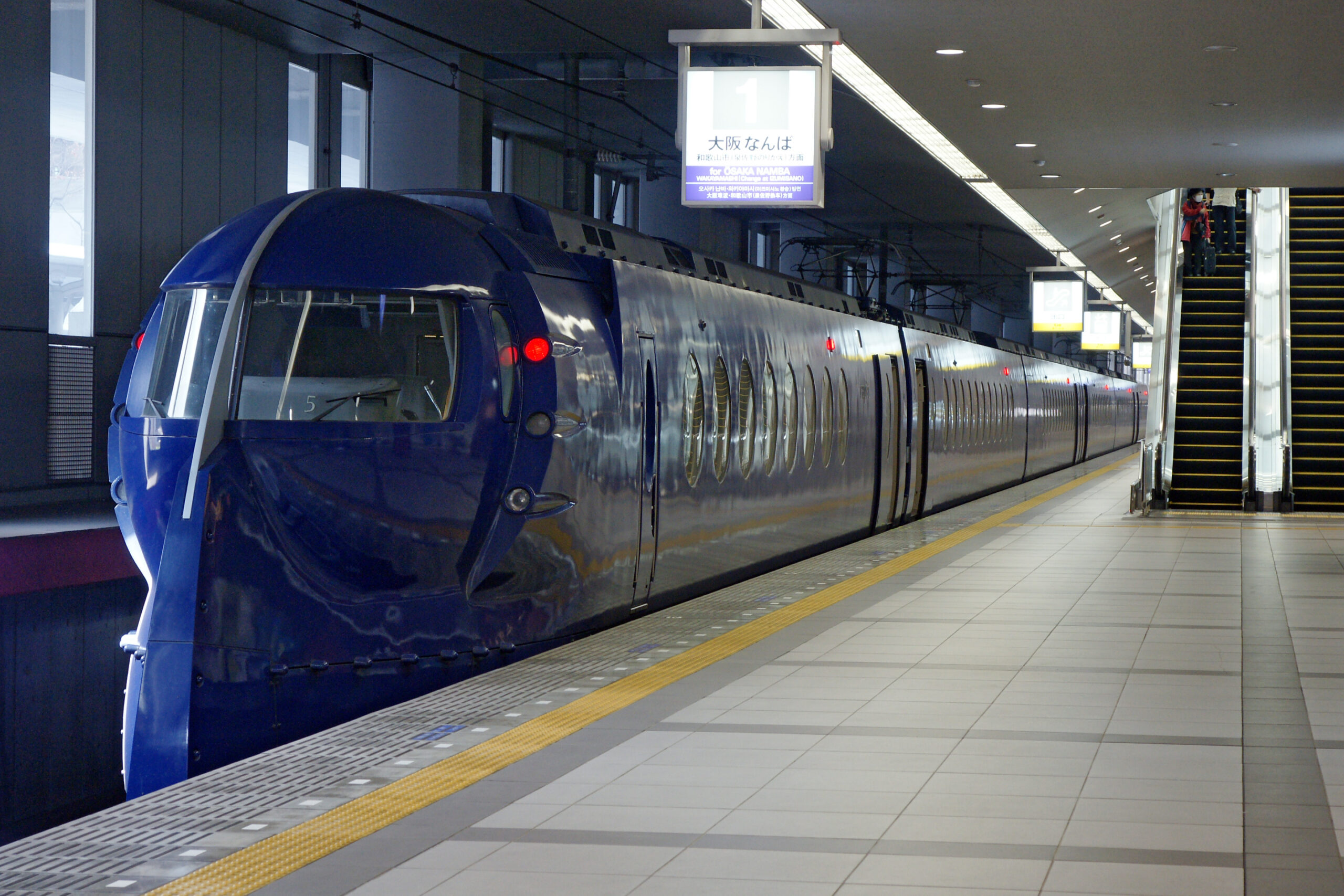
For Namba and Dotonbori: Nankai Rapi:t
The Nankai Limited Express Rapi:t connects Kansai Airport with Nankai Namba in as little as 34 minutes. It offers reserved seating and is convenient for travelers staying near Namba, Dotonbori or Shinsaibashi.
The regular Nankai Airport Express is slower but does not require a limited-express seat ticket. It may be the better budget option when you are not in a hurry.
Official information
Staying near Namba or Dotonbori?
Check Nankai Railway’s official Rapi:t page for current schedules, fares, ticket conditions and seat information.
For Tennoji, Osaka, Shin-Osaka or Kyoto: JR HARUKA
The JR HARUKA provides direct service from Kansai Airport to Tennoji, Osaka Station, Shin-Osaka and Kyoto. It is often the easiest choice for travelers staying near those stations or connecting to the Shinkansen at Shin-Osaka.
Official information
Staying near Tennoji, Umeda or Shin-Osaka?
Check JR West’s official HARUKA page for eligible destinations, current prices, ticket collection and seat-reservation instructions.
This article keeps the airport comparison brief. Ticket types, stopping patterns and purchase methods change, so check the current railway operator pages before travel.
How to Use Trains in Osaka
- Search the full route before entering the station. Check the railway company, line name, station number and train type. Two routes may use stations with similar names but completely different ticket gates.
- Check the direction or terminal station. Japanese platforms often show the direction using the name of a terminal station you may not recognize. Match it with the direction shown in Google Maps.
- Tap your IC card at the gate. Touch the card or phone firmly to the reader. Do not move it away before the gate confirms the tap.
- Check local, rapid, express and limited-express service. Faster trains may skip your destination. Limited-express services may require an additional ticket.
- Confirm the correct exit before arriving. A wrong exit at Umeda, Namba or Tennoji can add a long walk. Save the exit number or nearby building name in advance.
- Tap again when leaving. The fare is deducted automatically. If the balance is insufficient, recharge or adjust the fare before trying the gate again.
- Add station walking time. Google Maps may show an efficient transfer, but unfamiliar underground passages and crowded platforms can make it take longer. Add at least 10 to 15 minutes for major-station transfers when catching a reserved train.
Common Osaka Transport Mistakes
- Confusing Osaka Station with Shin-Osaka
- Assuming every station called Namba is in exactly the same location
- Thinking a nationwide JR Pass covers Osaka Metro
- Tapping an IC card and assuming it includes a reserved or limited-express seat
- Boarding an express train without checking whether it stops at the destination
- Following only a train’s color instead of checking the line name and station number
- Ignoring exit numbers at large stations
- Allowing too little time to transfer inside Umeda or Namba
- Buying a transport pass before calculating which companies the itinerary uses
- Choosing the cheapest route even when it adds several difficult transfers and luggage handling
Local Tips for Getting Around Osaka
- In Umeda, navigate by buildings and exits, not only by station names.
- From Namba to Sumiyoshi Taisha or central Sakai, Nankai is often simpler than JR.
- For one or two stops around Namba, Shinsaibashi and Hommachi, walking can be faster than changing lines.
- The Midosuji Line is busy during weekday commuting hours. Travel outside the morning peak when your schedule is flexible.
- With large luggage, prioritize direct trains and elevators rather than the absolute lowest fare.
- Add station walking time to the journey shown by your app.
- For day trips, the route with fewer transfers is often worth a small fare difference.
- Take a screenshot of your hotel name, address and nearest exit in case your mobile data stops working.
- Keep some cash available for charging a physical IC card or handling an unexpected ticket issue.
- Check service alerts and the final train on the day of travel. Schedules vary by line, day and destination.
Frequently Asked Questions
What is the easiest way to get around Osaka?
For most travelers, use an ICOCA, Suica or PASMO with Google Maps. Take Osaka Metro for central sightseeing, JR for USJ and Loop Line destinations, and private railways when they provide a more direct route.
Can I use Suica in Osaka?
Yes. Suica and other compatible nationwide IC cards can generally be used on Osaka transport services displaying the common IC-card mark.
Do I need to buy an ICOCA card?
No. You can use a compatible IC card you already own, purchase paper tickets or set up ICOCA on a supported iPhone. A physical ICOCA is mainly a convenient option for travelers who do not already have one.
Is the Osaka Metro pass worth it?
It can be, especially when you plan several subway journeys in one day. It is not automatically good value when your itinerary includes JR or private railways outside the pass coverage.
Can I use the JR Pass on Osaka Metro?
No. Osaka Metro is a separate operator. A JR pass only covers the JR services included in that specific pass.
What is the difference between Osaka and Shin-Osaka stations?
Shin-Osaka is the Shinkansen station. Osaka Station is the central JR station in the Umeda district. They are connected by JR and Osaka Metro but are separate stations.
Is Osaka easy to explore without a car?
Yes. Public transport covers nearly all major visitor areas, and a car is usually less convenient because of traffic, parking costs and the density of the rail network.
What time do trains stop running in Osaka?
The final train depends on the line, direction, station and day. Many services end around midnight, but you should never rely on one general time. Check Google Maps and the railway operator’s timetable on the day you travel.
Final Advice
Most travelers should use an IC card for everyday trips, Osaka Metro for central Osaka, JR for the Loop Line and USJ, and private railways for places such as Sumiyoshi Taisha and Sakai.
Do not try to learn every line before arriving. Start with your destination and choose the company that gets you there with the fewest practical transfers. Osaka’s network looks complicated because it offers many choices; once you stop treating one railway as the answer to every journey, it becomes much easier to use.
Official Information Sources
- JR West: ICOCA Guide
- JR West: ICOCA on Apple Pay
- JR West: ICOCA Usage Area
- Osaka Metro: Enjoy Eco Card
- Osaka Metro: Using and Charging Compatible IC Cards
- Nankai Railway: Limited Express Rapi:t
- JR West: HARUKA One-way Ticket
- Hankai Tramway Official Website
Information last checked: July 22, 2026.
Transport products, fares, schedules, coverage and redemption methods may change. Confirm important details with the railway operator before travel.