Introduction
Ask most travelers what to eat in Osaka and two answers appear immediately: takoyaki and okonomiyaki. Both deserve their fame, but stopping there is a little like visiting the city and never leaving Dotonbori.
This Osaka local food guide introduces 11 dishes that reveal how the city eats beyond takoyaki and okonomiyaki.
Osaka’s food culture also lives in bowls of light dashi, old-fashioned pressed sushi, inexpensive griddle snacks, Western-style dishes that evolved in Japan, and the smoky yakiniku restaurants around Tsuruhashi. Some of these foods are quieter than the city’s famous neon signs, but they often reveal more about how Osaka actually eats.
This guide introduces 11 local foods worth trying beyond the obvious classics. It is designed for repeat visitors, curious first-timers, and anyone who would rather explore several neighborhoods than queue for the same dishes everyone already knows.
Osaka Local Food: 11 Dishes at a Glance
| Food | What it is | Good area to try it | Best for |
|---|---|---|---|
| Kitsune udon | Soft udon with sweet fried tofu and light dashi | Semba, Hommachi, Namba | A gentle lunch |
| Osaka sushi | Pressed sushi such as hakozushi and battera | Semba, Namba | A traditional meal |
| Kushikatsu | Breaded and deep-fried skewers | Shinsekai | Casual dinner and drinks |
| Nikusui | Beef and scallion soup based on meat udon without noodles | Namba | A light but savory meal |
| Doteyaki | Beef tendon slowly simmered in a sweet miso sauce | Shinsekai | A rich side dish |
| Negiyaki | A thin savory pancake packed with green onions | Juso, Umeda | A lighter teppan meal |
| Ikayaki | A pressed squid-and-flour pancake | Umeda | A quick snack |
| Tonpeiyaki | Pork and egg cooked on a hot griddle | Umeda, Namba | An izakaya or teppan side |
| Udon suki | A hot pot of udon, seafood, meat and vegetables | Central Osaka | A relaxed group dinner |
| Omurice | Seasoned rice wrapped in an omelet | Shinsaibashi, Namba | Japanese yoshoku |
| Yakiniku and horumon | Table-grilled meat and offal | Tsuruhashi | A lively evening meal |
Why Osaka Food Is More Than Street Food
Osaka has long been associated with the phrase kuidaore, commonly understood as eating until you have spent generously—or simply eating to your heart’s content. The idea is not only about large portions. It reflects a city where people care deeply about whether everyday food is satisfying, fairly priced and worth returning for.
Dashi is another important part of the story. Osaka cooking often uses a pale-looking but flavorful stock built around kombu and dried fish. That balance appears in udon, hot pots, simmered dishes and many foods that look simpler than they taste.
The city’s merchant history also helped create a broad food culture rather than one narrow cuisine. Traditional sushi sits beside inexpensive working-class snacks, Japanese-style Western food and Korean-Japanese grill culture. That range is exactly why an Osaka food day should include more than one neighborhood.
Do not plan every meal around Dotonbori. Use it for atmosphere, then eat in places such as Semba, Juso, Shinsekai, Tsuruhashi or the smaller streets around Namba and Umeda.
1. Kitsune Udon
Kitsune udon is a bowl of udon topped with a large piece of fried tofu that has been simmered until sweet and juicy. In Osaka, the noodles are often softer than Sanuki-style udon, while the broth is light in color but full of kombu-and-fish flavor.
The dish is closely associated with Semba, Osaka’s historic merchant district, where the sweet tofu topping is said to have developed during the Meiji period. It is a useful first meal in the city because it introduces Osaka’s dashi culture without feeling heavy.
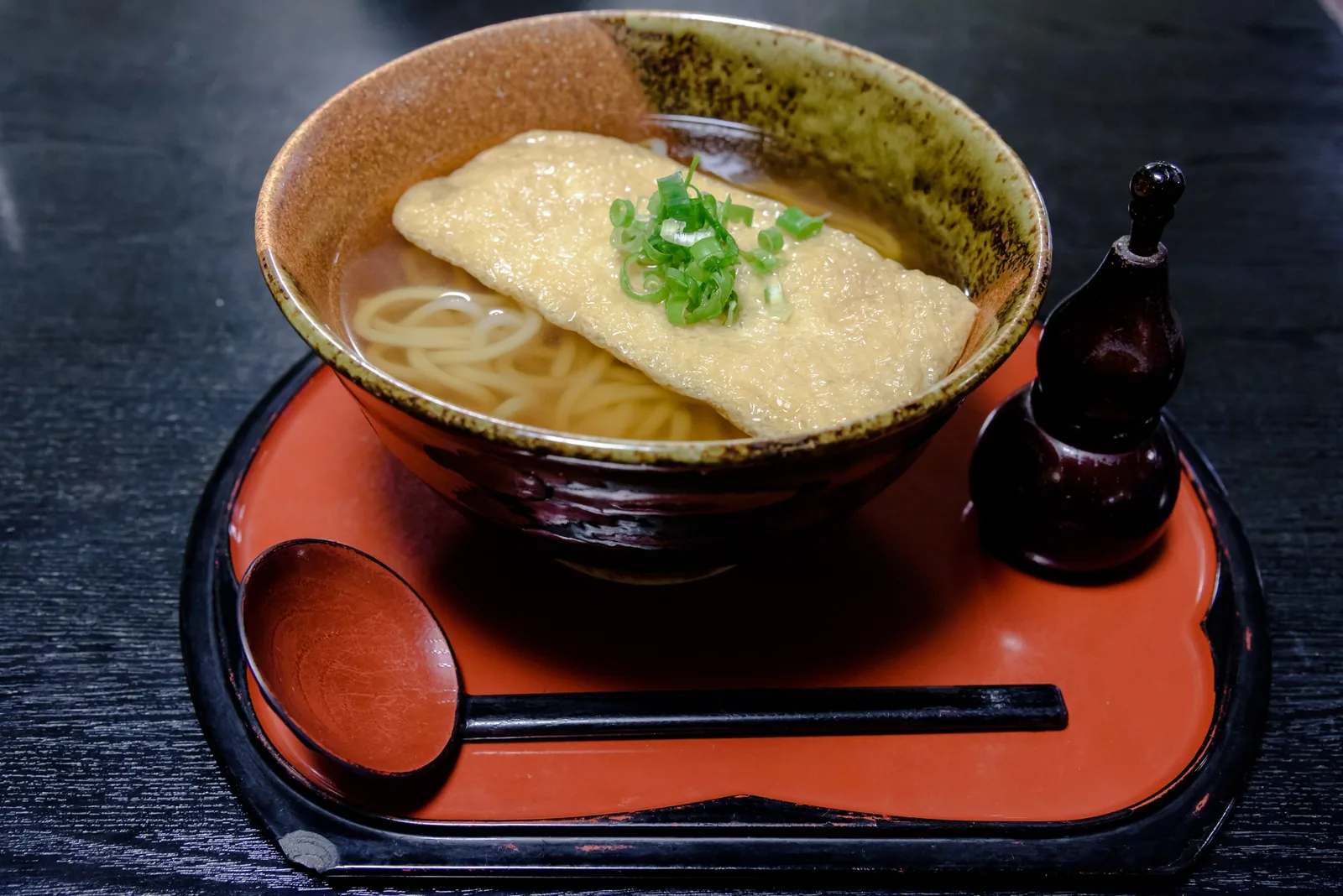
Photo: MemColorLab
· CC BY-SA 4.0
· Wikimedia Commons · resized and converted to WebP
How to order it: Order the standard bowl first. Extra tempura or rice can hide the delicate broth, so save the fully loaded version for another visit.
Drink a spoonful of the broth before adding any seasoning. The quiet dashi flavor is the point.
2. Osaka Sushi: Hakozushi and Battera
Before nigiri became the image of sushi around the world, Osaka developed its own strong tradition of pressed sushi. Hakozushi is made by arranging toppings and vinegared rice inside a wooden mold, pressing them together and cutting the result into precise pieces.
Battera is one of the best-known styles. It typically combines vinegared mackerel, sushi rice and a thin layer of kombu. The flavor is firmer and more composed than freshly shaped nigiri, making it easy to carry and well suited to a merchant city.
How to order it: Look for an assorted Osaka-sushi box rather than choosing only one topping. You will get a better sense of the different textures, colors and seasoning styles.
Osaka sushi is an excellent train meal, but buy it from a specialist or established department-store counter rather than treating it as an emergency convenience-store purchase.
3. Kushikatsu
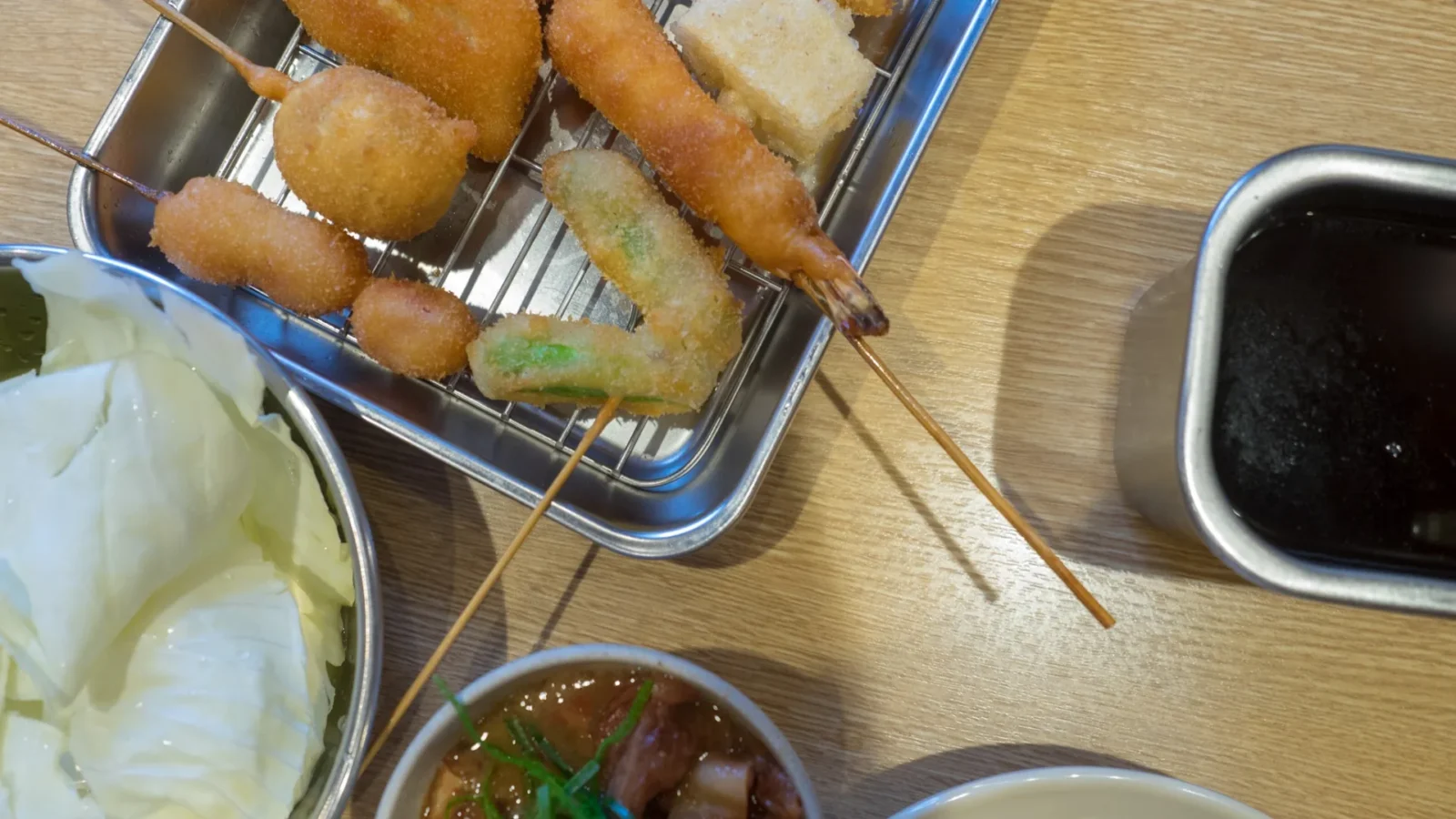
Kushikatsu consists of meat, seafood, vegetables and other ingredients placed on skewers, coated in fine breadcrumbs and fried. Part of the fun is ordering several small items instead of committing to one large plate.
Shinsekai is the classic place to try it. The neighborhood’s bright signs, counter restaurants and retro streets fit the dish perfectly, although good kushikatsu can now be found throughout Osaka.
Older guides often focus on the famous “no double dipping” rule. Sauce service now differs from shop to shop: some provide individual containers, pour-over bottles or other systems. Follow the restaurant’s instructions instead of assuming every place works the same way.
Good first order: Beef, pork, shrimp, lotus root, onion and asparagus give you a useful mix of rich, sweet and crisp textures.
Order in two rounds. Fried skewers are at their best immediately, and the second round lets you repeat your favorites without ending up with a cold mountain of breadcrumbs.
4. Nikusui
Nikusui is often explained as meat udon without the noodles. The bowl usually contains thinly sliced beef, green onions and a dashi-based soup, with egg or tofu added depending on the restaurant.
The dish is strongly associated with Chitose near Namba Grand Kagetsu. Its popularity grew through Osaka’s comedy world, and it remains one of the most recognizably local meals in the Namba area.
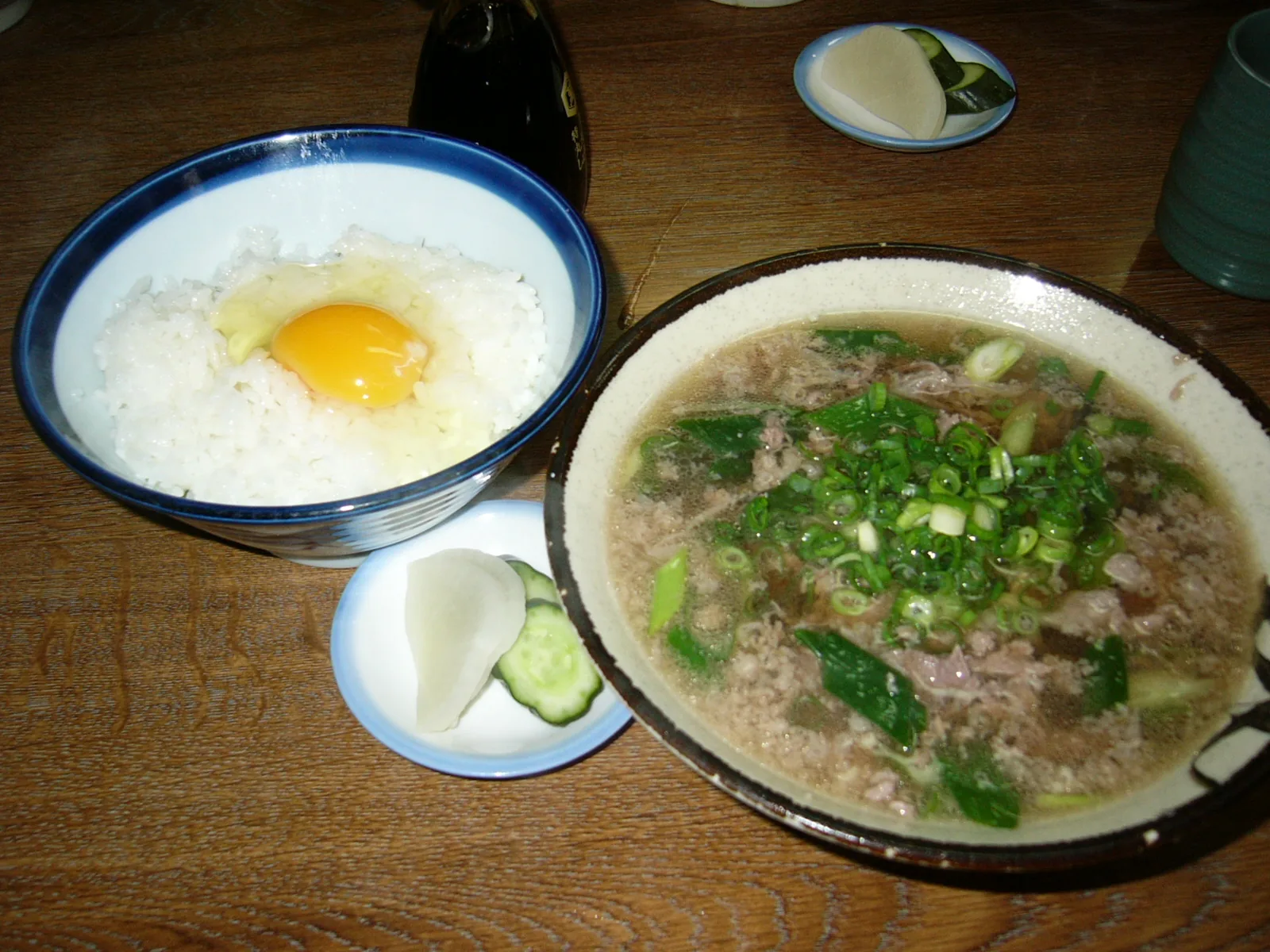
Photo: Naocchi
· CC BY-SA 3.0
· Wikimedia Commons · converted to WebP
A common pairing is a small bowl of rice topped with raw egg. At Chitose, this combination is known as kodama. The rice makes the meal more substantial while keeping the soup at the center.
Nikusui is not a delicate clear soup. The beef adds richness, but the absence of noodles keeps it lighter than a full bowl of meat udon.
5. Doteyaki
Doteyaki is beef tendon slowly simmered in a thick miso-based sauce. The long cooking softens the tendon and creates a rich, sticky dish that tastes far bigger than its usual small serving size.
It is commonly eaten beside kushikatsu in Shinsekai. That pairing works because the soft, sweet miso stew contrasts with the crisp coating of the fried skewers.
How to order it: Treat doteyaki as a side dish, not the entire meal. One serving for the table is usually enough to decide whether you want another.
Miso recipes vary. Some are sweeter, some darker and saltier, and some include konjac. Comparing two places is a perfectly respectable form of research.
6. Negiyaki
Negiyaki is a savory griddle dish filled with a generous amount of chopped green onion. It may resemble okonomiyaki at first glance, but it is usually thinner, greener and more aromatic, with less emphasis on cabbage and heavy sauce.
The dish is closely associated with Juso, a lively neighborhood reached by Hankyu train from Umeda. Many versions are finished with soy-based seasoning rather than a thick layer of okonomiyaki sauce, allowing the green onion flavor to remain clear.
How to order it: Beef tendon and konjac are common additions. A plain version is better when you want to understand the basic dish; a tendon-filled version is richer and more Osaka-like.
Juso works best in the late afternoon or evening. Combine negiyaki with a walk through its compact shopping streets and old-school bar area.
7. Ikayaki
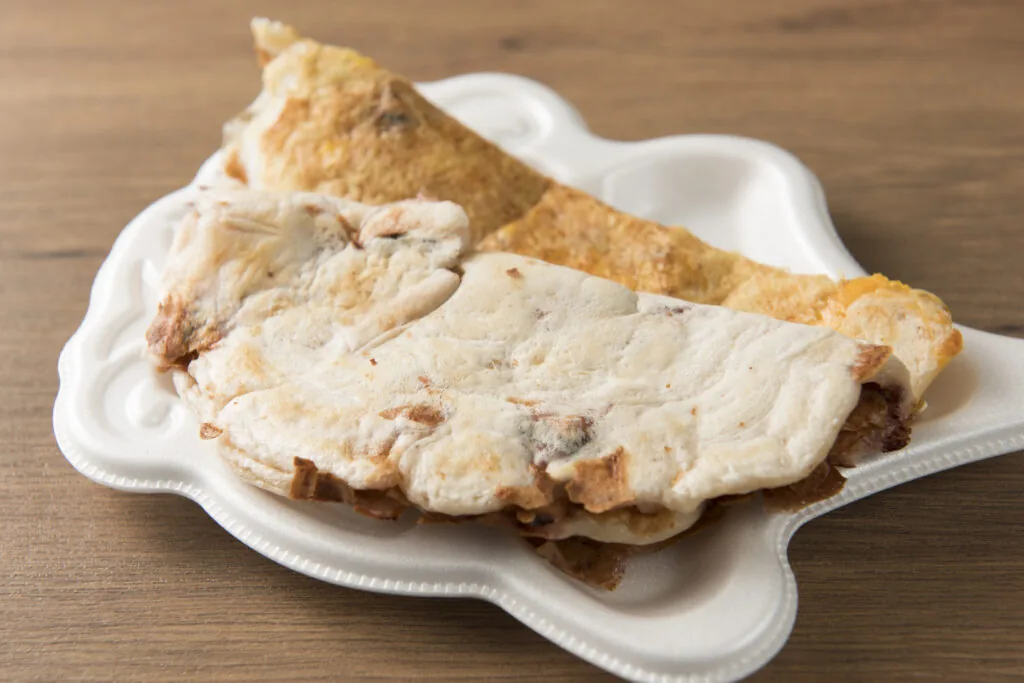
Outside Osaka, ikayaki often means a whole squid grilled with soy sauce. In Osaka, the same name can describe something completely different: chopped squid and flour-based batter pressed into a thin pancake on a hot iron plate.
The result is more chewy than fluffy, usually folded and brushed with a sweet-savory sauce. It is inexpensive, fast to eat and far less filling than okonomiyaki, which makes it ideal between sightseeing stops.
© Osaka Convention & Tourism Bureau
· resized and converted to WebP
How to order it: Start with the standard version. Egg, cheese and green onion variations are enjoyable, but the simplest one makes the squid texture easiest to recognize.
This is the food to choose when lunch was large but your curiosity remains irresponsibly active.
8. Tonpeiyaki
Tonpeiyaki is a hot-griddle dish built around pork and egg. Some restaurants wrap pork in a thin omelet, while others layer the ingredients more loosely and add cabbage, cheese or other fillings.
It usually arrives with savory sauce, mayonnaise and sometimes bonito flakes. Compared with okonomiyaki, it contains little or no flour and is easier to share as one dish among several.
How to order it: Add it after choosing your main dish. It works especially well when a group wants one more warm plate without ordering another full pancake.
There is no single universal tonpeiyaki shape. The variation is part of the dish, not evidence that somebody in the kitchen has gone rogue.
9. Udon Suki
Udon suki is a shared hot pot containing udon noodles, seafood, chicken or other meat, vegetables and seasonal ingredients cooked in a carefully prepared broth. Despite the name, it is not simply udon placed in sweet sukiyaki sauce.
The dish shows the refined side of Osaka’s dashi culture. Ingredients are added gradually, and the broth becomes deeper as the meal continues. It is slower and usually more expensive than the street foods in this guide, making it better for an unhurried dinner.
How to order it: Confirm the minimum number of diners and whether reservations are recommended. Some traditional restaurants serve udon suki as a set or course rather than an individual bowl.
Choose udon suki when your group wants one memorable dinner, not when everyone needs to eat and reach the next attraction in 38 minutes.
10. Omurice
Omurice combines seasoned rice—often chicken rice flavored with ketchup—with a soft or firmly wrapped omelet. It belongs to the world of yoshoku, Western-influenced food that developed into its own Japanese cuisine.
One widely told origin theory connects modern omurice with Osaka in the 1920s, and Hokkyokusei is especially associated with that story. Today, versions range from nostalgic ketchup-topped plates to dramatic soft omelets served with demi-glace sauce.
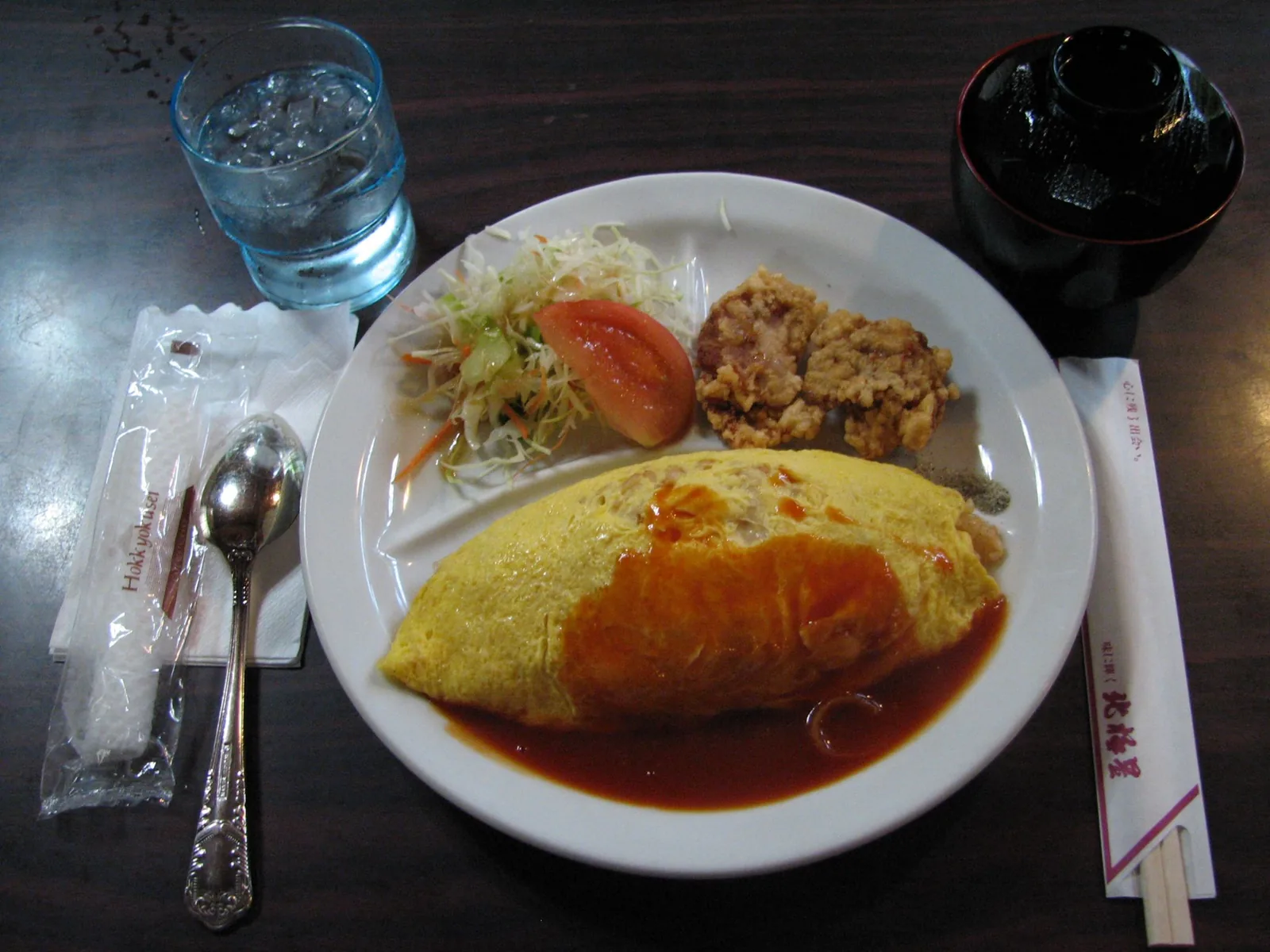
Photo: POHAN
· CC BY 2.0
· Wikimedia Commons · resized and converted to WebP
How to order it: A classic chicken omurice is the best starting point. Curry, cream and demi-glace versions can be excellent, but they shift attention away from the rice-and-egg combination.
Omurice is a good reset meal after several rounds of fried food. It is still comfort food, just wearing a yellow jacket.
11. Yakiniku and Horumon
Yakiniku restaurants let diners grill small cuts of meat at the table. Horumon refers to offal cuts, prized for their deep flavor and varied textures. You do not need to order horumon to enjoy the experience, but trying one or two cuts can make the meal more distinctive.
Tsuruhashi is Osaka’s best-known yakiniku district. Around the station, narrow market lanes, Korean food shops and grill restaurants form one of the city’s most atmospheric food neighborhoods.
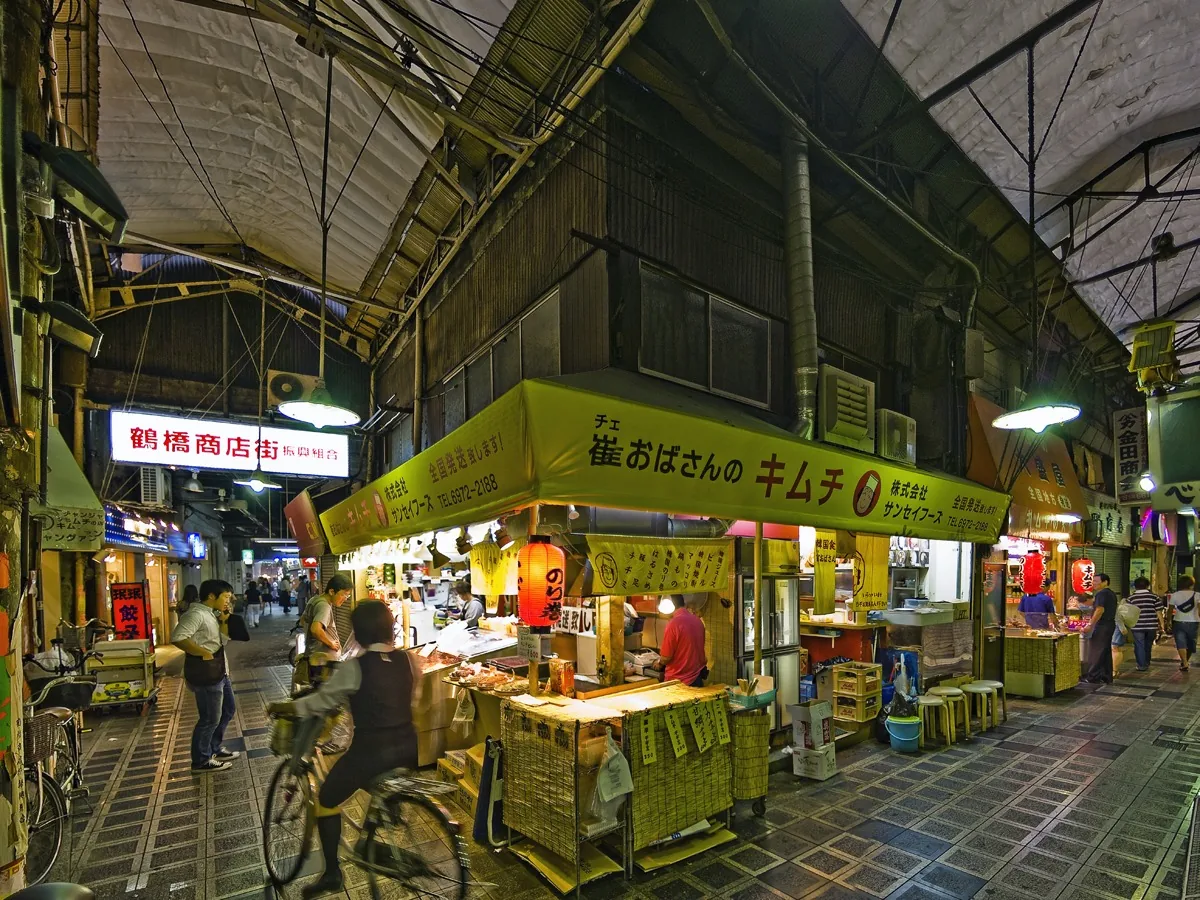
Photo: Ken OHYAMA
· CC BY-SA 2.0
· Wikimedia Commons · converted to WebP
Good first order: Start with familiar cuts such as short rib or skirt steak, then add one horumon item. Staff may help with cooking times if you ask.
Smoke and grilled-meat aromas are part of the experience. This is not the evening to wear the one sweater you hope to keep smelling like cedar and emotional stability.
Best Areas for Local Food in Osaka
Namba and Ura-Namba
Best for nikusui, small izakaya, teppan dishes and a wide range of late-night food within walking distance.
Shinsekai
The classic choice for kushikatsu and doteyaki, with retro streets and an easy connection to Tennoji.
Tsuruhashi
Best for yakiniku, horumon, kimchi, Korean-Japanese food culture and the atmosphere of narrow market lanes.
Juso
A less polished but rewarding evening area associated with negiyaki, neighborhood restaurants and compact bar streets.
Semba and Hommachi
A useful weekday lunch area for kitsune udon, traditional food and the quieter merchant side of central Osaka.
Umeda
Convenient for ikayaki, department-store food halls, underground restaurants and easy food stops on a rainy day.
For more neighborhood ideas, see our guide to 15 hidden gems in Osaka. It includes Tsuruhashi Market, Semba Center Building, Shinsekai Market and several areas where food is part of the experience rather than a separate attraction.
How to Order Local Food in Osaka
You do not need fluent Japanese to eat well in Osaka. Photo menus, ticket machines and simple pointing solve a surprising number of problems. A few phrases still make small restaurants easier.
Osusume wa nan desu ka?
Kore o hitotsu kudasai.
Kore wa karai desu ka?
Kādo wa tsukaemasu ka?
Small shops may have limited seating, cash-only payment or ordering rules that are not obvious from outside. Check signs near the entrance, avoid blocking narrow doorways while deciding, and be ready to order once seated at a busy counter.
At crowded restaurants, choose one or two priorities before entering. Translating the entire menu while a line forms behind you is an advanced social-pressure simulation nobody requested.
Vegetarian, Vegan and Allergy Notes
Several foods in this guide can look meat-free while still containing fish-based dashi, meat stock, bonito flakes or sauces made with wheat and soy. Shared griddles, utensils and frying oil are also common.
- Kitsune udon: the tofu is vegetarian-looking, but the broth usually contains fish.
- Vegetable kushikatsu: vegetables may be fried in the same oil as meat and seafood.
- Negiyaki and tonpeiyaki: batter, sauce or toppings may contain wheat, egg, fish or meat.
- Osaka sushi: battera contains mackerel, and other pressed sushi may include shellfish or fish roe.
- Yakiniku: sauces commonly contain soy and wheat; cross-contact is likely.
Watashi wa ___ arerugī ga arimasu.
Niku ya sakana no dashi wa haitte imasu ka?
For a severe allergy, carry a professionally translated allergy card and confirm ingredients directly with the restaurant. Do not rely only on an English menu icon or the visible ingredients.
How Much Should You Budget?
The ranges below are practical planning estimates rather than fixed prices. Location, drinks, premium ingredients and restaurant style can change the total considerably.
- Quick snack: roughly ¥300–¥800 for foods such as ikayaki.
- Noodle, soup or yoshoku lunch: roughly ¥900–¥2,000.
- Kushikatsu or casual izakaya meal: roughly ¥2,000–¥4,500 per person, especially with drinks.
- Yakiniku dinner: roughly ¥3,000–¥8,000+ depending on meat quality and alcohol.
- Traditional udon-suki or formal Osaka-sushi meal: often ¥4,000+ and potentially much higher for courses.
A realistic food-focused day can stay near ¥5,000 per person if you combine a simple udon lunch, one snack and a casual dinner. A yakiniku or udon-suki evening will push the budget higher.
FAQ
What is the best Osaka food for a first-time visitor?
After takoyaki and okonomiyaki, try kitsune udon for Osaka’s dashi culture and kushikatsu for the city’s casual, social side. Together they show two very different parts of local food.
What should I eat if I want something light?
Kitsune udon and nikusui are the easiest options, although both can still be rich in sodium and dashi flavor. Ikayaki works when you want a snack rather than a full meal.
Is Osaka-style ikayaki a whole grilled squid?
No. In Osaka, ikayaki commonly means a thin pressed pancake made with chopped squid and flour-based batter. Elsewhere in Japan, the same word may refer to whole grilled squid.
Where should food lovers stay in Osaka?
Namba offers the easiest access to late-night restaurants and southern food districts. Umeda is more convenient for transport, department-store food halls and trips to Juso. Compare the options in our guide to the best areas to stay in Osaka.
Can I combine these foods into one day?
Yes, but do not attempt all 11 unless your travel insurance includes consequences. A balanced route could include kitsune udon in Semba, ikayaki in Umeda, and kushikatsu in Shinsekai or yakiniku in Tsuruhashi.
Official Sources and Further Reading
- Osaka’s food culture and gastronomy history — OSAKA-INFO
- Osaka dashi culture — OSAKA-INFO
- Osaka udon and udon suki — OSAKA-INFO
- Hakozushi and battera — OSAKA-INFO
- Kushikatsu guide — OSAKA-INFO
- Omurice history in Osaka — OSAKA-INFO
- Yakiniku and horumon in Osaka — OSAKA-INFO
- Tsuruhashi area guide — OSAKA-INFO
Final Thoughts
Osaka’s famous flour-based dishes are a good introduction, not a complete definition. The city becomes more interesting when you follow its food into different neighborhoods: dashi and pressed sushi in the old merchant center, quick snacks beneath Umeda, fried skewers in Shinsekai, green-onion pancakes in Juso and smoky grills around Tsuruhashi.
You do not need to eat everything in one trip. Choose one traditional dish, one casual snack and one neighborhood dinner. That combination will tell you more about Osaka than a checklist of famous restaurants ever could.