This article may contain affiliate links. If you book or purchase something through one of these links,
we may earn a small commission at no additional cost to you.
Osaka is one of the best bases in Japan for day trips. Step onto a train in the morning and, within a few hours, you can be walking beneath temple gates in Kyoto, standing below Himeji Castle, soaking in an old onsen town, or looking out over the Sea of Japan.
Kyoto and Nara are obvious choices for a first trip to Kansai, but they are only the beginning. Kobe is even closer, Himeji is remarkably simple by direct train, and quieter places such as Sakai, Omi Hachiman, Wakayama City, and Iga Ueno become much more appealing once you have already seen the classics.
All 15 destinations in this guide can be reached from Osaka without a car, although some require buses, cable cars, or other local transportation after the main train journey.
This is a comparison guide rather than 15 full itineraries. The goal is simple: help you decide where to go tomorrow.
Start with the table below, compare travel time and difficulty, then jump directly to the destination that sounds right for you. Where Local Steps Japan has a detailed guide, you can continue to a complete one-day itinerary.
If you are still deciding where to base yourself in the city, see our guide to where to stay in Osaka first.
Best Day Trips from Osaka at a Glance
Travel times below use JR Osaka Station as the common starting point unless noted otherwise. Times are approximate and vary by service and connection.
| Destination | From Osaka | Transfers | Getting there | Getting around | Best for | Day-trip fit |
|---|---|---|---|---|---|---|
| Kyoto | ~30 min | 0 | Very easy | Walk + local transit | Temples, traditional streets | Excellent |
| Nara | ~50–55 min | 0 | Very easy | Mostly walk | Temples, deer, history | Excellent |
| Kobe | ~20–25 min | 0 | Very easy | Walk + local transit | Food, architecture, waterfront | Excellent |
| Himeji | ~1 hr | 0 | Very easy | Mostly walk | Castle, history, gardens | Excellent |
| Uji | ~50–60 min | 1 | Easy | Mostly walk | Matcha, temples, riverside | Excellent |
| Arima Onsen | ~1 hr | 3 | Moderate | Mostly walk | Onsen, traditional streets | Excellent |
| Sakai | ~45–60 min | 1 | Easy | Train/tram + walk | Crafts, tea, local history | Very good |
| Omi Hachiman | ~1 hr 10 min | 0 | Very easy | Bus + walk | Canals, merchant town, local food | Excellent |
| Wakayama City | ~1–1.25 hr | 0–1 | Easy | Bus + walk | Ramen, castle, seaside | Very good |
| Koyasan | ~2 hr | 2 | Moderate | Bus + walk | Buddhism, temples, forest | Very good |
| Iga Ueno | ~1 hr 40 min–2 hr | 2 | Moderate | Mostly walk | Ninja history, castle town | Very good |
| Kurashiki | ~1 hr 15–30 min | 2 | Moderate | Mostly walk | Historic streets, canals, art | Excellent |
| Shirahama | ~2.5 hr | 0 | Moderate | Local bus needed | Coast, seafood, onsen | Good, but long |
| Kinosaki Onsen | ~2 hr 40 min | 0 | Easy but long | Mostly walk | Traditional onsen town | Better overnight |
| Amanohashidate & Ine | 2 hr 20 min+ | 1+ | Planning-heavy | Bus / boat needed | Coastal scenery, villages | Good with planning |
If you’re looking for easy places to visit near Osaka by train, start with Kobe, Kyoto, Nara, or Himeji.
If you have already visited the classics, Sakai, Omi Hachiman, Wakayama City, and Iga Ueno offer a quieter side of the region.
Which Osaka Day Trip Should You Choose?
You do not need to read all 15 sections before narrowing down your options.
First trip to Kansai: Kyoto, Nara, or Himeji
Shortest and easiest: Kobe
Best for food: Kobe or Wakayama City
Best for matcha: Uji
Best for a Japanese castle: Himeji
Best easy onsen escape: Arima Onsen
Best quieter alternatives: Sakai, Omi Hachiman, or Iga Ueno
Best spiritual atmosphere: Koyasan
Best coastal escape: Shirahama
Best traditional onsen town: Kinosaki Onsen
Best scenery: Amanohashidate & Ine
15 Best Day Trips from Osaka
1. Kyoto: Best for Temples and a First Trip to Kansai
From Osaka: About 30 minutes
Best departure point: Osaka Station
Transfers: 0
Time needed: Full day
Cost level: Low
Getting around: Walking + buses/trains
Best for: Temples, traditional streets, first-time visitors
Watch out for: Easy to reach, easy to over-plan.
Kyoto is the obvious choice for a reason. About half an hour after leaving Osaka, you can be surrounded by temple roofs, old streets, gardens, and some of Japan’s most recognizable scenery.
Getting there is easy. Planning the day well is harder.
Kyoto has enough to fill several days, so trying to combine Arashiyama, Fushimi Inari, Kiyomizu-dera, Gion, and the northern temples usually turns a relaxed day trip into a race across the city.
Choose one or two areas instead.
A good Kyoto day from Osaka should feel like a focused walk through part of the city, not an attempt to complete Kyoto in eight hours.
The trade-off: Kyoto is incredibly easy to reach, but it is one of the easiest places on this list to over-plan.
Why choose Kyoto: Few destinations give a first-time visitor more iconic Japan with such an easy train ride from Osaka.
2. Nara: Best for Temples, Deer and Ancient Japan
From Osaka: About 50–55 minutes from Osaka Station
Best departure point: Osaka-Namba
Transfers: 0
Time needed: 8–9 hours
Cost level: Low
Getting around: Mostly walkable
Best for: Temples, deer, history
Watch out for: Kintetsu-Nara is more convenient than JR Nara for the main sightseeing area.
Nara is one of those rare destinations where the day becomes simpler after you arrive.
You can walk from the city toward Nara Park, pass deer wandering between temples, step inside the enormous Todai-ji complex, and continue toward quieter streets around Naramachi without constantly checking train lines or bus routes.
From JR Osaka Station, the direct rapid service takes roughly 50–55 minutes. If you are staying around Namba, Kintetsu can be even more convenient.
Compared with Kyoto, Nara asks you to make fewer decisions. That makes it especially good when you want a major cultural day without spending half of it navigating the city.
The feel of the day: Slow walking, open parkland, temple grounds, and plenty of time outside.
Why choose Nara: It gives you some of Kansai’s most important history in one of its easiest sightseeing days.
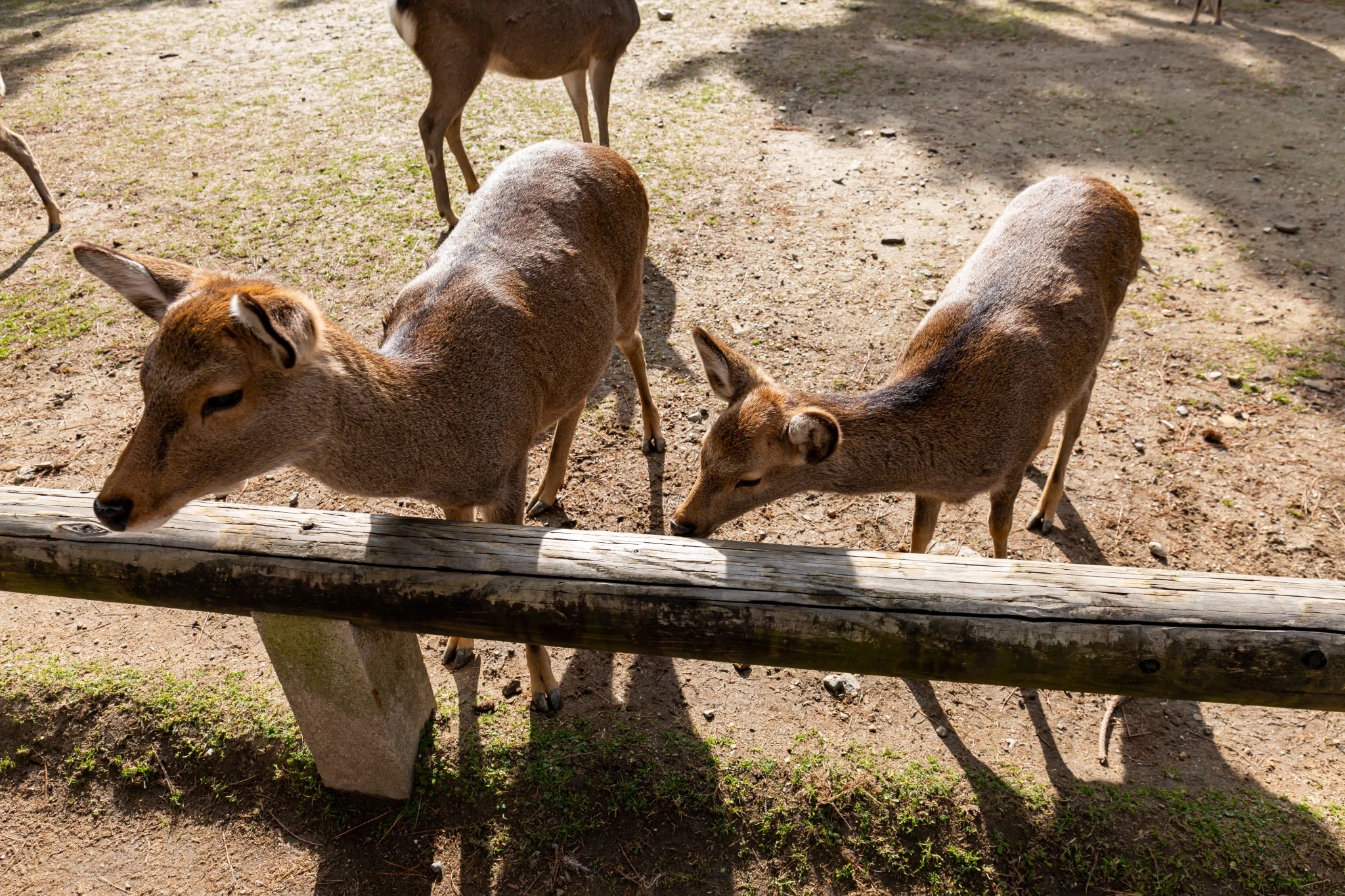
Photo: Balon Greyjoy / Wikimedia Commons / CC0 1.0.
3. Kobe: Best for Food, Architecture and Harbor Views
From Osaka: About 20–25 minutes
Best departure point: Osaka Station
Transfers: 0
Time needed: 6–8 hours
Cost level: Low
Getting around: Mostly walkable with local transit
Best for: Food, architecture, waterfront
Watch out for: The route stretches from the hillside down to the waterfront, so expect plenty of walking.
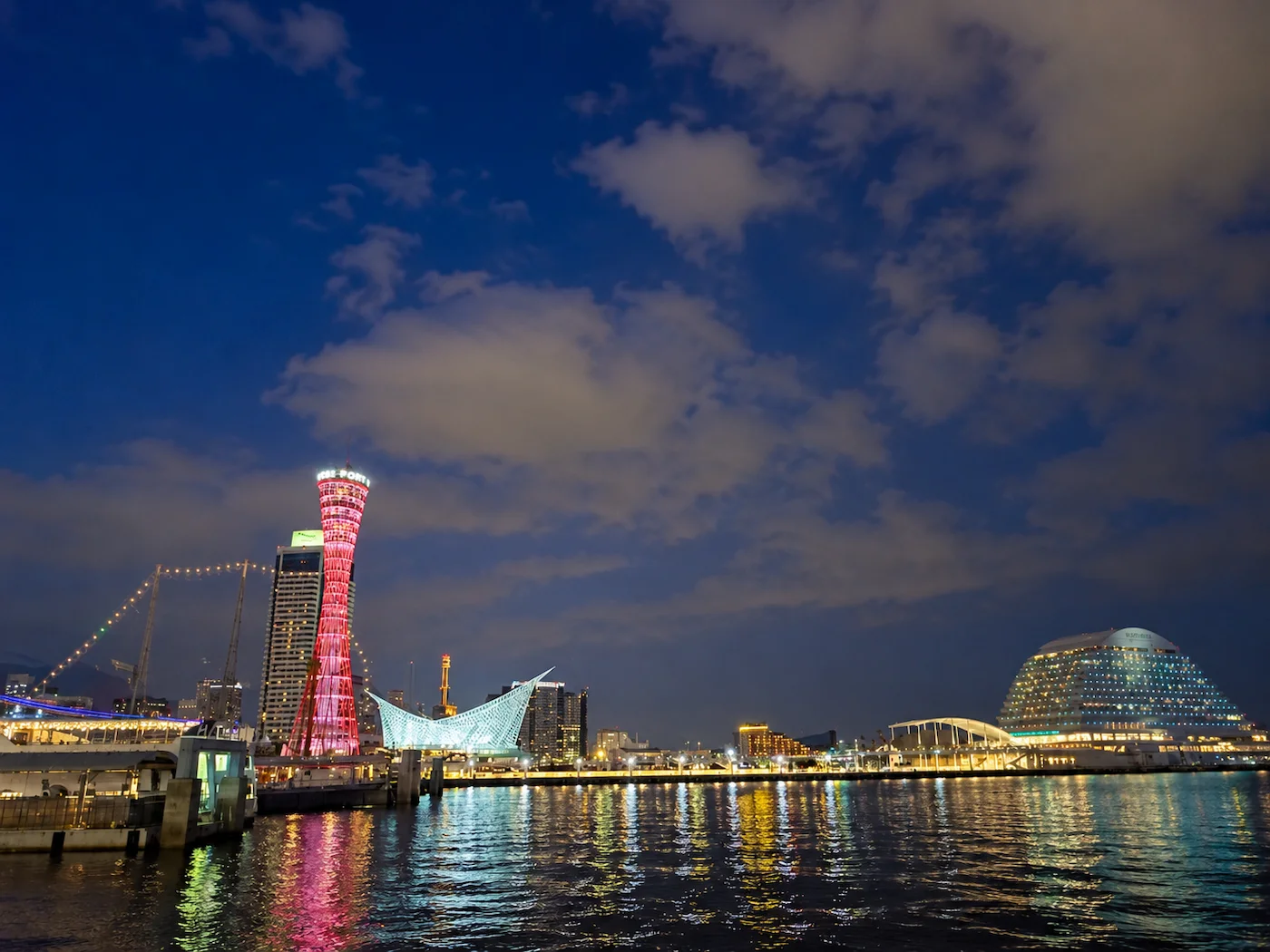
Kobe is the day trip to choose when you want variety without effort.
Leave Osaka after breakfast, walk uphill through the Western-style streets of Kitano, head back down for lunch around Nankinmachi, then continue toward Meriken Park as the afternoon light reaches the harbor.
The city changes character every few neighborhoods, yet the distances remain manageable.
Kobe is also a useful break from temple-heavy travel. Food, architecture, Chinatown, mountain views, and the waterfront can all fit naturally into the same day.
And because Osaka is so close, you can stay until the city lights come on without worrying about a long journey back.
The feel of the day: Relaxed city walking with plenty of food stops and an easy waterfront finish.
Why choose Kobe: You can leave Osaka late, eat well, walk a lot, and still finish the day beside the harbor.
4. Himeji: Best for Japan’s Most Famous Original Castle
From Osaka: About 1 hour
Best departure point: Osaka Station
Transfers: 0
Time needed: 5–7 hours
Cost level: Moderate
Getting around: Mostly walkable
Best for: Castles, history, gardens
Watch out for: Adding Mount Shosha turns an easy castle trip into a much fuller day.
Few arrivals are as straightforward as Himeji.
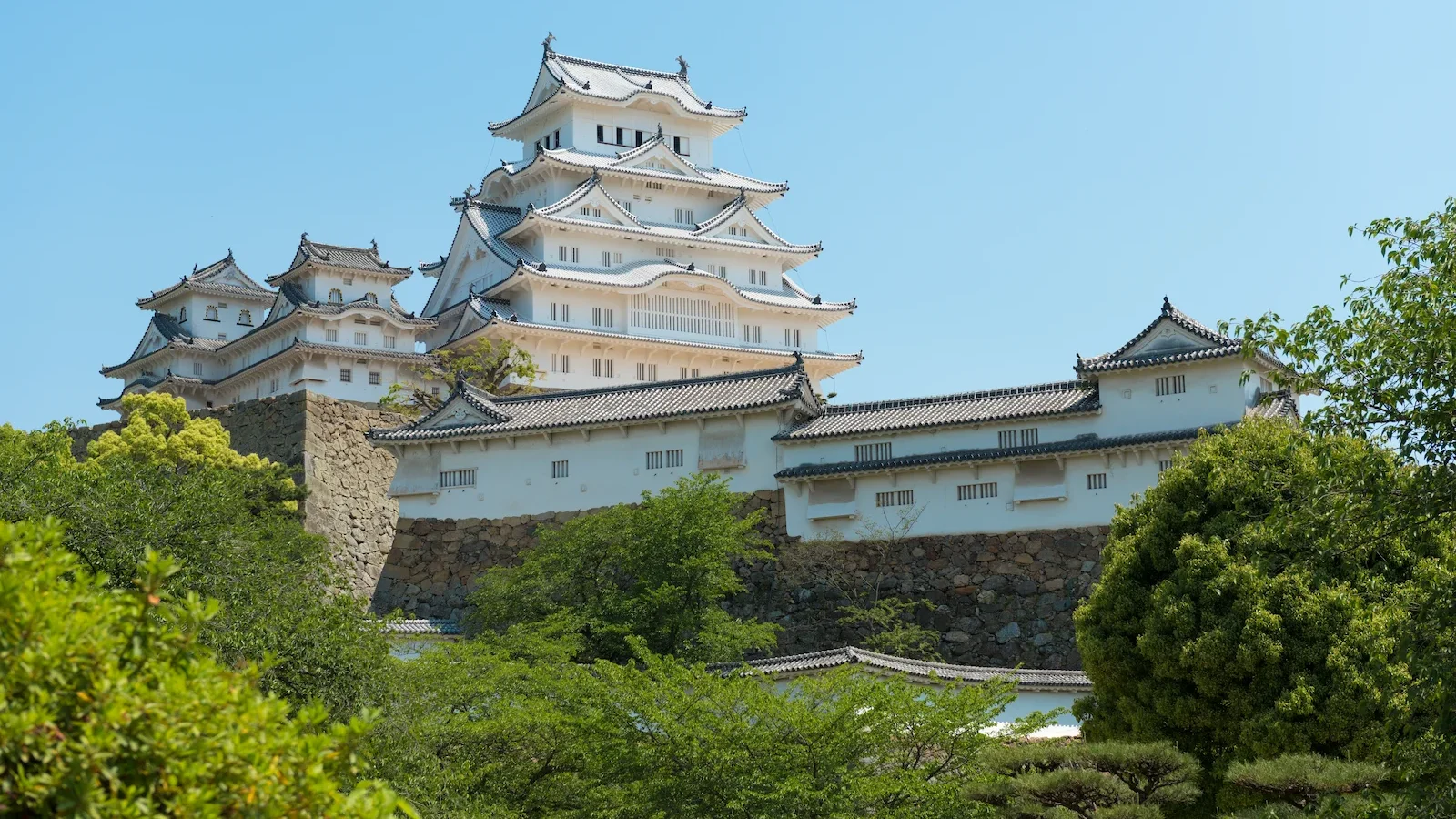
Walk out of the station and the white castle is already visible at the end of the broad avenue ahead of you. There is no complicated local transport puzzle and no need to cross the city before sightseeing begins.
Himeji Castle is the clear centerpiece, and nearby Koko-en Garden makes an easy second stop.
Together, they can fill a relaxed half day or form the core of a full-day trip.
Mount Shosha is also possible if you leave early, although adding it changes the trip from simple to fairly busy.
The trade-off: Himeji is less varied than Kobe or Kyoto, but what it does offer is exceptional.
Why choose Himeji: If seeing one extraordinary historical site sounds better than rushing through five smaller ones, choose Himeji.
5. Uji: Best for Matcha, Byodoin and a Slower Kyoto Day
From Osaka: About 50–60 minutes
Best departure point: Osaka Station
Transfers: Usually 1
Time needed: 6–7 hours
Cost level: Low
Getting around: Mostly walkable
Best for: Matcha, temples, riverside walks
Watch out for: Nintendo Museum should only be added if you already have a timed ticket.
Uji feels like Kyoto with the volume turned down.
Instead of spending the day crossing a large city, you can walk between Byodoin, the Uji River, tea shops, cafés, and historic streets at an easy pace.
Matcha is not just something to buy here. Tea culture is part of the destination itself, which makes stopping for sweets or a bowl of tea feel like part of the sightseeing rather than a break from it.
A walk beside the river also gives Uji something central Kyoto often lacks during a busy sightseeing day: space.
If you already have a timed Nintendo Museum reservation, it can be combined with Uji, but do not plan your day around the museum unless admission is secured.
The feel of the day: Calm, compact, and easy to enjoy without a strict schedule.
Why choose Uji: It gives you Kyoto culture in a much smaller and calmer package.
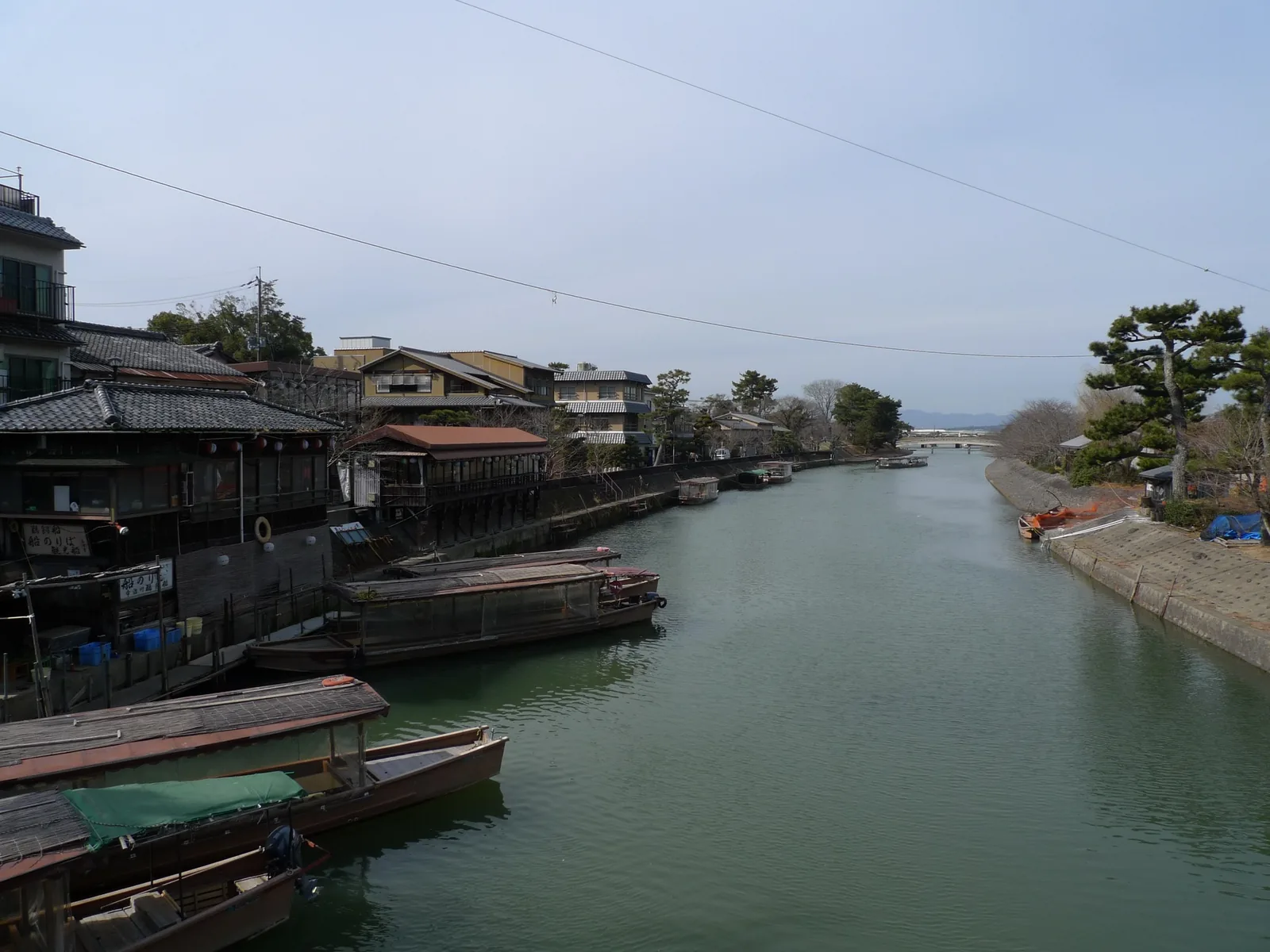
6. Arima Onsen: Best for a Short Onsen Escape
From Osaka: About 1 hour
Best departure point: Osaka Station
Transfers: Around 3
Time needed: Around 7 hours
Cost level: Moderate
Getting around: Mostly walkable
Best for: Hot springs, traditional streets
Watch out for: The trip is short, but the rail route involves several transfers.
Arima Onsen proves that travel time and travel difficulty are not always the same thing.
The town is only about an hour from Osaka, but the normal rail journey involves several changes. Once you arrive, however, everything slows down.
The old center is compact, with narrow streets, small shops, bathhouses, and the distinctive atmosphere of a hot spring town tucked into the hills.
You can soak in a public bath, wander without much of a plan, try local snacks, and be back in Osaka the same evening.
Compared with Kinosaki, Arima offers less of the full ryokan-town experience — but it asks for far less travel time.
The feel of the day: A slow afternoon of baths, snacks, and short walks.
Why choose Arima: It gives you genuine onsen-town atmosphere without committing most of your day to the journey.
7. Sakai: Best for Local Culture Close to Osaka
From Osaka: About 45–60 minutes to the main sightseeing area
Best departure point: Namba
Transfers: Around 1
Time needed: 5–7 hours
Cost level: Low
Getting around: Train/tram + walking
Best for: Crafts, tea, history, local atmosphere
Watch out for: The main sights are spread across different areas.
Sakai is close enough to Osaka that many travelers barely think of it as a separate trip — which is part of why it feels so different from the usual Kansai sightseeing circuit.
The city is known for traditional knife-making, tea culture, and the vast Mozu burial mounds. Old tram lines and ordinary neighborhoods add another layer: Sakai feels like a real city first and a tourist destination second.
That also means it requires slightly more thought.
The main sights are spread between different areas, so this is not a place where you step out of one station and simply follow the crowds.
The trade-off: Sakai is very close to Osaka, but less convenient once you arrive.
Why choose Sakai: Come here when you want to see local craft, history, and everyday Kansai without travelling far.
8. Omi Hachiman: Best Hidden Gem for Canals and Merchant Streets
From Osaka: About 1 hour 10 minutes
Best departure point: Osaka Station
Transfers: 0
Time needed: 6–8 hours
Cost level: Moderate
Getting around: Local bus + walking
Best for: Canals, merchant history, Omi beef
Watch out for: You will usually need a local bus between the station and the historic area.
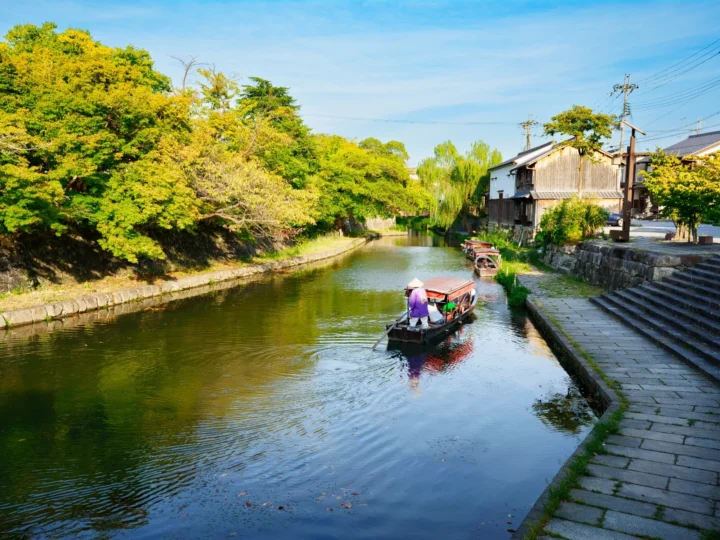
If Kyoto feels too busy, Omi Hachiman offers a quieter version of old Japan.
Around the historic district, you can walk beside the Hachiman-bori Canal, pass former merchant houses, and explore streets where the pace feels noticeably slower than in Kyoto’s major sightseeing areas.
The city’s history is closely tied to the Omi merchants, and that background gives the old town more depth than simply being photogenic.
Food is another reason to make the trip. This area is associated with Omi beef, while La Collina Omihachiman provides a striking contemporary contrast to the traditional streets.
You will normally use a local bus from the station, but the historic core itself is easy to explore on foot.
The feel of the day: Quiet streets, canals, local food, and far fewer crowds.
Why choose Omi Hachiman: It is a strong choice when you want historic Japan but do not want another crowded temple district.
9. Wakayama City: Best Hidden Gem for Ramen, Castle and the Sea
From Osaka: About 1–1.25 hours
Best departure point: Namba or Osaka Station
Transfers: 0–1
Time needed: Full day
Cost level: Moderate
Getting around: Bus + walking
Best for: Food, castle, seaside atmosphere
Watch out for: Local bus timing matters once you leave the central castle area.
Wakayama City is not built around one world-famous attraction, and that is exactly why some travelers will enjoy it.
A day here can move from Wakayama Castle to a bowl of local ramen, then toward Kimiidera or the waterfront without ever feeling like you are working through a checklist of must-see sights.
It is more spread out than Nara or Himeji, so buses matter, but the slower sightseeing rhythm makes the day feel local rather than monumental.
This is the kind of destination that works best once you have stopped asking, “What is the famous thing here?” and started asking, “What would be a good day?”
The feel of the day: Casual, food-focused, and less polished than the major Kansai destinations.
Why choose Wakayama: Go when you want a relaxed local city day with good food and a glimpse of the sea.
10. Koyasan: Best for Temples, Forest and Spiritual Atmosphere
From Osaka: About 2 hours
Best departure point: Namba
Transfers: Around 2
Time needed: Full day
Cost level: Moderate
Getting around: Bus + walking
Best for: Buddhism, temples, forest
Watch out for: Start early; trains, cable car and local buses make this less spontaneous than it looks.
Few day trips from Osaka change the atmosphere as completely as Koyasan.
Around two hours after leaving the city, you can be walking beneath towering cedar trees among temples, stone lanterns, and centuries-old graves.
The journey takes more effort than a simple JR ride. Trains carry you into the mountains, followed by the cable car and local transport around Koyasan.
But that journey is part of what makes arriving feel different.
Okunoin is the highlight for many visitors, while Kongobuji and Danjo Garan add important context to Koyasan’s religious history.
A temple stay offers a deeper experience, but you do not need to stay overnight for the mountain to be worth visiting.
The feel of the day: Quiet, atmospheric, and more contemplative than almost anywhere else on this list.
Why choose Koyasan: Choose it when you want the destination to feel completely different from Osaka.
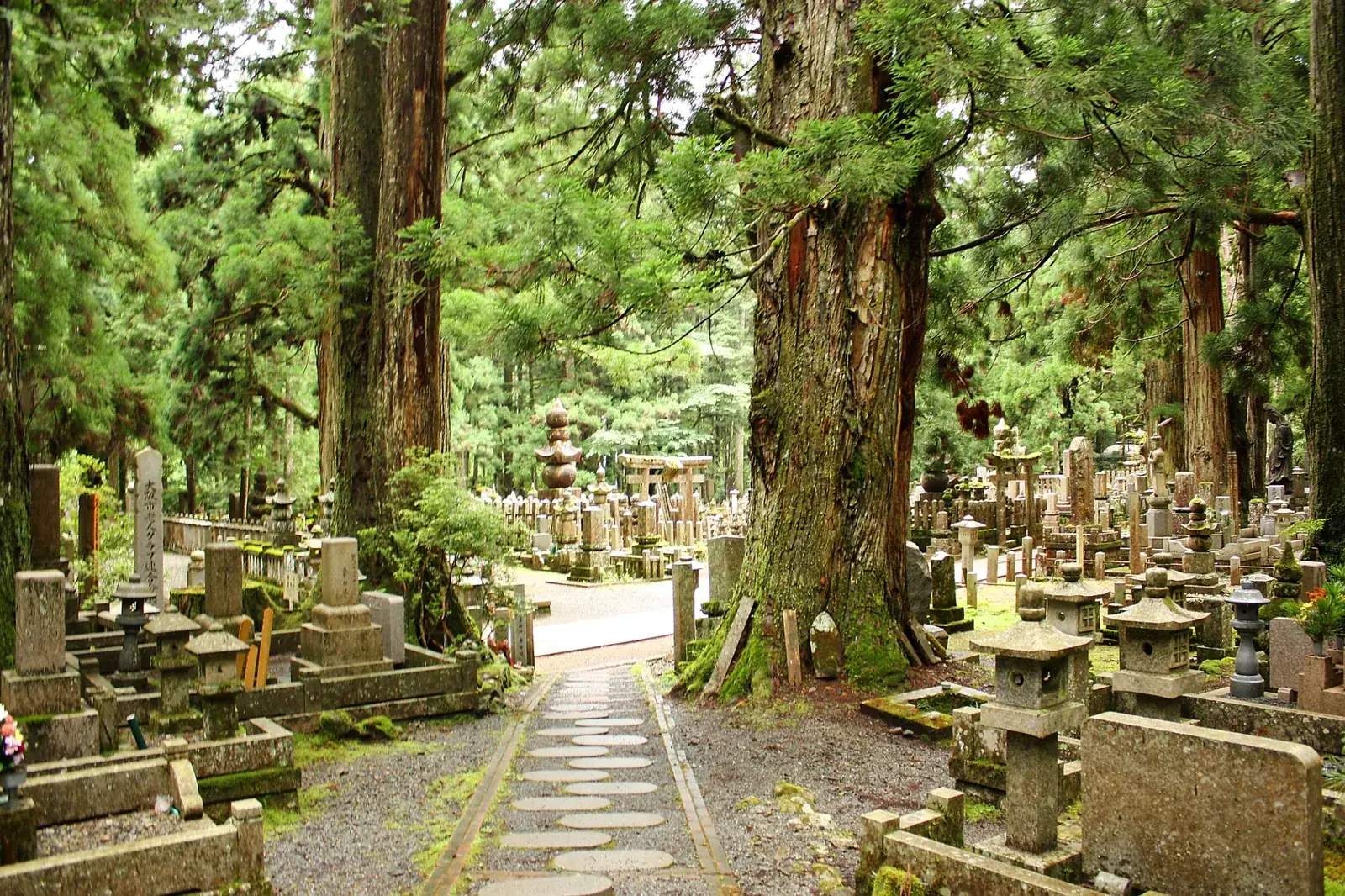
Photo: Andrea Schaffer / Wikimedia Commons / CC BY 2.0. Modified for web.
11. Iga Ueno: Best for Ninja History and a Quiet Castle Town
From Osaka: About 1 hour 40 minutes–2 hours
Best departure point: Osaka-Namba
Transfers: Around 2
Time needed: 6–8 hours
Cost level: Moderate
Getting around: Mostly walkable
Best for: Ninja history, castle town, repeat visitors
Watch out for: The journey is less direct than most Kansai day trips.
Iga Ueno is easy to reduce to one word: ninja.
But the trip works better when you see it as a small castle town with ninja history layered into it.
Once you reach the center, the ninja museum, Iga Ueno Castle, and surrounding streets sit close enough together for a relaxed walking day.
There are fewer major sights than in Nara or Kyoto, and the journey is less direct, so this is not the first trip we would recommend to someone seeing Kansai for the first time.
For repeat visitors, that is exactly the appeal.
The feel of the day: Small-scale, easygoing, and more local than spectacular.
Why choose Iga Ueno: Go when you want something memorable and distinctly different from the standard Kansai route.
12. Kurashiki: Best for Canals, Historic Streets and Art
From Osaka: About 1 hour 15–30 minutes
Best departure point: Shin-Osaka
Transfers: Around 2
Time needed: 6–8 hours
Cost level: High
Getting around: Mostly walkable
Best for: Historic streets, canals, art
Watch out for: Shinkansen travel makes this one of the more expensive options.
Kurashiki looks far from Osaka on a map, but the Shinkansen makes it surprisingly realistic as a day trip.
Once you reach the Bikan Historical Quarter, the travel effort fades quickly. White-walled storehouses line narrow streets, willow trees lean over the canal, and most of the area can be explored on foot.
The Ohara Museum of Art gives the town another reason to linger, especially if you want something beyond temples and castles.
The biggest drawback is cost: using the Shinkansen makes Kurashiki more expensive than most Kansai day trips.
But once you arrive, the sightseeing itself is refreshingly simple.
The feel of the day: A slow historic-town walk with good cafés, architecture, and art.
Why choose Kurashiki: It is one of the easiest ways to reach a beautifully preserved western-Japan town without needing a car.
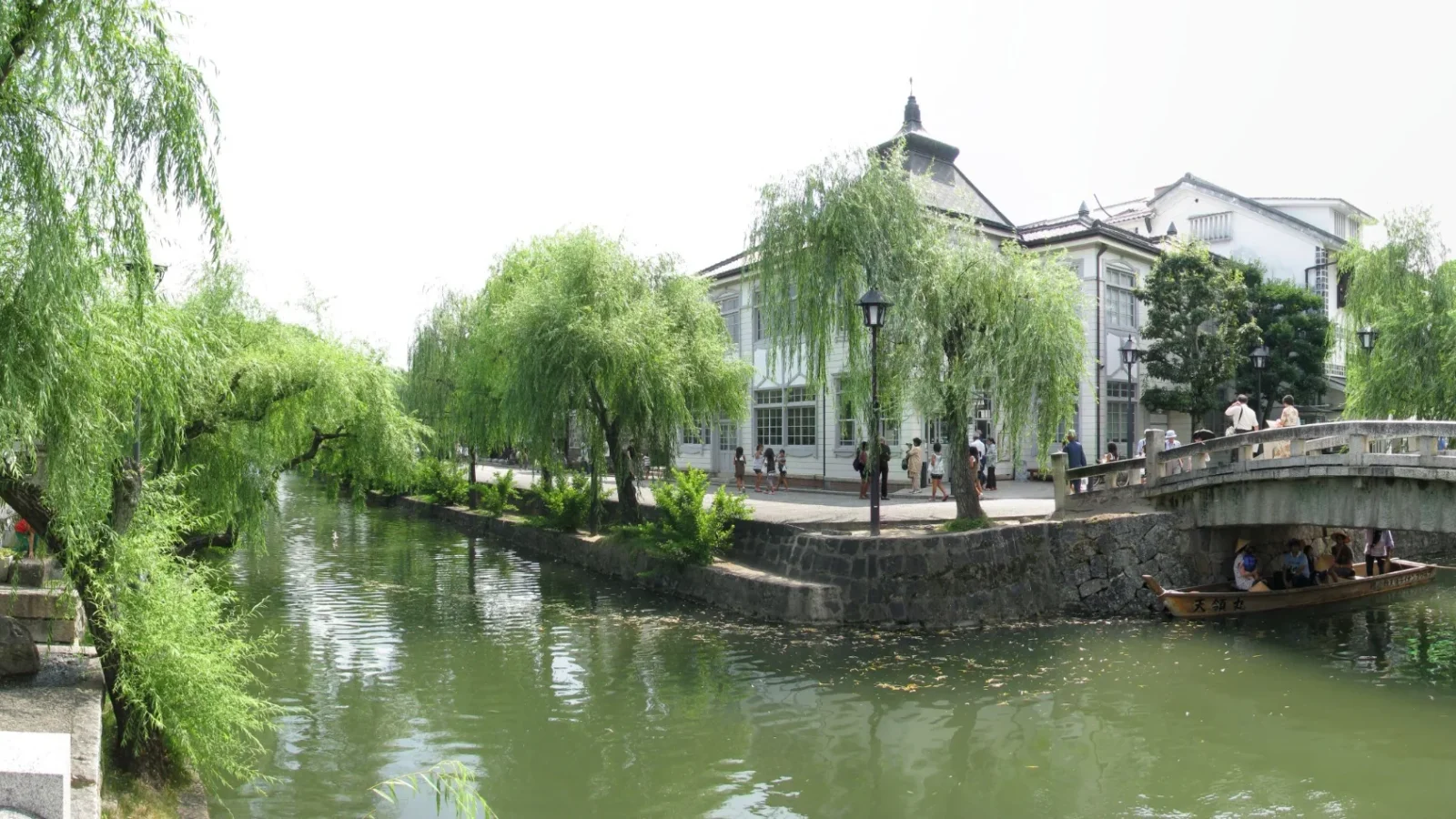
The canal and historic streets of Kurashiki Bikan Historical Quarter.
Photo: Aimaimyi / Wikimedia Commons / CC BY-SA 3.0. Converted to WebP.
Plan your day → See our Kurashiki day trip itinerary from Osaka
13. Shirahama: Best for Beach, Onsen and a Coastal Escape
From Osaka: About 2.5 hours
Best departure point: Osaka Station
Transfers: 0 on many limited-express services
Time needed: Very full day
Cost level: High
Getting around: Local bus needed
Best for: Coast, seafood, hot springs
Watch out for: Local buses determine how much of Shirahama you can realistically see.
Shirahama is the trip to choose when you want Osaka to feel very far away.
After a long but straightforward limited-express ride, the scenery shifts toward white sand, blue water, coastal rock formations, seafood, and hot springs.
The important catch is local transportation.
Shirahama Station is not beside the beach, so buses determine how efficiently you can move between Shirarahama, the coast, and onsen areas.
Trying to see everything will make the day feel rushed. Choose two or three priorities instead.
The feel of the day: Long, scenic, and satisfying if you genuinely want the coast.
Why choose Shirahama: Make the journey when you want a real seaside escape, not simply another sightseeing city.
14. Kinosaki Onsen: Best for a Traditional Onsen Town
From Osaka: About 2 hours 40 minutes
Best departure point: Osaka Station
Transfers: 0 on direct limited-express services
Time needed: Full day
Cost level: High
Getting around: Mostly walkable
Best for: Onsen hopping, traditional town atmosphere
Watch out for: A day trip works, but an overnight stay gives you much more of the onsen-town experience.
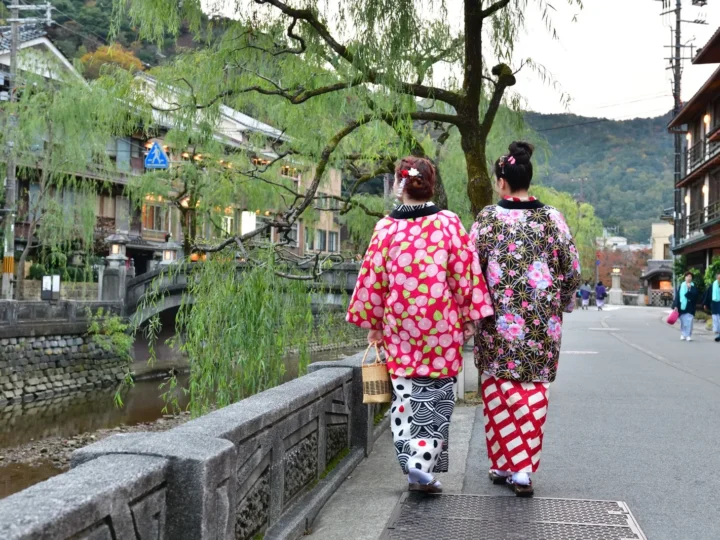
Kinosaki is what many travelers imagine when they picture a traditional Japanese onsen town.
A willow-lined river runs through the center, wooden inns face narrow streets, and public bathhouses are scattered throughout town. Once you arrive, there is very little to figure out — you simply walk.
The direct train makes the long journey easier than the travel time suggests.
You can absolutely visit for the day, soak in one or two baths, eat lunch, and stroll through town before returning to Osaka.
But Kinosaki also reveals the main weakness of day-tripping: evening is part of the experience.
Guests in yukata walking between baths and a night in a ryokan are difficult to reproduce on a daytime visit.
The feel of the day: Slow, nostalgic, and built around the pleasure of doing very little.
Why choose Kinosaki: No other trip on this list gives you a more complete onsen-town atmosphere — but this is the one place where an overnight stay clearly adds value.
Plan your day → Compare a Kinosaki Onsen day trip with an overnight stay
15. Amanohashidate & Ine: Best for Coastal Scenery
From Osaka: About 2 hours 20 minutes+ to Amanohashidate
Best departure point: Osaka Station
Transfers: 1+
Time needed: Very full day
Cost level: High
Getting around: Train + bus and potentially boat
Best for: Coastal scenery, traditional villages
Watch out for: Adding Ine makes the day highly dependent on bus and train connections.
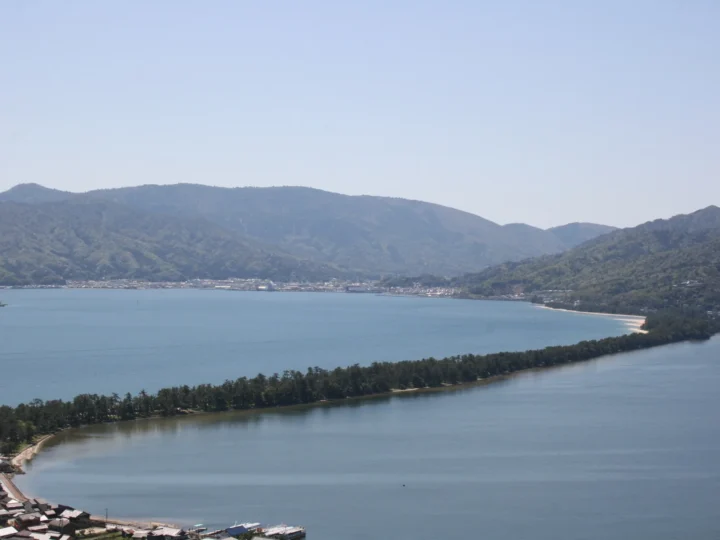
Amanohashidate is where this list stops feeling like a normal city day trip.
The famous sandbar stretches across the bay between mountains and sea, giving you one of the most distinctive landscapes within reach of Osaka.
Amanohashidate alone is realistic as a long day trip.
Adding Ine changes the calculation.
The funaya boat houses along Ine Bay are absolutely worth seeing, but reaching them requires additional local transportation and much more attention to timing.
Leave Osaka early, check the day’s connections in advance, and resist the temptation to add too many stops.
The trade-off: This is one of the most rewarding scenic trips on the list, but also the least spontaneous.
Why choose Amanohashidate & Ine: Choose it when seeing somewhere genuinely different matters more than having an easy day.
Plan your day → See how to visit Amanohashidate and Ine in one day
Official information → Amanohashidate Tourism / Kyoto by the Sea
Easy Day Trips from Osaka by Train
If convenience matters most, these are the strongest choices:
| Destination | Why it is easy |
|---|---|
| Kobe | ~20–25 minutes, direct train |
| Kyoto | ~30 minutes, direct train |
| Nara | ~50–55 minutes from Osaka Station, direct train |
| Himeji | ~1 hour, direct train |
| Uji | Around 1 hour with one easy transfer |
Kobe is the easiest all-round choice if you want a flexible day with almost no transport planning.
Jump back to the main comparison table ↑
Lesser-Known Day Trips from Osaka
These are not secret places. They are simply destinations that receive far less attention from international travelers than Kyoto, Nara, or Kobe.
| Destination | Best reason to go |
|---|---|
| Sakai | Crafts, tea culture, ancient burial mounds |
| Omi Hachiman | Canals, merchant history, quieter old streets |
| Wakayama City | Local ramen, castle, seaside atmosphere |
| Iga Ueno | Ninja history and a small castle town |
For repeat visitors, these four are where this article becomes more interesting than a standard list of Kansai highlights.
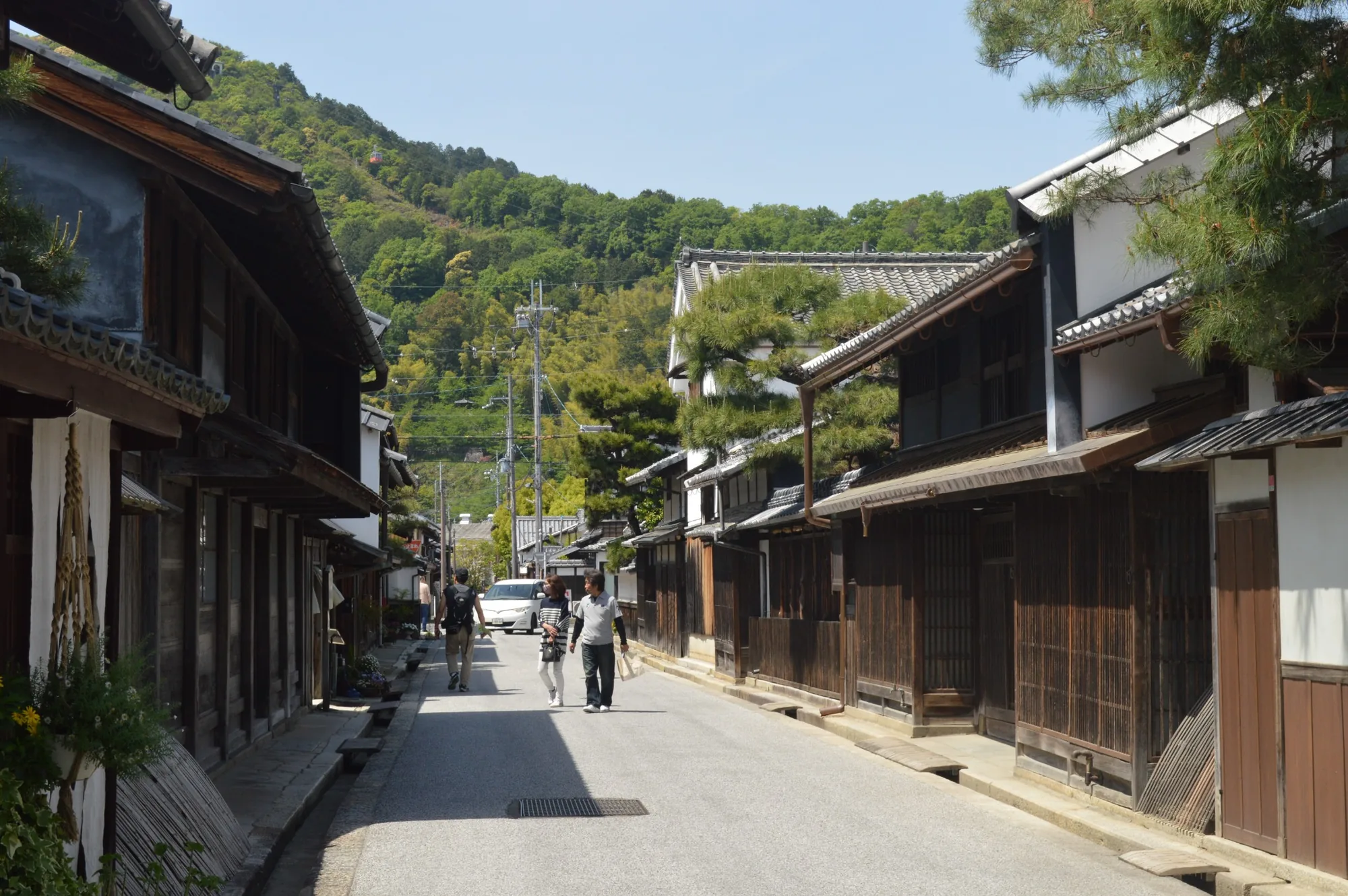
Photo: Asturio Cantabrio / Wikimedia Commons / CC BY-SA 4.0.
Longer Day Trips: Worth It or Better Overnight?
A long train ride does not automatically make a destination a bad day trip.
The better question is whether the experience still feels worth the journey once you arrive.
| Destination | Our take |
|---|---|
| Koyasan | Worth the day trip; stay overnight for a temple stay |
| Shirahama | Worth it if you start early |
| Kinosaki Onsen | Possible, but better overnight |
| Amanohashidate & Ine | Possible with careful planning |
Koyasan gives you the biggest change in atmosphere for the travel involved.
Shirahama works when you keep the itinerary focused.
Kinosaki is easy to enjoy during the day, but the evening atmosphere makes an overnight stay more rewarding.
Amanohashidate alone is much easier than combining Amanohashidate and Ine.
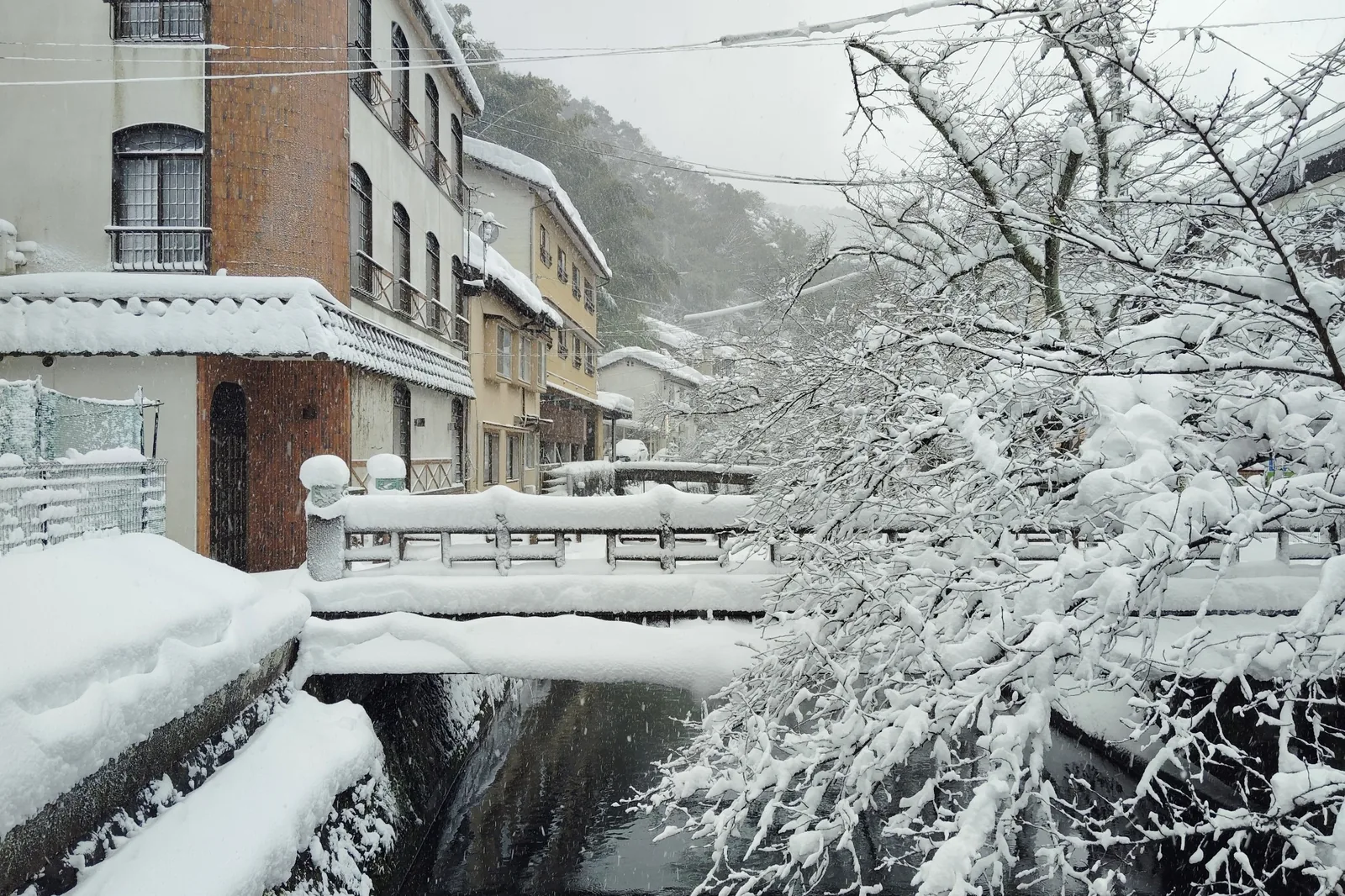
Photo: Asturio Cantabrio / Wikimedia Commons / CC BY-SA 4.0. Converted to WebP and resized for web use.
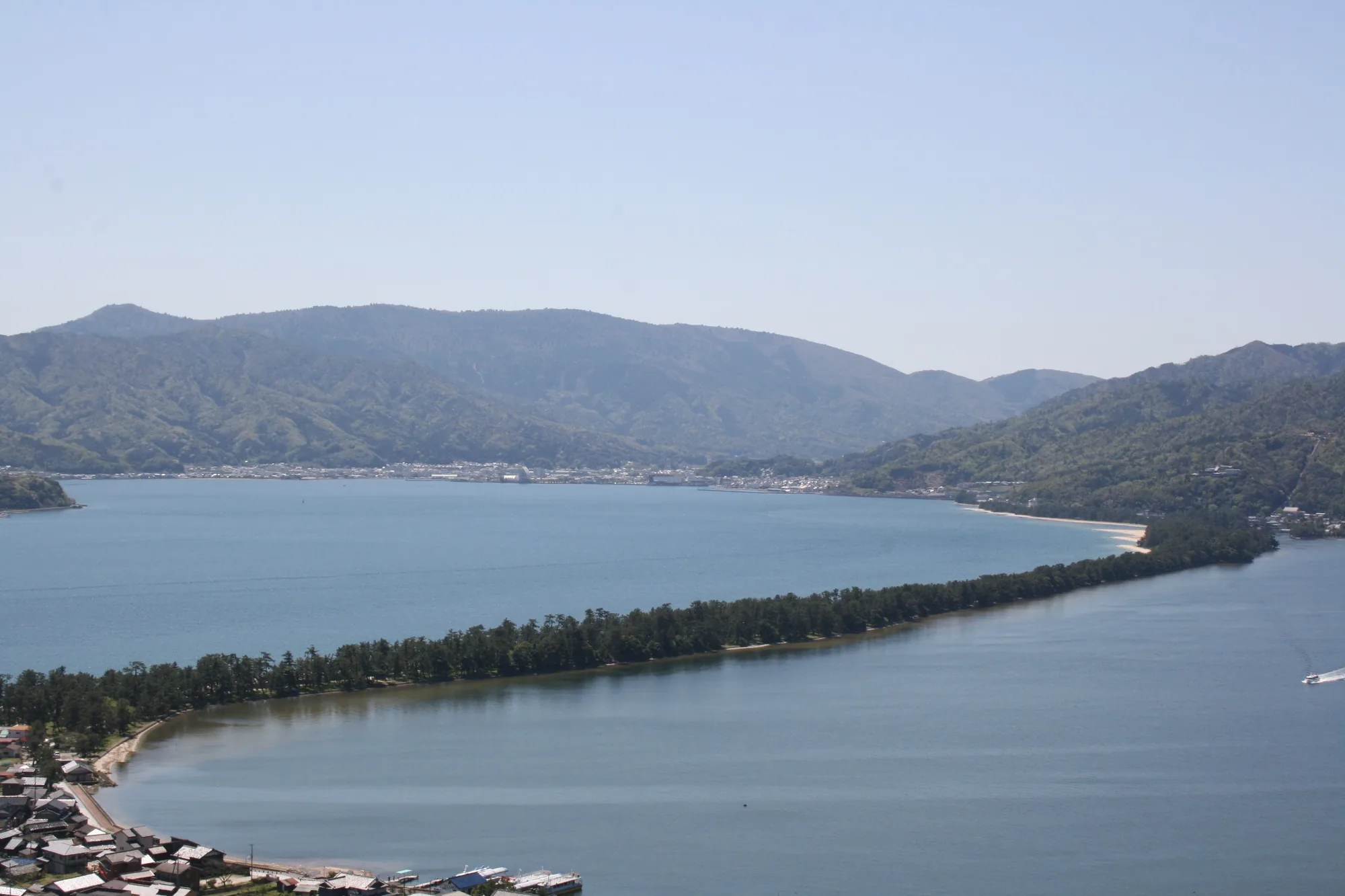
Photo: Kyoto by the Sea / 海の京都DMO
Do You Need a Rail Pass for Osaka Day Trips?
Not necessarily.
Do not buy a rail pass simply because several of your trips involve trains.
The destinations in this guide use a mixture of JR services, private railways, buses, Shinkansen, cable cars, and local transportation. A pass that looks useful for one route may not cover another.
A better approach is:
- Decide which day trips you actually plan to take.
- Check the normal return fare for those routes.
- Compare that total with the price and coverage of any regional pass you are considering.
This matters especially for Koyasan and Arima Onsen, where private railways are involved, and for Kurashiki, where the Shinkansen significantly changes the cost.
For a single easy day trip such as Kobe, Nara, or Himeji, ordinary tickets or an IC card are often simpler than choosing a pass specifically for that journey.
FAQ
What are the best day trips from Osaka?
For a first visit, Kyoto, Nara, Kobe, and Himeji are some of the strongest choices because they combine straightforward transportation with major sights.
Repeat visitors should also consider Sakai, Omi Hachiman, Wakayama City, and Iga Ueno.
What is the easiest day trip from Osaka by train?
Kobe is one of the easiest.
The train journey from Osaka to Sannomiya is short and direct, and the city gives you enough to do for a full day without requiring a complicated route.
Kyoto, Nara, and Himeji are also very straightforward.
Can you visit Kyoto from Osaka in one day?
Yes.
Osaka and Kyoto are close enough that transportation is not the problem. The real challenge is choosing a realistic part of Kyoto to explore instead of trying to see the entire city in one day.
Is Nara an easy day trip from Osaka?
Yes.
From Osaka Station, the direct JR journey takes roughly 50–55 minutes. If you are staying around Namba, the Kintetsu route to Kintetsu-Nara can be even faster.
Many major sights are concentrated around Nara Park and can be explored largely on foot.
What are the best lesser-known day trips from Osaka?
Sakai, Omi Hachiman, Wakayama City, and Iga Ueno are strong options if you have already visited Kyoto and Nara.
They offer very different experiences, from traditional crafts and merchant history to local ramen and ninja culture.
Which day trips from Osaka can be done without a car?
Every destination in this guide can be visited by public transportation.
Convenience varies, though. Kobe and Himeji are extremely straightforward, while Shirahama and Amanohashidate & Ine require more attention to buses and connections.
Which day trips from Osaka are best for repeat visitors?
Sakai, Omi Hachiman, Iga Ueno, Wakayama City, Koyasan, and Amanohashidate & Ine are particularly good if you have already seen Kyoto, Nara, Kobe, and Himeji.
The right choice depends on whether you want local culture, food, history, nature, or a longer scenic trip.
Is Koyasan worth visiting as a day trip from Osaka?
Yes, especially if Okunoin, Buddhist temples, and the mountain atmosphere are your priorities.
Start early. If a temple stay is one of the main experiences you want from Koyasan, staying overnight is the better choice.
Final Thoughts
The best day trip from Osaka is not always the most famous one.
For a first trip to Kansai, Kyoto, Nara, and Himeji are difficult to beat. If you want something quick, flexible, and easy, choose Kobe.
If you have already seen the classics, Sakai, Omi Hachiman, Wakayama City, and Iga Ueno offer quieter days with fewer international visitors.
And if you are willing to spend more time travelling, Koyasan, Shirahama, Kinosaki Onsen, and Amanohashidate can make Osaka feel like a gateway to a much wider part of western Japan.
Osaka works so well as a base because the best day trip does not have to be the farthest or most famous one.
Sometimes it is simply the place that gives you a completely different day.