Featured image: Romeo A / Unsplash
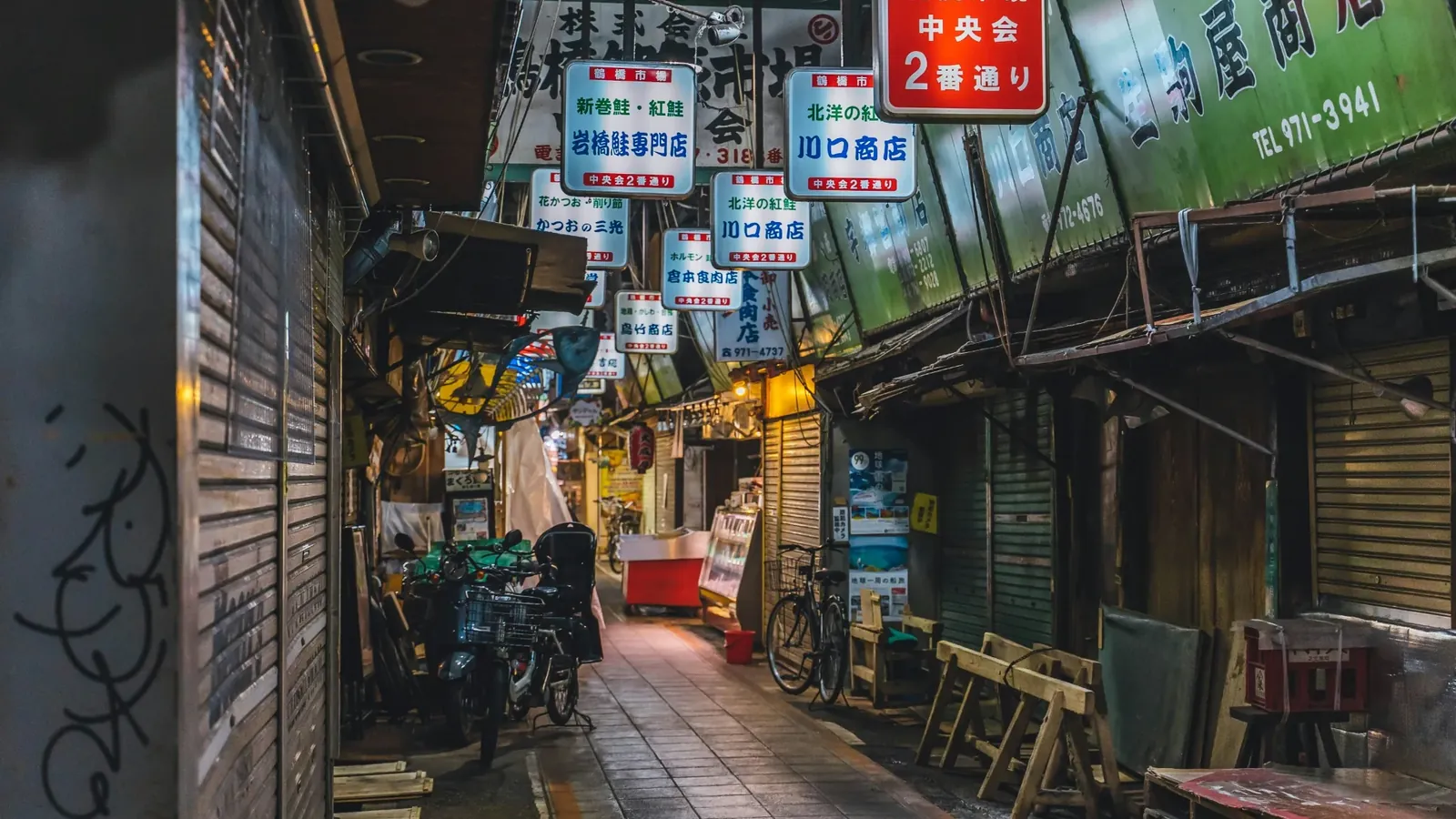
Tsuruhashi announces itself before you fully see it. Step out of the station and you enter a maze of covered alleys filled with hanging shop signs, kimchi counters, Korean groceries, old cafés and the unmistakable aroma of yakiniku drifting from beneath the railway tracks.
This is not the polished Osaka of department stores and landmark viewpoints. Tsuruhashi feels close, crowded and lived-in. Its narrow market passages are used by local shoppers as well as visitors, while the wider streets of Osaka Korea Town bring together long-established food businesses, newer Korean cafés, street snacks and K-culture shops.
The important thing to understand is that Tsuruhashi Market and Osaka Korea Town are connected, but they are not the same place. This guide follows a practical route through both, beginning beside Tsuruhashi Station and continuing east toward Miyuki-dori and Momodani.
Information check: Area access, shop information and opening hours were reviewed on July 31, 2026. Business hours, closing days, prices and payment methods can change, so confirm essential details before traveling.
Why Visit Tsuruhashi?
Many first-time visitors to Osaka focus on Dotonbori, Kuromon Market and Shinsekai. Tsuruhashi offers a different side of the city: less about one famous landmark and more about exploring a neighborhood through its food, shopfronts and everyday rhythm.
The station-side shopping streets grew from the market activity that developed around this important railway junction after World War II. Today, the area still has the slightly chaotic layout of an old market: passages split unexpectedly, shop signs hang overhead and small businesses occupy almost every available corner.
A short walk farther east brings you to Osaka Korea Town. Here, the streets become wider and brighter, and the mix shifts toward Korean street food, groceries, cosmetics, cafés and pop-culture shops. Visiting both areas gives you a much better understanding of Tsuruhashi than stopping only for a plate of yakiniku.
Tsuruhashi Market and Osaka Korea Town Are Different
Online guides often use “Tsuruhashi” and “Osaka Korea Town” as though they describe one compact attraction. In practice, there are two noticeably different areas connected by a walk of roughly 10–15 minutes.
Tsuruhashi Station Area
- Begins immediately beside the station
- Narrow, covered market alleys
- Kimchi, Korean groceries and prepared foods
- Old cafés and small family-run shops
- Many yakiniku restaurants beneath and around the railway tracks
- Most atmospheric earlier in the day
Osaka Korea Town
- Located around Miyuki-dori in Momodani
- About a 10–15 minute walk from Tsuruhashi Station
- A wider shopping street that is easier to navigate
- Kimbap, chijimi, tteokbokki and Korean sweets
- Groceries, cosmetics, cafés and K-culture shops
- Most shops become active from late morning
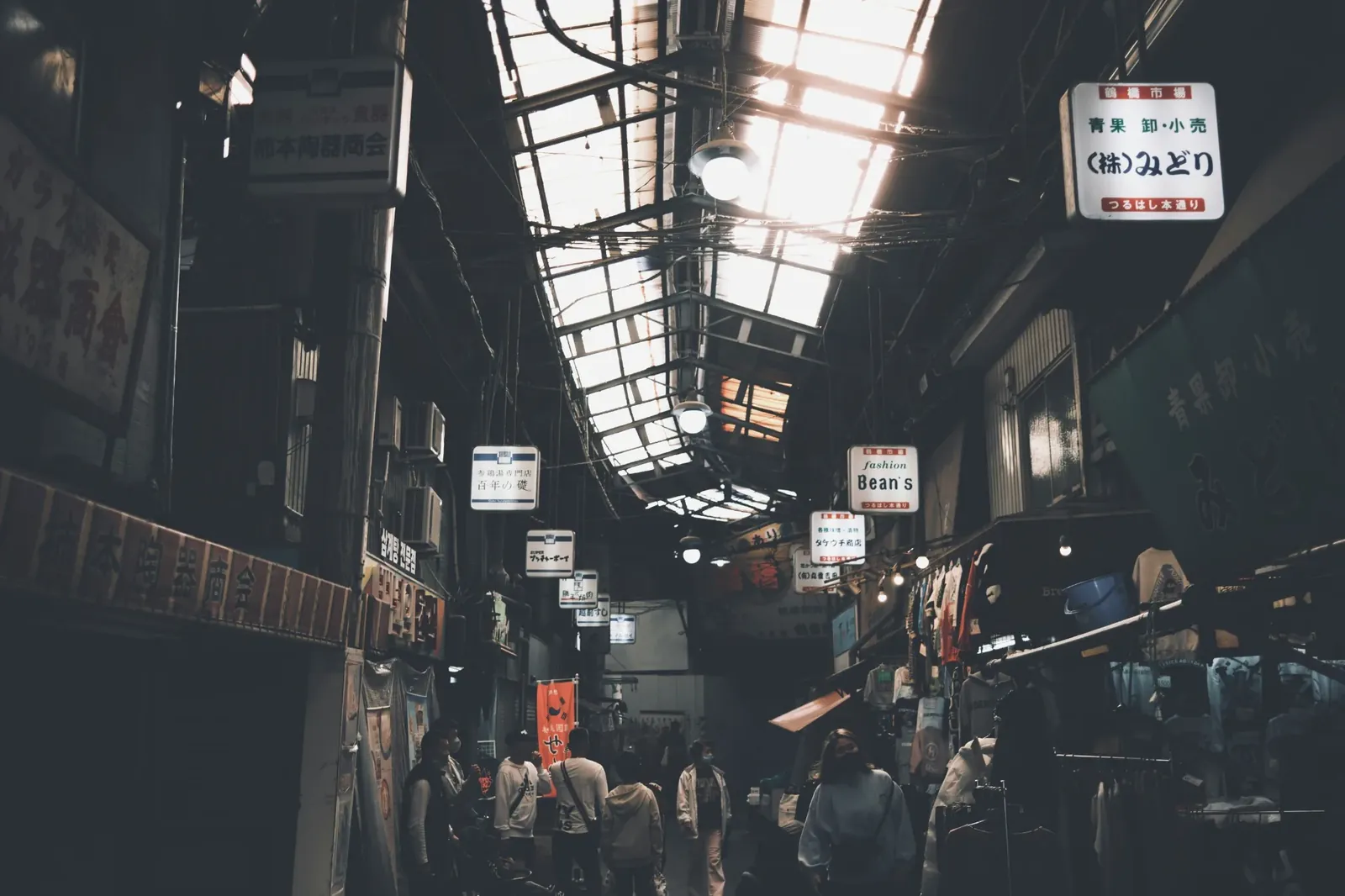
The station-side market is darker, narrower and more labyrinth-like than Osaka Korea Town.
Photo: Clark Gu / Unsplash
A Practical Half-Day Route Through Tsuruhashi
The route below begins at Tsuruhashi Station, passes through the old market streets, continues to Osaka Korea Town and finishes near Momodani Station. Travelers who want yakiniku can return to Tsuruhashi in the late afternoon or evening.
Map of the Route
How to Get to Tsuruhashi
Tsuruhashi is one of Osaka’s easiest food districts to reach because three railway networks meet at the same station:
For this route, begin on the west or central side of the station and follow signs toward the market streets. The passages start almost immediately outside the station, so it is easy to enter the wrong lane and briefly lose your sense of direction.
That is not necessarily a problem. Wandering is part of the experience, but save the route map on your phone before entering the covered market because GPS can feel less precise beneath the roofs and railway structures.
Stop 1: Coffee House Rock Villa
Coffee House Rock Villa is a wonderfully unusual place to begin. Hidden inside the market area, this retro kissaten is known for its kimchi sandwich—a combination that sounds odd until you taste how the acidity and spice of kimchi cut through the richer sandwich fillings.
The café also serves siphon coffee, juice and more conventional sandwiches. It is a better introduction to Tsuruhashi than immediately ordering a large meal because it gives you time to settle into the neighborhood before the food stalls and shops become busier.
Stop 2: Explore Tsuruhashi’s Station-Side Market
After breakfast, resist the urge to follow the most direct route. The appeal of Tsuruhashi Shopping Street lies in its smaller passages, where food shops sit beside clothing stores, produce counters and businesses that have served local customers for decades.
The shopping area developed from the informal market that formed around Tsuruhashi shortly after World War II. The location was already an important transport and distribution point, and its railway connections helped the market grow into a place where residents could find an unusually wide range of goods.
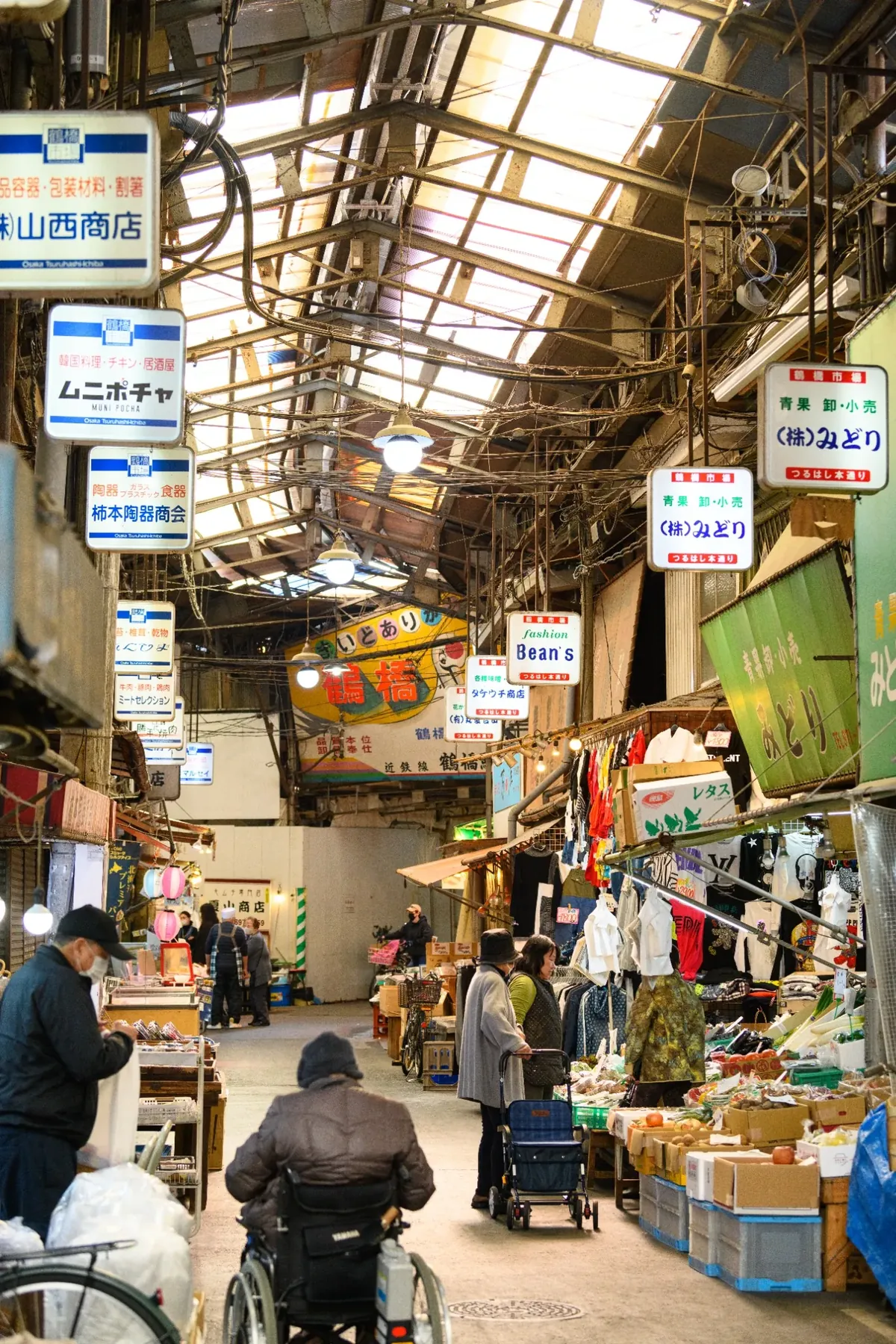
Tsuruhashi’s market passages remain part of an everyday shopping district, not just a sightseeing attraction.
© Osaka Convention & Tourism Bureau
Doi Shoten: Old-School Korean Market Snacks
Doi Shoten is a casual stop for travelers who want to try a small portion of Korean market food without sitting down for a full meal. Its official listing highlights chijimi, tteokbokki, grilled horumon and kimchi.
Choose one item to share. Chijimi is the easiest introduction, while grilled horumon provides a preview of the flavors that made Tsuruhashi famous as a yakiniku district.
Choi Obasan’s Kimchi: More Than a Kimchi Shop
Choi Obasan’s Kimchi is useful for travelers who want more choice and a place to sit. Alongside its kimchi and Korean side dishes, the shop operates a casual dining area serving dishes such as bibimbap, cold noodles, chijimi and Korean stews.
One distinctive snack is amadai chijimi, a Korean-style pancake made with tilefish. It is cooked on a large hot plate until golden and works well as a shared snack before continuing toward Osaka Korea Town.
Toyoda Kimchi Shop: Food Souvenirs Near the Market
Toyoda Kimchi Shop is a long-established specialist near the Tsuruhashi market area. It is a practical place to compare several types of handmade kimchi or buy Korean seasonings to take home.
Browse here before walking to Osaka Korea Town, but consider postponing refrigerated purchases until the end of your visit. Carrying kimchi through a full afternoon of sightseeing is rarely the most elegant travel plan.
Stop 3: Walk to Osaka Korea Town
From the station-side market, continue east toward Miyuki-dori. The walk takes roughly 10–15 minutes, depending on how often you stop, and gradually reveals how different the two parts of the neighborhood feel.
Around Tsuruhashi Station, the covered passages are narrow, dim and slightly disorienting. As you approach Osaka Korea Town, the streets become brighter and easier to follow. Korean grocery stores, street-food counters, cafés, cosmetics shops and K-culture stores line a long, mostly straight shopping street.
Osaka Korea Town is sometimes described simply as part of Tsuruhashi, but it is more accurately associated with the Miyuki-dori area of Momodani. Visiting both areas on foot is what makes this route worthwhile: the walk connects an older market district with a newer, more visitor-friendly Korean shopping street.
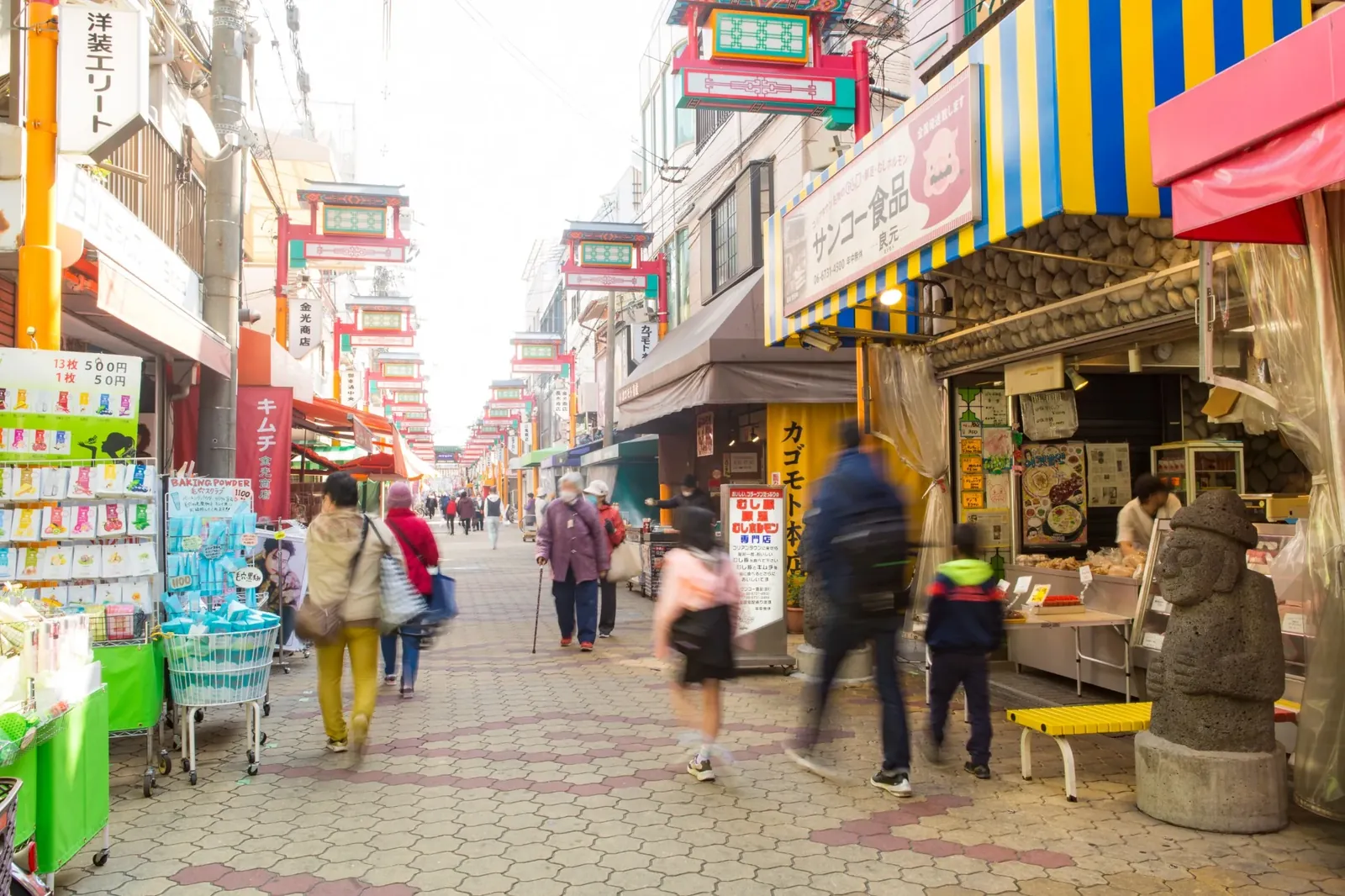
Osaka Korea Town is wider, brighter and easier to navigate than the covered market beside Tsuruhashi Station.
© Osaka Convention & Tourism Bureau
How to Approach the Food Stalls
The biggest mistake in Osaka Korea Town is ordering a full serving at the first shop that looks good. Kimbap, chijimi and Korean sweets are often more filling than they appear, especially when several stops are planned.
A better approach is to choose two or three foods that show different sides of the neighborhood. Share one kimbap roll, try a small savory snack and finish with one Korean sweet. This leaves room for a café break—or yakiniku later in the day.
Mugi no Ie: Handmade Kimbap
Mugi no Ie specializes in kimbap, the Korean seaweed rice roll that makes one of the most practical street-food choices in Osaka Korea Town. Several fillings are usually available, including meat-based varieties, along with Korean side dishes such as japchae and chijimi.
Kimbap resembles a Japanese makizushi roll at first glance, but the flavor is different. The rice is usually seasoned with sesame oil rather than sushi vinegar, while the fillings often include vegetables, egg and seasoned meat.
One roll can be surprisingly substantial. If you plan to visit several food shops, buy one to share rather than treating it as a complete lunch.
atelier K: Goguma Bread and Korean Sweets
After a savory stop, atelier K offers something more unusual than the Korean desserts commonly found in tourist districts. Its signature item is goguma bread—a sweet-potato-shaped bread with a soft outer layer and a sweet potato filling.
The shop also produces gamja bread, which is designed to resemble a potato, along with Korean rice cakes and traditional sweets. These items are playful, photogenic and easy to share, but their appeal is not purely visual. The soft texture and gentle sweetness make them a good contrast to spicy kimchi or tteokbokki.
Popular products can sell out, so this stop works best around lunchtime or in the early afternoon rather than near closing time.
See atelier K’s official goguma bread post on Instagram.
Stop 4: Miyukimori Tenjingu Shrine
Miyukimori Tenjingu Shrine stands beside the busy shopping streets of Osaka Korea Town, yet the atmosphere changes almost immediately when you enter the grounds. The food stalls, conversations and shop music fade into a quieter space shaded by mature trees.
The shrine reflects the history of the neighborhood before Miyuki-dori became associated with Korean food and culture. Its presence also helps explain the name of the street: Miyuki-dori developed around the area historically connected with Miyukimori.
You do not need long here. Ten to fifteen minutes is enough to appreciate the architecture, pause between food stops and experience a calmer side of the neighborhood.
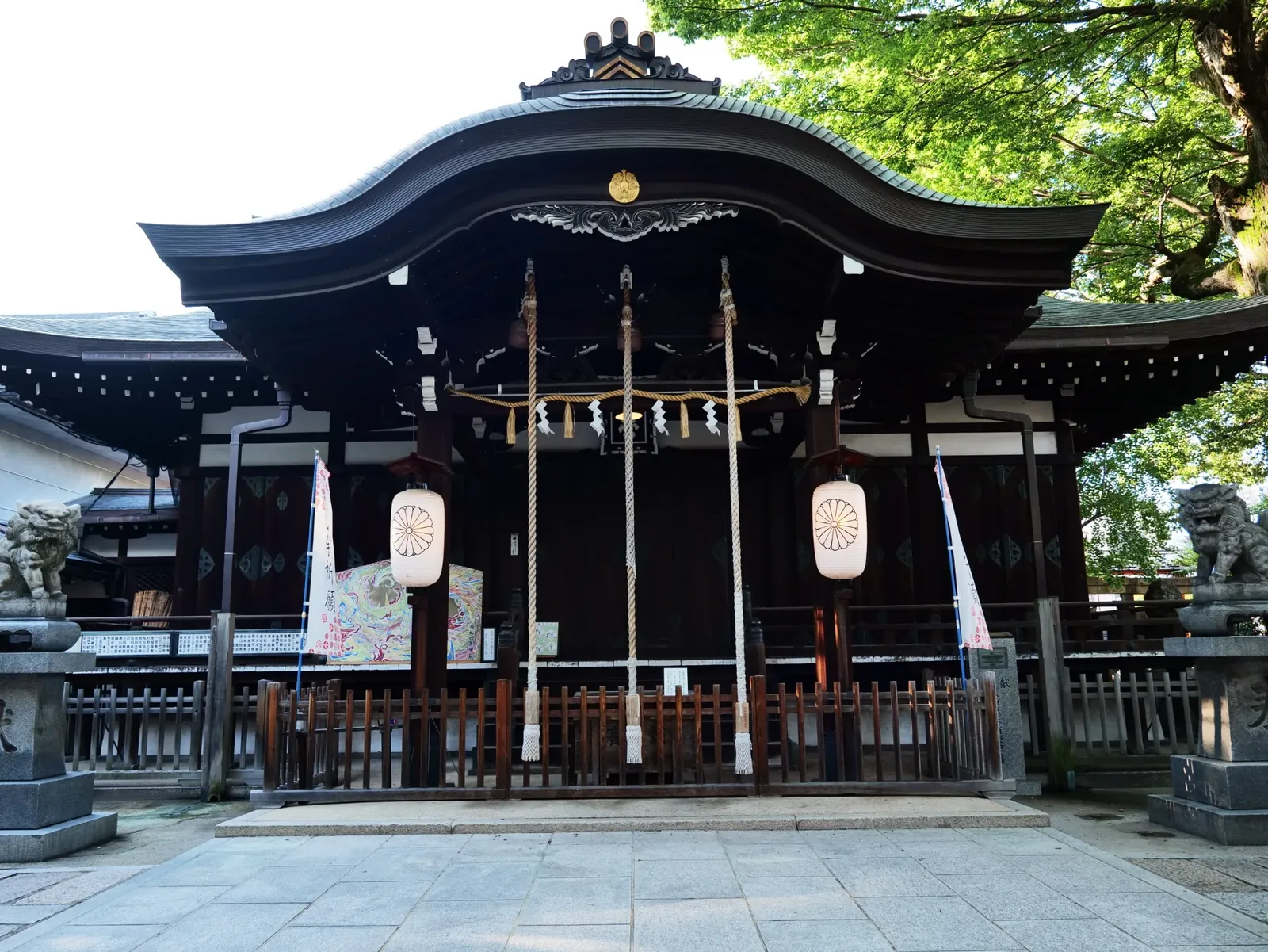
Miyukimori Tenjingu Shrine provides a quiet cultural stop beside the lively streets of Osaka Korea Town.
Photo: Hyppolyte de Saint-Rambert /
Wikimedia Commons /
CC BY 4.0 /
Cropped and converted to WebP
Stop 5: Osaka Korea Town History Museum
Food is the easiest way to enter Tsuruhashi and Osaka Korea Town, but it should not be the only context visitors take away. The area has been shaped by migration, trade, changing communities and the experiences of Korean residents in Osaka.
The Osaka Korea Town History Museum introduces the development of the neighborhood and the people connected with it. It is a small stop rather than a major museum, but it gives valuable background to the markets and shopping streets outside.
Visiting the museum changes the tone of the route in a useful way. Instead of treating Korea Town as only a collection of photogenic foods and K-pop shops, it becomes a neighborhood with a layered local history.
Finish at Momodani—or Return to Tsuruhashi
From the eastern side of Osaka Korea Town, Momodani Station is a convenient place to finish. The JR Osaka Loop Line connects directly with Tennoji, Osaka Station and several other major areas.
However, if yakiniku is part of your plan, return west toward Tsuruhashi Station. The walk back helps rebuild your appetite, and the station area has a larger concentration of casual yakiniku and horumon restaurants.
Finish at Momodani
- Best if you have eaten enough
- Convenient for continuing around Osaka
- Avoids retracing the walking route
- Works well for a 3–4 hour visit
Return to Tsuruhashi
- Best if you want yakiniku for dinner
- More evening restaurant choices
- Easy access to JR, Kintetsu and Osaka Metro
- Turns the route into a longer half-day outing
Where to Eat Yakiniku in Tsuruhashi
Tsuruhashi is one of Osaka’s best-known yakiniku districts. Walk around the station in the late afternoon and the smell of meat grilling over open flames begins to drift through the streets beneath the railway tracks.
The area has everything from smoky, casual horumon counters to larger restaurants serving carefully selected wagyu. For this route, the two choices below suit different types of traveler: Yakiniku Horumon Sora for a lively local experience, and Hakuundai for a more comfortable meal that can be reserved in advance.
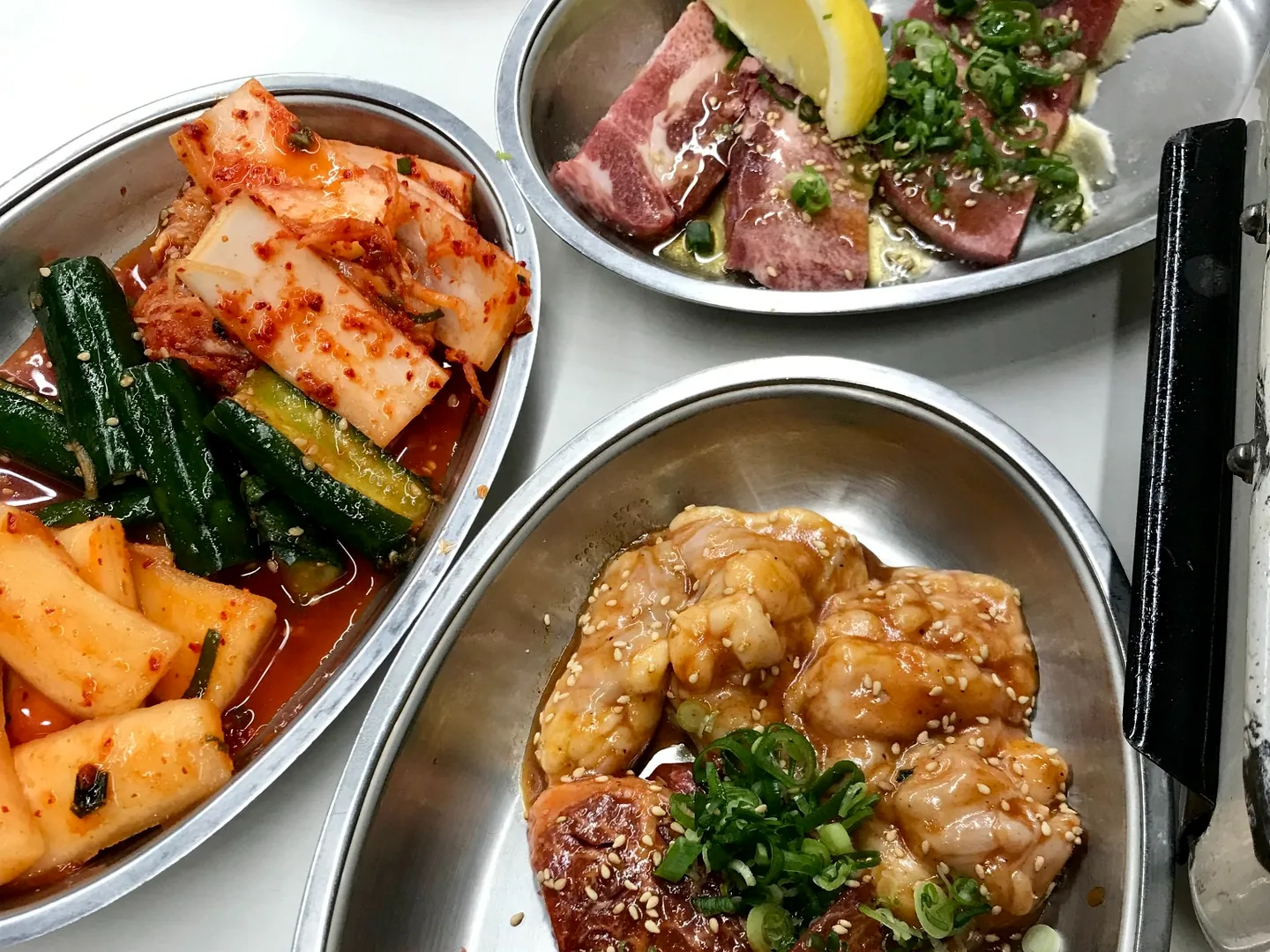
Tsuruhashi is famous for casual yakiniku restaurants serving marinated beef, horumon and Korean side dishes.
Yakiniku Horumon Sora: Best for a Local, Casual Experience
Yakiniku Horumon Sora is one of the best-known casual horumon restaurants around Tsuruhashi Station. Its menu is designed around smaller portions, making it possible to compare several different cuts without committing to one large plate.
This is the better choice for travelers who want energy, smoke and a less polished local atmosphere. Seating is limited to 90 minutes, so decide on a few cuts before ordering and avoid treating the meal as a long, leisurely dinner.
Hakuundai: Best for Reservations and First-Time Visitors
Hakuundai offers a more structured and comfortable introduction to Tsuruhashi yakiniku. The restaurant is close to the station, accepts online reservations and serves Japanese black beef alongside Korean dishes.
It is a better fit for families, small groups and travelers who prefer to know where they will eat before arriving. Lunch is also available, making Hakuundai useful for visitors who do not want to wait until evening for yakiniku.
Choose Sora If You Want
- A casual and energetic atmosphere
- Several small horumon portions
- A more adventurous meal
- A classic Tsuruhashi experience
Choose Hakuundai If You Want
- A reservable table
- A more comfortable dining room
- Japanese black beef
- Lunch or a planned family dinner
Practical Tips for Visiting Tsuruhashi
Visit Before the Market Winds Down
Tsuruhashi works best from late morning to mid-afternoon. Many food shops and traditional market businesses close earlier than the yakiniku restaurants around the station.
Beginning between 9:30 and 10:30 gives you time for the station-side market before walking to Osaka Korea Town around lunchtime. Arriving late in the afternoon can leave you with plenty of dinner choices but fewer open market stalls.
Check Individual Closing Days
There is no single closing day followed by every business. Wednesday is a common day off for some long-established market shops, while cafés, street-food stores and restaurants follow their own schedules.
Check the official page or social-media account of any shop that is essential to your route. Temporary closures, sold-out products and seasonal hours are common enough that old travel articles should not be your only source.
Bring Some Cash
Card and mobile payments are becoming more common, especially in larger restaurants and newer shops. Smaller market businesses may still accept cash only, and payment options can change without being reflected immediately on English-language map listings.
Carrying a few ¥1,000 notes and coins makes small food purchases easier and reduces the chance of needing to find an ATM in the middle of the market.
Expect Narrow and Busy Passages
The station-side alleys are working market streets rather than pedestrian sightseeing spaces. Delivery carts, bicycles, shoppers and visitors may all be moving through the same narrow passage.
Avoid stopping suddenly for photos, and do not position bags or tripods where they block a store entrance. Osaka Korea Town is wider, but it can become crowded around lunchtime and on weekends.
Use Public Transportation
The area is much easier to visit by train than by car. Roads around Osaka Korea Town include narrow residential streets, and vehicle traffic—including bicycles—is prohibited along the main shopping street from 10:00 to 18:00. Cyclists must dismount and walk their bicycles through the street during those hours.
Tsuruhashi Station is served by JR, Kintetsu and Osaka Metro, while Momodani Station provides a convenient one-way endpoint on the JR Osaka Loop Line.
Where to Stay Near Tsuruhashi
Staying near Tsuruhashi is particularly convenient for travelers planning a day trip to Nara, exploring eastern Osaka or using the Kintetsu railway network. It also allows you to enjoy yakiniku in the evening without worrying about a long trip back across the city.
The area is less polished than Umeda or Namba and has fewer large international hotels. In return, it provides quick access to JR, Osaka Metro and Kintetsu trains, along with a distinctly local atmosphere.
Tsuruhashi Is a Good Base For
- Nara day trips on the Kintetsu line
- Food-focused Osaka visits
- Access to eastern Osaka
- Travelers who prefer local neighborhoods
Consider Another Area If You Want
- A large selection of international hotels
- Umeda nightlife and department stores
- Immediate access to Dotonbori
- A more polished tourist district

Is Tsuruhashi Worth Visiting?
Tsuruhashi is not an essential stop for every first-time visitor to Osaka. Travelers with only one or two days may prefer to focus on the city’s major landmarks and central districts.
For repeat visitors, food lovers and anyone interested in neighborhood-scale Osaka, it is one of the city’s most rewarding areas. The contrast between the station-side market and Osaka Korea Town gives the walk a sense of progression that is missing from many single-street food districts.
Tsuruhashi is most enjoyable when you arrive without expecting a perfectly organized attraction. Some passages are dark, shop hours vary and the neighborhood can feel visually chaotic. That roughness is precisely what gives the area its character.
Frequently Asked Questions
Is Tsuruhashi the Same as Osaka Korea Town?
No. Tsuruhashi’s station-side market begins immediately beside Tsuruhashi Station, while Osaka Korea Town is centered on Miyuki-dori around 10–15 minutes away on foot. The areas are connected and often discussed together, but they have noticeably different layouts and atmospheres.
How Long Should I Spend in Tsuruhashi?
Allow three to five hours for the market, Osaka Korea Town, food stops and a short cultural visit. Add another 60–90 minutes if you plan to return to Tsuruhashi Station for yakiniku.
What Time Should I Visit?
Late morning is best. Starting around 9:30–10:30 allows you to explore the station-side market before continuing to Osaka Korea Town when its food shops become busier.
Can I Visit Tsuruhashi at Night?
Yes, but the experience changes. Many market and food shops close by the late afternoon, while the yakiniku restaurants near Tsuruhashi Station remain the main reason to visit in the evening.
Is Tsuruhashi Good for Solo Travelers?
Yes. The market and Korea Town are easy to explore alone, and many snacks can be purchased individually. Yakiniku can be less efficient for one person because it is harder to try several cuts, but some casual restaurants accommodate solo diners.
What Food Is Tsuruhashi Famous For?
Tsuruhashi is especially known for yakiniku, horumon, kimchi, chijimi, kimbap, tteokbokki and Korean side dishes. Newer cafés and bakeries also sell Korean-inspired desserts and breads.
Do I Need Cash?
Not everywhere, but cash is strongly recommended. Larger restaurants and newer shops often accept cards or mobile payments, while smaller market businesses may not.
Is Tsuruhashi Suitable for Children?
Osaka Korea Town is generally easy to visit with children, although weekends can be crowded. The station-side market has narrow passages, and individual cafés or restaurants may have age restrictions, smoking policies or limited room for strollers.
Can I Take Kimchi Back to My Hotel?
Usually, but ask the shop about refrigeration and packaging. Strong smells can escape even from wrapped containers, so carry kimchi separately from clothing and confirm whether your hotel room has a suitable refrigerator.
Which Station Should I Use?
Start at Tsuruhashi Station for the old market and yakiniku district. Finish at Momodani Station for a one-way route through Osaka Korea Town, or walk back to Tsuruhashi if you plan to have dinner there.
Final Thoughts
Tsuruhashi rewards curiosity more than careful sightseeing. Its best moments often come from turning into an unexpected market passage, sharing one more snack than planned or noticing how quickly the neighborhood changes between the railway tracks and Miyuki-dori.
Begin with the older market near Tsuruhashi Station, walk slowly toward Osaka Korea Town and leave enough time to understand the community beyond its food. Then, if your appetite survives the journey, return to the station for yakiniku.
This is Osaka at its most layered: informal, crowded, deeply local and much more interesting than a single photograph of Korean street food might suggest.