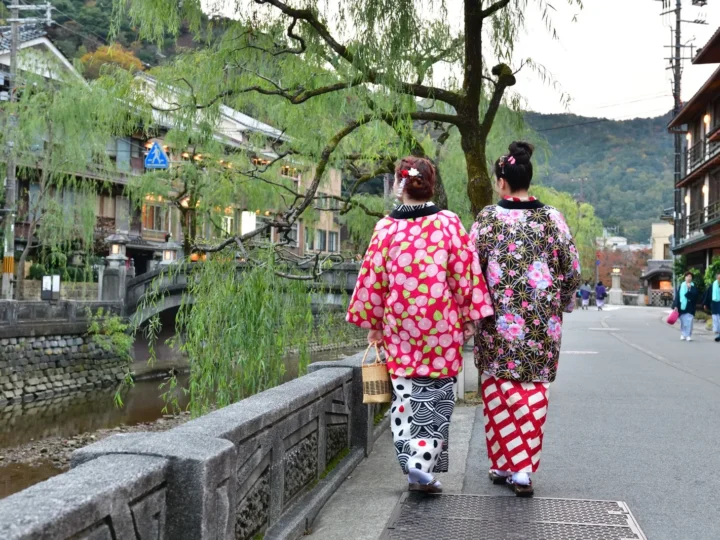
Uji is often treated as a quick stop for Byodoin Temple and a matcha dessert. That works for a short visit, but it misses much of what makes the town worth exploring.
Spend a full day here and Uji begins to feel less like an extension of Kyoto and more like a destination of its own. This route moves from one of Japan’s most recognizable temple views to a local tempura lunch, the banks of the Uji River, a hands-on matcha experience, traditional pottery and the literary world of The Tale of Genji.
This itinerary is not designed as a temple marathon. Byodoin is the only essential temple on the main route. The rest of the day focuses on tea culture, food, craftsmanship, the river and the quieter side of central Uji.
The route starts at JR Uji Station and finishes at Keihan Uji Station, allowing you to walk through the town in one direction rather than returning along the same streets.
Before settling on a day of tea and riverside walks, compare Kyoto-area and other day trips from Osaka to see which route fits your plans.
Uji Day Trip: Quick Information
Uji Day Trip Itinerary at a Glance
Why Uji Is Worth More Than a Short Matcha Stop
Uji is compact enough to explore on foot, which makes it tempting to rush through in two or three hours. A short visit normally includes Byodoin, one matcha café and the walk back to the station.
That version covers the town’s most famous attractions, but it leaves little time to understand why tea is so closely connected with Uji or how the river shapes the atmosphere of the town. It also skips the eastern bank, where the streets become quieter and tea workshops, pottery and literary sites replace the busier souvenir shops around Byodoin.
Our 5-Day Osaka and Kansai Itinerary combines a shorter Uji visit with Fushimi. The route in this article is different: it is for travelers who want to give Uji most of the day and experience the town at a slower pace.
The result is a day trip with a clear balance: one major temple, one local lunch, one tea experience, one riverside route and one cultural museum. You still see the famous version of Uji, but the afternoon reveals why the town deserves more than a quick stop between Kyoto and Nara.
How to Get to Uji from Osaka and Kyoto
From Kyoto Station
Take the JR Nara Line from Kyoto Station to JR Uji Station. The Miyakoji Rapid service takes approximately 16 minutes, making Uji one of the easiest day trips from Kyoto.
Make sure you board a train that stops at Uji. A local service also reaches the town, but the journey takes longer.
From Osaka Station
Take a JR Special Rapid service from Osaka Station to Kyoto Station, then transfer to the JR Nara Line for Uji. The fastest connections take approximately 46 minutes, although allowing around one hour is more realistic once transfer and waiting time are included.
Travelers starting in Namba, Tennoji or another part of Osaka should allow additional time. Our guide to getting around Osaka explains the main railway networks and transport cards used in the city.
If you are using Osaka as a base for Uji, Kyoto and other Kansai day trips, the first transfer of the morning changes by hotel area. Compare Osaka accommodation areas before choosing between Umeda, Namba, Tennoji or a quieter central base.
JR Uji Station and Keihan Uji Station Are Different
Uji has two main stations, and they are not in the same place.
JR Uji Station is more convenient when arriving from Kyoto Station, Osaka or Nara. Keihan Uji Station sits near Uji Bridge and is useful for traveling toward Fushimi, Gion-Shijo, Sanjo or Osaka via Chushojima.
This itinerary deliberately uses both. You arrive at JR Uji Station, walk through central Uji and finish near Keihan Uji Station. This avoids an unnecessary return walk at the end of the day.
Uji Day Trip Map
Use this map to follow the recommended route from JR Uji Station to Keihan Uji Station. Optional and alternative stops are shown in a separate layer.
Uji Day Trip Itinerary
8:30 a.m. — Arrive at JR Uji Station
JR Uji Station is a practical place to begin because it puts you within walking distance of both Byodoin and LovA, the lunch stop used later in the morning.
There is no need to spend long at the station. Check that you have water, especially in summer, and walk toward Byodoin through the streets leading away from the station. The walk takes around 10 to 15 minutes depending on your pace.
The large tea-jar-shaped postbox outside the station is an easy first reminder that tea is not simply a tourist product here. It is part of how Uji presents its local identity before you even reach the main sightseeing area.
8:45 a.m. — Visit Byodoin Before the Busiest Part of the Day
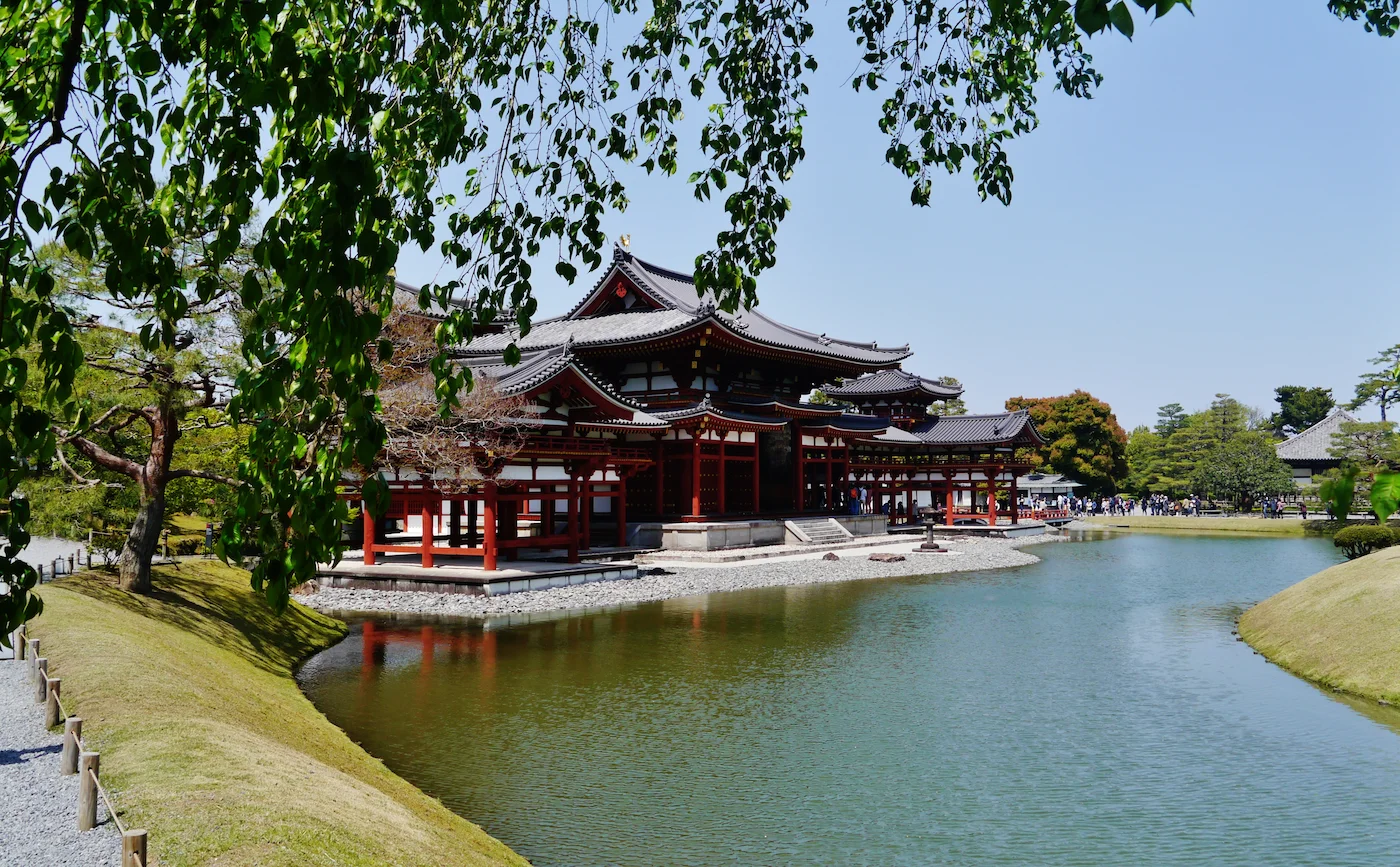
Byodoin is the one unmissable historical site on this route. The temple’s Phoenix Hall appears on Japan’s 10-yen coin, but the familiar image does not fully prepare you for seeing the building across the pond.
Arriving when the garden opens gives you a better chance to enjoy the view before the area becomes busier. Walk around the pond first rather than stopping immediately at the entrance. The angle changes as you move, and the classic symmetrical view appears from the opposite side of the water.
The general admission ticket includes the garden and the Byodoin Museum Hoshokan. Do not treat the museum as an optional extra. Its dark, modern interior creates a sharp contrast with the open garden and allows you to see important sculptures and temple objects at much closer range.
Allow approximately 90 minutes for the garden and museum. Travelers interested in entering the Phoenix Hall interior must purchase a separate timed ticket after entering the grounds.
The garden is open from 8:45 a.m. to 5:30 p.m., with final entry at 5:15 p.m. The Hoshokan Museum is open from 9:00 a.m. to 5:00 p.m. General adult admission is ¥700. Entry to the Phoenix Hall interior costs an additional ¥300 and uses timed sessions. Check the latest official notice because interior access can change for ceremonies, maintenance or seasonal operations.
If the next interior session fits your route, it can be a worthwhile addition. If the wait is long, continue with the garden and museum rather than allowing one timed entry to delay the rest of the day.
10:20 a.m. — Browse Byodoin Omotesando
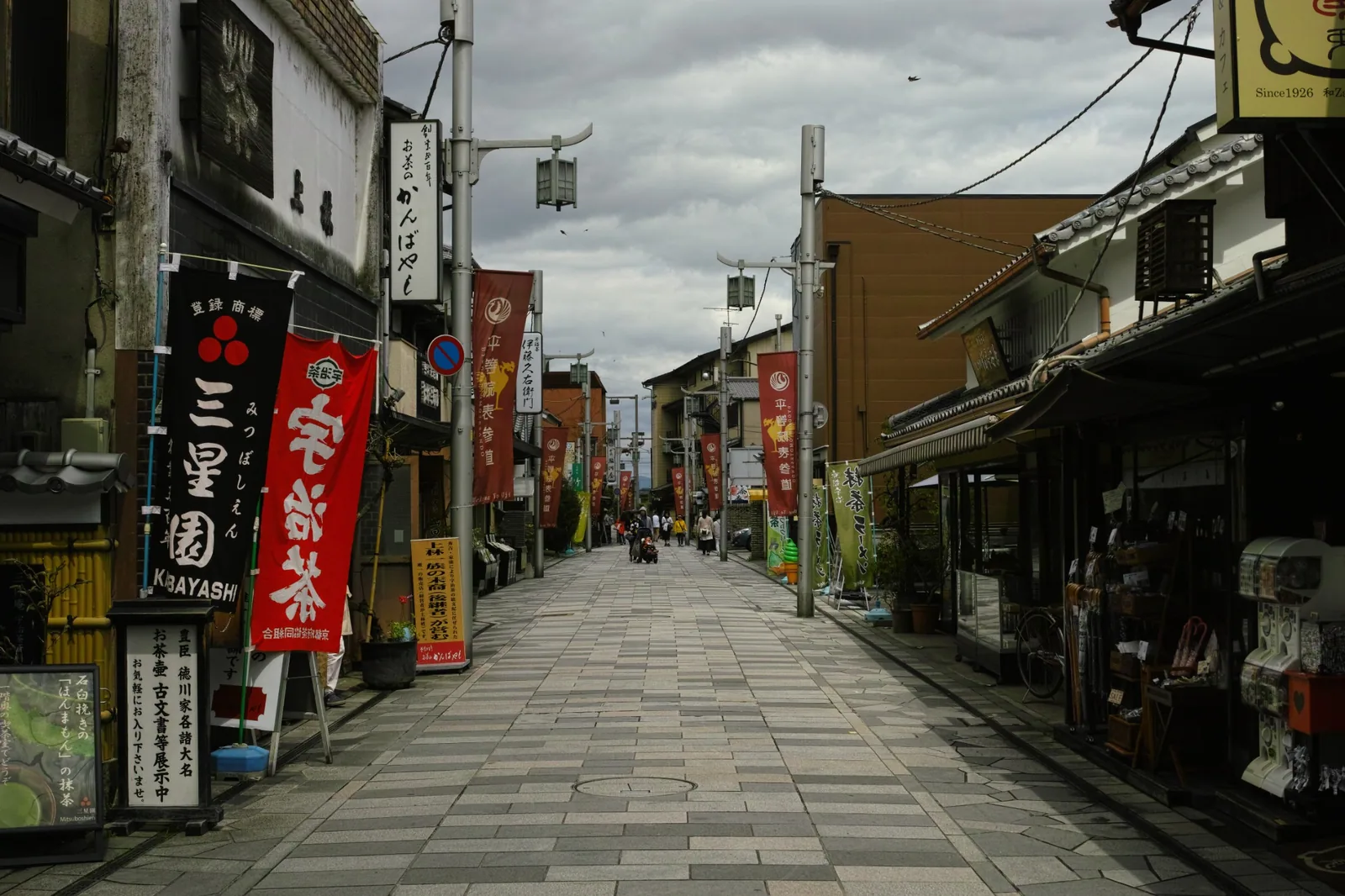
After leaving Byodoin, continue along Byodoin Omotesando. This compact street is lined with established tea shops, souvenir stores and cafés, and it is usually the busiest part of central Uji.
It can be tempting to begin ordering matcha drinks and desserts immediately, but this itinerary saves the main tea experience for the afternoon. Use the morning instead to look at how Uji tea is presented and sold.
Browse the tea canisters, teapots and packages of matcha, gyokuro and sencha. Even without buying anything, the displays help show that “Uji tea” is not one single drink. Different leaves, growing methods and preparation styles produce very different flavors.
This is also a good time to choose a practical souvenir. Tea bags and sealed packets are easier to carry than fragile sweets, while a small tea canister or cup can be more memorable than another box of matcha cookies.
Keep this stop to around 30 minutes. A long café break here would make the morning feel repetitive, especially because the afternoon includes a hands-on matcha-making experience and an optional final stop at a historic tea house.
11:15 a.m. — Have an Early Lunch at Seasonal Cuisine and Tempura LovA
After a morning surrounded by tea shops, LovA provides a useful change of pace. The restaurant serves seasonal Japanese food and tempura in a renovated traditional house a few minutes from JR Uji Station.
The short walk back toward the station may look like a minor detour on the map, but the restaurant fits this itinerary better than adding another matcha-focused meal near Byodoin. Lunch becomes a distinct part of the day rather than an extension of the souvenir street.
The recommended order is the LovA Tempura Set. The current set includes natural shrimp, fish, five seasonal vegetables, Kyoto-style wheat gluten, kombu kimchi, salad, a small side dish, miso soup and rice. The exact ingredients may change with the season, which is part of the appeal.
LovA uses rice oil and a batter made with rice flour and domestic wheat. The restaurant also offers a vegetable tempura set. However, that option uses bonito-based stock, so it is not suitable for strict vegetarians or vegans unless the restaurant confirms an adjustment in advance.
The renovated interior feels more like a neighborhood restaurant than a large sightseeing-area dining room. That makes LovA a good fit for Local Steps Japan: it is close to the main route, but it does not feel designed only for tour groups.
Lunch begins at 11:15 a.m., with last orders at 2:00 p.m. LovA is normally closed on Tuesdays and may close on Saturdays when events are held. The LovA Tempura Set is currently ¥1,900. Check the restaurant’s latest schedule before visiting, and consider reserving when traveling on weekends.
The official Instagram post below shows the style of LovA’s tempura meal. The post itself was originally published with information about evening service, so use the restaurant’s official website—not the old Instagram caption—for current opening details.
View this post on InstagramA post shared by LovA (@lovauji)
Finishing lunch around 12:15 p.m. leaves enough time to walk back toward Uji Bridge and begin the riverside section without rushing. From this point, the route moves away from the busiest streets and into the part of Uji that many short visits miss.
12:30 p.m. — Return to the Uji River
Allow roughly 15 minutes to walk from LovA back toward the river. The streets become busier again as you approach the central sightseeing area, but the atmosphere changes quickly once the shops give way to open water and forested hills.
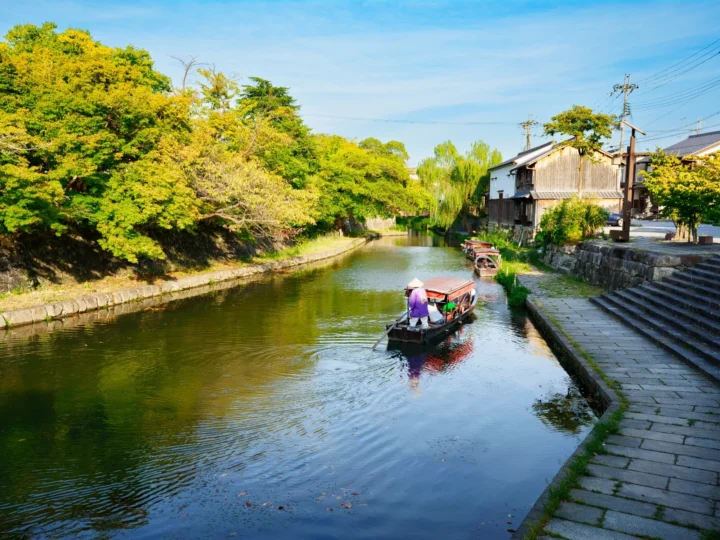
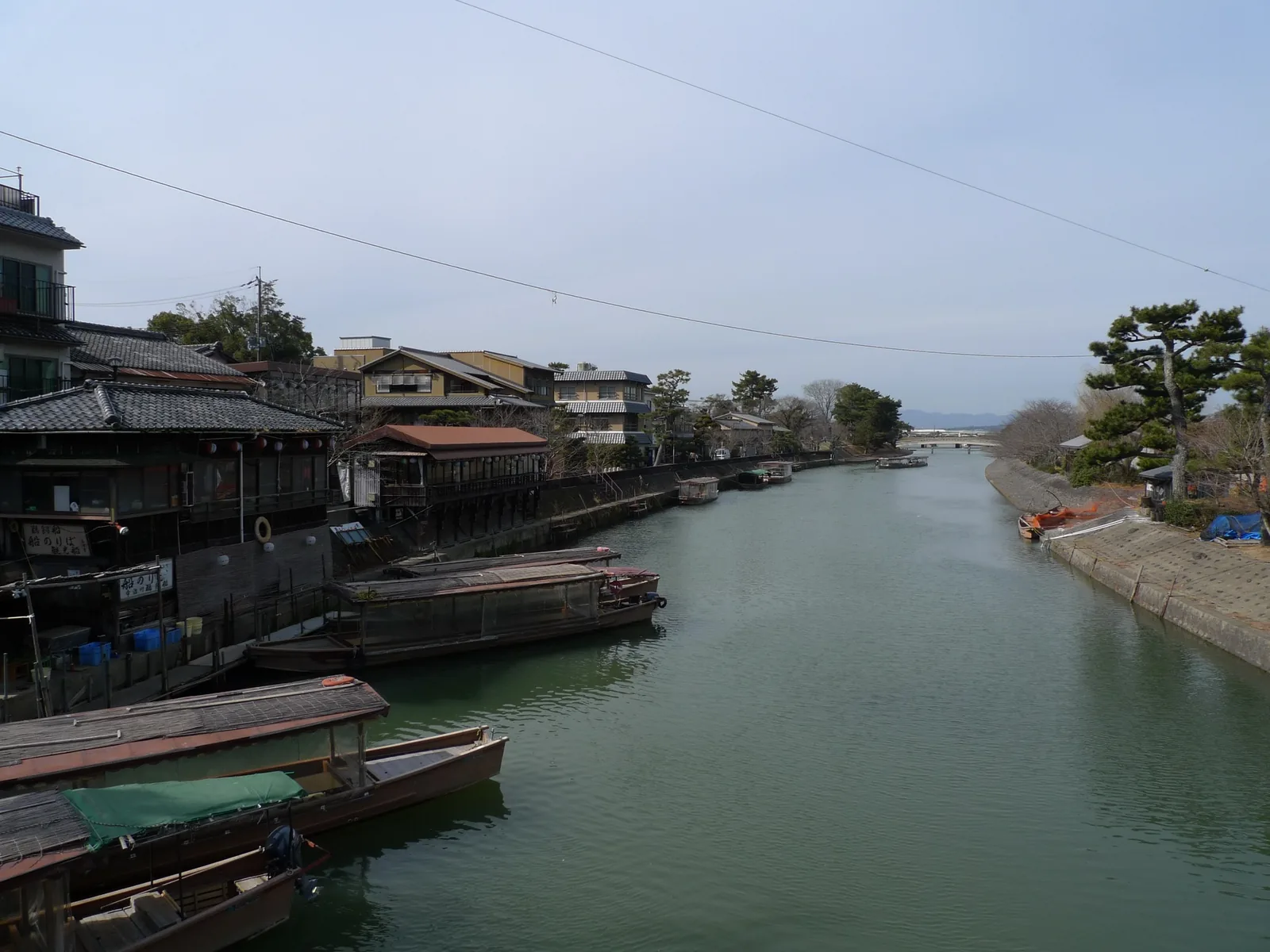
The Uji River is not simply a scenic background to the town. It separates the busier area around Byodoin from the quieter eastern bank and provides the natural route connecting the afternoon stops.
Begin near Uji Bridge, one of the town’s best-known landmarks. Bridges have stood around this location for centuries, connecting routes between Kyoto, Nara and eastern Japan. The present bridge is modern, but its position has long made this part of Uji an important crossing point and a setting for stories, battles and tea culture.
Before continuing upstream, look toward the river, low mountains and traditional buildings. The view feels very different from central Kyoto.
You will also find a statue of Murasaki Shikibu near the bridge. It introduces Uji’s connection with The Tale of Genji, which becomes more important later in the afternoon.
12:45 p.m. — Walk Through Uji Park and See the Thirteen-Story Stone Pagoda
From Uji Bridge, follow the western bank upstream and enter Uji Park. The park occupies islands in the middle of the river, connected to both banks by pedestrian bridges.
This section should not feel like another attraction that must be completed quickly. It is the transition between the busy morning and the experience-focused afternoon, so allow time to look back toward the Byodoin side of town, watch the movement of the river and rest briefly if needed.
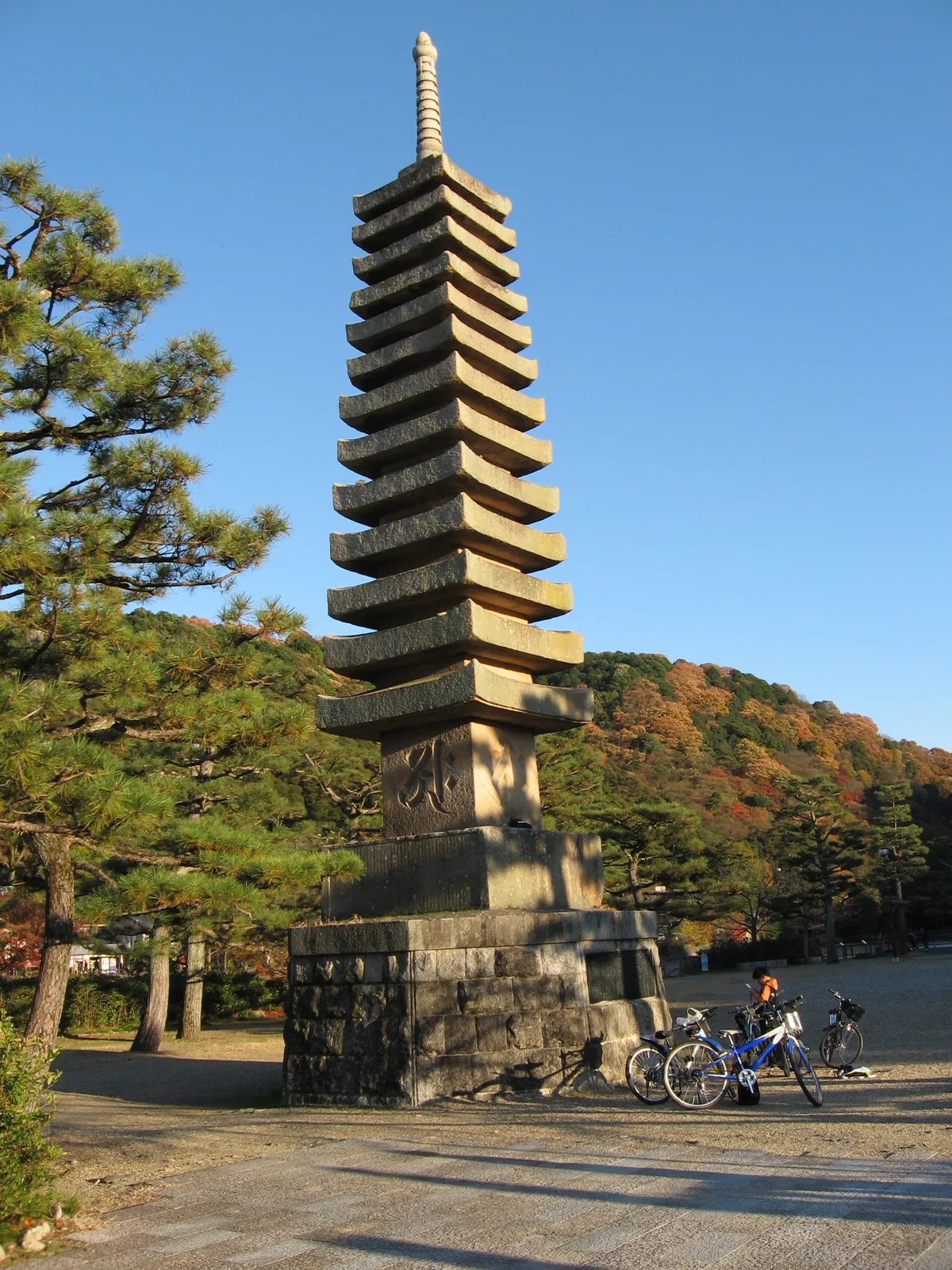
The main landmark is the Thirteen-Story Stone Pagoda. It was originally erected in 1286 by the Buddhist priest Eison in connection with the rebuilding of Uji Bridge and a prohibition on killing animals in the river.
The pagoda later collapsed during flooding and remained lost for many years before being reconstructed in the early twentieth century. At around 15 meters tall, its scale and isolated position make it one of the most distinctive sights along the river.
Continue toward Asagiri Bridge at the eastern end of the islands. This is the bridge you use to cross to the quieter side of the river.
The open view from Asagiri Bridge is one of the best moments on the route. Behind you are the central shopping streets and the Byodoin side of town; ahead are wooded slopes, tea-related workshops and smaller cultural sites.
The distance is not long, but the schedule includes the walk from LovA, photo stops and a short break. During heavy rain or high water, follow local closure notices and do not enter restricted paths.
1:30 p.m. — Grind Your Own Matcha at Fukujuen Uji Tea Workshop
The afternoon’s main experience takes place at Fukujuen Uji Tea Workshop, a short walk from Asagiri Bridge.
Many travelers experience Uji tea only as a finished drink or dessert. This workshop adds the missing step by showing how tencha—the processed tea leaf used to make matcha—becomes the fine green powder used in a tea bowl.
For this itinerary, choose the Making Matcha Tea with a Stone Mortar course. During the approximately 40-minute session, you grind tencha using a traditional stone mill, prepare the freshly ground matcha and drink it yourself.
Turning the stone mill looks simple, but the pace matters. Moving too quickly does not necessarily produce better matcha. The process makes it easier to appreciate how much time is involved in creating even a small serving of finely ground tea.
This is why the earlier stop on Byodoin Omotesando was kept short. The morning introduced the different types of tea and products sold in Uji; the workshop allows you to take part in the preparation yourself.
The stone-mill matcha course takes approximately 40 minutes and costs ¥2,750 per person as of August 2026. Advance booking is recommended because same-day participation depends on availability. Check the official booking calendar for available start times and irregular closure dates.
The official Instagram post below shows visitors using the stone mill during the experience. The carousel also gives a useful sense of the size of the equipment and how participants work with it.
View this post on InstagramA post shared by Fukujuen Uji Tea Workshop (@ujikoubou_fukujuen)
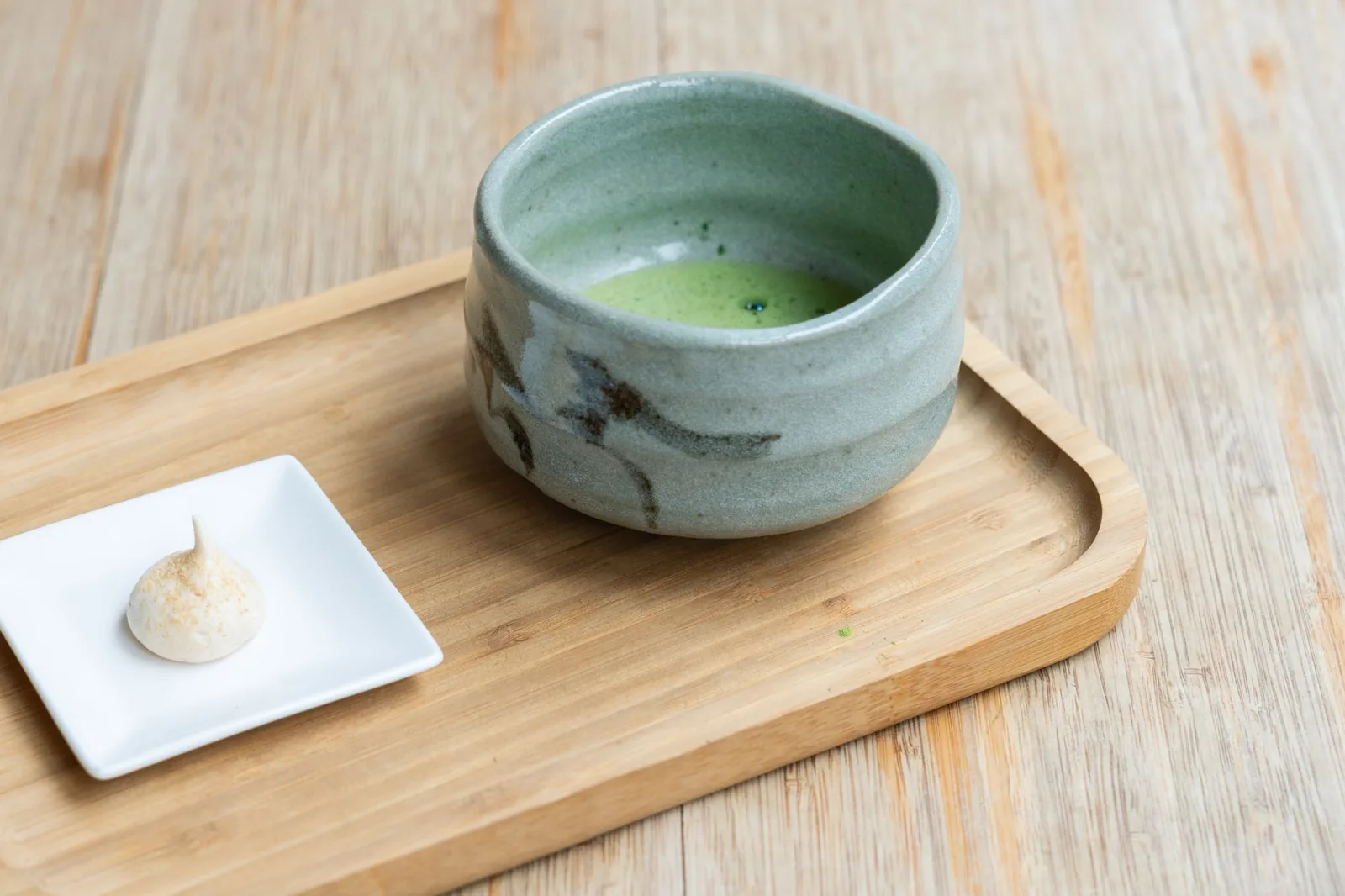
The photograph above is an illustrative image rather than the exact bowl or presentation used during the workshop. The official Instagram embed shows the actual Fukujuen experience.
2:15 p.m. — Connect Tea with Local Craft at Asahiyaki Shop & Gallery
After making matcha, continue to Asahiyaki Shop & Gallery. It is close enough to visit without adding a major detour, but it changes the focus from the tea itself to the objects used to prepare and serve it.
Asahiyaki has produced pottery in Uji since around the beginning of the seventeenth century. Its history developed alongside the area’s tea culture, and the shop displays tea bowls, cups, teapots, plates and other ceramics made for both formal tea settings and everyday use.
You do not need to understand pottery techniques to enjoy this stop. Look at the differences between the shapes, glazes and textures of the tea bowls. A handmade bowl is not perfectly uniform, and those small variations affect how it feels when held and viewed.
The timing here is deliberately short. This itinerary includes the shop and gallery, not a pottery-making class. A full ceramics workshop would require substantially more time and should replace another afternoon activity rather than be added to the route.
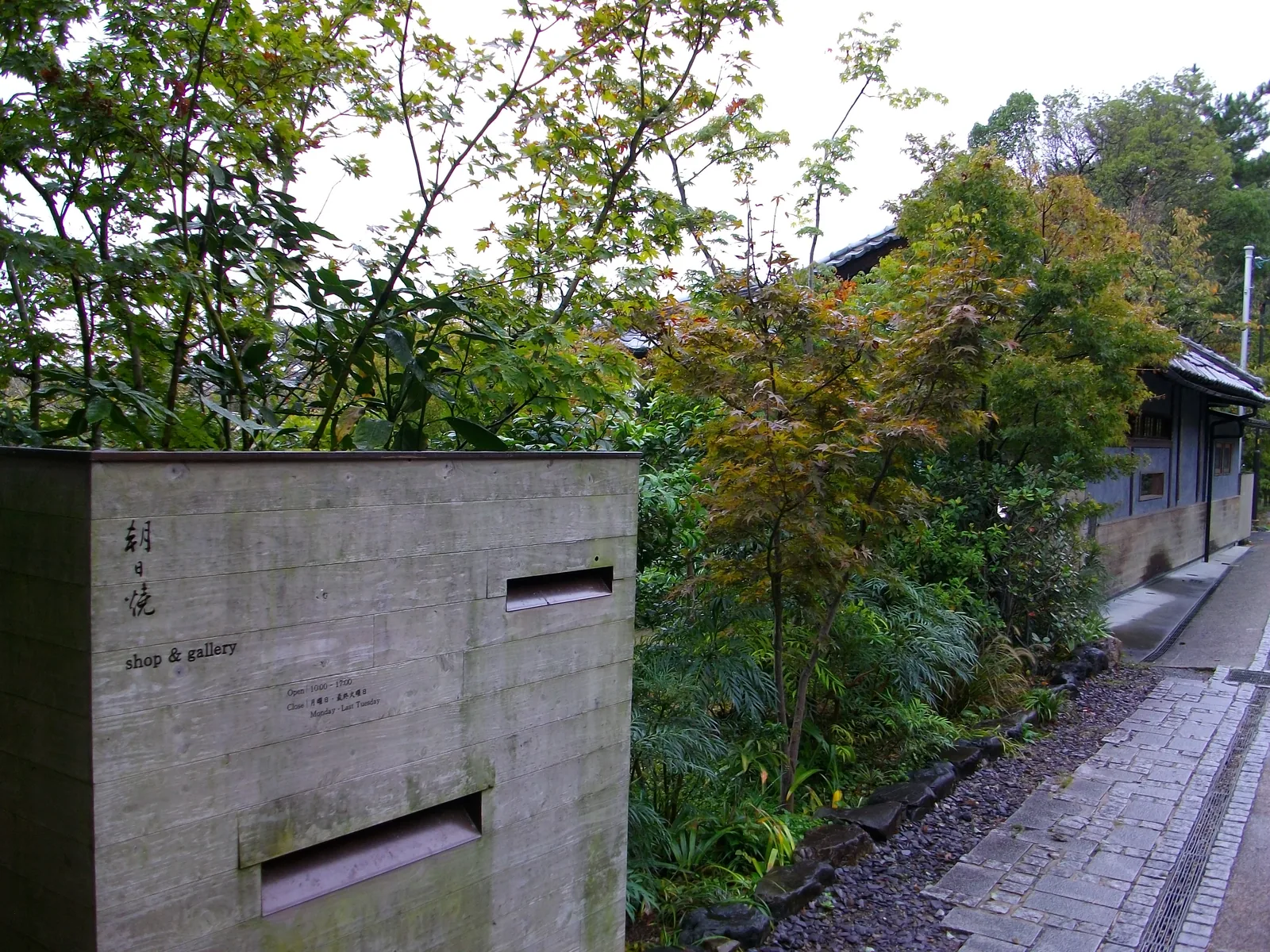
The shop and gallery are open from 10:00 a.m. to 5:00 p.m. They are normally closed on Mondays and on the last Tuesday of each month. If Monday is a national holiday, the closure generally moves to the following day. Check the official calendar for irregular closures.
2:50 p.m. — Discover Uji’s Literary Side at the Tale of Genji Museum
The final major cultural stop is the Tale of Genji Museum. This may sound like a specialist attraction for visitors who have already read the novel, but no prior knowledge is required.
The final ten chapters of The Tale of Genji are known as the Uji Chapters because much of the story takes place here. They follow a later generation after the death of Hikaru Genji and use Uji’s river, distance from the capital and quieter atmosphere as part of the emotional setting.
That connection becomes easier to understand after walking through the town. The river you crossed earlier is not only scenery; it forms part of the landscape associated with separation, uncertainty and changing relationships in the Uji chapters.
Inside, the museum introduces the story and Heian-period culture through reconstructed spaces, objects, visual displays and original film presentations. Rather than trying to memorize characters, focus on the clothing, architecture, transportation and physical distance that shaped daily life in the period.
Allow approximately 45 to 50 minutes for this itinerary. Readers with a strong interest in classical literature could spend considerably longer, but this amount of time provides a meaningful introduction without making the afternoon feel like a museum-only visit.
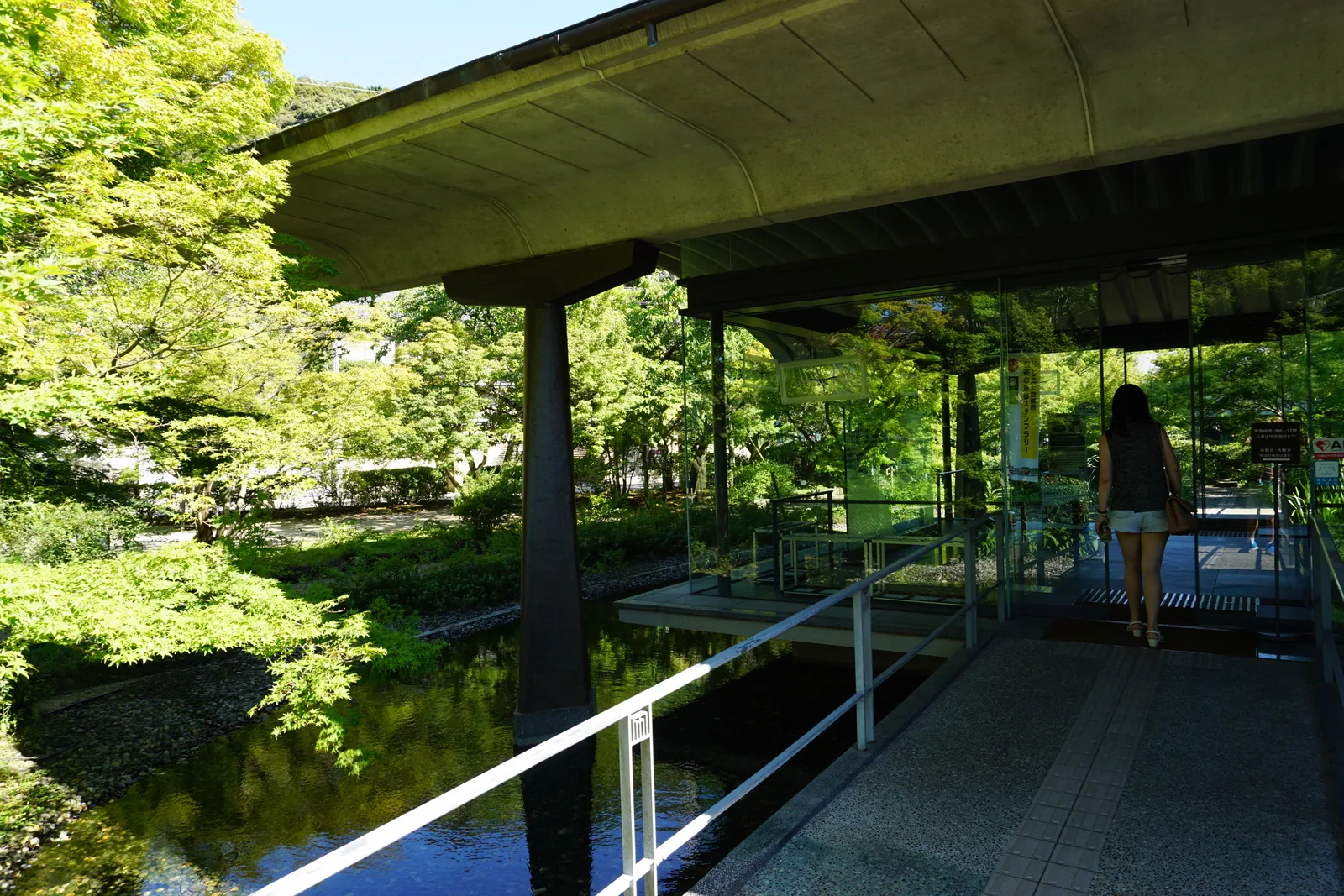
The museum is open from 9:00 a.m. to 5:00 p.m., with final admission at 4:30 p.m. Adult admission is ¥600. It is normally closed on Mondays—or the following day when Monday is a national holiday—and during the year-end and New Year period.
3:50 p.m. — Make an Optional Final Stop at Tsuen Tea
From the museum, walk back toward Uji Bridge and Keihan Uji Station. Tsuen Tea stands at the eastern end of the bridge, almost directly opposite the station.
Tsuen traces its history to 1160, when tea was served to travelers crossing the river. Its location beside Uji Bridge is part of its identity: this was not originally a hidden retreat but a place connected with movement, rest and the people passing through Uji.
Because you have already prepared and drunk matcha at Fukujuen, this stop is optional. There is no need to order another large matcha dessert simply because you are in Uji.
Use Tsuen according to how you feel at the end of the day. You can sit down for a small sweet and tea, browse packaged tea for a souvenir or simply look at the historic exterior before continuing to the station.
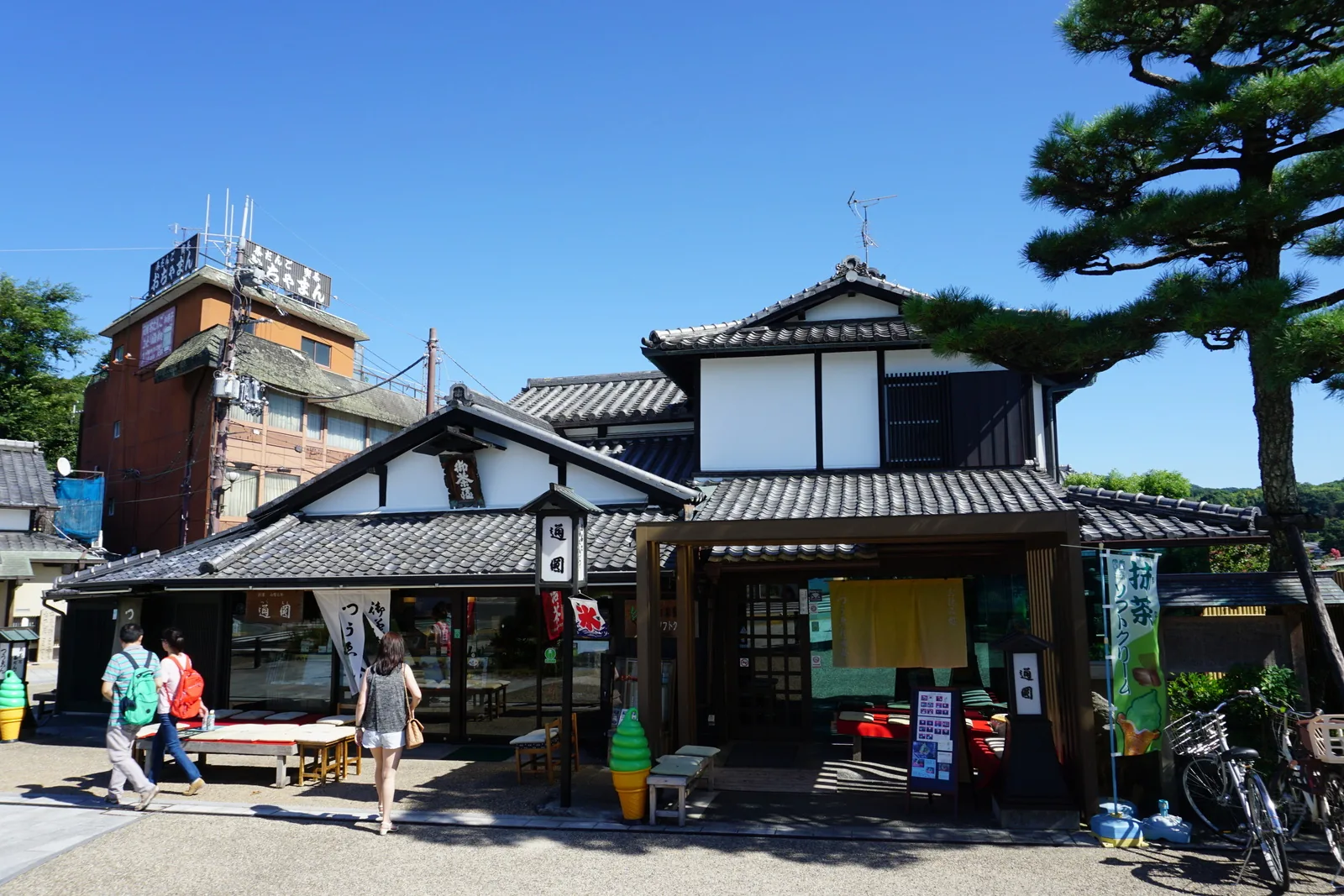
Tsuen is open from 10:30 a.m. to 5:30 p.m., with tea-house last orders at 4:00 p.m. It is open year-round. If you want to sit down, arrive promptly after leaving the museum; otherwise, browse the shop or continue directly to the station.
4:20 p.m. — Finish at Keihan Uji Station
Keihan Uji Station is only a short walk from Tsuen, making it a convenient endpoint for the route.
From here, trains run toward Chushojima, where you can transfer for Fushimi, central Kyoto or Osaka. Travelers returning to Kyoto Station may prefer to walk back to JR Uji Station, but for most visitors the Keihan line avoids retracing the full morning route.
The day has moved through several versions of Uji without becoming a temple checklist: the famous view of Byodoin, a local lunch, the open river, a hands-on tea experience, pottery connected with tea culture and the literary landscape of The Tale of Genji.
How to Adjust This Uji Itinerary
The main route works best when LovA, Asahiyaki Shop & Gallery and the Tale of Genji Museum are all open. However, you do not need to abandon the day trip when one stop is unavailable.
The key is to replace activities rather than continue adding more places. Uji is compact, but trying to include every temple, shrine, museum, tea shop and workshop would remove the slower pace that makes the town enjoyable.
If LovA Is Closed: Have Lunch at Tsubameya
When LovA is closed or fully booked, Tsubameya is the most practical alternative. It is located close to Keihan Uji Station and serves soba with seasonal tempura.
Because Tsubameya is on the eastern side of Uji Bridge, adjust the order rather than walking back toward JR Uji Station:
Tsubameya lets you choose from juwari soba made entirely from buckwheat, hachiwari soba made with an 80-percent buckwheat blend, and matcha soba. For this itinerary, choose juwari or hachiwari unless you specifically want matcha noodles. The afternoon already includes a full matcha-making experience, so a non-matcha lunch keeps the day more balanced.
The tempura and soba combination also works well before walking through Uji Park: it is substantial enough for a full sightseeing day without becoming another dessert-focused stop.
Tsubameya is open from 11:15 a.m. to 5:00 p.m., with last orders at 4:00 p.m. Its official information lists irregular closing days, so confirm the latest schedule before relying on it as your backup lunch.
Visiting on Monday: Replace the Museum and Gallery
Monday requires the largest adjustment because both Asahiyaki Shop & Gallery and the Tale of Genji Museum are normally closed.
Keep the morning route, lunch and riverside section. If your reserved Fukujuen session is operating, keep the matcha-making experience too. Afterward, choose one quieter historical stop instead of trying to replace both closed attractions.
Option 1: Ujikami Shrine
Ujikami Shrine is the easiest replacement because it is close to the eastern-bank route. It is part of the UNESCO-listed Historic Monuments of Ancient Kyoto, and its main hall is regarded as the oldest surviving example of shrine architecture in Japan.
Although the standard itinerary avoids becoming a temple-and-shrine checklist, Ujikami works well as a replacement on Monday. The grounds are compact, and the visit adds a different kind of architecture without taking over the entire afternoon.
Option 2: Koshoji Temple
Choose Koshoji Temple instead if you would rather extend the riverside walk and visit a quieter Zen temple.
The approach to Koshoji follows a gently rising path known as Kotozaka. It is particularly attractive when the maple leaves are fresh green or changing color, but the quieter setting is appealing throughout the year.
Koshoji should replace the Tale of Genji Museum rather than be added after it. Allow approximately 45 to 60 minutes for the walk, temple grounds and return journey.
How to Change the Route on a Rainy Day
Uji still works well in light rain, but shorten the exposed riverside section rather than forcing the complete park route.
Keep Byodoin because the Hoshokan Museum provides an indoor section, then continue with lunch, the Fukujuen workshop and the Tale of Genji Museum. These stops give the day enough substance even if you spend less time beside the river.
After lunch, cross Uji Bridge and follow the eastern bank directly toward Fukujuen. Skip the islands and the Thirteen-Story Stone Pagoda if paths are slippery, water levels are high or local restrictions are in place.
Asahiyaki can remain in the route during ordinary rain because the shop and gallery are indoors. During severe weather, remove it and allow more time at the museum or finish early at Tsuen.
Nintendo Museum: An Alternative Uji Route
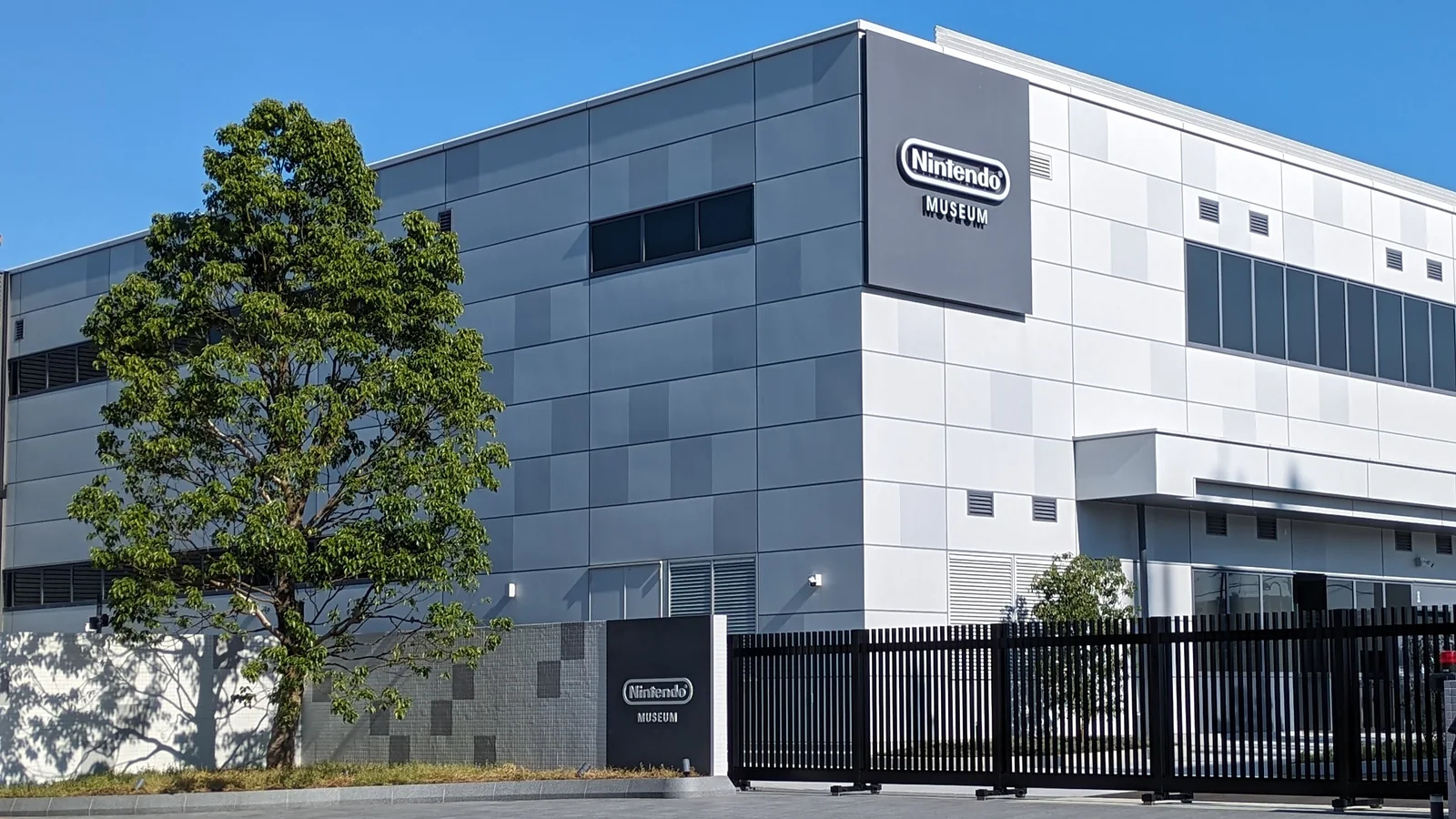
The Nintendo Museum is located in Ogura, away from the main sightseeing area around Byodoin and the Uji River. Treat it as an alternative half-day plan—not as one more stop added to the complete itinerary.
Tickets are sold in advance for a specific date and time. A free Nintendo Account is required. The regular process begins with a ticket drawing three months before the visit; any remaining or canceled tickets may later appear as first-come, first-served availability. Identification may be checked at entry, so reserve using the visitor’s correct name.
For an afternoon entry, visit Byodoin when it opens, browse Omotesando and have an early lunch. Keep the riverside portion short, then travel toward Kintetsu Ogura Station or JR Ogura Station according to your assigned time. The museum is about five minutes on foot from Kintetsu Ogura Station’s east exit and about eight minutes from JR Ogura Station’s north exit.
Do not combine the museum with the full Fukujuen, Asahiyaki and Tale of Genji Museum sequence. Nintendo Museum includes historical displays, interactive experiences, a café and a shop, so it deserves a substantial block of time.
How Much Does an Uji Day Trip Cost?
The standard itinerary is not a low-cost sightseeing day because the matcha-making workshop is a substantial paid experience. However, most of the riverside route, Omotesando and the Asahiyaki gallery visit do not require admission.
The core route costs approximately ¥5,950 per adult before transportation. A comfortable budget is around ¥7,000–¥9,000 plus train fares if you include the Phoenix Hall interior, a drink at Tsuen or a small tea souvenir.
Travelers who skip the paid matcha workshop can complete a simpler version of the route for considerably less, but the workshop is the experience that most clearly distinguishes this itinerary from a short Byodoin visit.
Best Time to Visit Uji
Spring
Spring brings cherry blossoms and fresh greenery to the riverbanks. It is one of the most photogenic periods, but Byodoin, Omotesando and the bridges can become crowded, particularly on weekends.
Arrive for opening time and reserve lunch and the tea workshop in advance. A weekday visit makes a noticeable difference during the busiest blossom period.
Early Summer
Fresh green maple leaves suit Uji particularly well, especially along the river and the approach to Koshoji. Rain is more likely, but the combination of indoor museums, tea experiences and covered shops means the day can still work.
Summer
Summer in Uji is hot and humid. The riverside may look refreshing, but much of the route is exposed, and the afternoon walk can feel demanding.
Carry water, use sun protection and avoid spending too long on the islands around midday. The early start in this itinerary becomes especially important from July through September.
Autumn
Autumn is one of the strongest seasons for this route. The wooded slopes, riverside paths and temple approaches gain more color, while hot tea feels more appealing after the outdoor sections.
It is also a popular period. Reserve any fixed-time experiences and allow extra time around Byodoin and the eastern-bank paths.
Winter
Winter is quieter and often easier for travelers who dislike crowds. The landscape is less colorful, but the river, temple architecture and warm tea become the focus.
Daylight ends earlier, so do not delay the morning start. Cold wind beside the river can also make the temperature feel lower than it does near the stations.
What Uji Tea Should You Buy as a Souvenir?
Do not assume that matcha is automatically the best souvenir. Choose tea according to how you actually prepare drinks at home.
Omotesando is the best place to compare several established tea shops in one area. Fukujuen is convenient if you want to buy tea after completing the workshop, while Tsuen works well for a final purchase near Keihan Uji Station.
For international travel, sealed tea leaves are generally more practical than fresh cream sweets or delicate desserts. Check the import rules of your destination before carrying food products home.
Where to Stay for an Uji Day Trip
Most travelers visit Uji from Kyoto or Osaka, but staying overnight can make sense if you prefer a quieter evening, want to begin before the day-trip crowds or plan to explore more of southern Kyoto.
Uji has fewer accommodation choices than central Kyoto, but that is part of the appeal. The area becomes noticeably calmer after the main attractions and shops close.
The Agoda link below is an affiliate link. If you make a booking through it, Local Steps Japan may receive a commission at no additional cost to you.

Final Thoughts
Uji does not need dozens of attractions to fill a rewarding day. Its strength comes from how closely the main experiences connect with one another.
Byodoin introduces the town through architecture and history. Omotesando shows how tea is packaged and sold. LovA adds a local meal that is not built around matcha, while the river gives the route space to breathe.
The afternoon then moves beyond observation. At Fukujuen, you turn tencha leaves into matcha yourself. At Asahiyaki, you see the bowls and utensils that shape the experience of drinking tea. At the Tale of Genji Museum, the river and quieter eastern bank gain a literary context.
That balance is what makes Uji worth a full day. It is not only a matcha destination, a temple stop or an extra place to add between Kyoto and Nara. It is a compact town where tea, craftsmanship, landscape and history still fit naturally into one walkable route.
Frequently Asked Questions
Is Uji worth a full-day trip?
Yes. A three-hour visit is enough for Byodoin and one tea stop, but six to seven hours allows you to include lunch, the river, a matcha-making experience, local pottery and the Tale of Genji Museum without rushing.
Can I visit Uji as a day trip from Osaka?
Yes. The journey from Osaka Station usually takes around one hour with a transfer at Kyoto Station. Leave Osaka early enough to reach JR Uji Station at approximately 8:30 a.m.
Should I use JR Uji Station or Keihan Uji Station?
Use JR Uji Station when arriving from Kyoto Station, Osaka or Nara. This itinerary finishes at Keihan Uji Station, which is convenient for traveling toward Fushimi, central Kyoto and Osaka via Chushojima.
Do I need to reserve the matcha-making experience?
Advance booking is strongly recommended. Same-day places may be available, but the stone-mill course has limited capacity, and a missing session would leave a large gap in the afternoon itinerary.
Can I combine central Uji with the Nintendo Museum?
Yes, but only by shortening the standard route. Visit Byodoin, Omotesando and an early lunch before traveling to Ogura. Do not also schedule Fukujuen, Asahiyaki and the Tale of Genji Museum on the same day.
Photo Credits
View full photo credits
Byodoin Phoenix Hall:
Zairon /
Wikimedia Commons /
CC BY-SA 4.0.
Byodoin Omotesando:
bethom33 /
Wikimedia Commons /
CC BY-SA 2.0.
Uji River:
Motokoka /
Wikimedia Commons /
CC BY-SA 4.0.
Thirteen-Story Stone Pagoda:
Wikiwikiyarou /
Wikimedia Commons /
CC BY-SA 3.0.
Prepared matcha:
Anh Nguyen /
Pexels.
Asahiyaki Shop & Gallery:
おいでやす千年の都 /
Wikimedia Commons /
File: 朝日焼 04.jpg /
CC0 1.0.
Resized and converted to WebP.
Tale of Genji Museum:
Ctny /
Wikimedia Commons /
CC BY-SA 4.0.
Tsuen Tea:
Ctny /
Wikimedia Commons /
CC BY-SA 4.0.
Nintendo Museum:
Nagomijirap /
Wikimedia Commons /
CC BY-SA 4.0.
Wikimedia images were resized, cropped where necessary and converted to WebP. Official Instagram posts are embedded directly from LovA and Fukujuen Uji Tea Workshop.
Information checked in August 2026. Opening days, admission fees, menus and experience availability may change. Confirm the latest details on each official website before visiting.