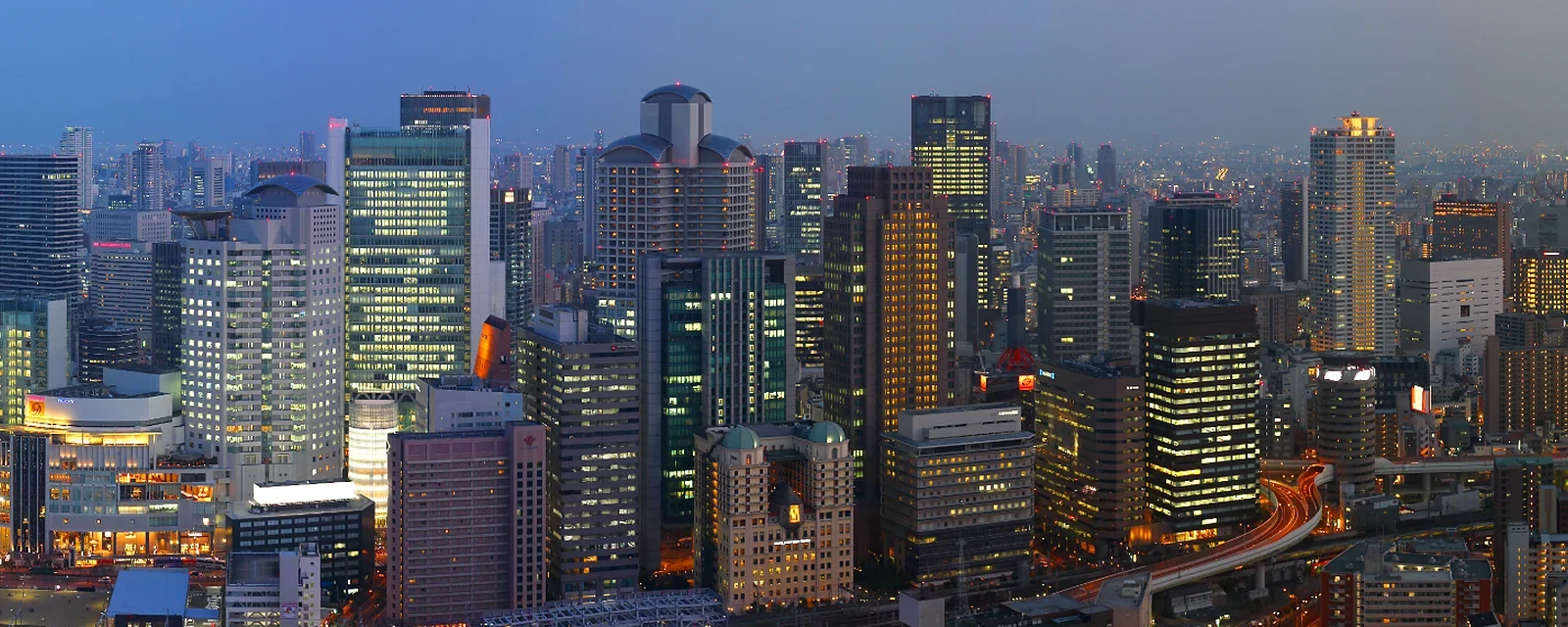
Five days in Osaka does not have to mean spending every morning at another
crowded landmark. Osaka is also one of the most practical bases for exploring
Kansai without changing hotels every night.
This 5-day Osaka itinerary is designed for repeat visitors to Japan.
It combines local neighborhoods in northern Osaka, the shrine and craft culture
of southern Osaka and Sakai, Kobe’s international port history, quieter parts of
Nara, and the tea and sake districts of southern Kyoto.
The route deliberately avoids turning every day into a race between famous
attractions. Important temples and historic districts are included, but there
is also time for shopping streets, neighborhood restaurants, riverside walks
and local railway journeys.
How to use this itinerary
This plan assumes five reasonably full sightseeing days and one hotel base
in Osaka. If your arrival or departure day is included, shorten Day 1 or
Day 5 rather than trying to complete every optional stop.
5-Day Osaka and Kansai Itinerary at a Glance
Click a Day number to jump directly to that part of the itinerary.
Day |
Theme |
Main Stops |
Evening |
|---|---|---|---|
Day 1 |
Local northern Osaka |
Osaka Tenmangu, Tenjinbashisuji, Osaka Museum of Housing and Living and Nakazakicho |
Ura-Tenma |
Day 2 |
Shrines, trams and crafts |
Sumiyoshi Taisha, Hankai Tramway, Sakai Plaza of Rikyu and Akiko and Sakai Denshokan |
Return to Osaka |
Day 3 |
Kobe port-city day trip |
Kitano, Nankinmachi, Former Foreign Settlement, Meriken Park and Harborland |
Kobe beef or a local izakaya |
Day 4 |
Nara beyond the deer |
Naramachi, Gangoji, Isuien Garden, Todaiji and Nigatsudo |
Return to Osaka |
Day 5 |
Tea, rivers and sake |
Byodoin, Uji River, optional Nintendo Museum and the Fushimi sake district |
Ramen in Fushimi |
Travelers with only three days should use our
3-day Osaka itinerary
instead. This five-day route works best when you want Osaka to function
as a regional base rather than the only destination.
Why Base Yourself in Osaka?
Osaka sits between several major Kansai destinations and is served by JR,
Osaka Metro and multiple private railway companies. This gives travelers
more route choices than relying on one network.
Kobe can be reached by JR, Hankyu or Hanshin. Kintetsu is useful for Nara,
while Nankai and the Hankai Tramway work well for southern Osaka and Sakai.
Uji and Fushimi require a little more planning, but both can still be visited
without moving your luggage to Kyoto.
The main advantage appears after sightseeing. Returning to the same Osaka
neighborhood each evening means you can rest properly, eat locally and avoid
spending part of every day checking in, checking out and moving suitcases.
Local Steps Tip
Use an IC card for ordinary journeys and choose the railway that provides
the simplest route. A JR pass does not automatically cover Osaka Metro,
Nankai, Hankyu, Hanshin, Kintetsu, Keihan or the Hankai Tramway.
For a full comparison of Osaka Metro, JR, private railways and IC cards,
read our
guide to getting around Osaka
.
Where to Stay for This Five-Day Route
There is no perfect station for all five days. The best base depends on
whether you value regional rail access, southern Osaka connections or
evening food options most.
Area |
Best For |
Why Stay Here |
|---|---|---|
Umeda |
Regional day trips |
Convenient for Kobe and northern Osaka, with access to JR, Hankyu and Hanshin. |
Namba |
Food and overall balance |
Practical for Sumiyoshi, Sakai and Nara, with many evening restaurant choices. |
Tennoji |
Southern Osaka access |
A calmer base with useful connections for southern Osaka and airport travel. |
For most travelers following this itinerary, choose
Umeda when Kobe and regional railway convenience matter most,
or Namba when food and southern Osaka access are the priority.
Compare the main neighborhoods in our
where to stay in Osaka guide
.
Interactive Five-Day Route Map
The map is divided into separate layers for each day.
Open the menu in the upper-left corner to show or hide individual routes.
Routes, railway services, opening days and restaurant schedules may change.
Check live directions and current facility information before traveling.
Day 1 | Local North Osaka, Shopping Streets and Tenma
Overview
Your first day focuses on the everyday character of northern Osaka.
Instead of starting at Osaka Castle or Dotonbori, you will explore a
historic shrine district, a long local shopping street and one of the
city’s most distinctive residential neighborhoods.
The route is mostly flat and can be completed largely on foot.
It begins at Osaka Tenmangu and finishes among the compact food streets
of Ura-Tenma.
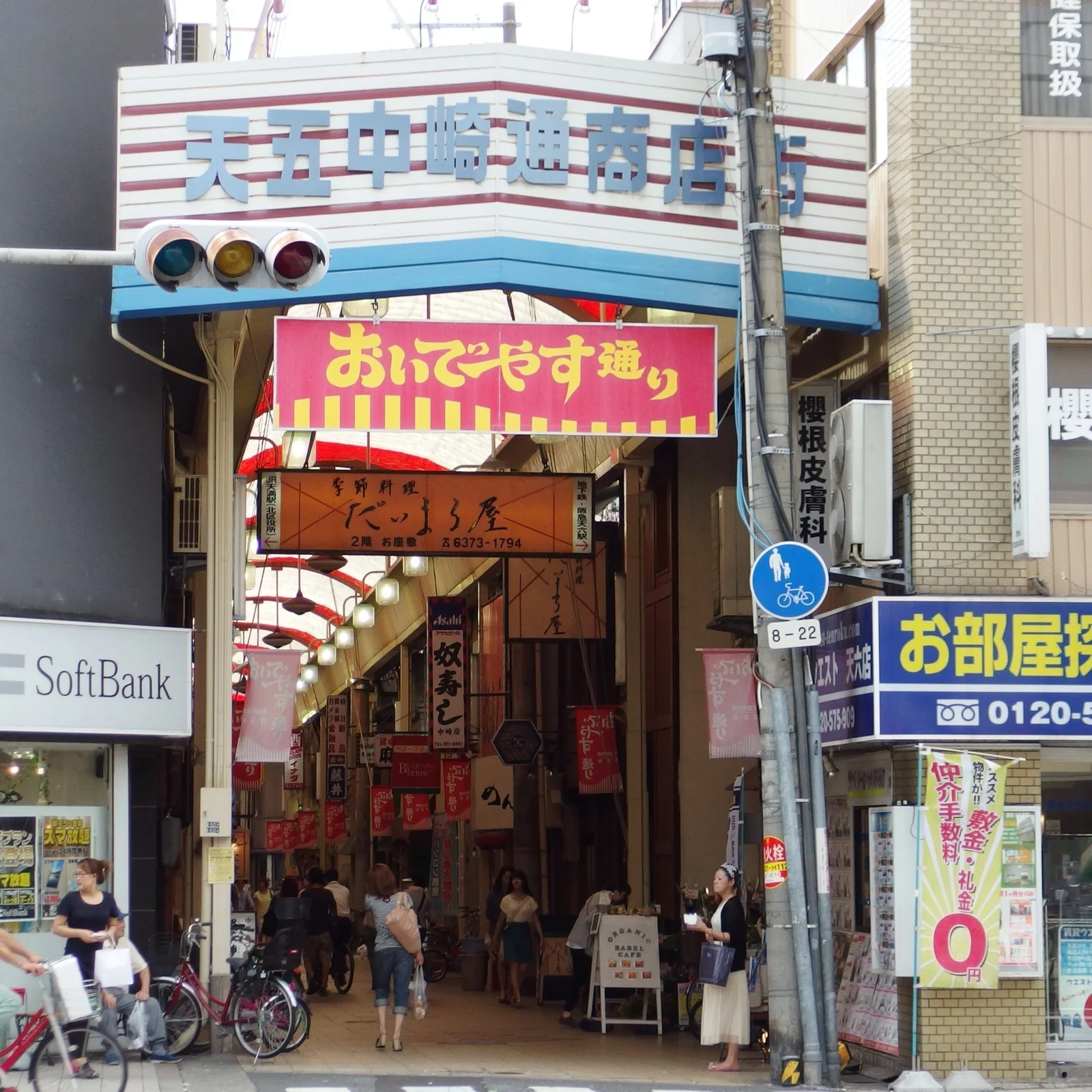
Northern Osaka combines long shopping arcades, residential lanes
and compact evening food districts.
Day 1 Quick Schedule
Time |
Activity |
|---|---|
09:00 |
Visit Osaka Tenmangu Shrine |
09:40 |
Walk north through Tenjinbashisuji Shopping Street |
11:15 |
Osaka Museum of Housing and Living |
12:30 |
Lunch at Sarashina Tenroku |
14:00 |
Explore Nakazakicho |
17:30 |
Ura-Tenma and dinner at Gifuya |
09:00 | Osaka Tenmangu Shrine
Start at Osaka Tenmangu, a shrine closely connected with the surrounding
Tenma neighborhood. Arriving in the morning gives you time to see the
main sanctuary and shrine approach before the shopping streets become busier.
The shrine is associated with scholarship and the Tenjin Matsuri,
one of Osaka’s major annual festivals. It also introduces the history
behind the district you are about to explore.
Local Steps Tip
Before entering the shopping arcade, walk briefly around the smaller
streets beside the shrine, where older shops, cafés and neighborhood
buildings begin to appear.
09:40 | Tenjinbashisuji Shopping Street
Enter the shopping street near Tenjinbashisuji 2-chome and gradually
walk north. This is not simply a row of souvenir stores. You will pass
restaurants, pharmacies, clothing shops, produce sellers, cafés and
businesses serving nearby residents.
The atmosphere changes between sections. Some blocks feel traditional
and compact, while others are busier and more commercial. Leave the main
arcade occasionally to look into the side streets.
For more neighborhoods with an everyday local character, see our
15 hidden gems in Osaka
.
11:15 | Osaka Museum of Housing and Living
The Osaka Museum of Housing and Living recreates a full-scale Osaka
townscape from the Edo period. Instead of presenting history only
inside display cases, it allows visitors to walk between reconstructed
merchant houses, shops and narrow streets.
Visiting after Tenjinbashisuji works particularly well. The museum provides
context for the merchant culture that shaped the area, while the modern
shopping arcade shows how the neighborhood continues to function today.
12:30 | Lunch at Sarashina Tenroku
Sarashina Tenroku
This traditional soba restaurant is a practical lunch stop near
Tenjinbashisuji 6-chome. Its simple neighborhood atmosphere fits
the day better than leaving the route for a tourist-oriented restaurant.
Choose cold soba during hot weather or a warm bowl when you want
a more comforting lunch. Menus and operating hours can change.
14:00 | Explore Nakazakicho
Walk toward Nakazakicho, where older wooden buildings and narrow lanes
sit surprisingly close to the towers of Umeda. Some houses have been
converted into cafés, vintage shops, small galleries and independent studios.
Nakazakicho is not a fully preserved historical district.
Its appeal comes from the mixture of older buildings, contemporary
businesses and ordinary residential life.
Respect the Neighborhood
Keep voices low in residential lanes, avoid blocking entrances and
ask before photographing inside shops. A photogenic doorway may still
be somebody’s home.
17:30 | Ura-Tenma and Dinner at Gifuya
Finish in Ura-Tenma, the network of compact dining streets near
Temma Station and Tenma Market. Lanterns, small counters and closely
packed restaurants create a different atmosphere from the polished
dining floors around Umeda.
Gifuya Ura-Tenma
Gifuya is a casual Osaka-style izakaya serving kushikatsu,
simmered dishes and familiar drinking-street food.
Izakaya meals are usually built from several shared dishes rather
than one main plate. Drinking alcohol is not required.
For more dishes to look for during the trip, read our
Osaka local food guide
.
Day 2 | Sumiyoshi and Sakai: Shrines, Streetcars and Crafts
Overview
Day 2 travels south from central Osaka to Sumiyoshi Taisha before
continuing into Sakai by local streetcar.
The route combines shrine architecture, tea history, traditional sweets
and Sakai’s long-established knife-making culture.
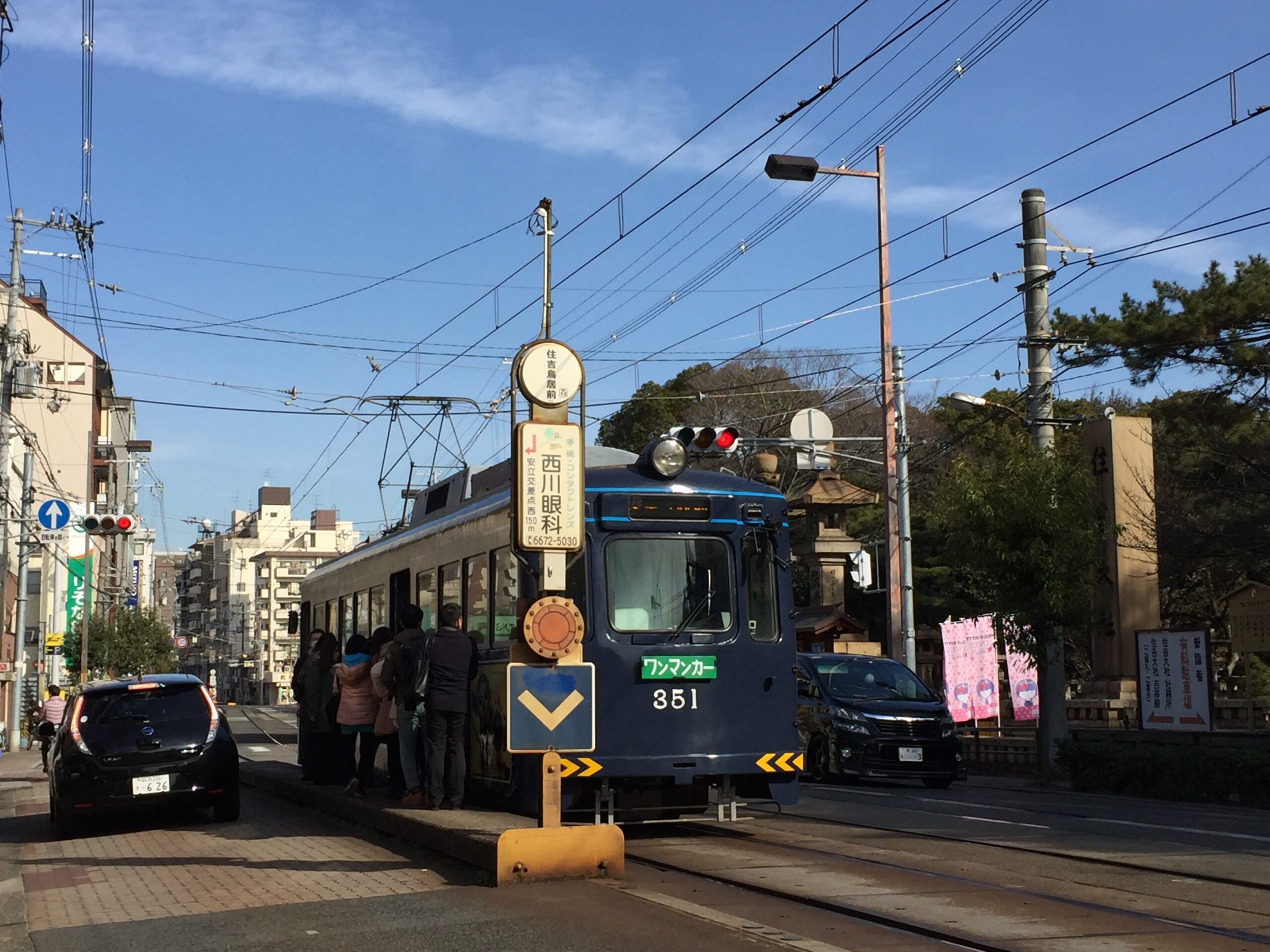
The Hankai Tramway makes the journey between Sumiyoshi and Sakai
part of the sightseeing experience.
Day 2 Quick Schedule
Time |
Activity |
|---|---|
09:00 |
Visit Sumiyoshi Taisha |
10:15 |
Ride the Hankai Tramway to Shukuin |
11:00 |
Sakai Plaza of Rikyu and Akiko |
12:30 |
Lunch at Restaurant Naniwatei |
13:45 |
Keshi-mochi and tea at Kojimaya |
14:30 |
Shukuin Tongu and tram to Myokokujimae |
15:00 |
Sakai Traditional Crafts Museum |
16:15 |
Optional visit to Myokokuji Temple |
09:00 | Sumiyoshi Taisha
Begin at Sumiyoshi Taisha before continuing south to Sakai.
The shrine is known for Sorihashi Bridge and its four main sanctuaries,
which use the distinctive Sumiyoshi-zukuri architectural style.
Allow enough time to cross the bridge carefully, see the main shrine
buildings and walk through the quieter parts of the grounds.
Read our
complete Sumiyoshi Taisha guide
for more details.
10:15 | Ride the Hankai Tramway to Shukuin
The tram is slower than the fastest railway route, but speed is not
the point today. It passes through ordinary residential streets and
connects cultural sites along the southern Osaka and Sakai corridor.
Board at Sumiyoshi-Torii-mae and travel toward Shukuin.
Follow the operator’s current boarding and payment instructions.
11:00 | Sakai Plaza of Rikyu and Akiko
Sakai Plaza of Rikyu and Akiko introduces tea master Sen no Rikyu
and poet Akiko Yosano, both closely connected with the city.
The exhibitions explain how Sakai’s history as a trading city supported
the development of tea culture, literature and local aesthetics.
12:30 | Lunch at Restaurant Naniwatei
Restaurant Naniwatei
Naniwatei is a retro neighborhood restaurant serving Japanese-style
Western food. It provides a useful change from the noodles and
izakaya dishes of Day 1.
Look for yoshoku dishes such as hamburg steak, pork cutlet or
fried seafood. Confirm the current opening day before visiting.
13:45 | Keshi-Mochi and Tea at Kojimaya
Kojimaya Main Store
Kojimaya is included as a sweet break rather than a second lunch.
The shop is associated with keshi-mochi, a Sakai confection covered
with poppy seeds and served well with tea.
This stop adds another part of Sakai’s local food culture before
continuing toward the craft district.
14:30 | Shukuin Tongu
Shukuin Tongu is a small but meaningful connection between
Sumiyoshi Taisha and Sakai. It plays a role in the shrine’s
annual festival traditions.
This is a brief historical stop rather than a major attraction.
Continue afterward by tram to Myokokujimae.
15:00 | Sakai Traditional Crafts Museum
Sakai Traditional Crafts Museum, also called Sakai Denshokan,
introduces industries that developed through the city’s long history
of specialized production.
The Sakai Knife Museum “CUT” explains how local blades are made
through stages such as forging, sharpening and handle attachment.
When buying a knife, ask about its intended use, steel type,
maintenance, sharpening and safe transport.
16:15 | Optional: Myokokuji Temple
Add Myokokuji only when the temple is open and you still have enough
time and energy. Otherwise, finish at Sakai Denshokan and return to
central Osaka.
Do not add the Mozu kofun area to this particular day.
The burial mounds and Daisen Park deserve a separate route.
Day 3 | Kobe: Hillside Streets, Chinatown and the Waterfront
Overview
Day 3 follows Kobe from the historic hillside streets of Kitano
down through the city center and toward the waterfront.
The route combines Western-style residences, Kobe’s Chinatown,
the Former Foreign Settlement, Meriken Park and Harborland.
Finish with either a special Kobe beef dinner or a casual local izakaya.
The morning includes several uphill streets, but most of the route
becomes flat or downhill after leaving Kitano.
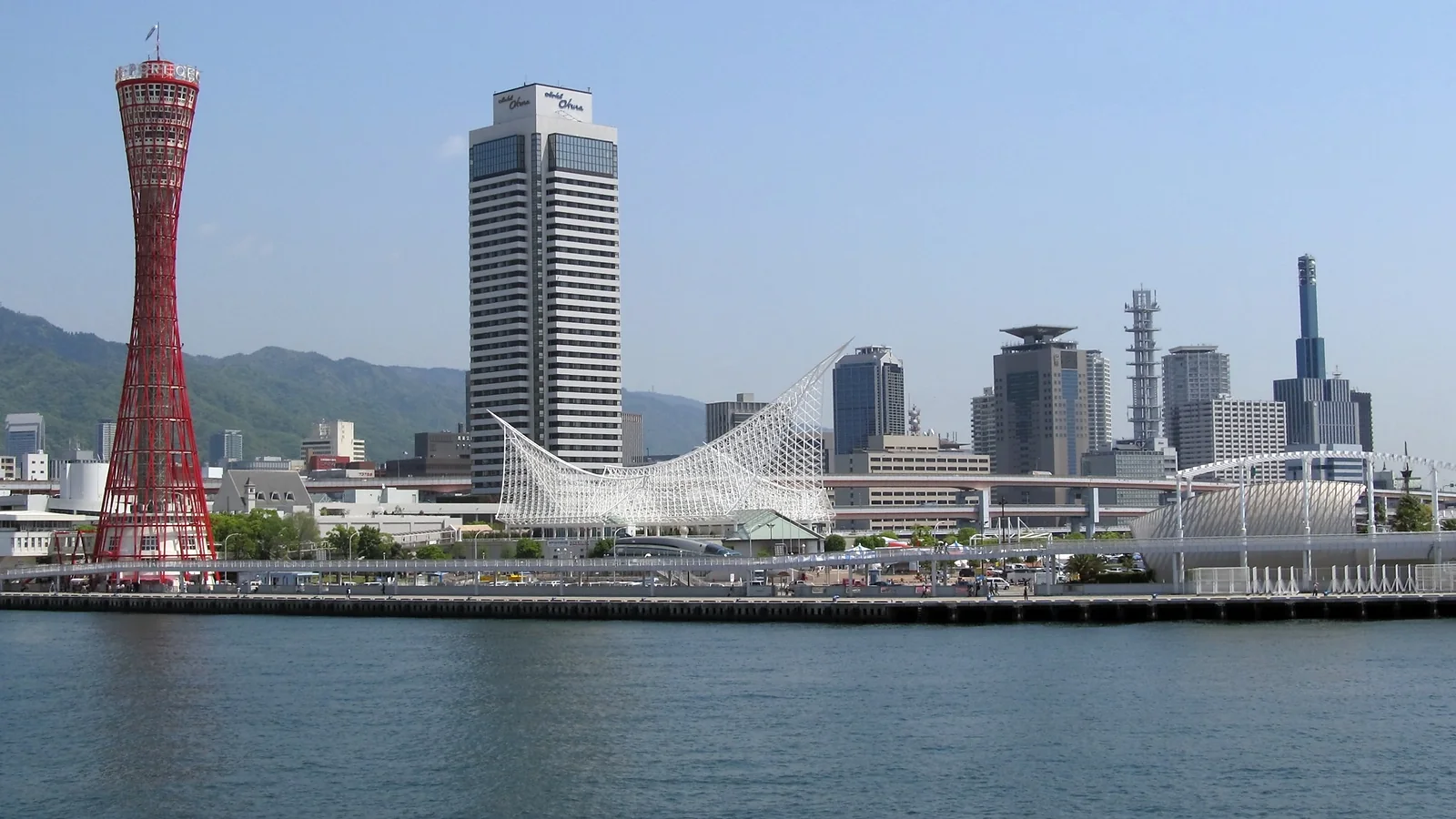
Kobe’s waterfront reflects the international port history
that shaped the modern city.
Day 3 Quick Schedule
Time |
Activity |
|---|---|
09:00 |
Arrive at Sannomiya Station |
09:30 |
Explore the Kitano Ijinkan District |
11:30 |
Walk toward central Kobe and optionally visit Ikuta Shrine |
12:15 |
Lunch in Nankinmachi or at Grill Ippei |
13:30 |
Walk through the Former Foreign Settlement |
14:45 |
Explore Meriken Park |
16:00 |
Walk to Kobe Harborland |
18:30 |
Kobe beef dinner or casual izakaya dinner in Sannomiya |
09:00 | Arrive at Sannomiya Station
Sannomiya is the most convenient starting point for central Kobe.
From Osaka, travelers can use JR, Hankyu or Hanshin Railway,
depending on the location of their hotel.
The different operators use similar station names, including
Sannomiya, Kobe-Sannomiya and JR Sannomiya. They are located
within the same general area but have separate entrances.
Local Steps Tip
Choose the railway station that is easiest to reach from your Osaka hotel.
The fastest train is not always the most convenient overall route.
09:30 | Kitano Ijinkan District
Walk uphill from Sannomiya toward Kitano, where Western-style residences
were built during Kobe’s development as an international port.
The district combines historic houses, narrow hillside streets,
cafés and views toward central Kobe. You do not need to enter every
residence. Choose one building that interests you and spend the remaining
time walking through the neighborhood.
Kitano Tenman Shrine is an optional detour above the main streets.
The shrine offers elevated city views but requires additional stairs.
Check Individual Opening Hours
Kitano’s historic residences have separate admission fees and schedules.
Some buildings may close temporarily for maintenance or restoration.
11:30 | Walk Through Central Kobe
Walk downhill from Kitano using Kitano-zaka or one of the quieter
parallel streets. The route becomes progressively flatter as you
approach central Kobe.
Add Ikuta Shrine if you would like a short Shinto stop before lunch.
The shrine is located near Sannomiya and requires only a small adjustment
to the route.
Skip Ikuta Shrine if you spent longer in Kitano or already need a rest.
It is an optional connector rather than an essential stop.
12:15 | Choose Your Kobe Lunch
Both lunch options are located around Motomachi and fit naturally
into the afternoon route.
Option A: Street Food in Nankinmachi
Kobe’s Chinatown contains restaurants, food stalls, tea shops
and stores selling Chinese sweets and ingredients.
A casual lunch can be assembled from several small dishes such as
steamed buns, dumplings, roast pork or noodles. Walk through the
district once before deciding what to buy.
Eat beside the shop or in an appropriate designated area and dispose
of packaging where you purchased the food whenever possible.
Option B: Grill Ippei Motomachi
Grill Ippei is a long-established yoshoku restaurant where travelers
can try Japanese-style Western comfort food.
Popular choices include omelette rice, hamburg steak, fried seafood
and dishes served with dark demi-glace sauce. This is the better option
when you want a seated meal before the waterfront walk.
The restaurant can attract a queue during lunch. Keep Nankinmachi
as an alternative if waiting would delay the afternoon.
13:30 | Former Foreign Settlement
Continue through the Former Foreign Settlement, the commercial district
established near Kobe’s international port.
Its broad streets and stone buildings create a more formal atmosphere
than the hillside residences of Kitano. Walk around Kyomachi and the
Kobe City Museum area rather than treating the district as one attraction.
Kitano and the Former Foreign Settlement represent different sides
of Kobe’s international history. Kitano was primarily residential,
while the settlement developed as a center of trade and business.
14:45 | Meriken Park
Continue toward Meriken Park, where several of Kobe’s best-known
waterfront landmarks stand together.
Look for Kobe Port Tower, the maritime museum building, the BE KOBE
monument and the Port of Kobe Earthquake Memorial Park.
The memorial preserves part of the waterfront damaged during the
1995 Great Hanshin-Awaji Earthquake and adds important historical
context to the modern harbor.
Photo Tip
The BE KOBE monument often has a queue. The wider harbor and skyline
usually provide stronger photographs than waiting for an empty monument.
16:00 | Kobe Harborland
Walk west along the waterfront toward Harborland.
The route provides changing views of the port and central Kobe skyline.
Harborland includes shopping centers, cafés and restaurants,
but its main value in this itinerary is the evening waterfront atmosphere.
Take a break around the Mosaic side and watch the harbor lights
gradually appear. In summer, sunset may occur later than your
preferred dinner reservation.
18:30 | Choose Your Kobe Dinner
Special Dinner: Bifteck Kawamura Sannomiya Main Store
Bifteck Kawamura is the special-occasion option for travelers
who want Kobe beef prepared on a teppan.
This is a high-priced dinner rather than a casual steak stop.
Check the selected course carefully and confirm that Kobe beef
is included.
Advance reservations are strongly recommended.
Casual Alternative: Izakaya Chaki
Chaki is a more casual option for travelers who do not want to
build the evening around an expensive steak course.
The small local izakaya serves seafood and familiar Japanese
drinking-food dishes. Check the latest opening schedule before visiting.
Compare Kobe with other regional destinations in our guide to the
best day trips from Osaka
.
Day 4 | Nara Beyond the Deer: Townhouses, Gardens and Temple Paths
Overview
Day 4 explores Nara as a historic city rather than treating the park
only as a place to photograph deer.
The route connects the traditional streets of Naramachi with
Gangoji Temple, Isuien Garden, Todaiji and the quieter temple paths
around Nigatsudo and the Kasuga forest.
This is one of the longest walking days in the itinerary.
Wear comfortable shoes and keep the final stop flexible.
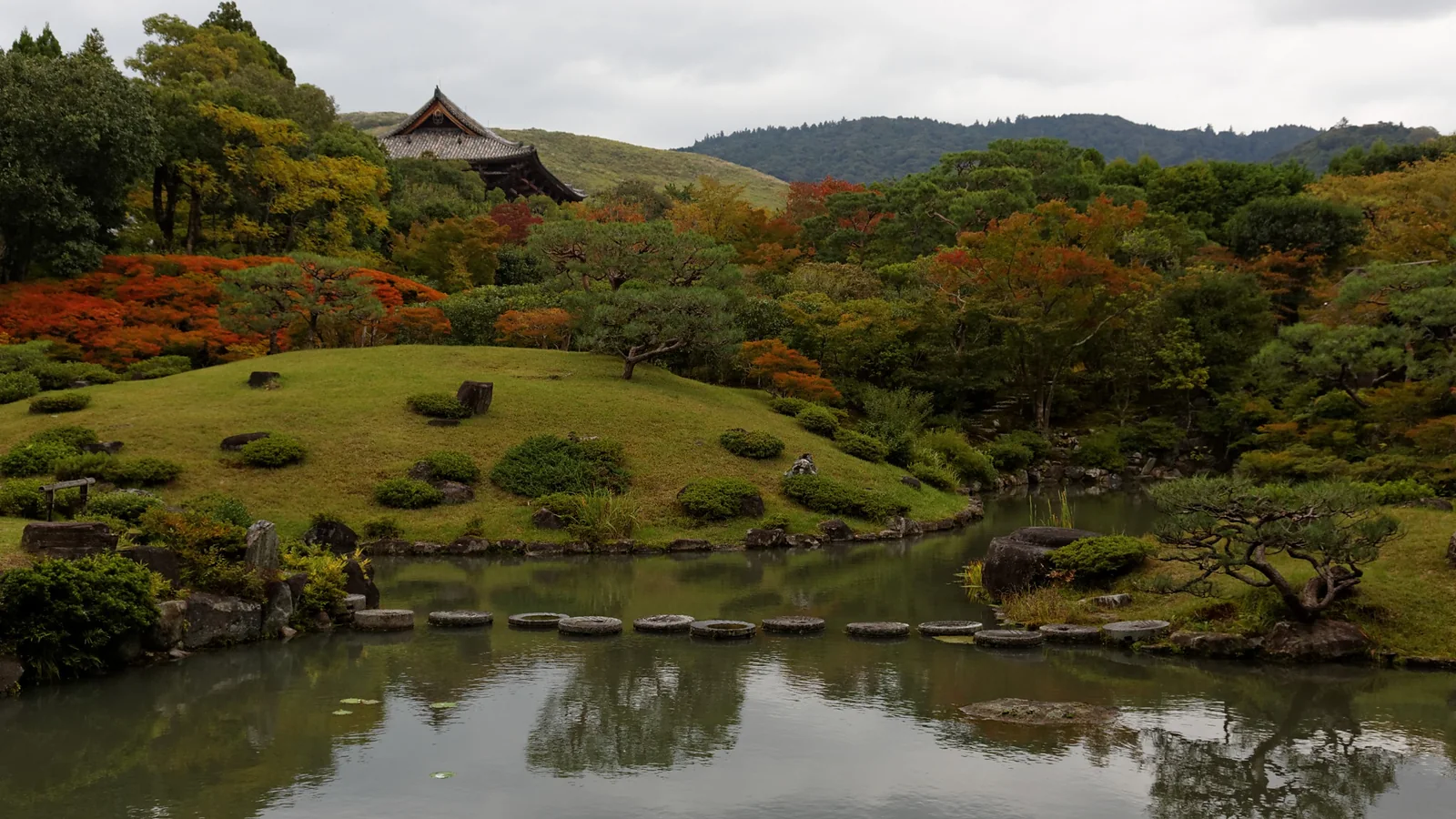
Isuien Garden provides a quieter view of Nara through ponds,
traditional buildings and borrowed scenery.
Day 4 Quick Schedule
Time |
Activity |
|---|---|
09:00 |
Arrive at Kintetsu Nara Station |
09:15 |
Walk through Naramachi |
09:45 |
Visit Naramachi Koshi-no-Ie |
10:30 |
Visit Gangoji Temple |
11:30 |
Explore Isuien Garden |
12:30 |
Lunch at Izasa near Todaiji |
13:30 |
Todaiji Nandaimon and Great Buddha Hall |
14:50 |
Walk to Nigatsudo Hall |
15:30 |
Walk toward the Kasuga forest |
16:15 |
Choose Kasuga Taisha or Mount Wakakusa |
17:30 |
Return to Osaka |
09:00 | Arrive at Kintetsu Nara Station
Begin at Kintetsu Nara Station, which is closer to Naramachi
and Nara Park than JR Nara Station.
From Osaka-Namba, Kintetsu services provide a convenient approach
to the sightseeing area.
Prepare for a Long Walking Day
Buy drinks near the station, wear comfortable shoes and keep
the final stop flexible.
09:15 | Walk Through Naramachi
Naramachi developed around the former grounds of Gangoji and retains
narrow streets, traditional townhouses, small shops and residential buildings.
Walk slowly through the district and look for wooden lattice façades,
small courtyards, craft shops and traditional machiya details.
Naramachi remains a living neighborhood. Avoid entering private
courtyards, blocking narrow lanes or photographing residents
without permission.
09:45 | Naramachi Koshi-no-Ie
Naramachi Koshi-no-Ie is a reconstructed traditional townhouse
that helps visitors understand the architecture seen around the district.
Its narrow street frontage opens into deeper rooms, internal courtyards
and practical living spaces. This is a short contextual stop rather
than a major museum.
10:30 | Gangoji Temple
Gangoji is closely connected with the history of Naramachi
and provides a quieter temple experience before the busier Todaiji area.
Its history reaches back to the early development of Buddhism in Japan.
Allow time for the main hall, grounds and any exhibitions open during your visit.
11:30 | Isuien Garden
Continue toward Isuien, a traditional landscape garden near Todaiji.
The garden combines ponds, stepping stones, tea-house architecture
and views that incorporate the surrounding landscape.
Isuien provides a quiet transition between the streets of Naramachi
and the large temple buildings of Nara Park.
Check Opening Days
Garden schedules and admission arrangements may change.
Confirm the latest visitor information before traveling.
Official Nara Travel Information
12:30 | Lunch at Izasa
Izasa Todaiji-mon Yume-Kaze Plaza
Izasa is a convenient place to try kakinoha sushi and other
regional dishes before entering Todaiji.
Kakinoha sushi consists of pressed sushi wrapped in persimmon leaves.
Depending on the menu, meals may also include noodles, tempura
or seasonal dishes.
Confirm the current opening schedule rather than assuming
the restaurant operates every day.
13:30 | Todaiji Nandaimon Gate
Continue through Nandaimon, Todaiji’s monumental southern gate.
The wooden structure and guardian statues are major parts of the
temple complex rather than only an entrance.
Keep paper maps, food and loose belongings secure around the deer.
Do not stop in the center of the main walking route for photographs.
13:50 | Todaiji Great Buddha Hall
The Great Buddha Hall is the most famous stop of the day and remains
worth including even in an itinerary for repeat visitors.
The scale of the building and the central Buddha image are difficult
to understand from photographs alone. Follow the marked visitor route
and be considerate during worship.
14:50 | Nigatsudo Hall
Continue east through Todaiji’s grounds toward Nigatsudo instead
of returning immediately to the main park.
The route becomes quieter as you move away from the Great Buddha Hall.
Nigatsudo stands on higher ground and provides views across the temple
precincts and toward Nara.
One of the Best Parts of the Route
The walk between the Great Buddha Hall and Nigatsudo reveals
that Todaiji is much larger than its most famous building.
Official Nigatsudo Information
15:30 | Walk Toward the Kasuga Forest
Continue south through the quieter side of Nara Park toward Kasuga Taisha.
Forest paths and rows of stone lanterns gradually replace the open lawns
and large temple buildings.
This part of the route is about atmosphere rather than moving quickly
between individual attractions. Keep to established paths and slow down.
16:15 | Choose One Final Stop
Option A: Kasuga Taisha
Choose Kasuga Taisha when shrine architecture, lantern-lined paths
and Nara’s spiritual history are your priorities.
After a long walking day, focus on the approach and main sanctuary
area rather than trying to explore every part of the complex.
Option B: Mount Wakakusa Lower Slope
Choose the lower slope of Mount Wakakusa when you prefer open scenery
and a lighter final stop.
There is no need to complete the full climb or reach the summit
as part of this itinerary. Access may also depend on the season
and weather.
Do not try to complete both Kasuga Taisha and Mount Wakakusa
simply because they appear close together on the map.
Choose one according to your remaining energy and daylight.
17:30 | Return to Osaka
Return toward Kintetsu Nara Station on foot or use a local bus
if your legs need a break.
Keep dinner flexible near your Osaka hotel.
Day 4 is already one of the longest walking days of the itinerary.
Day 5 | Uji and Fushimi: Tea, Rivers and Sake Culture
Overview
The final day of this 5-day Osaka itinerary explores southern Kyoto
without entering the busiest parts of central Kyoto.
Begin with Byodoin and the Uji River, then continue to Fushimi for
canals, historic sake breweries and a casual ramen dinner.
A confirmed Nintendo Museum ticket changes the schedule significantly.
Treat the museum as a replacement activity rather than adding it to
every stop in the standard route.
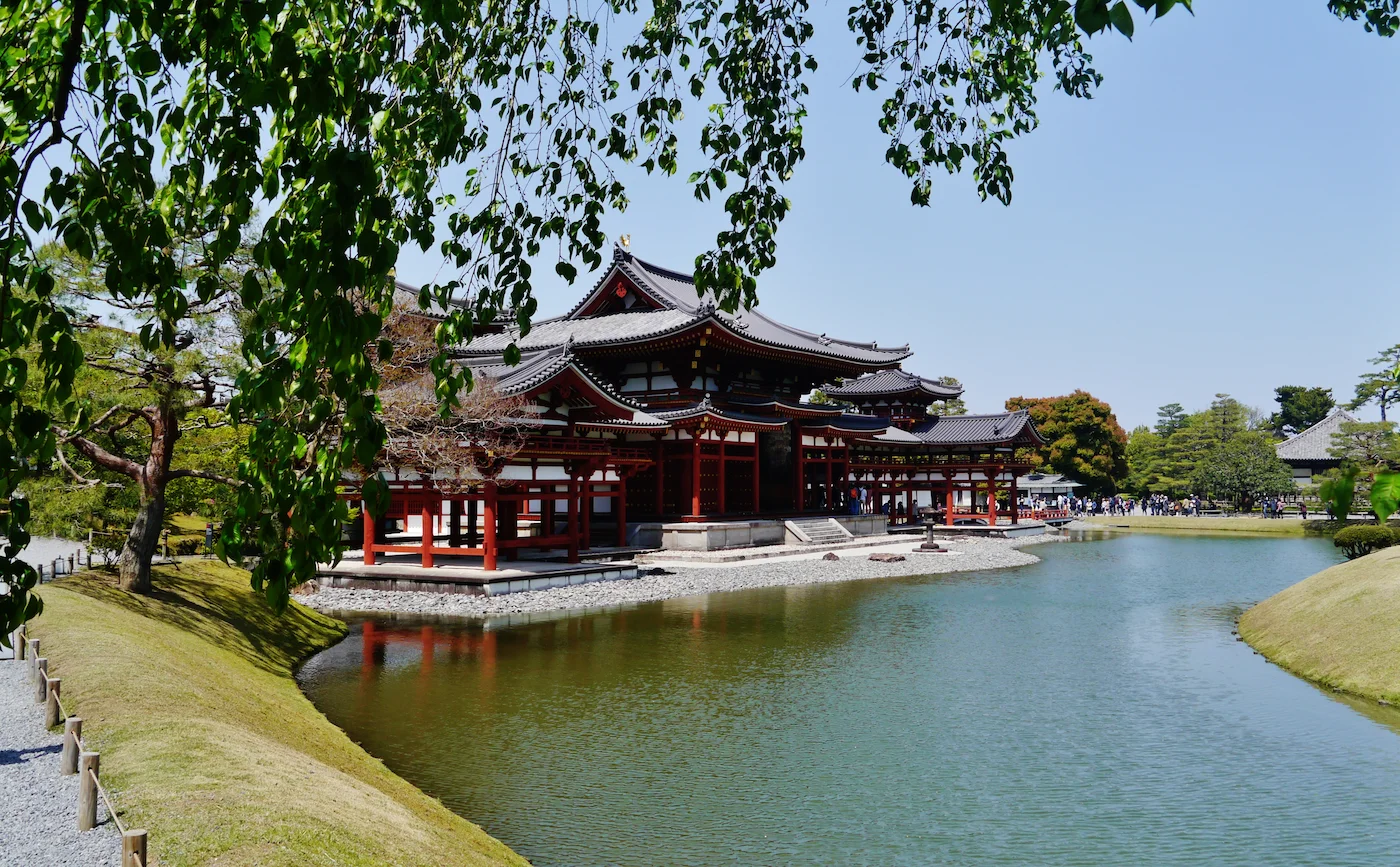
Byodoin and the nearby Uji River offer a quieter alternative
to central Kyoto.
Day 5 Quick Schedule
Time |
Activity |
|---|---|
08:30 |
Arrive at JR Uji Station |
08:45 |
Visit Byodoin Temple |
10:30 |
Explore Byodoin Omotesando |
11:30 |
Walk around Uji Bridge and Uji Park |
12:15 |
Lunch at Seasonal Cuisine and Tempura LovA |
13:30 |
Optional visit to Koshoji Temple |
14:15 |
Take the Keihan Railway to Chushojima |
15:00 |
Choose the Gekkeikan Sake Museum or Jikkokubune boat |
16:15 |
Walk through the Fushimi sake brewery district |
17:00 |
Brief stop at Teradaya |
18:00 |
Dinner at Tokusei Ramen Daichu |
19:00 |
Return to Osaka |
08:30 | Arrive at JR Uji Station
Arrive in Uji early enough to reach Byodoin close to opening time.
An early start provides a calmer visit and leaves enough time for
the riverside area before lunch.
From Osaka, the practical JR route usually involves traveling through
Kyoto or another suitable transfer station. Check live directions
from your hotel because the best connection depends on your starting point.
JR Uji and Keihan Uji Are Different Stations
JR Uji is useful when arriving through the JR network.
Keihan Uji is located on the opposite side of the river and is
more convenient when continuing to Chushojima and Fushimi.
08:45 | Byodoin Temple
Begin with Byodoin, best known for Phoenix Hall and its reflection
in Ajiike Pond.
The temple grounds and Hoshokan Museum can be enjoyed without entering
the interior of Phoenix Hall. The museum displays important objects
connected with the temple and provides details that are difficult
to see from outside.
Interior visits to Phoenix Hall operate separately with timed admission.
Spaces are limited, an additional fee may be required and entry can
be affected by ceremonies, weather or maintenance.
Decide About the Interior When You Arrive
Check the available entry times at the beginning of your visit.
Avoid choosing a late slot that would delay lunch and the transfer
to Fushimi.
10:30 | Byodoin Omotesando
Walk along Byodoin Omotesando, where tea shops, sweet shops
and restaurants line the approach to the temple.
This is a convenient place to compare loose-leaf tea, powdered tea,
utensils and packaged souvenirs.
Uji is strongly associated with matcha, but matcha sweets are only
one part of the city’s tea culture. Look for gyokuro, sencha and
locally prepared tea as well.
Buying Tea as a Souvenir
Ask how the tea should be stored, how quickly it should be consumed
after opening and what water temperature is recommended.
11:30 | Uji Bridge and Uji Park
Continue toward Uji Bridge and the islands of Uji Park.
The river separates the JR side of central Uji from Keihan Uji Station
and several historic sites on the opposite bank.
Walk around part of Nakanoshima, pause beside the river and look back
toward the surrounding hills. This section is intentionally slower
after the structured temple visit.
River levels and access to individual paths can be affected by
severe weather. Stay within open areas and follow local restrictions.
12:15 | Lunch at Seasonal Cuisine and Tempura LovA
Seasonal Cuisine and Tempura LovA
LovA serves seasonal Japanese dishes and tempura inside a renovated
traditional building near JR Uji Station.
It provides a savory lunch after a morning surrounded by tea shops
and matcha sweets. The menu may change according to the season
and ingredient availability.
Confirm the current opening day and reservation policy before
organizing the entire Uji schedule around the restaurant.
13:30 | Optional: Koshoji Temple
Add Koshoji when the morning has remained on schedule and you want
one quieter temple before leaving Uji.
Skip this stop when lunch finishes late, the weather is poor or
you have a reserved activity in Fushimi.
Optional Route | Nintendo Museum
Reservation Required
The Nintendo Museum is in the Ogura area, separate from Byodoin
and the main Uji riverside route. A ticket for a designated date
and entry time is required.
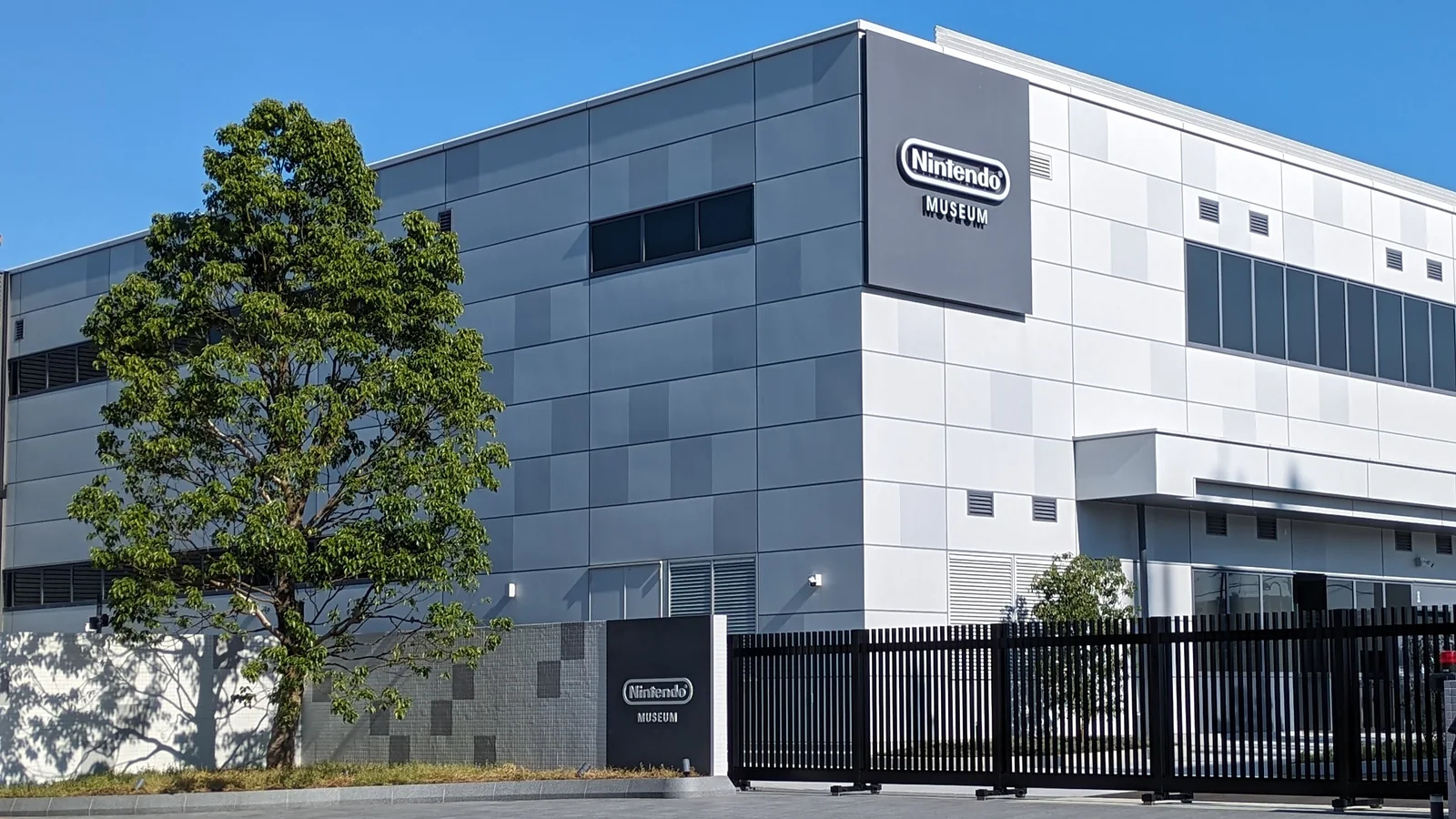
The Nintendo Museum is a reservation-based optional activity
near Ogura Station.
How to Adjust the Day for the Nintendo Museum
With a morning ticket, visit the Nintendo Museum first and then
continue to central Uji. Shorten the temple and riverside route
if you still want to reach Fushimi.
With an afternoon ticket, visit Byodoin in the morning and treat
the museum as the main afternoon activity. Remove Fushimi or limit
it to a short evening walk and dinner.
Do not assume that Byodoin, the Nintendo Museum and every Fushimi
stop will fit comfortably into one day.
A Nintendo Account is normally required for the reservation process.
Visitor details should match the identification documents used
on the day of entry.
14:15 | Travel from Uji to Chushojima
Walk to Keihan Uji Station and take the Keihan Uji Line
toward Chushojima.
This is the most natural connection between the Uji riverside
and the Fushimi sake brewery district.
Chushojima was historically connected with river transport and
remains a practical starting point for the canals, breweries and
sake museum.
15:00 | Choose One Fushimi Experience
The sake museum and canal boat cannot always be combined comfortably
late in the afternoon. Choose the experience that matters more and
preserve enough time for the brewery streets.
Option A: Gekkeikan Okura Sake Museum
The museum introduces Fushimi’s brewing history through traditional
tools, historic materials and the story of Gekkeikan.
It is the better choice when you want cultural context before
exploring the surrounding brewery district.
Check the current final admission time and reservation conditions.
Non-drinkers can still enjoy the historic building and brewing displays.
Option B: Fushimi Jikkokubune Boat Ride
The Jikkokubune boat provides a different view of Fushimi’s canals,
waterside buildings and former river-port landscape.
The service operates seasonally rather than throughout the year.
Check the operating calendar, departure time and reservation process
before traveling.
Arrive before the stated meeting time because late passengers
may not be permitted to board.
Choose One Main Experience
A museum visit followed by a reserved boat ride works only when
the times align. Choosing one usually creates a more relaxed afternoon.
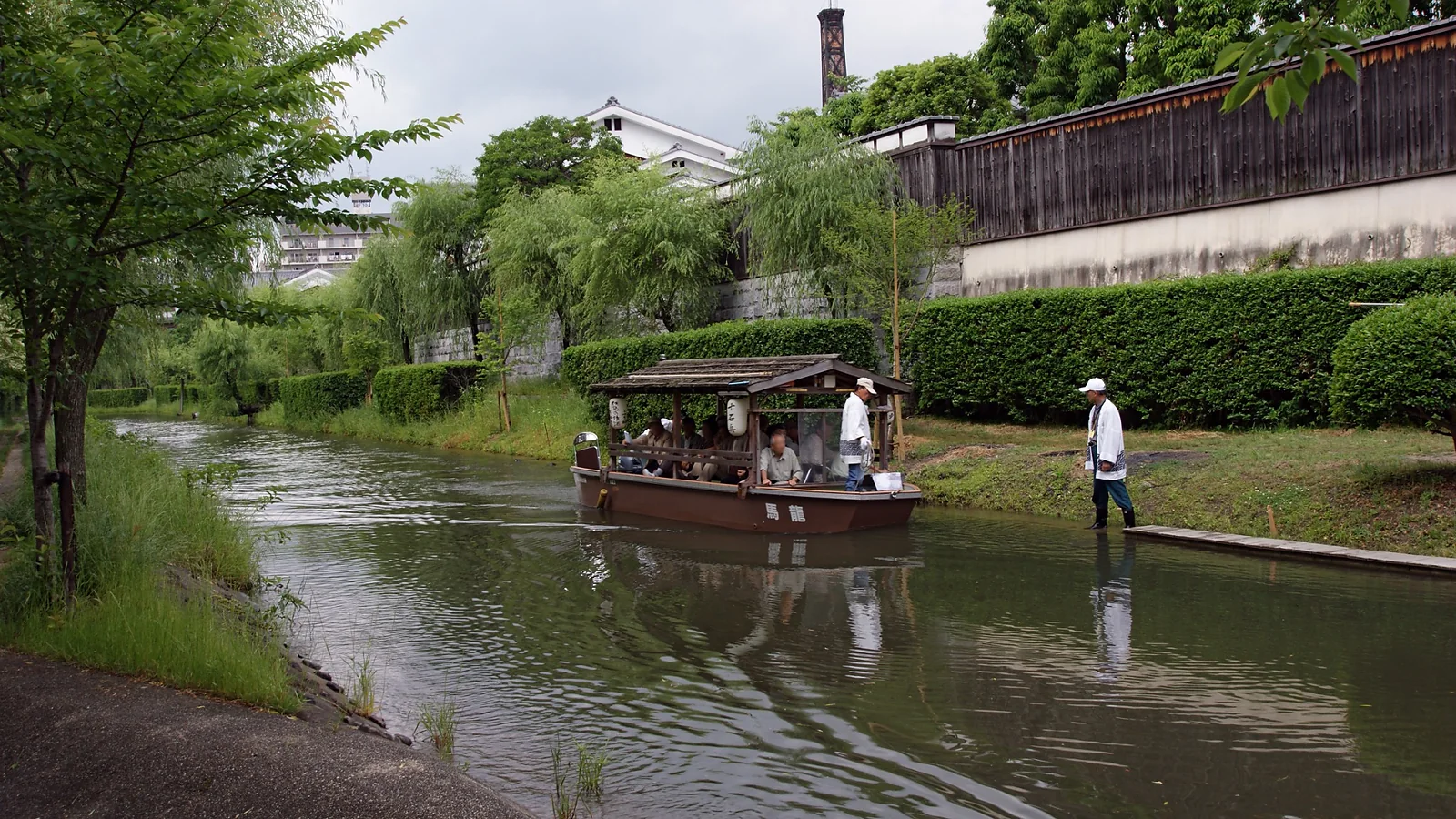
Fushimi’s canals preserve part of the atmosphere of its historic
river-port and sake brewery district.
16:15 | Fushimi Sake Brewery District
Continue through the streets surrounding Minamihama and the canals.
White plaster walls, wooden brewery buildings and waterside paths
reflect Fushimi’s development as both a brewing center and transport town.
Not every brewery offers public tours or walk-in tastings.
Enter only facilities that clearly welcome visitors and respect
private production areas.
When tasting sake, drink small amounts, alternate with water and
remember that samples from several locations can add up quickly.
17:00 | Teradaya
Pass Teradaya while continuing north through the district.
The site is associated with events from the final years of the
Edo period and the history of Sakamoto Ryoma.
Treat it as a brief historical stop unless you have confirmed
current interior access. The surrounding canal streets are equally
important to the atmosphere of the route.
18:00 | Dinner at Tokusei Ramen Daichu
Tokusei Ramen Daichu Main Store
Daichu is located beneath the railway tracks near
Momoyamagoryo-mae Station and provides a casual finish to the trip.
The restaurant serves a rich broth made with pork and chicken bones,
with several topping and customization choices.
Fushimi is known for its lively ramen scene, so walking around
and choosing another ramen shop that catches your eye is also part
of the experience. Daichu is one convenient local option.
19:00 | Return to Osaka
Momoyamagoryo-mae Station is beside the restaurant,
while Fushimi-Momoyama Station on the Keihan network is also nearby.
Travelers staying around Namba may find the Kintetsu connection
convenient. Travelers staying around Yodoyabashi or northern Osaka
may prefer Keihan with an appropriate transfer.
How to Get Around During This Five-Day Itinerary
This route uses several railway companies. Trying to force every journey
onto one network can make the itinerary less convenient.
Day |
Main Transport |
Practical Note |
|---|---|---|
Day 1 |
Osaka Metro, JR and walking |
Most of the route is completed on foot after arrival. |
Day 2 |
Nankai and Hankai Tramway |
The streetcar journey is part of the sightseeing experience. |
Day 3 |
JR, Hankyu or Hanshin |
Choose according to the location of your Osaka hotel. |
Day 4 |
Kintetsu Railway |
Kintetsu Nara Station is closest to this route. |
Day 5 |
JR, Keihan and possibly Kintetsu |
Arrive through JR Uji and leave through Keihan when practical. |
The Simplest Payment Method
Use an IC card for ordinary journeys and keep a small amount of cash
available. Reserved attractions and restaurants may have separate
payment rules.
For more information about IC cards, JR, private railways and Osaka Metro,
read our
Osaka transportation guide
.
Estimated Budget for This Five-Day Route
The following amounts are planning estimates per adult.
They exclude accommodation, international flights, airport transfers
and personal shopping.
Category |
Estimated Amount |
What Affects the Total |
|---|---|---|
Local and regional transport |
About ¥7,000–¥11,000 |
Hotel location, railway choices and use of buses or taxis. |
Attractions |
About ¥4,000–¥8,000 |
Museums, gardens, temples and optional experiences. |
Regular meals |
About ¥15,000–¥25,000 |
Drinks, izakaya ordering and restaurant choices. |
Nintendo Museum |
Add the current ticket price |
Optional and available only with a confirmed ticket. |
Kobe beef dinner |
Add roughly ¥10,000–¥30,000+ |
Selected course, beef grade, drinks and service style. |
Practical Total Excluding Accommodation
Plan roughly ¥26,000–¥44,000 per person with ordinary
meals and the casual Kobe dinner option. Adding the Nintendo Museum
and a Kobe beef course can raise the total to approximately
¥40,000–¥75,000 or more.
For accommodation, food and transport ranges, see our
Osaka travel budget guide
.
Are Transport Passes Worth It?
There is no single transport pass that neatly covers every important
journey in this itinerary.
The route uses JR, Nankai, Hankai, Hankyu, Hanshin, Kintetsu and Keihan
according to which operator is most convenient on each day.
A regional pass may save money when additional long JR journeys are added,
but it can also encourage inconvenient detours when a private railway
provides the most natural route.
Before Buying a Pass
Add the normal fares for the journeys you will actually take,
confirm which railway companies are covered and check whether
limited-express or reserved-seat fees cost extra.
For this route, an IC card and individual fares are usually the
easiest starting point.
Best Time to Follow This Itinerary
Spring
Spring provides comfortable walking temperatures and seasonal scenery.
Cherry-blossom periods and weekends can increase crowds and hotel prices.
Summer
The itinerary remains possible, but heat and humidity make Kobe,
Nara and Uji more tiring. Start early, carry water and shorten
optional outdoor walks.
Autumn
Autumn is one of the strongest seasons for this route,
particularly for Isuien Garden, Nara’s temple paths and the Uji riverside.
Winter
Winter often provides quieter streets and clear city views.
Earlier sunset works well for Kobe’s harbor lights but reduces
daylight for the final Nara and Uji walks.
Rainy-Day Adjustments
Day 1 and Day 2 include substantial indoor stops.
Shorten the waterfront, garden and riverside sections on Day 3,
Day 4 and Day 5 during severe weather.
How to Adjust the Route for Arrival and Departure Days
If Day 1 Is Your Arrival Day
Begin in the afternoon with Osaka Tenmangu and Tenjinbashisuji,
then finish in Ura-Tenma. Remove the museum or Nakazakicho rather
than rushing through both.
If Day 5 Is Your Departure Day
Complete Byodoin and central Uji only, then return for your luggage
and airport connection. Do not add Fushimi when your flight schedule
leaves little room for delays.
If You Have a Nintendo Museum Ticket
Organize the entire day around the designated entry time.
A museum reservation is less flexible than a temple, shopping street
or restaurant stop.
If You Prefer a Slower Route
Remove the final optional stop from Day 2 and Day 4,
choose either Uji or Fushimi on Day 5 and keep one evening free
near your Osaka hotel.
Who This Itinerary Is For
- Repeat visitors who have already seen some of Japan’s major highlights
- Travelers who enjoy walking between connected neighborhoods
- Visitors who want to keep one hotel base in Osaka
- Travelers interested in local food, historic streets and regional culture
This itinerary may not suit travelers whose main priorities are
Universal Studios Japan, central Kyoto’s major landmarks or a
very low-walking schedule.
Frequently Asked Questions
Is Five Days Too Long to Stay in Osaka?
No. Osaka functions as the hotel base, while the itinerary includes
Sakai, Kobe, Nara, Uji and Fushimi.
Can I Add Central Kyoto to Day 5?
It is not recommended. Byodoin, the Uji River and Fushimi already
create a full day. Adding Gion, Kiyomizudera or Nishiki Market
would make the route unnecessarily rushed.
Can I Visit Byodoin, the Nintendo Museum and Fushimi in One Day?
Only with a favorable museum entry time and a shortened Uji or Fushimi route.
The Nintendo Museum should normally replace part of the standard schedule.
Do I Need to Reserve Every Restaurant?
No. Reserve the Kobe beef dinner and any restaurant that specifically
recommends advance bookings. Keep casual meals flexible.
Do I Need a Kansai Rail Pass?
Not automatically. This itinerary uses several railway companies,
so an IC card and individual fares are often simpler.
Can I Complete This Route With Large Luggage?
It is not practical. Leave large luggage at your Osaka hotel
and travel with a small day bag.
Final Thoughts
A five-day Kansai trip does not need to be built around changing hotels
or rushing through the same famous streets as every first-time itinerary.
By using Osaka as one base, you can spend one day in local shopping streets,
ride a streetcar into Sakai, follow Kobe from its hillside houses to the port,
explore Nara beyond the deer and finish among the tea and sake towns
of southern Kyoto.
The optional stops are intentionally optional.
Removing one museum, temple or viewpoint often creates a better trip
than completing every item exactly as written.
The Local Steps Approach
Use this itinerary as a structure rather than a race.
Preserve time for an unexpected shop, a slower meal or a neighborhood
that feels more interesting than the next planned stop.
Continue Planning Your Osaka and Kansai Trip
-
Best Day Trips from Osaka
— Compare other regional destinations. -
Where to Stay in Osaka
— Choose a practical hotel base. -
Getting Around Osaka
— Understand IC cards and railway networks. -
Osaka Travel Budget
— Estimate food, transport and accommodation costs. -
Osaka Local Food Guide
— Find local dishes beyond takoyaki and okonomiyaki. -
Hidden Gems in Osaka
— Add quieter neighborhoods and local alternatives.
Opening hours, fares, admission rules, restaurant schedules and
seasonal services may change. Confirm important details on official
websites before traveling.
Photo Credits
Osaka Dusk Skyline
by Zhang Zhang /
Wikimedia Commons /
CC BY-SA 4.0
.
Cropped and converted to WebP.
Tengo-Nakazaki-dori Shopping Mall
by Mc681 /
Wikimedia Commons /
CC BY-SA 4.0
.
Cropped and converted to WebP.
Hankai Tramway at Sumiyoshi Torii-mae Station
by 寅次郎 /
Wikimedia Commons /
CC BY 2.0
.
Resized for web use.
Kobe Meriken Park
by Pastern /
Wikimedia Commons /
CC BY-SA 3.0
.
Cropped and converted to WebP.
Isuien Garden in Nara
by KimonBerlin /
Wikimedia Commons /
CC BY-SA 2.0
.
Cropped and converted to WebP.
Byodoin Phoenix Hall
by Zairon /
Wikimedia Commons /
CC BY-SA 4.0
.
Converted to WebP.
Nintendo Museum Entrance
by Nagomijirap /
Wikimedia Commons /
CC BY-SA 4.0
.
Cropped and converted to WebP.
Fushimi Jikkokubune
by 663highland /
Wikimedia Commons /
CC BY 2.5
.
Cropped and converted to WebP.