Affiliate disclosure:
This article contains hotel-booking affiliate links.
If you make an eligible reservation through them,
Local Steps Japan may earn a small commission at no extra cost to you.
Information checked: August 12, 2026.
Transport, admission fees, opening hours and accommodation details can change,
so confirm essential information before your trip.
Koyasan feels much farther from Osaka than it really is.
Leave the crowds and neon around Namba in the morning, and around 90 minutes later you can be climbing into the forested mountains of Wakayama, where temple roofs, cedar trees and centuries-old Buddhist sites replace the city skyline.
But Koyasan creates one important planning question:
Should you visit Koyasan as a day trip from Osaka, or stay overnight in a Buddhist temple?
A day trip is absolutely possible. You can see Okunoin, Kongobuji Temple and Danjo Garan in one well-planned day. But if you want to experience the side of Koyasan that makes it genuinely different from other temple destinations in Japan — shojin ryori, evening quiet, morning prayers and life inside a shukubo temple lodging — staying one night is the better experience.
Local Steps Japan Take
Short on time? Visit Koyasan as a day trip.
Want the full experience? Stay one night in a temple lodging.
For a first visit, we would choose one night.
This guide gives you both options: a practical one-day route from Osaka and a slower overnight itinerary, plus three temple stays worth considering, where to eat, transport tips and a map you can use while exploring.
Still deciding where to go?
Compare the Best Day Trips from Osaka
before planning your route.
Day Trip vs Overnight in Koyasan: At a Glance
| Day Trip | One Night | |
|---|---|---|
| Best for | Travelers with limited time | Travelers who want the full Koyasan experience |
| Main sights | Okunoin, Kongobuji, Danjo Garan, Daimon | All major sights, with more time to explore |
| Temple lodging | No | Yes |
| Shojin ryori | Possible at a restaurant | Usually part of the temple-stay experience |
| Morning service | Usually no | Available at many shukubo |
| Pace | Busy | Relaxed |
| Our choice | Good if Osaka time is limited | Best for a first visit |
If Koyasan is one stop on a packed Kansai itinerary, the day trip works well. If you can spare one night, however, the mountain feels very different after most daytime visitors leave.
How to Get to Koyasan from Osaka
For most travelers staying in central Osaka, the easiest starting point is Nankai Namba Station.
If Koyasan is a priority, Namba can be a more convenient Osaka base than Umeda because the Nankai route starts there. For a trip that also includes Kyoto, Kobe or other day trips, compare where to stay in Osaka before deciding.
Nankai Namba Station
↓ Nankai Koya Line
Gokurakubashi Station
↓ Koyasan Cable Car
Koyasan Station
↓ Nankai Rinkan Bus
Central Koyasan / Okunoin
The fastest straightforward option is the Limited Express Koya, which runs from Namba to Gokurakubashi with reserved seating. At Gokurakubashi, transfer to the cable car for the final climb to Koyasan Station.
The journey from Nankai Namba to Koyasan takes roughly 90 minutes when using a convenient Limited Express Koya and cable-car connection, although the exact time depends on your departure.
Regular services can also reach Gokurakubashi and may cost less, but they generally take longer and can require additional transfers. If you are attempting Koyasan as a day trip, saving time in the morning is worth considering.
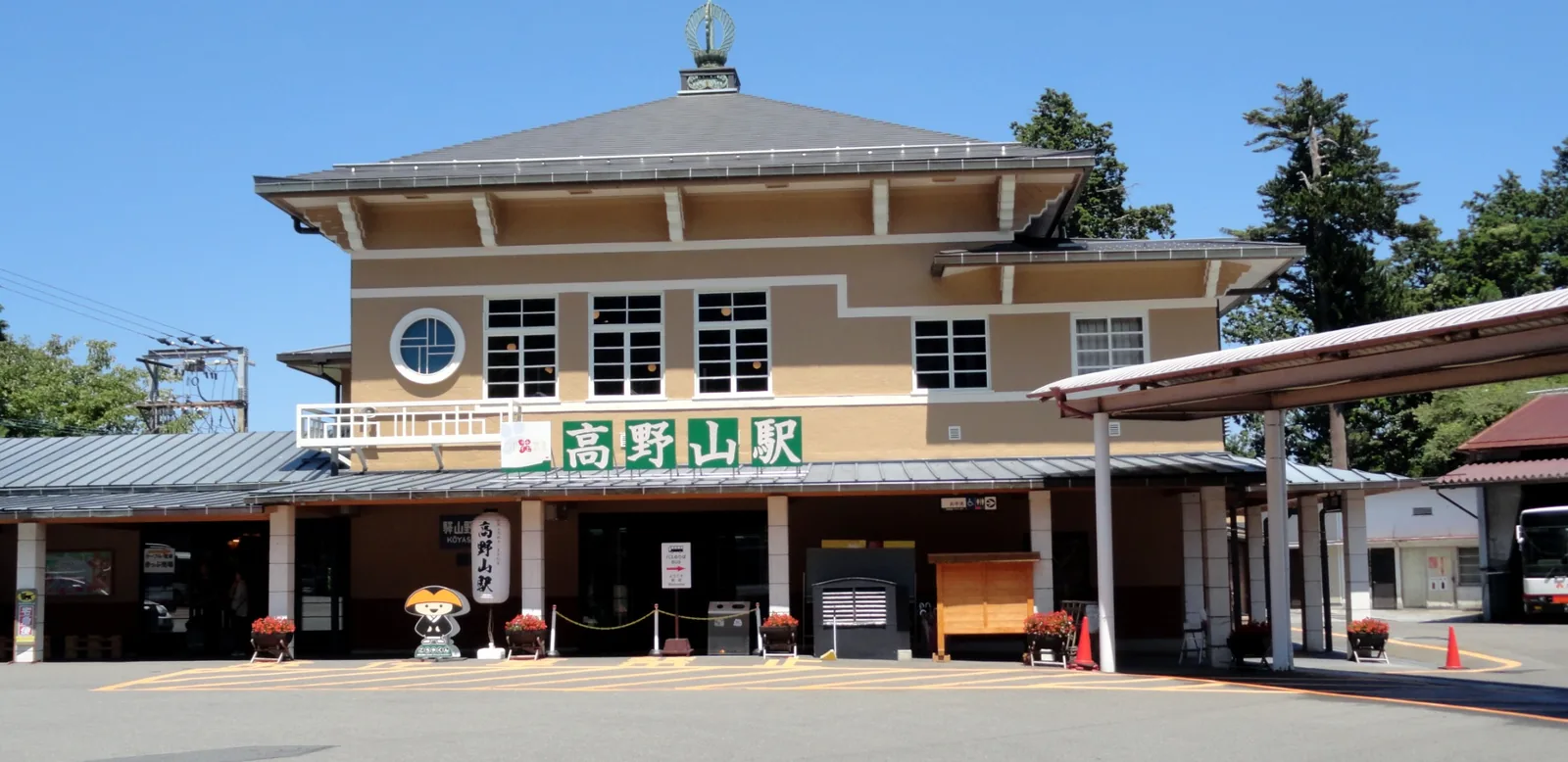
Do Not Walk from Koyasan Station to the Main Sights
Koyasan Station is the rail gateway to the mountain, but it is not the center of the temple town.
From the station, use the Nankai Rinkan Bus to reach areas such as Senjuinbashi, Kongobuji and Okunoin. This is especially useful on a day trip, when spending extra time walking the access road makes little sense.
Limited Express Koya or Regular Train?
For most first-time visitors, we recommend the Limited Express Koya when its departure time fits your itinerary.
All seats are reserved, making the mountain journey more comfortable than relying entirely on regular services. A separate limited-express ticket is required unless it is included in the ticket package you purchase.
Day-trip travelers: prioritize the quickest practical morning connection.
Overnight travelers: you have more flexibility, so choosing a slower connection is less of a problem.
Is the Koyasan World Heritage Digital Ticket Worth It?
For many visitors traveling from Osaka, yes.
The Koyasan World Heritage Digital Ticket includes round-trip Nankai railway travel from your selected departure station, eligible local bus travel around Koyasan for two days and discounts at selected facilities.
As of August 2026, the adult fare from Namba is:
Standard digital ticket: ¥3,980
With an outbound Limited Express Koya ticket: ¥4,910
The ticket is valid for two consecutive days, which makes it especially convenient for an overnight temple stay, although day-trip travelers can use it too.
Check the latest Koyasan ticket information on Nankai Electric Railway’s official website
Koyasan Map: Sights, Temple Stays and Food Stops
Koyasan is more spread out than it first appears. The main sights stretch from Okunoin in the east to Daimon in the west, with Kongobuji and Danjo Garan between them.
We created this map with the places used in this guide, including major sights, our three recommended temple stays and food stops.
On a day trip, do not try to walk every section of the map. Use the local bus for the longer east-west movements and walk within each sightseeing area.
One-Day Koyasan Itinerary from Osaka
If you decide not to stay overnight, starting early matters. This route concentrates on Koyasan’s essential sights without turning the entire day into a race.
The exact train times will vary, so treat this as a practical route rather than a minute-by-minute schedule.
The important part is the order: start with Okunoin, have lunch around central Koyasan, then visit Kongobuji and Danjo Garan before their indoor areas close.
Kongobuji, Kondo Hall and Konpon Daito currently operate from 8:30 to 17:00, with last admission at 16:30.
Check current admission fees and opening hours on the official Koyasan website
If you arrive late: skip Daimon before rushing through Kongobuji or Danjo Garan. The central temple sites are more important on a first visit.
Start the Day at Okunoin
Okunoin is the place that immediately makes Koyasan feel different from an ordinary temple day trip.
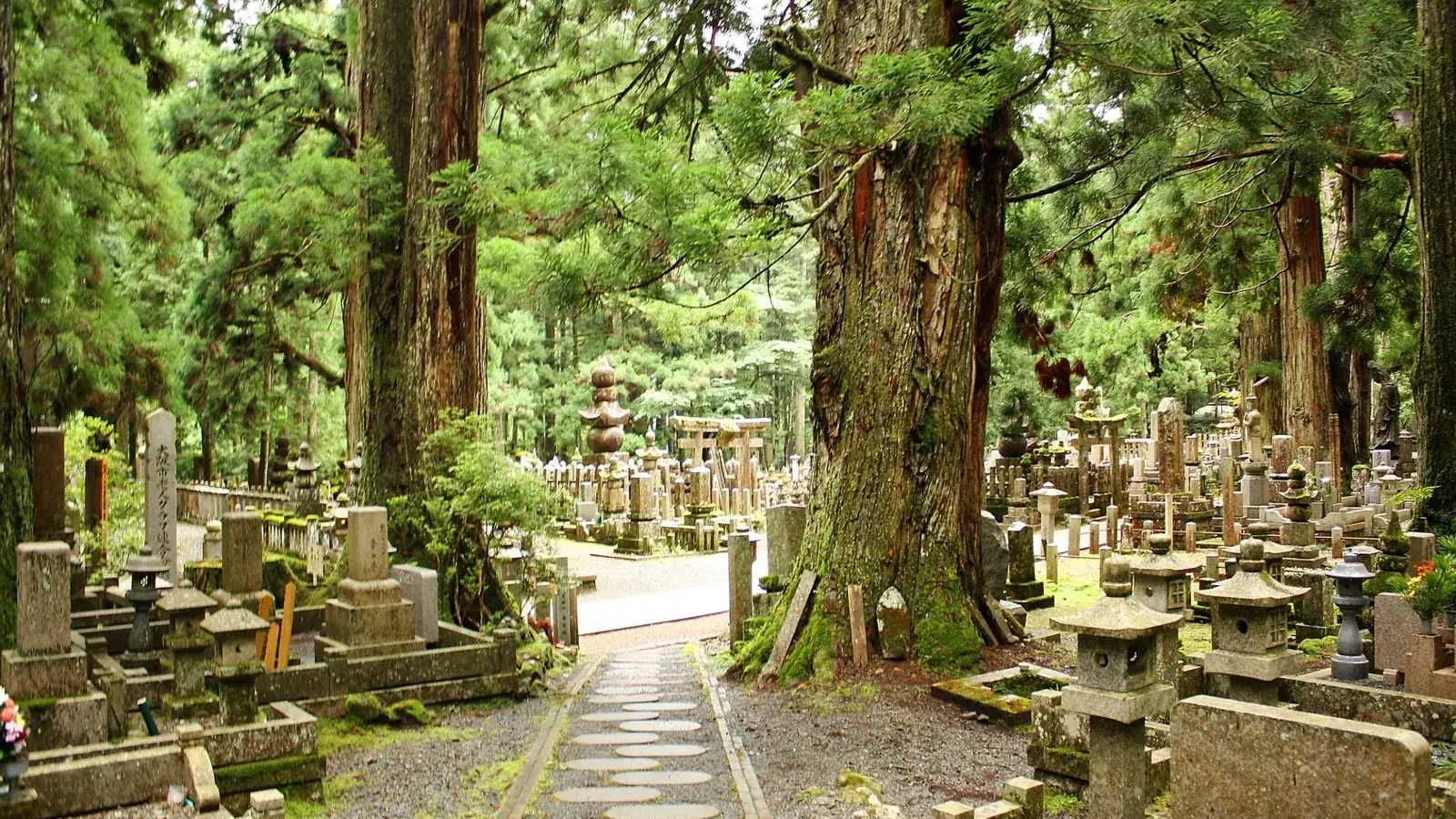
The traditional approach runs for roughly two kilometers beneath huge cedar trees, passing more than 200,000 tombstones and memorial monuments before reaching the mausoleum of Kobo Daishi.
This is not simply a historical cemetery. Okunoin remains one of the most sacred places in Koyasan, so walk quietly and treat the route as an active religious site rather than just another sightseeing attraction.
If you only have one day in Koyasan, give Okunoin enough time. Rushing through the forest just to tick it off a list misses much of what makes the place memorable.
Good to know: visitors are asked to dress respectfully at Okunoin. Avoid very revealing clothing; this is one of the central sacred spaces of Koyasan.
Lunch in Koyasan: Try Shojin Ryori at Chuoshokudo Sanbo
After walking through Okunoin, head back toward central Koyasan for lunch.
Our first choice for a day trip is Chuoshokudo Sanbo, a casual restaurant specializing in shojin ryori — the Buddhist vegetarian cuisine closely associated with temple life on Koyasan.
The menu uses ingredients such as tofu, vegetables, grains, konjac and wheat gluten. This makes Sanbo a useful option if you want to experience Koyasan’s food culture without staying overnight in a temple.
Our pick: Shojin Hanakago Bento
It brings several small shojin dishes together in one meal, including goma tofu, vegetables and other traditional plant-based preparations.
As of August 2026, Sanbo is open from 11:00 to 16:00, but service ends when dishes sell out. On busy weekends and holidays, going before the main lunch rush is the safer choice.
Check the latest menu and opening information on the official website
Kongobuji Temple
After lunch, continue to Kongobuji Temple.
Koyasan works a little differently from a typical Japanese temple complex. Rather than thinking of Kongobuji as just one isolated building, it helps to understand Koyasan itself as a vast sacred precinct made up of temples, halls and religious sites spread across the mountain.
The Kongobuji building that visitors enter today is one of the most important places to understand the organization and living traditions of Koyasan Shingon Buddhism.
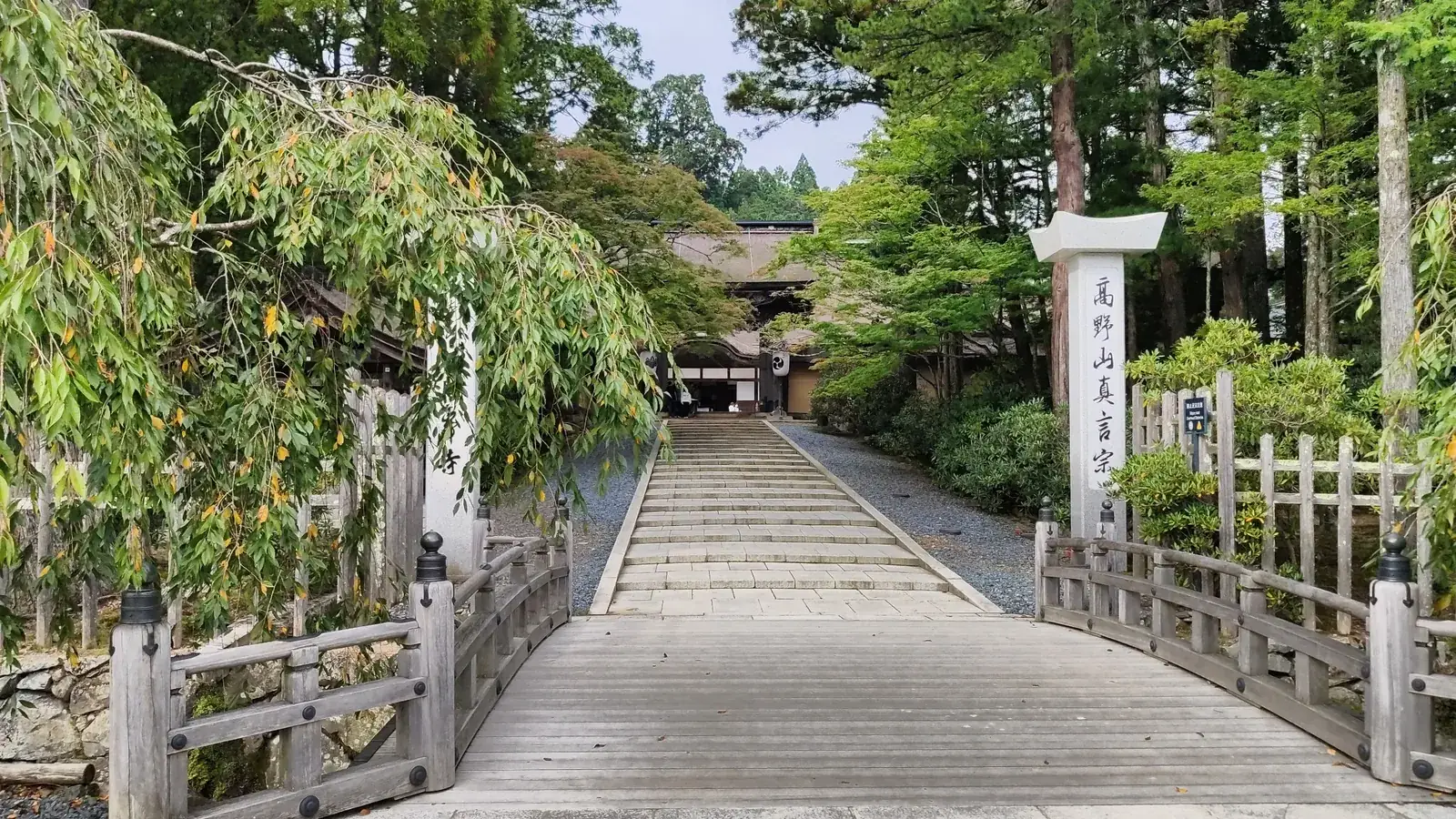
Do not treat this as a quick photo stop. Allow time to go inside rather than only seeing the exterior.
As of August 2026, admission to Kongobuji is ¥1,000 for visitors of junior high school age and above. Opening hours are 8:30–17:00, with reception ending at 16:30.
Day-trip tip: visit Kongobuji before spending too much time shopping or stopping at cafés. The outdoor streets can wait; indoor temple admission cannot.
Danjo Garan and Konpon Daito
From Kongobuji, walk to Danjo Garan, one of the places most closely connected with the foundation of Koyasan.
When Kobo Daishi established his monastic center here, Danjo Garan was the first area developed as a center for esoteric Buddhist practice and study.
Several halls and pagodas stand inside the complex, but the building that immediately catches your eye is Konpon Daito.
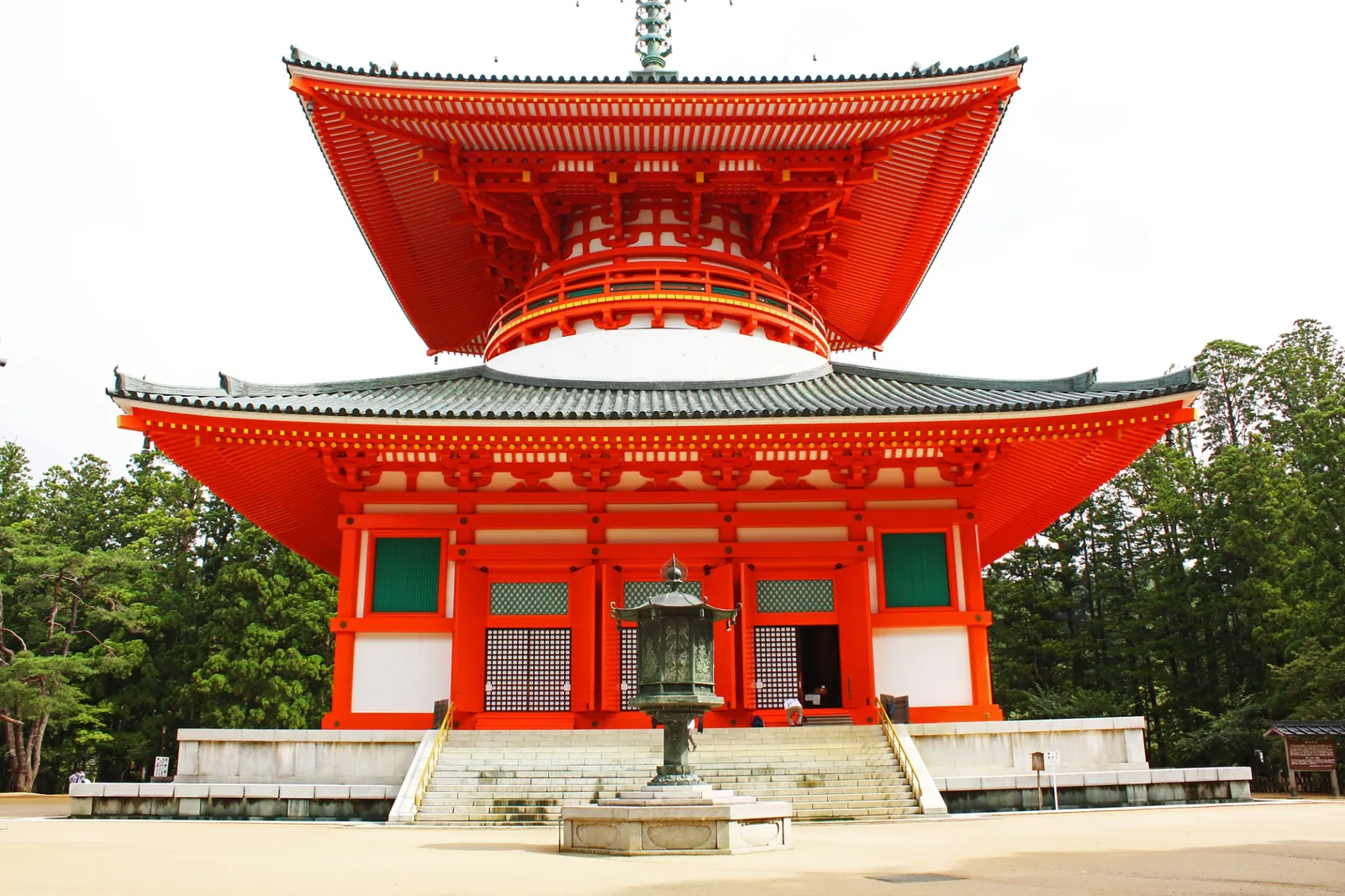
The bright vermilion pagoda is one of Koyasan’s most recognizable landmarks, but its importance goes beyond its appearance. The interior was conceived as a three-dimensional expression of the esoteric Buddhist mandala world.
If time allows, enter both Konpon Daito and the nearby Kondo rather than simply photographing the buildings from outside.
As of August 2026, admission is ¥500 each for Konpon Daito and Kondo, with both open from 8:30 to 17:00 and last admission at 16:30.
Daimon Gate
Continue west from Danjo Garan and you eventually reach Daimon, Koyasan’s monumental western gateway.
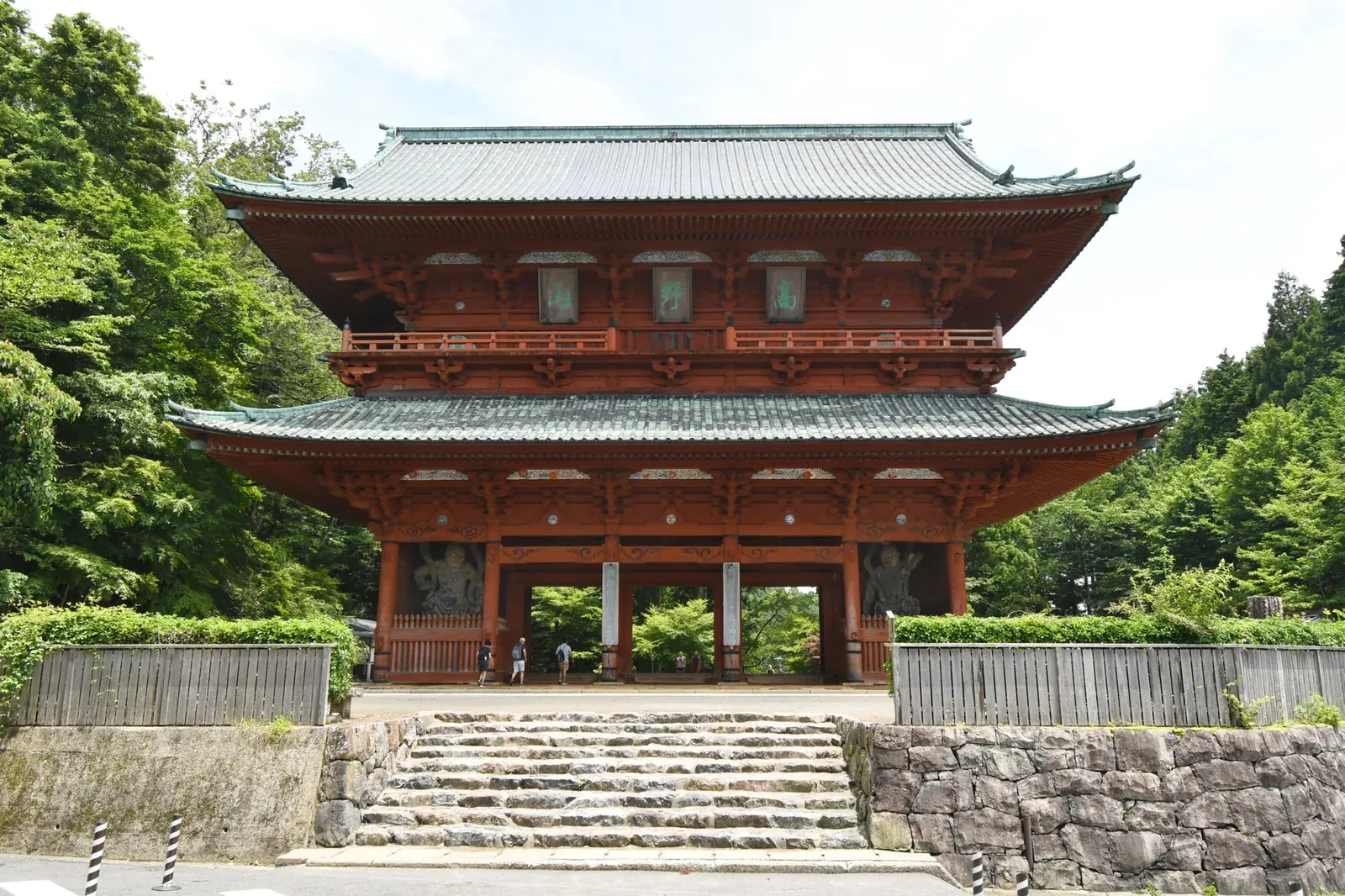
Daimon is worth seeing, but on a one-day itinerary it is the easiest major stop to make optional.
If you are running behind schedule, spend your time at Okunoin, Kongobuji and Danjo Garan first. Daimon is better treated as a bonus than a reason to rush through the more important religious sites.
If you stay overnight, there is far less pressure. You can visit Daimon later in the afternoon or fit it naturally into your second day.
Where Else to Eat in Koyasan
Hamadaya — For Fresh Goma Tofu
Hamadaya specializes in goma tofu, one of the foods most strongly associated with Koyasan.
Despite the English name “sesame tofu,” goma tofu is very different from ordinary soybean tofu. Its smooth, almost custard-like texture comes from sesame and starch rather than soybeans.
Hamadaya prepares its goma tofu fresh, and it can sell out before the scheduled closing time. As of August 2026, the official opening hours are 9:00–17:00, with irregular closing days.
For a day trip, this is a good afternoon stop after the main temples. If you are staying overnight, it also works as a small snack before checking into your shukubo.
Check Hamadaya’s latest opening information
Bon On Shya — For a Café Break
If you want something lighter than another traditional set meal, Bon On Shya is a useful café option around central Koyasan.
It fits particularly well for travelers who want coffee, a lighter meal or a slower break between temple visits. Its schedule varies, so check the latest opening information before building it into a tight day-trip itinerary.
If you only make two food stops:
Have lunch at Chuoshokudo Sanbo, then try fresh goma tofu at Hamadaya.
What You Miss on a Koyasan Day Trip
By late afternoon, a successful day trip has already shown you many of Koyasan’s major sights.
But this is also the point where the difference between visiting Koyasan and staying in Koyasan becomes much clearer.
Most day visitors start moving back toward the cable car and Osaka. If you stay, your itinerary changes completely.
- You have dinner inside a Buddhist temple lodging.
- You can experience shojin ryori as part of the stay rather than just as a restaurant lunch.
- You wake up on Koyasan instead of commuting back from Osaka.
- You may be able to join morning prayers or other Buddhist practices offered by your temple.
- You can explore parts of Koyasan before the main daytime crowds arrive.
This is why our recommendation changes from “day trip is possible” to “stay overnight if you can.”
Shojin Ryori Is Part of the Experience
Temple meals are not simply vegetarian versions of normal Japanese food.
Shojin ryori developed alongside Buddhist practice and traditionally avoids meat and fish, building the meal around plant-based ingredients, careful preparation and seasonality.
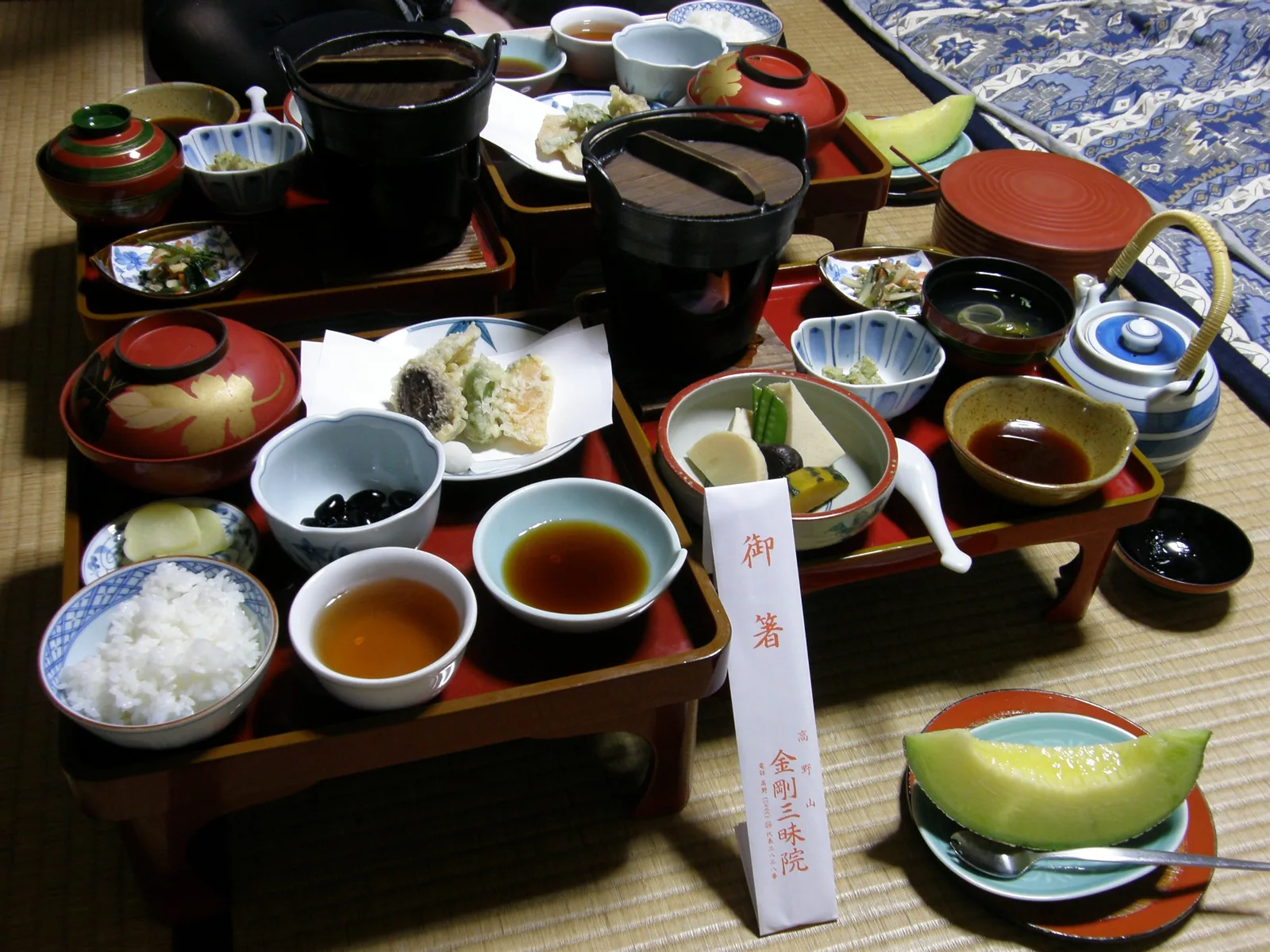
The exact menu and serving style vary between temples, which is part of the appeal. A shukubo is not a standardized hotel chain; each temple has its own atmosphere, rooms, food and religious schedule.
Morning at a Temple Feels Completely Different
Many Koyasan shukubo allow overnight guests to join morning Buddhist services. Some temples also offer meditation, sutra copying or goma fire rituals.
At Ekoin, for example, guests can experience morning worship and the temple’s daily goma fire ritual.
That kind of experience is difficult to reproduce on a normal Osaka day trip. It is also the main reason we would spend the extra night here rather than simply trying to add more sightseeing stops.
Where to Stay in Koyasan: 3 Temple Lodgings We Recommend
Koyasan has dozens of shukubo, so choosing one can quickly become overwhelming.
Instead of listing every temple lodging, we would narrow the choice to three depending on what you value most.
1. Ekoin — Best for Your First Temple Stay
Best for: first-time shukubo guests, international travelers and anyone who wants several Buddhist experiences in one stay.
If you have never stayed in a Buddhist temple before, Ekoin is our easiest recommendation.
One major advantage for international visitors is that Ekoin explicitly provides English-speaking staff. That removes some of the uncertainty around check-in, temple etiquette and joining religious activities.
The temple offers a particularly broad range of experiences. Overnight guests can join the morning service and goma fire ritual, while optional activities may include meditation, sutra copying and an Okunoin night tour.
Choose Ekoin if: this is your first temple stay and you want the easiest balance of cultural experience and accessibility for international travelers.

2. Ichijoin — Best for Shojin Ryori and a Refined Temple Stay
Best for: travelers who care most about food, atmosphere and a slower traditional experience.
Ichijoin is particularly attractive if shojin ryori is one of the main reasons you want to stay overnight.
Its official temple-stay schedule gives a good idea of what one night can look like: arrive in the afternoon, visit nearby Danjo Garan, optionally join an Asokukan meditation session, eat shojin ryori for dinner, try sutra copying, then join morning prayers the next day.
The temple is also conveniently positioned for Kongobuji and Danjo Garan, so it works especially well if you prefer to divide the main sightseeing between two relaxed days rather than complete everything on the first afternoon.
Choose Ichijoin if: excellent shojin ryori and a polished traditional temple-stay atmosphere matter more to you than having the widest range of English-focused services.

3. Shojoshin-in — Best for Early-Morning Okunoin
Best for: travelers who want to make Okunoin the focus of their overnight stay.
Shojoshin-in has one advantage that is difficult to beat: the temple describes itself as the closest temple lodging to Okunoin.
That makes it our preferred option if your idea of staying overnight is waking early and heading toward Okunoin before the mountain becomes busier later in the morning.
The temple also offers its own Buddhist services and experiences, including morning prayers and goma rituals.
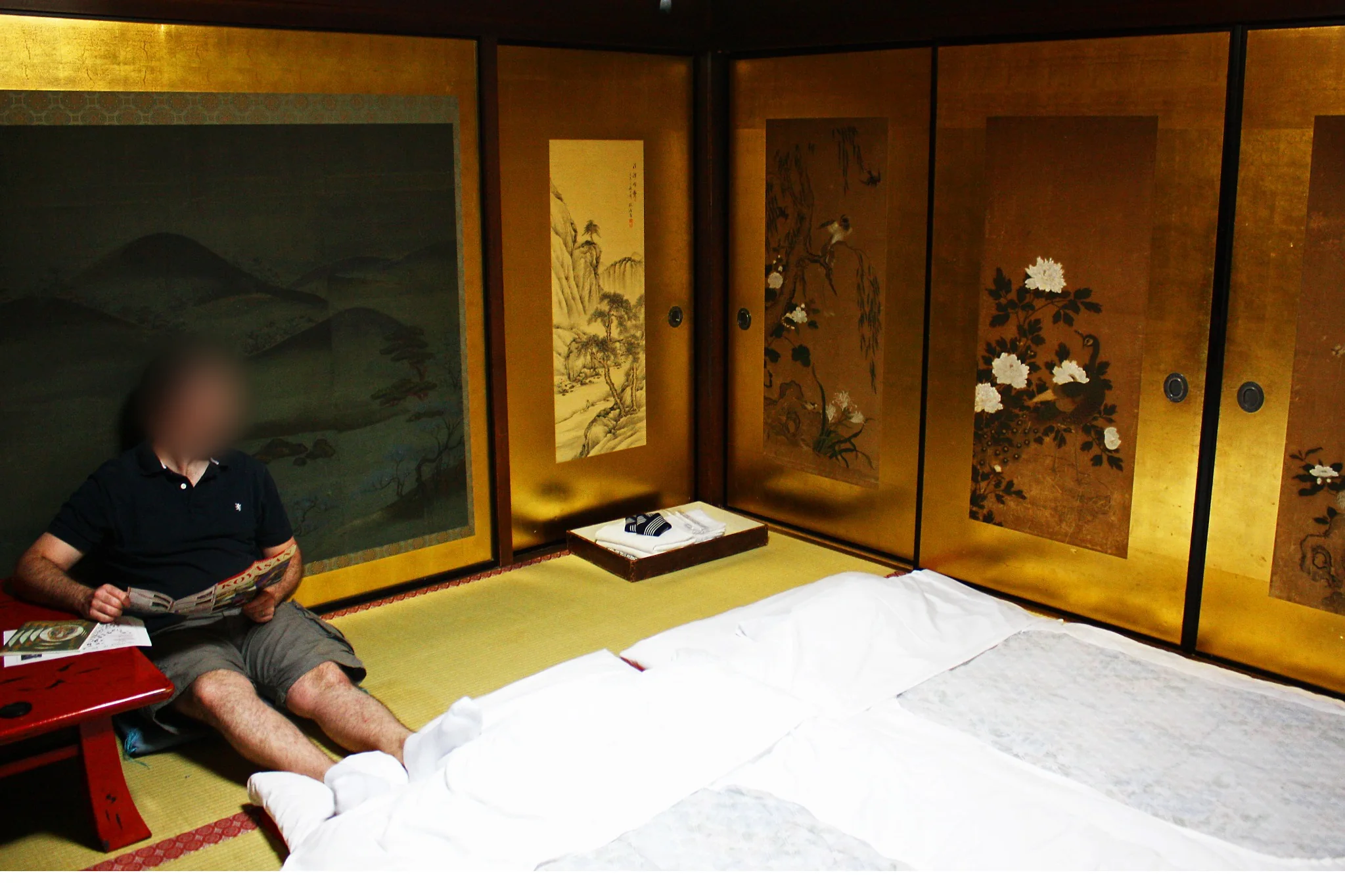
The photo above is an example of a temple lodging room photographed at Shojoshin-in. Room types and furnishings can change, so check the current accommodation details when booking.
Choose Shojoshin-in if: you want easy access to Okunoin and would rather prioritize location and religious atmosphere over booking-platform convenience.
Which Temple Stay Should You Choose?
If we had to choose one for a first Koyasan temple stay, we would start with Ekoin.
But there is no single “best” shukubo for everyone. Ichijoin makes more sense if food and atmosphere are your priority, while Shojoshin-in is especially attractive if you want to structure your stay around Okunoin.
One-Night Koyasan Itinerary from Osaka
If you can give Koyasan two days instead of one, there is no need to squeeze every major sight into a single afternoon.
The biggest advantage of staying overnight is not simply that you can see more places. It is that you can slow the trip down and experience Koyasan before and after the main daytime sightseeing hours.
Day 1: Osaka to Koyasan and Temple Stay
The exact check-in time, dinner time and activities depend on your temple, so always build the afternoon around the schedule provided by your shukubo.
This is one reason we would not try to visit Okunoin on Day 1 as well. Save the most atmospheric part of Koyasan for the following morning, when you are already on the mountain.
Day 2: Morning Service and Okunoin
Is One Night in Koyasan Enough?
For most travelers, yes.
One night gives you enough time to experience the main things that distinguish an overnight Koyasan trip from a day trip:
- Sleeping inside a Buddhist temple lodging
- Eating shojin ryori as part of the stay
- Joining a morning Buddhist service
- Seeing Koyasan at a slower pace
- Visiting Okunoin without needing to fit it between trains from Osaka
Two nights can make sense if you want to participate in additional Buddhist activities, visit smaller temples or simply spend more time in the mountain atmosphere, but we would not consider a second night essential for a normal Kansai itinerary.
Our recommendation: one night is the sweet spot for most first-time Koyasan visitors.
Best Time to Visit Koyasan
Koyasan can be visited throughout the year, but the experience changes noticeably with the seasons.
Koyasan Station sits at an elevation of around 867 meters, so do not assume the conditions will feel the same as Osaka.
Spring
Spring is a comfortable time for combining temple sightseeing with longer walks around Okunoin and Danjo Garan.
Summer
Summer brings green forests and long daylight hours, which work well for exploring the mountain on foot.
It can still be warm and humid, so carry water and be prepared for rain rather than assuming that a mountain destination will always feel cool.
Autumn
Autumn is one of the most atmospheric seasons for Koyasan, with temple grounds and forests changing color.
If an overnight temple stay is important to your trip, book earlier rather than leaving your preferred shukubo until the last minute.
Winter
Winter completely changes the mood of Koyasan.
Snow can cover the temple town, and temperatures at the higher elevations can drop below freezing. The scenery can be beautiful, but you need proper winter clothing and should check transport conditions before traveling.
Winter trip: bring a warm coat, insulating layers and shoes suitable for cold or slippery conditions. Do not plan a winter Koyasan trip using Osaka’s weather forecast alone.
What to Wear at Koyasan
Koyasan is not a theme park built around temples. It remains an active religious center, particularly around Okunoin and the main worship spaces.
Dress comfortably for walking, but keep your clothing respectful.
- Avoid clothing that leaves much of the shoulders or back exposed.
- Avoid very short skirts or shorts when visiting sacred areas.
- Bring an extra layer outside midsummer, especially if staying overnight.
- Wear comfortable shoes — you will walk considerably more than the map may suggest.
If your shukubo gives you a yukata, remember that it is generally intended for use inside the temple lodging.
Change back into normal clothing before attending the morning service or visiting sacred sites such as Okunoin and Danjo Garan.
Temple Stay Etiquette: What First-Time Guests Should Know
You do not need to be Buddhist to stay at a Koyasan shukubo.
Temple lodgings welcome ordinary travelers as well as pilgrims and worshippers. The important thing is to remember that you are staying inside a functioning religious institution rather than a conventional resort hotel.
1. Arrive on Time
Dinner and religious activities usually follow a fixed schedule.
If your temple asks you to check in by a particular time, treat that as part of the experience rather than as a flexible hotel guideline.
2. Morning Services Are Religious Ceremonies
You do not need to understand every chant or ritual to participate respectfully.
Watch what the monks and other guests do, remain quiet and follow any instructions given by the temple.
3. Ask Before Taking Photos
Photography is prohibited in some sacred areas.
Do not assume that because photography is allowed in a courtyard it is also permitted inside a worship hall or during a ceremony. Look for signs or ask the temple before taking photos.
4. A Shukubo Is Not the Same as a Hotel
Some temple lodgings now have private bathrooms, modern toilets, Wi-Fi and upgraded suites. Others retain simpler rooms and shared facilities.
That variation is part of the experience, but it means you should read the room details carefully before booking.
5. Carry Some Cash
Card acceptance has improved, especially at larger accommodations and tourist facilities, but cash is still useful around Koyasan.
Do not arrive with only a credit card and assume every small shop, restaurant or temple facility will accept it.
Should You Bring Your Luggage to Koyasan?
If you are staying one night, we recommend traveling light if possible.
A small overnight bag is easier on the train, cable car and local bus than a large suitcase, especially when you are also walking between temple sites.
If Koyasan is a side trip during a longer stay in Osaka, consider leaving your large suitcase at your Osaka accommodation or using a luggage service and taking only what you need for the night.
Day Trip or Overnight: Which Should You Choose?
A Koyasan day trip from Osaka is completely realistic, and we would still recommend doing it rather than skipping Koyasan altogether because you cannot stay overnight.
But if your schedule allows one night, this is one destination where paying for accommodation changes the experience rather than simply giving you somewhere to sleep.
Local Steps Japan Verdict
Day trip: worthwhile and practical.
One-night temple stay: our recommendation for a first Koyasan visit.
Frequently Asked Questions About Koyasan
Can you visit Koyasan as a day trip from Osaka?
Yes. Koyasan can be visited as a day trip from Osaka, especially if you leave Namba early. Prioritize Okunoin, Kongobuji and Danjo Garan, and use the local bus for longer movements around the mountain.
How long does it take to get from Osaka to Koyasan?
Using the Limited Express Koya from Nankai Namba, followed by the cable car from Gokurakubashi, the journey to Koyasan takes roughly 90 minutes with a convenient connection. You then need a local bus from Koyasan Station to most sightseeing areas.
Is Koyasan better as a day trip or overnight?
For sightseeing alone, a day trip is enough to see the major sites. For the complete experience, we recommend staying one night because it allows you to experience a Buddhist temple lodging, shojin ryori and morning religious activities.
Is one night in Koyasan enough?
Yes. One night is enough for most first-time visitors. Spend the first day around Kongobuji, Danjo Garan and Daimon, stay in a shukubo, then visit Okunoin the following morning.
Do you need to be Buddhist to stay in a Koyasan temple?
No. Koyasan’s temple lodgings welcome general visitors. You do not need to be Buddhist, but you should respect the temple’s schedule, religious ceremonies and rules.
What is a Koyasan temple stay like?
It varies by temple, but a typical stay may include a Japanese-style room, shojin-ryori dinner and breakfast, and the opportunity to join a morning Buddhist service. Some temples also offer meditation, sutra copying or goma fire rituals.
Which Koyasan temple stay is best for first-time visitors?
Our first choice is Ekoin because it combines English support with a wide range of Buddhist experiences. Choose Ichijoin if food and a refined traditional atmosphere are your priorities, or Shojoshin-in if easy access to Okunoin matters most.
Can vegetarians eat in Koyasan?
Yes. Shojin ryori is traditionally based on plant ingredients and is widely available in Koyasan, especially at temple lodgings. However, dietary needs such as vegan, gluten-free or allergy requirements should always be confirmed directly with the restaurant or temple before booking.
Does it snow in Koyasan?
Yes. Koyasan can receive snow in winter, and temperatures at its higher elevation can fall below freezing. Bring proper winter clothing and check the latest weather and transport information before traveling.
More Trips from Osaka
If Koyasan fits the kind of trip you are looking for, these Local Steps Japan guides may also help you plan the rest of your Kansai stay:
-
Arima Onsen Day Trip from Osaka: Hot Springs, Trout Fishing & Local Food
-
Minoh Falls: Osaka’s Easiest Nature Escape
-
Kobe Day Trip: The Perfect One-Day Route from Osaka
-
Uji Day Trip: Tea, Temples and Riverside Japan
-
5-Day Osaka and Kansai Itinerary for Repeat Visitors
Final Thoughts
Koyasan is close enough to Osaka to make a day trip possible, but just far enough — physically and culturally — to feel like you have left the city behind.
If all you have is one day, go. Walk through Okunoin, see the red Konpon Daito, visit Kongobuji and eat a shojin-ryori lunch.
But if you can make room for one night, stay.
The most memorable part of Koyasan may not be another temple building. It may be eating a quiet dinner inside a shukubo, waking before breakfast for morning prayers, and stepping back outside into the mountain the next morning.
That is the version of Koyasan we would choose.
“`