This one-day Osaka food itinerary follows a different route. It begins early at a working wholesale market, passes through the kitchenware street that supports the city’s restaurant culture, pauses for a bowl of kitsune udon in the old merchant district, and ends among the market lanes and yakiniku restaurants of Tsuruhashi.
The route is designed for repeat visitors, curious first-time travelers and anyone who wants to explore Osaka through neighborhoods rather than spend the entire day around Dotonbori. It is food-focused, but it includes enough walking and browsing time to stop the day from becoming one very long lunch.
Affiliate disclosure: This article contains hotel booking links. If you make a reservation through one of these links, we may earn a small commission at no extra cost to you.
Information check: Market access, area information and food history were checked in July 2026. Shop hours, restaurant closures, prices, payment methods and market conditions can change, so confirm essential details before traveling.In this guide
- Route at a glance
- Before you start
- Breakfast at Kizu Market
- Sennichimae Doguyasuji
- Kitsune udon in Semba
- Tsuruhashi Market
- Yakiniku dinner
- Optional drinks in Ura-Tenma
- Recommended restaurants
- Budget and transport
- Where food lovers should stay
- Alternative routes
- FAQ
One-Day Osaka Food Itinerary at a Glance
| Time | Activity |
|---|---|
| 8:00 | Breakfast at Kizu Wholesale Market Enjoy a light seafood breakfast and experience a working morning market. |
| 10:00 | Explore Sennichimae Doguyasuji Browse cookware, tableware, restaurant signs and Japanese food samples. |
| 11:30 | Kitsune Udon Lunch in Semba Try a classic Osaka bowl and discover why dashi matters in the city’s cooking. |
| 14:00 | Snack Through Tsuruhashi Market Explore the narrow market lanes and try one or two Korean-Japanese snacks. |
| 17:30 | Yakiniku Dinner in Tsuruhashi Finish the main route with grilled meat at a restaurant near the station. |
| 20:00 | Drinks in Ura-Tenma Optional Continue with one relaxed drink or a small shared plate beneath the lanterns. |
Best forFood-focused travelers, repeat visitors and market lovers.
Best daysWeekdays and many Saturdays, after checking the market calendar.
StartDaikokucho Station.
FinishTsuruhashi Station, or JR Temma Station with the optional extension.
Local Steps tip: Do not order a full meal at every stop. One proper breakfast, a modest lunch, a few snacks and dinner will make the route much more enjoyable.
Before You Start
Check the market calendar first
Kizu Wholesale Market is an early-day destination. Many businesses operate roughly from morning until early afternoon, but individual shop hours vary and some businesses finish earlier. The market is generally closed on Sundays, national holidays, New Year holidays and some irregular Wednesdays linked to wholesale-market schedules.
The public morning market held on selected Saturdays can be lively, but it may also be busier than an ordinary weekday. Check the official market calendar before deciding which day to follow this itinerary.
Carry some cash
Card and mobile payments are increasingly common in Osaka, but small market shops, older restaurants and compact counters may still prefer cash. Carrying several ¥1,000 notes is more useful than attempting to fund the entire day with one heroic ¥10,000 note.
Keep portions small
Food itineraries fail when every stop is treated as the final meal before a long voyage. At Kizu Market, choose one breakfast rather than collecting seafood bowls like trophies. At Tsuruhashi, share snacks where possible and save space for yakiniku.
Respect working neighborhoods
Kizu and Tsuruhashi are not food-themed amusement parks. People are shopping, carrying goods, serving regular customers and moving through narrow passages. Keep aisles clear, ask before photographing shop interiors or staff, and avoid stopping a group in the middle of a busy lane.
Plan carefully for allergies and dietary restrictions
Fish-based dashi, soy, wheat, sesame, shellfish and shared cooking equipment appear frequently on this route. Kitsune udon may look vegetarian, but its broth commonly contains fish. Yakiniku sauces may contain soy and wheat, and cross-contact is likely at grills and market counters.
For a severe allergy, carry a professionally translated allergy card and confirm ingredients directly with each business. Do not rely only on photographs or a simplified menu icon.
8:00 — Start with Breakfast at Kizu Wholesale Market
Stop 1 · Suggested time: 75–90 minutes
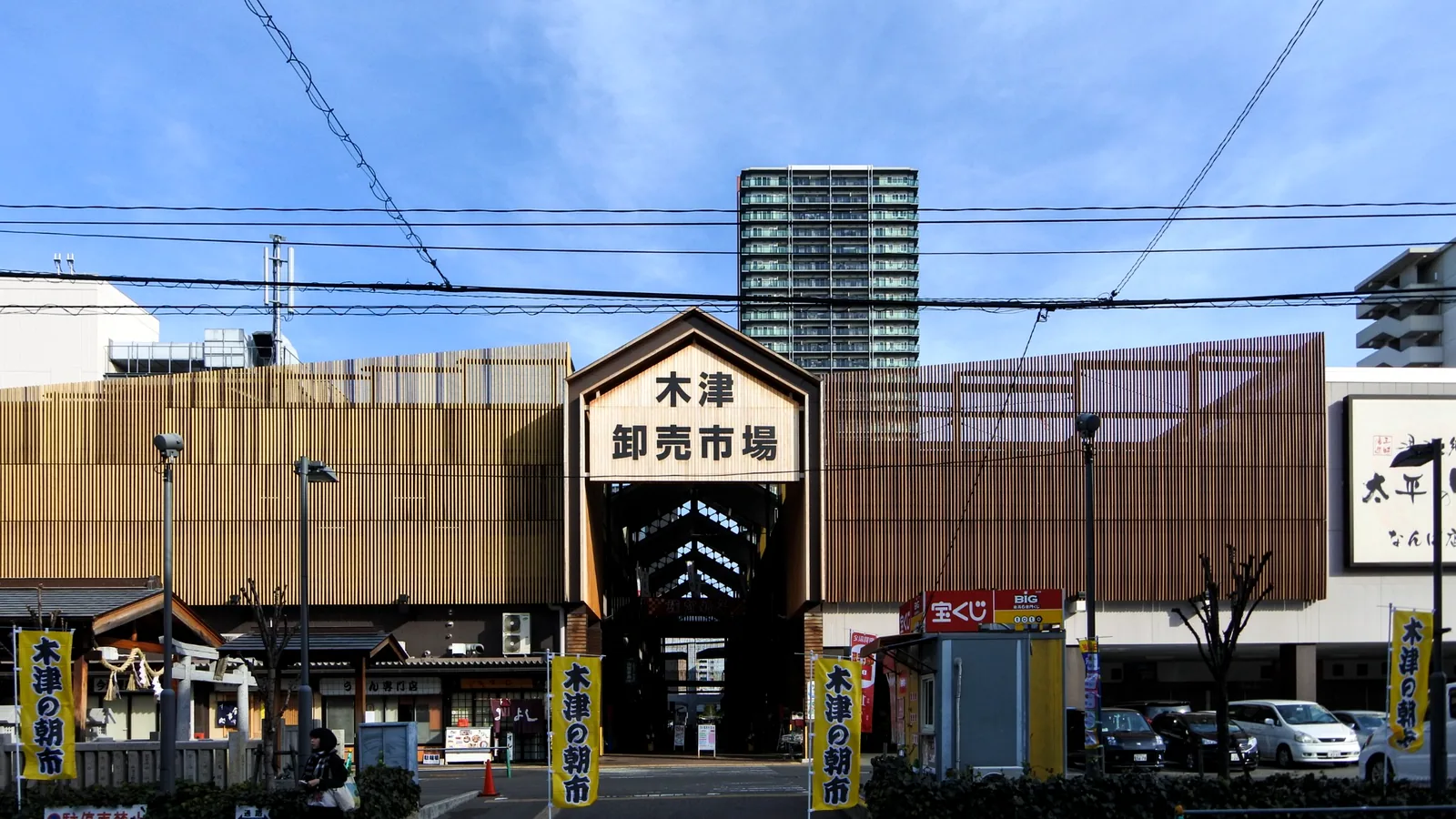
Kizu Wholesale Market is a better beginning for this itinerary than another lap around the tourist snack stalls of central Namba. The market has more than 300 years of history and continues to serve professional buyers as well as ordinary visitors. Its seafood shops, produce businesses, prepared-food counters and restaurants reveal the supply side of Osaka’s reputation as a food city.
The market is a short walk from Daikokucho Station on the Osaka Metro Midosuji and Yotsubashi lines. Arrive around 8:00 rather than near closing time. You do not need to appear at dawn, but the market makes far more sense while deliveries, shopping and breakfast service are still underway.
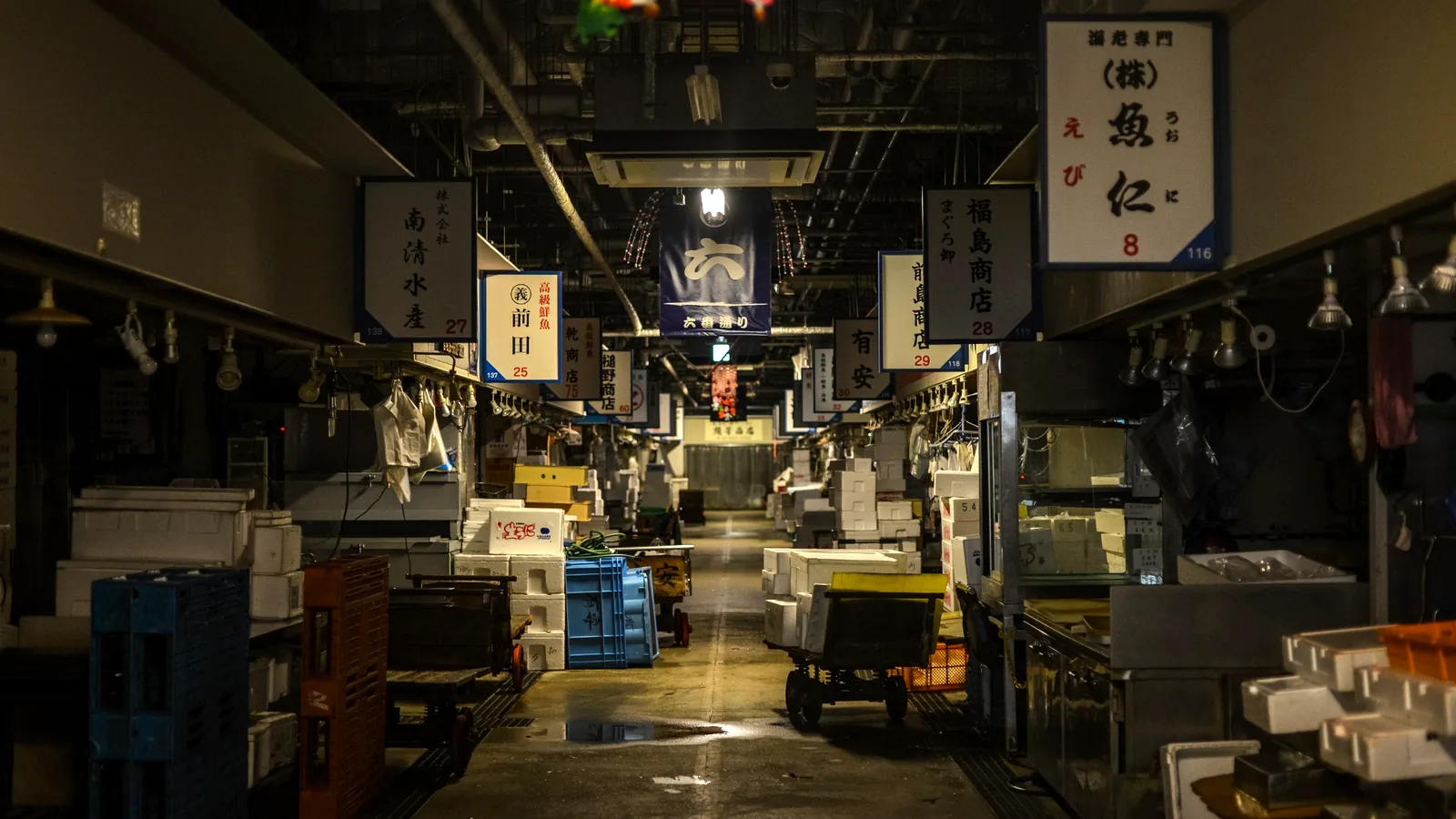
Recommended restaurant: Maruyoshi (まるよし)
Our recommended breakfast stop inside Kizu Market. Maruyoshi serves sushi, seafood bowls and other market-fresh dishes at approachable prices. A standard sushi set or a regular seafood bowl fits this itinerary better than ordering the largest option before a full day of eating.
Before you go: Market-listed hours are early morning to around lunchtime, but current opening days and serving times should be checked before visiting.
What to eat
Choose one breakfast that reflects what looks best on the day. Depending on the open businesses, this could be a seafood rice bowl, sashimi set, grilled fish, sushi, soup or another simple market meal. Availability changes, and the point is not to hunt one exact dish from an old social-media post.
A seafood bowl is the most obvious option, but it is not automatically the best one. A smaller grilled-fish or sashimi breakfast can leave more room for the rest of the route. Look at what is being served, compare two or three places, and choose a shop that is clearly open and ready for diners.
How to behave in the market
- Walk at the side of active aisles and watch for carts, boxes and delivery work.
- Do not touch seafood, produce or equipment unless invited.
- Ask before taking close-up photographs of staff, counters or customers.
- Eat in the space provided by the shop rather than standing in a working passage.
- Take your rubbish with you unless the business provides a bin.
Local Steps tip: Kizu works best when you let the market decide breakfast. A fixed “must-eat” list is less useful than noticing what is fresh, open and attracting regular customers that morning.
Access: About three minutes on foot from Exit 1 of Daikokucho Station.
Typical market hours: Around 7:00–13:00, varying by business.
Common closures: Sundays, national holidays, New Year holidays and irregular wholesale-market closure days.
Check current Kizu Market visitor information
10:00 — Explore Osaka’s Kitchen Culture at Sennichimae Doguyasuji
Stop 2 · Suggested time: 45–60 minutes
After breakfast, travel north toward Namba and Sennichimae Doguyasuji Shopping Street. You can walk from Kizu Market if the weather is comfortable, or use the subway for part of the journey and continue on foot from Namba.
Doguyasuji is a compact specialty arcade filled with the objects that make restaurant service possible: knives, pots, pans, bowls, lacquerware, signs, lanterns, noren curtains, takoyaki equipment and detailed plastic food samples. Osaka’s food culture is not only what arrives on the table. It also includes the practical network of businesses supplying the city’s cooks and dining rooms.
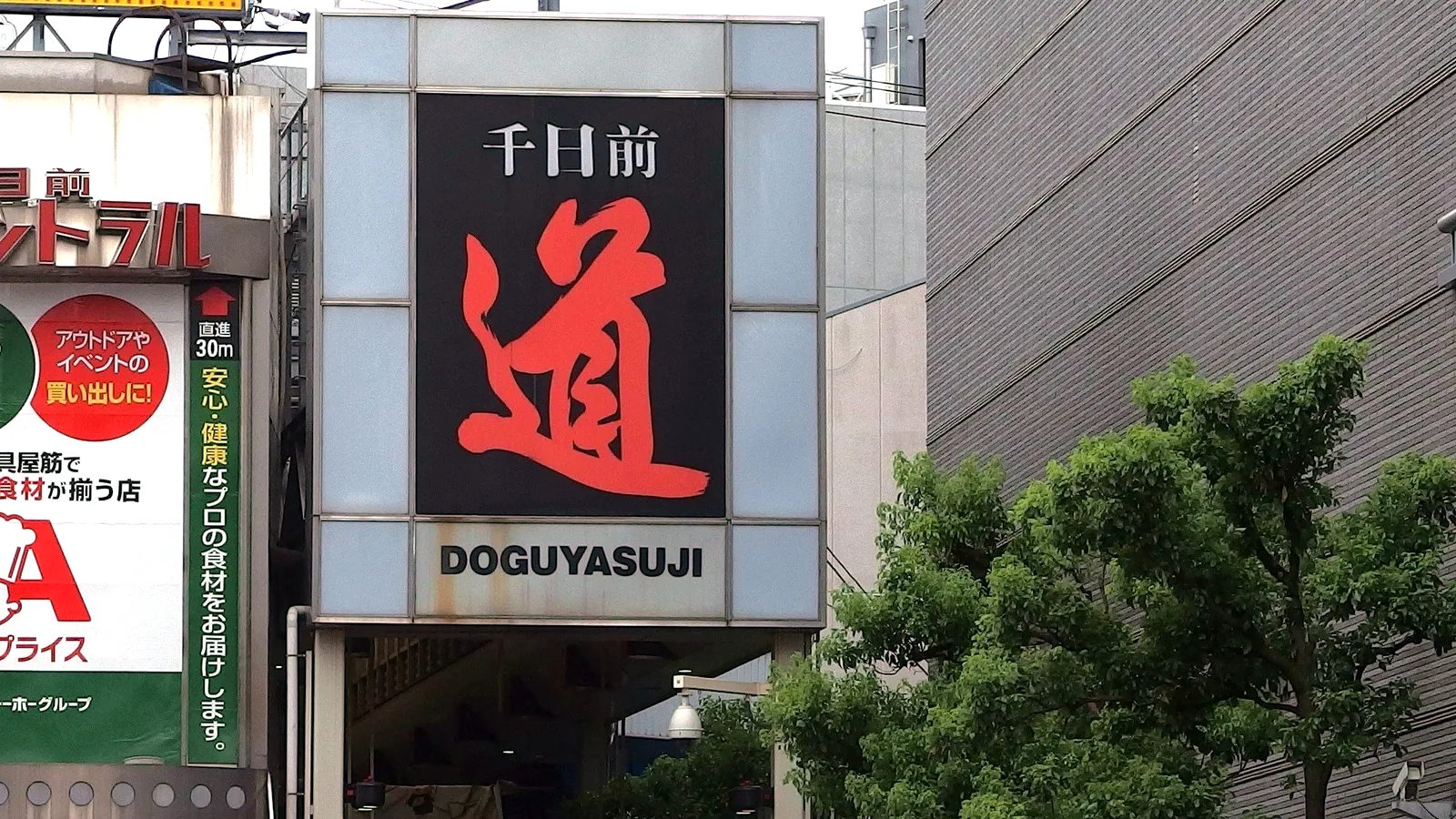
What to look for
- Japanese kitchen knives: Useful for serious home cooks, but compare steel type, maintenance needs and export or airline rules before buying.
- Small tableware: Chopstick rests, sake cups and compact bowls are easier to pack than a restaurant-sized pot.
- Takoyaki equipment: A deeply Osaka souvenir, although the cast-iron version may test both your luggage allowance and your commitment.
- Food samples: Miniature sushi, ramen, desserts and keychains are distinctive gifts and require no refrigeration.
- Restaurant signs and lanterns: Even without buying, these shops help explain the visual language of Japanese dining streets.
Some food-sample stores offer hands-on experiences, but schedules, reservation requirements and available designs can change. Treat a workshop as a pre-booked alternative rather than assuming you can add it casually to this already full itinerary.
Local Steps tip: Do not buy a large knife at the beginning of a long international trip unless you already know how you will transport, store and declare it. A ceramic sake cup creates fewer airport plot twists.
Check current Doguyasuji information
11:30 — Try Kitsune Udon in Semba
Lunch · Suggested time: 45–60 minutes
From Doguyasuji, continue north toward Semba, the old merchant district around Shinsaibashi and Hommachi. This is a good place to slow the day down with kitsune udon: soft noodles in a light dashi broth topped with sweet simmered fried tofu.
The dish looks simple, but it introduces one of the most important ideas in Osaka cooking. The broth may be pale in color, yet it carries layers of kombu and dried-fish flavor. The sweet tofu adds richness without turning the bowl into a heavy lunch.
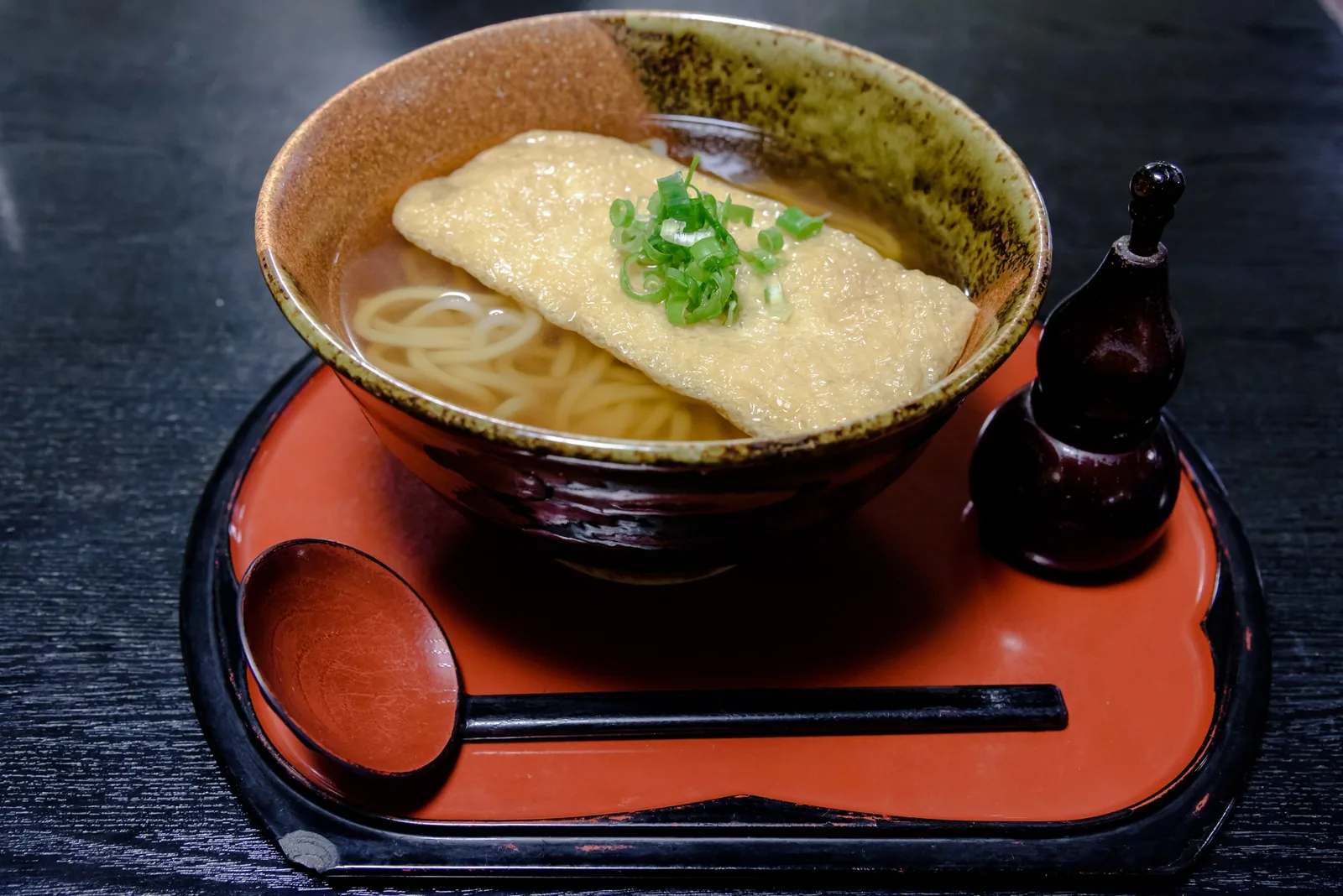
Usamitei Matsubaya and the origin story
Recommended restaurant: Usamitei Matsubaya (うさみ亭マツバヤ)
Our recommended lunch stop in Semba. This long-running restaurant is widely associated with the origin of kitsune udon, making it the most meaningful place on the route to try the dish. Order the classic kitsune udon first rather than a large set meal.
Before you go: The restaurant does not normally take reservations and may close on Sundays and public holidays. Confirm the latest hours before traveling.
Open Usamitei Matsubaya in Google Maps
Usamitei Matsubaya in Minamisenba is widely associated with the birth of kitsune udon. According to Japan’s Ministry of Agriculture, Forestry and Fisheries, the story dates to 1893, when a customer placed a piece of sweet fried tofu—then served separately—on top of plain udon.
The restaurant is a logical stop for this route because it connects the food itself with the history of Semba. However, it is an old independent business rather than an attraction operating for the convenience of an itinerary. Hours and closure days can change, seats are limited, and a queue is possible.
If it is closed or too busy, do not let one restaurant break the day. Choose another udon shop around Semba, Hommachi, Shinsaibashi or Namba and order a standard kitsune udon. The purpose of this stop is to experience Osaka’s dashi culture, not to collect proof that you entered one exact doorway.
How to order
Begin with the normal bowl before adding tempura, rice or a large set meal. Taste the broth first. The fried tofu gradually releases sweetness into the dashi, so the final spoonful may taste slightly different from the first.
For more dishes connected to Osaka’s neighborhoods, read our Osaka local food guide beyond takoyaki and okonomiyaki.
Local Steps tip: Osaka udon is often softer than the firm Sanuki-style noodles many travelers know. That is not a cooking emergency. The texture and dashi belong to a different regional tradition.
Read the official regional-cuisine background for kitsune udon
14:00 — Snack Through Tsuruhashi Market
Stop 3 · Suggested time: 2–2.5 hours
After lunch, take the subway toward Tsuruhashi. The area around Tsuruhashi Station is one of Osaka’s most distinctive food neighborhoods, combining a postwar market atmosphere with Korean-Japanese food culture, fresh-food businesses and an unusually dense concentration of yakiniku restaurants.
Tsuruhashi Market is not one tidy building. It is a network of six markets and shopping streets containing roughly 800 businesses. Narrow passages branch away from the station, and the mix can change quickly from kimchi and Korean ingredients to fish, clothing, household goods and grill restaurants.
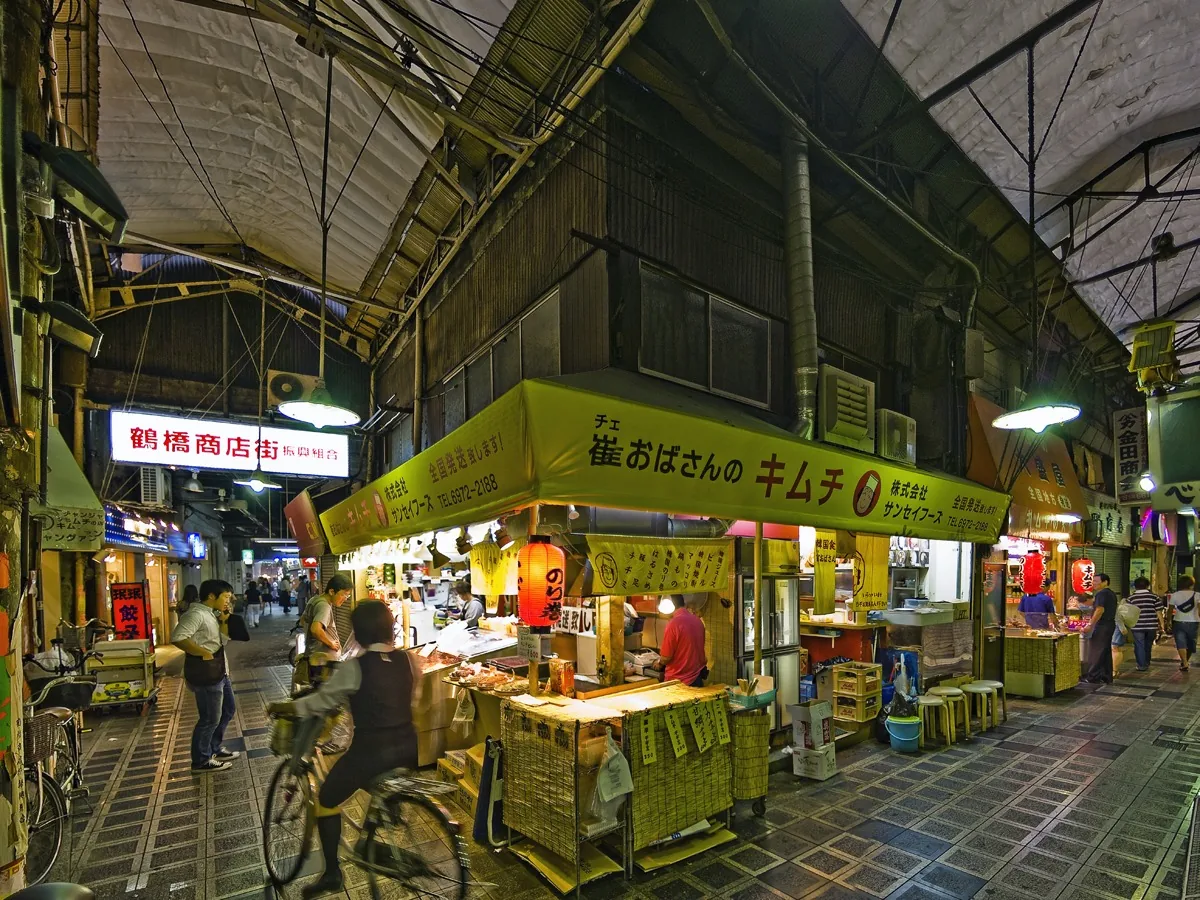
Recommended restaurant: Doi Shoten (土井商店)
Our recommended snack stop around Tsuruhashi Market. Doi Shoten offers casual Korean-style dishes and prepared foods such as chijimi, tteokbokki and japchae. Share one small portion so you still have room for yakiniku later.
Before you go: Available dishes and opening hours can vary. Some items are better eaten near the shop rather than carried for several hours.
Open Doi Shoten in Google Maps
What to try before dinner
Keep this part flexible. Depending on what is open, look for one or two small items rather than assembling a second lunch. Kimchi, Korean-style savory pancakes, seaweed rolls, dumplings, rice cakes and small prepared-food portions are common possibilities, but the exact selection varies by shop and time of day.
Buying something to take away can be smarter than eating everything immediately, especially when yakiniku is still ahead. Check whether food needs refrigeration before carrying it for the rest of the evening.
Tsuruhashi Market and Osaka Korea Town are not exactly the same place
Travel articles often use “Tsuruhashi” and “Korea Town” as though they were one compact attraction. The market lanes around Tsuruhashi Station are the focus of this itinerary. Osaka Korea Town, also associated with Miyuki-dori, lies farther east and has a different atmosphere, with many Korean food, cosmetics and pop-culture shops.
You can add Osaka Korea Town, but doing so increases the walking time and makes the afternoon more crowded. For this one-day plan, explore the station-side market properly rather than racing between two areas only to photograph their entrances.
Market etiquette
- Keep moving in narrow lanes and step aside before checking a map.
- Ask before photographing staff, customers or close-up merchandise.
- Do not assume every prepared-food item is intended for eating while walking.
- Check storage instructions before buying kimchi, seafood or refrigerated products.
- Expect store hours and closure days to vary significantly.
Local Steps tip: Tsuruhashi is supposed to feel a little maze-like. Save the restaurant you want to return to on your phone, because “next to the kimchi shop in the narrow lane” describes a heroic percentage of the neighborhood.
Check current Tsuruhashi Market information
17:30 — Finish with Yakiniku in Tsuruhashi
Main dinner · Suggested time: 90–120 minutes
By early evening, the smell of grilled meat around Tsuruhashi Station makes the final decision fairly obvious. Yakiniku restaurants let diners cook small cuts of meat at the table, ordering several plates rather than one fixed main dish. Tsuruhashi is Osaka’s best-known area for this style of dining and also one of the easiest places to try horumon, or offal cuts.
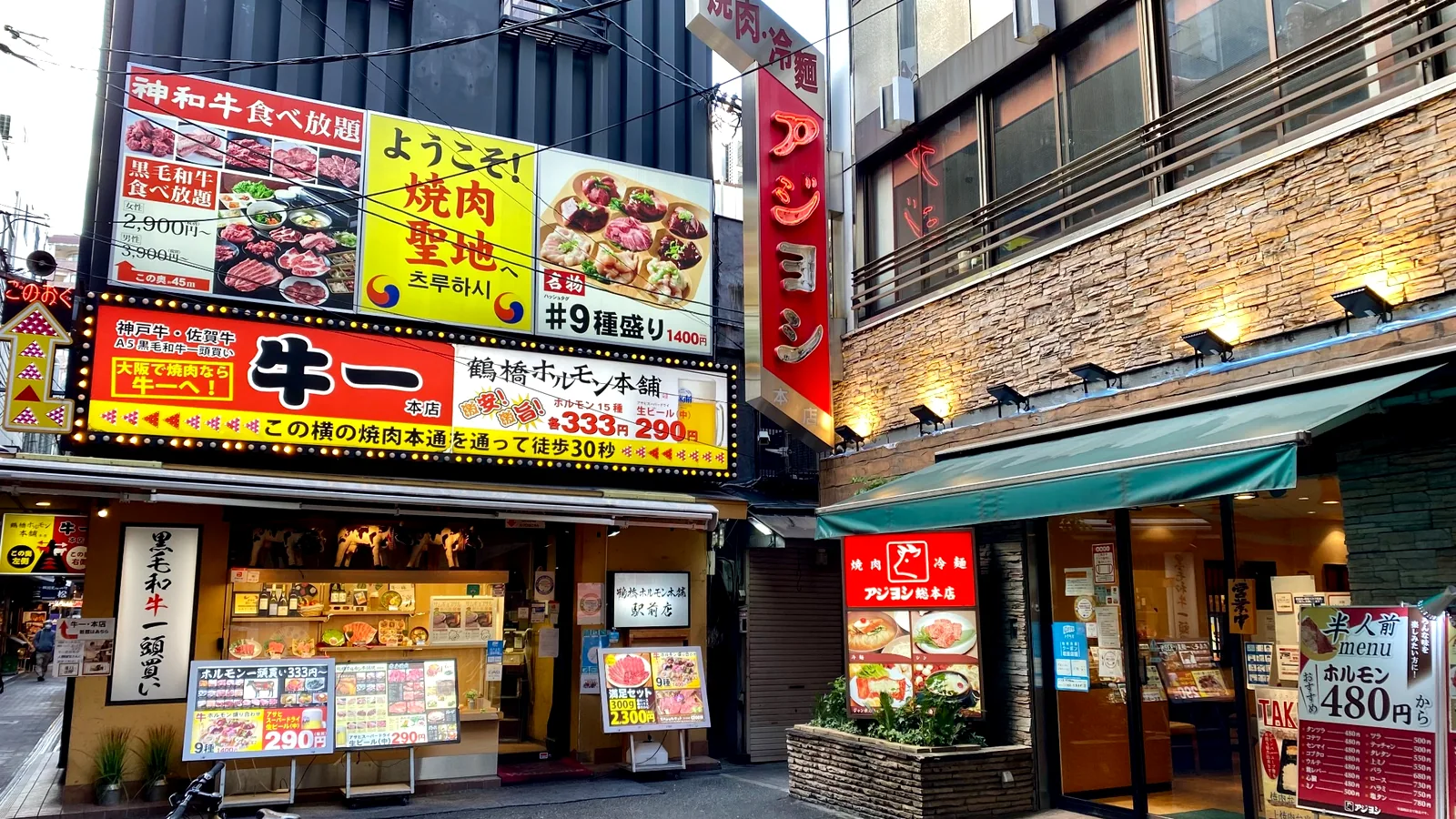
Recommended restaurant: Sora Tsuruhashi Main Store (空 鶴橋総本店)
Our recommended yakiniku restaurant for a classic Tsuruhashi experience. Sora is especially known for horumon and lets diners try several cuts in relatively small portions. It is lively, smoky and less polished than a modern hotel restaurant—which is exactly why many visitors remember it.
Before you go: Queues are possible, and the smell of smoke may remain on clothing. Travelers who do not eat offal can still order familiar beef cuts, but should check the current menu.
Open Sora Tsuruhashi Main Store in Google Maps
How to choose a restaurant
There is no single restaurant that suits every traveler. Before joining the longest queue automatically, check the menu, seating style and ventilation.
- For first-time yakiniku diners: Choose a place with photo menus or clearly listed sets.
- For solo travelers: Look for counter seating, individual grills or signs indicating one-person service.
- For groups: Check table size and whether a reservation is expected during the evening peak.
- For smoke-sensitive travelers: Choose a modern restaurant with strong extraction or smokeless grills.
- For horumon beginners: Order familiar beef cuts first, then add one offal plate rather than beginning with an ambitious mixed platter.
- For budget control: A set meal can be easier to manage than repeatedly adding premium plates and drinks.
A useful first order
Begin with a mixed set or two familiar cuts such as karubi-style short rib and harami-style skirt meat, then add vegetables, rice or soup. If you want to try horumon, ask for a recommendation and confirm the cooking time. Texture, fat content and required grilling time vary considerably between cuts.
Raw meat utensils should not touch cooked food. Use the provided tongs for grilling and separate chopsticks for eating when the restaurant supplies them. Staff can usually help if you are uncertain about when a cut is ready.
What to wear
Older grill restaurants can be smoky even when ventilation is working. Avoid delicate clothing and do not schedule a formal event immediately afterward unless “lightly marinated in yakiniku” matches the dress code.
Local Steps tip: Ordering slowly is usually better than filling the table immediately. Grill the first plates, learn which cuts you actually like, and then add more.
Read the official Osaka guide to yakiniku and horumon
Optional: Continue with One Drink in Ura-Tenma
Optional extension · Suggested time: 60–90 minutes
If dinner finishes early and the group still has energy, take the JR Osaka Loop Line from Tsuruhashi to Temma. Ura-Tenma is a compact restaurant area near JR Temma Station, known for casual counters, small izakaya and colorful lanterns above the market-side lanes.
Recommended restaurant: Sakanaya (肴や)
Our recommended optional final stop near JR Temma Station. This compact standing bar is known for seafood and reasonably priced small plates. After yakiniku, keep the order simple: one drink and one seasonal fish dish is enough.
Before you go: Standing space is limited and the regular closing day may change. Check current information before making the trip to Temma.
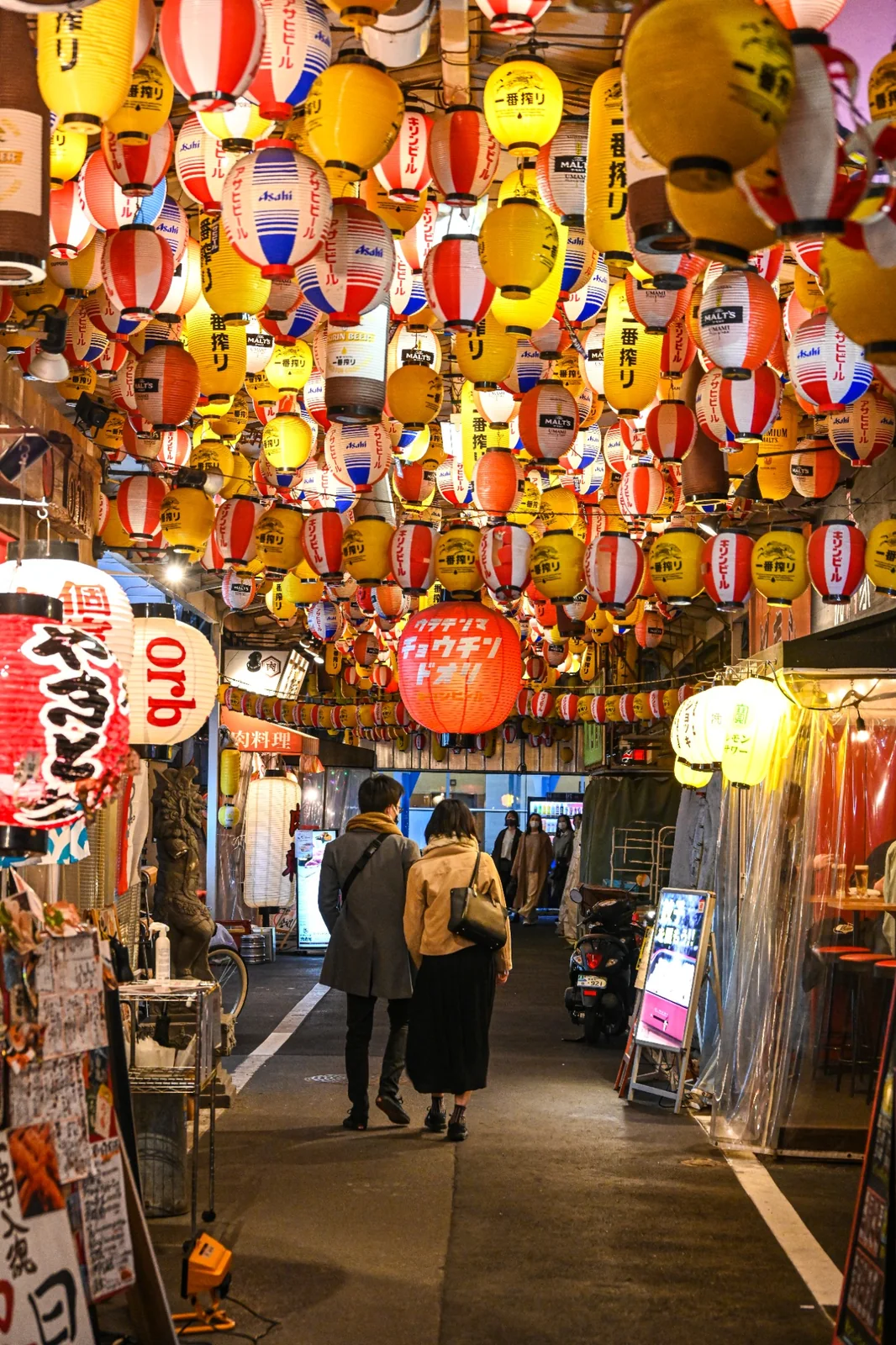
This is not the moment for another full dinner. Choose one drink, yakitori, seafood or a small shared dish, then finish near JR Temma Station. Small counters may have cover charges, compulsory appetizers or limited seating, so check before settling in.
Travelers who want to explore Tenma properly should save it for a separate day and follow our one-day Osaka route through Tenjinbashisuji, Nakazakicho and Ura-Tenma.
Local Steps tip: This extension is optional for a reason. A graceful return to the hotel is also an authentic Japanese travel experience, especially after five food stops.
Recommended Restaurants on This Route
These are the five practical restaurant choices used in this itinerary. They are selected for local character, generally approachable pricing and compatibility with the timing of the route—not as a definitive ranking of every restaurant in Osaka.
| Area | Restaurant | Best for | Map |
|---|---|---|---|
| Kizu Market | Maruyoshi | Sushi or a modest seafood bowl | Google Maps |
| Semba | Usamitei Matsubaya | Classic kitsune udon | Google Maps |
| Tsuruhashi Market | Doi Shoten | One small Korean-style snack | Google Maps |
| Tsuruhashi | Sora | Classic horumon and yakiniku | Google Maps |
| Ura-Tenma | Sakanaya | One drink and a seafood plate | Google Maps |
Important: Independent restaurants can change hours, menus, payment methods and closure days. Use the Google Maps links for location, then verify recent opening information through the restaurant’s current listing or official social account before visiting.
Estimated Budget and Transport
The ranges below are planning estimates rather than fixed prices. Seafood choice, alcohol, premium meat and shopping can change the total quickly.
| Item | Planning estimate per person |
|---|---|
| Kizu Market breakfast | ¥1,000–¥2,500 |
| Doguyasuji shopping | Optional; from a small souvenir to a serious knife purchase |
| Kitsune udon lunch | ¥700–¥1,500 |
| Tsuruhashi snacks | ¥500–¥1,500 |
| Yakiniku dinner | ¥3,000–¥8,000+ |
| Optional Ura-Tenma stop | ¥1,000–¥3,000+ |
| Local transport | Roughly ¥600–¥1,000, depending on your start, finish and route |
| Estimated total | Approximately ¥5,800–¥17,500+ per person |
A careful traveler can keep the day near the lower end by choosing a modest market breakfast, standard udon, one shared snack and a casual yakiniku set. Premium seafood, several drinks and high-grade beef move the total upward with impressive efficiency.
For a wider trip estimate covering hotels, transport, attractions and food, use our Osaka travel budget guide.
Transport plan
- Start: Osaka Metro to Daikokucho Station.
- Kizu to Doguyasuji: Walk toward Namba or combine a short subway ride with walking.
- Doguyasuji to Semba: Walk north through central Namba and Shinsaibashi, or use Osaka Metro if needed.
- Semba to Tsuruhashi: Use Osaka Metro, normally with a transfer depending on your starting station.
- Tsuruhashi to Ura-Tenma: JR Osaka Loop Line to Temma for the optional extension.
An ICOCA, Suica or PASMO makes the transfers simple. Read our guide to trains, Osaka Metro, ICOCA and transport passes before the trip.
Best Areas to Stay for Food Lovers
Namba: Best for the morning half of the route
Namba is the most practical base for travelers who want easy access to Kizu Market, Doguyasuji, Ura-Namba and late-night restaurants. You can reach the first stop quickly, return to the hotel between activities if necessary, and still connect easily to Tsuruhashi.
Tsuruhashi: Best for yakiniku and a neighborhood stay
Tsuruhashi is less convenient for travelers who want every major attraction outside the door, but it is an interesting base for food-focused repeat visitors. Staying near the station makes it easy to explore the market before the evening rush, enjoy yakiniku without a long return journey and use JR, Kintetsu and Osaka Metro connections.
Find hotels near Tsuruhashi Station on Agoda
For a full comparison of Namba, Umeda, Tennoji and other bases, read our guide to the best areas to stay in Osaka.
Alternative Versions of This Osaka Food Itinerary
If you start late
Do not visit Kizu Market near closing time and expect the full morning atmosphere. Begin around 10:00 at Doguyasuji, have kitsune udon in Semba, continue to Tsuruhashi around 14:00 and keep the same yakiniku dinner. Save Kizu for another morning.
If Kizu Market is closed
Start with breakfast near Namba or your hotel, then spend longer at Doguyasuji. You can also add a slow walk through Ura-Namba before moving north for udon. The rest of the route works without changing the afternoon.
If you do not eat beef
Keep the market and udon sections, then replace yakiniku with a Korean restaurant, seafood meal or another casual dinner near Tsuruhashi. Confirm stock, sauces and cross-contact directly; “no beef” does not automatically mean vegetarian or allergen-free.
If you are vegetarian or vegan
This exact route is not naturally vegetarian-friendly. Kitsune udon broth commonly contains fish, market foods may use seafood or meat stock, and Tsuruhashi’s evening identity centers heavily on grilled meat. A better plan is to reserve restaurants that explicitly handle vegetarian or vegan diners and use Doguyasuji and the neighborhood walks as cultural stops.
If it rains
The route remains workable because Doguyasuji and many market passages are covered, but the walks between stations and shopping streets are not fully protected. Use the subway more often, carry a compact umbrella and be careful on wet market floors.
If you are traveling with children
Begin slightly later, shorten the Tsuruhashi exploration and choose an early yakiniku dinner with table seating and good ventilation. Narrow market lanes, hot grills and a full evening extension can be tiring for younger children.
Frequently Asked Questions
Can I follow this Osaka food itinerary on a Sunday?
Not exactly. Kizu Wholesale Market is generally closed on Sundays. Follow the late-start version beginning at Doguyasuji, or choose a weekday or suitable Saturday for the complete route.
Do I need restaurant reservations?
Kizu breakfast and a basic udon lunch are usually better handled flexibly, although queues and closures remain possible. A yakiniku reservation is useful for a group, a popular restaurant or a Friday or Saturday evening. Solo travelers and pairs may have more walk-in options.
Is this route suitable for first-time visitors to Osaka?
Yes, especially for travelers whose priority is food and neighborhood atmosphere. However, it does not include Osaka Castle, Universal Studios Japan or the main Dotonbori sightseeing circuit. First-time visitors with limited time may want to combine selected stops with a broader city itinerary.
What is the difference between Tsuruhashi Market and Osaka Korea Town?
Tsuruhashi Market refers mainly to the maze of markets and shopping streets around Tsuruhashi Station. Osaka Korea Town, associated with Miyuki-dori, lies farther east and has its own concentration of Korean food, cosmetics and retail shops. They are connected culturally and geographically, but they are not one identical shopping street.
Is kitsune udon vegetarian?
Usually not. The fried tofu topping contains no meat, but the broth commonly uses fish-based dashi. Ask directly or choose a restaurant that explicitly provides vegetarian broth.
How much should I budget for the day?
Roughly ¥5,800–¥17,500 or more per person is a practical range. The largest variable is yakiniku: a casual set and limited alcohol keep costs controlled, while premium beef and repeated drink orders can raise the total substantially.
Can I add Dotonbori?
Yes. Doguyasuji is close to Namba and Dotonbori, so you can take a short detour before lunch. Keep it brief if you want to reach Tsuruhashi with enough time to explore the market before dinner.
Official Sources and Further Reading
- Osaka Kizu Wholesale Market — OSAKA-INFO
- Sennichimae Doguyasuji Shopping Street — OSAKA-INFO
- Kitsune Udon — Ministry of Agriculture, Forestry and Fisheries
- Osaka Tsuruhashi Market — OSAKA-INFO
- Yakiniku and Horumon in Osaka — OSAKA-INFO
Final Thoughts
Osaka’s food culture becomes more interesting when you follow it beyond a single entertainment district. At Kizu, food begins with the people buying and selling ingredients early in the morning. At Doguyasuji, it appears in the tools, bowls, signs and equipment behind thousands of restaurant meals. In Semba, it becomes a quiet bowl of dashi and sweet tofu. In Tsuruhashi, it expands into market lanes, Korean-Japanese food traditions and smoke rising from tabletop grills.
You do not need to eat everything you see. The best version of this route leaves room to notice the neighborhoods between meals, talk to shop staff when the moment is appropriate and choose food based on what is open and appealing that day.
For a longer trip that combines Osaka with local Kansai day trips, continue with our 5-day Osaka and Kansai itinerary for repeat visitors.
Image Credits
- Featured image — Osaka Kizu Wholesale Market: m-louis .® / Flickr via Wikimedia Commons / CC BY-SA 2.0. Cropped and converted to WebP.
- Kizu Market interior: m-louis .® / Flickr via Wikimedia Commons / CC BY-SA 2.0. Cropped and converted to WebP.
- Sennichimae Doguyasuji: Mc681 / Wikimedia Commons / CC BY-SA 4.0. Cropped and converted to WebP.
- Kitsune udon: MemColorLab / Wikimedia Commons / CC BY-SA 4.0. Resized and converted to WebP.
- Tsuruhashi Market: Ken OHYAMA / Wikimedia Commons / CC BY-SA 2.0. Converted to WebP.
- Tsuruhashi yakiniku street: ほっきー / Wikimedia Commons / CC BY-SA 4.0. Cropped and converted to WebP.
- Ura-Tenma: m-louis .® / Flickr via Wikimedia Commons / CC BY-SA 2.0. Resized and converted to WebP.
Osaka is often introduced through a short list of famous foods: takoyaki, okonomiyaki and perhaps kushikatsu. They are worth trying, but a full day built only around the best-known dishes can feel more like a checklist than a view of how the city actually eats.
This one-day Osaka food itinerary follows a different route. It begins early at a working wholesale market, passes through the kitchenware street that supports the city’s restaurant culture, pauses for a bowl of kitsune udon in the old merchant district, and ends among the market lanes and yakiniku restaurants of Tsuruhashi.
The route is designed for repeat visitors, curious first-time travelers and anyone who wants to explore Osaka through neighborhoods rather than spend the entire day around Dotonbori. It is food-focused, but it includes enough walking and browsing time to stop the day from becoming one very long lunch.
Information check: Market access, area information and food history were checked in July 2026. Shop hours, restaurant closures, prices, payment methods and market conditions can change, so confirm essential details before traveling.
One-Day Osaka Food Itinerary at a Glance
| Time | Activity |
|---|---|
| 8:00 |
Breakfast at Kizu Wholesale Market Enjoy a light seafood breakfast and experience a working morning market. |
| 10:00 |
Explore Sennichimae Doguyasuji Browse cookware, tableware, restaurant signs and Japanese food samples. |
| 11:30 |
Kitsune Udon Lunch in Semba Try a classic Osaka bowl and discover why dashi matters in the city’s cooking. |
| 14:00 |
Snack Through Tsuruhashi Market Explore the narrow market lanes and try one or two Korean-Japanese snacks. |
| 17:30 |
Yakiniku Dinner in Tsuruhashi Finish the main route with grilled meat at a restaurant near the station. |
| 20:00 |
Drinks in Ura-Tenma Optional Continue with one relaxed drink or a small shared plate beneath the lanterns. |
Food-focused travelers, repeat visitors and market lovers.
Weekdays and many Saturdays, after checking the market calendar.
Daikokucho Station.
Tsuruhashi Station, or JR Temma Station with the optional extension.
Do not order a full meal at every stop. One proper breakfast, a modest lunch, a few snacks and dinner will make the route much more enjoyable.
Before You Start
Check the market calendar first
Kizu Wholesale Market is an early-day destination. Many businesses operate roughly from morning until early afternoon, but individual shop hours vary and some businesses finish earlier. The market is generally closed on Sundays, national holidays, New Year holidays and some irregular Wednesdays linked to wholesale-market schedules.
The public morning market held on selected Saturdays can be lively, but it may also be busier than an ordinary weekday. Check the official market calendar before deciding which day to follow this itinerary.
Carry some cash
Card and mobile payments are increasingly common in Osaka, but small market shops, older restaurants and compact counters may still prefer cash. Carrying several ¥1,000 notes is more useful than attempting to fund the entire day with one heroic ¥10,000 note.
Keep portions small
Food itineraries fail when every stop is treated as the final meal before a long voyage. At Kizu Market, choose one breakfast rather than collecting seafood bowls like trophies. At Tsuruhashi, share snacks where possible and save space for yakiniku.
Respect working neighborhoods
Kizu and Tsuruhashi are not food-themed amusement parks. People are shopping, carrying goods, serving regular customers and moving through narrow passages. Keep aisles clear, ask before photographing shop interiors or staff, and avoid stopping a group in the middle of a busy lane.
Plan carefully for allergies and dietary restrictions
Fish-based dashi, soy, wheat, sesame, shellfish and shared cooking equipment appear frequently on this route. Kitsune udon may look vegetarian, but its broth commonly contains fish. Yakiniku sauces may contain soy and wheat, and cross-contact is likely at grills and market counters.
For a severe allergy, carry a professionally translated allergy card and confirm ingredients directly with each business. Do not rely only on photographs or a simplified menu icon.
8:00 — Start with Breakfast at Kizu Wholesale Market
Stop 1 · Suggested time: 75–90 minutes
Kizu Wholesale Market is a better beginning for this itinerary than another lap around the tourist snack stalls of central Namba. The market has more than 300 years of history and continues to serve professional buyers as well as ordinary visitors. Its seafood shops, produce businesses, prepared-food counters and restaurants reveal the supply side of Osaka’s reputation as a food city.
The market is a short walk from Daikokucho Station on the Osaka Metro Midosuji and Yotsubashi lines. Arrive around 8:00 rather than near closing time. You do not need to appear at dawn, but the market makes far more sense while deliveries, shopping and breakfast service are still underway.
Recommended restaurant: Maruyoshi (まるよし)
Our recommended breakfast stop inside Kizu Market. Maruyoshi serves sushi, seafood bowls and other market-fresh dishes at approachable prices. A standard sushi set or a regular seafood bowl fits this itinerary better than ordering the largest option before a full day of eating.
Before you go: Market-listed hours are early morning to around lunchtime, but current opening days and serving times should be checked before visiting.
What to eat
Choose one breakfast that reflects what looks best on the day. Depending on the open businesses, this could be a seafood rice bowl, sashimi set, grilled fish, sushi, soup or another simple market meal. Availability changes, and the point is not to hunt one exact dish from an old social-media post.
A seafood bowl is the most obvious option, but it is not automatically the best one. A smaller grilled-fish or sashimi breakfast can leave more room for the rest of the route. Look at what is being served, compare two or three places, and choose a shop that is clearly open and ready for diners.
How to behave in the market
- Walk at the side of active aisles and watch for carts, boxes and delivery work.
- Do not touch seafood, produce or equipment unless invited.
- Ask before taking close-up photographs of staff, counters or customers.
- Eat in the space provided by the shop rather than standing in a working passage.
- Take your rubbish with you unless the business provides a bin.
Access: About three minutes on foot from Exit 1 of Daikokucho Station.
Typical market hours: Around 7:00–13:00, varying by business.
Common closures: Sundays, national holidays, New Year holidays and irregular wholesale-market closure days.
10:00 — Explore Osaka’s Kitchen Culture at Sennichimae Doguyasuji
Stop 2 · Suggested time: 45–60 minutes
After breakfast, travel north toward Namba and Sennichimae Doguyasuji Shopping Street. You can walk from Kizu Market if the weather is comfortable, or use the subway for part of the journey and continue on foot from Namba.
Doguyasuji is a compact specialty arcade filled with the objects that make restaurant service possible: knives, pots, pans, bowls, lacquerware, signs, lanterns, noren curtains, takoyaki equipment and detailed plastic food samples. Osaka’s food culture is not only what arrives on the table. It also includes the practical network of businesses supplying the city’s cooks and dining rooms.
What to look for
- Japanese kitchen knives: Useful for serious home cooks, but compare steel type, maintenance needs and export or airline rules before buying.
- Small tableware: Chopstick rests, sake cups and compact bowls are easier to pack than a restaurant-sized pot.
- Takoyaki equipment: A deeply Osaka souvenir, although the cast-iron version may test both your luggage allowance and your commitment.
- Food samples: Miniature sushi, ramen, desserts and keychains are distinctive gifts and require no refrigeration.
- Restaurant signs and lanterns: Even without buying, these shops help explain the visual language of Japanese dining streets.
Some food-sample stores offer hands-on experiences, but schedules, reservation requirements and available designs can change. Treat a workshop as a pre-booked alternative rather than assuming you can add it casually to this already full itinerary.
11:30 — Try Kitsune Udon in Semba
Lunch · Suggested time: 45–60 minutes
From Doguyasuji, continue north toward Semba, the old merchant district around Shinsaibashi and Hommachi. This is a good place to slow the day down with kitsune udon: soft noodles in a light dashi broth topped with sweet simmered fried tofu.
The dish looks simple, but it introduces one of the most important ideas in Osaka cooking. The broth may be pale in color, yet it carries layers of kombu and dried-fish flavor. The sweet tofu adds richness without turning the bowl into a heavy lunch.
Usamitei Matsubaya and the origin story
Recommended restaurant: Usamitei Matsubaya (うさみ亭マツバヤ)
Our recommended lunch stop in Semba. This long-running restaurant is widely associated with the origin of kitsune udon, making it the most meaningful place on the route to try the dish. Order the classic kitsune udon first rather than a large set meal.
Before you go: The restaurant does not normally take reservations and may close on Sundays and public holidays. Confirm the latest hours before traveling.
Usamitei Matsubaya in Minamisenba is widely associated with the birth of kitsune udon. According to Japan’s Ministry of Agriculture, Forestry and Fisheries, the story dates to 1893, when a customer placed a piece of sweet fried tofu—then served separately—on top of plain udon.
The restaurant is a logical stop for this route because it connects the food itself with the history of Semba. However, it is an old independent business rather than an attraction operating for the convenience of an itinerary. Hours and closure days can change, seats are limited, and a queue is possible.
If it is closed or too busy, do not let one restaurant break the day. Choose another udon shop around Semba, Hommachi, Shinsaibashi or Namba and order a standard kitsune udon. The purpose of this stop is to experience Osaka’s dashi culture, not to collect proof that you entered one exact doorway.
How to order
Begin with the normal bowl before adding tempura, rice or a large set meal. Taste the broth first. The fried tofu gradually releases sweetness into the dashi, so the final spoonful may taste slightly different from the first.
For more dishes connected to Osaka’s neighborhoods, read our Osaka local food guide beyond takoyaki and okonomiyaki.
Read the official regional-cuisine background for kitsune udon
14:00 — Snack Through Tsuruhashi Market
Stop 3 · Suggested time: 2–2.5 hours
After lunch, take the subway toward Tsuruhashi. The area around Tsuruhashi Station is one of Osaka’s most distinctive food neighborhoods, combining a postwar market atmosphere with Korean-Japanese food culture, fresh-food businesses and an unusually dense concentration of yakiniku restaurants.
Tsuruhashi Market is not one tidy building. It is a network of six markets and shopping streets containing roughly 800 businesses. Narrow passages branch away from the station, and the mix can change quickly from kimchi and Korean ingredients to fish, clothing, household goods and grill restaurants.
Recommended restaurant: Doi Shoten (土井商店)
Our recommended snack stop around Tsuruhashi Market. Doi Shoten offers casual Korean-style dishes and prepared foods such as chijimi, tteokbokki and japchae. Share one small portion so you still have room for yakiniku later.
Before you go: Available dishes and opening hours can vary. Some items are better eaten near the shop rather than carried for several hours.
What to try before dinner
Keep this part flexible. Depending on what is open, look for one or two small items rather than assembling a second lunch. Kimchi, Korean-style savory pancakes, seaweed rolls, dumplings, rice cakes and small prepared-food portions are common possibilities, but the exact selection varies by shop and time of day.
Buying something to take away can be smarter than eating everything immediately, especially when yakiniku is still ahead. Check whether food needs refrigeration before carrying it for the rest of the evening.
Tsuruhashi Market and Osaka Korea Town are not exactly the same place
Travel articles often use “Tsuruhashi” and “Korea Town” as though they were one compact attraction. The market lanes around Tsuruhashi Station are the focus of this itinerary. Osaka Korea Town, also associated with Miyuki-dori, lies farther east and has a different atmosphere, with many Korean food, cosmetics and pop-culture shops.
You can add Osaka Korea Town, but doing so increases the walking time and makes the afternoon more crowded. For this one-day plan, explore the station-side market properly rather than racing between two areas only to photograph their entrances.
Market etiquette
- Keep moving in narrow lanes and step aside before checking a map.
- Ask before photographing staff, customers or close-up merchandise.
- Do not assume every prepared-food item is intended for eating while walking.
- Check storage instructions before buying kimchi, seafood or refrigerated products.
- Expect store hours and closure days to vary significantly.
17:30 — Finish with Yakiniku in Tsuruhashi
Main dinner · Suggested time: 90–120 minutes
By early evening, the smell of grilled meat around Tsuruhashi Station makes the final decision fairly obvious. Yakiniku restaurants let diners cook small cuts of meat at the table, ordering several plates rather than one fixed main dish. Tsuruhashi is Osaka’s best-known area for this style of dining and also one of the easiest places to try horumon, or offal cuts.
Recommended restaurant: Sora Tsuruhashi Main Store (空 鶴橋総本店)
Our recommended yakiniku restaurant for a classic Tsuruhashi experience. Sora is especially known for horumon and lets diners try several cuts in relatively small portions. It is lively, smoky and less polished than a modern hotel restaurant—which is exactly why many visitors remember it.
Before you go: Queues are possible, and the smell of smoke may remain on clothing. Travelers who do not eat offal can still order familiar beef cuts, but should check the current menu.
How to choose a restaurant
There is no single restaurant that suits every traveler. Before joining the longest queue automatically, check the menu, seating style and ventilation.
- For first-time yakiniku diners: Choose a place with photo menus or clearly listed sets.
- For solo travelers: Look for counter seating, individual grills or signs indicating one-person service.
- For groups: Check table size and whether a reservation is expected during the evening peak.
- For smoke-sensitive travelers: Choose a modern restaurant with strong extraction or smokeless grills.
- For horumon beginners: Order familiar beef cuts first, then add one offal plate rather than beginning with an ambitious mixed platter.
- For budget control: A set meal can be easier to manage than repeatedly adding premium plates and drinks.
A useful first order
Begin with a mixed set or two familiar cuts such as karubi-style short rib and harami-style skirt meat, then add vegetables, rice or soup. If you want to try horumon, ask for a recommendation and confirm the cooking time. Texture, fat content and required grilling time vary considerably between cuts.
Raw meat utensils should not touch cooked food. Use the provided tongs for grilling and separate chopsticks for eating when the restaurant supplies them. Staff can usually help if you are uncertain about when a cut is ready.
What to wear
Older grill restaurants can be smoky even when ventilation is working. Avoid delicate clothing and do not schedule a formal event immediately afterward unless “lightly marinated in yakiniku” matches the dress code.
Optional: Continue with One Drink in Ura-Tenma
Optional extension · Suggested time: 60–90 minutes
If dinner finishes early and the group still has energy, take the JR Osaka Loop Line from Tsuruhashi to Temma. Ura-Tenma is a compact restaurant area near JR Temma Station, known for casual counters, small izakaya and colorful lanterns above the market-side lanes.
Recommended restaurant: Sakanaya (肴や)
Our recommended optional final stop near JR Temma Station. This compact standing bar is known for seafood and reasonably priced small plates. After yakiniku, keep the order simple: one drink and one seasonal fish dish is enough.
Before you go: Standing space is limited and the regular closing day may change. Check current information before making the trip to Temma.
This is not the moment for another full dinner. Choose one drink, yakitori, seafood or a small shared dish, then finish near JR Temma Station. Small counters may have cover charges, compulsory appetizers or limited seating, so check before settling in.
Travelers who want to explore Tenma properly should save it for a separate day and follow our one-day Osaka route through Tenjinbashisuji, Nakazakicho and Ura-Tenma.
Recommended Restaurants on This Route
These are the five practical restaurant choices used in this itinerary. They are selected for local character, generally approachable pricing and compatibility with the timing of the route—not as a definitive ranking of every restaurant in Osaka.
| Area | Restaurant | Best for | Map |
|---|---|---|---|
| Kizu Market | Maruyoshi | Sushi or a modest seafood bowl | Google Maps |
| Semba | Usamitei Matsubaya | Classic kitsune udon | Google Maps |
| Tsuruhashi Market | Doi Shoten | One small Korean-style snack | Google Maps |
| Tsuruhashi | Sora | Classic horumon and yakiniku | Google Maps |
| Ura-Tenma | Sakanaya | One drink and a seafood plate | Google Maps |
Important: Independent restaurants can change hours, menus, payment methods and closure days. Use the Google Maps links for location, then verify recent opening information through the restaurant’s current listing or official social account before visiting.
Estimated Budget and Transport
The ranges below are planning estimates rather than fixed prices. Seafood choice, alcohol, premium meat and shopping can change the total quickly.
| Item | Planning estimate per person |
|---|---|
| Kizu Market breakfast | ¥1,000–¥2,500 |
| Doguyasuji shopping | Optional; from a small souvenir to a serious knife purchase |
| Kitsune udon lunch | ¥700–¥1,500 |
| Tsuruhashi snacks | ¥500–¥1,500 |
| Yakiniku dinner | ¥3,000–¥8,000+ |
| Optional Ura-Tenma stop | ¥1,000–¥3,000+ |
| Local transport | Roughly ¥600–¥1,000, depending on your start, finish and route |
| Estimated total | Approximately ¥5,800–¥17,500+ per person |
A careful traveler can keep the day near the lower end by choosing a modest market breakfast, standard udon, one shared snack and a casual yakiniku set. Premium seafood, several drinks and high-grade beef move the total upward with impressive efficiency.
For a wider trip estimate covering hotels, transport, attractions and food, use our Osaka travel budget guide.
Transport plan
- Start: Osaka Metro to Daikokucho Station.
- Kizu to Doguyasuji: Walk toward Namba or combine a short subway ride with walking.
- Doguyasuji to Semba: Walk north through central Namba and Shinsaibashi, or use Osaka Metro if needed.
- Semba to Tsuruhashi: Use Osaka Metro, normally with a transfer depending on your starting station.
- Tsuruhashi to Ura-Tenma: JR Osaka Loop Line to Temma for the optional extension.
An ICOCA, Suica or PASMO makes the transfers simple. Read our guide to trains, Osaka Metro, ICOCA and transport passes before the trip.
Best Areas to Stay for Food Lovers
Namba: Best for the morning half of the route
Namba is the most practical base for travelers who want easy access to Kizu Market, Doguyasuji, Ura-Namba and late-night restaurants. You can reach the first stop quickly, return to the hotel between activities if necessary, and still connect easily to Tsuruhashi.

Tsuruhashi: Best for yakiniku and a neighborhood stay
Tsuruhashi is less convenient for travelers who want every major attraction outside the door, but it is an interesting base for food-focused repeat visitors. Staying near the station makes it easy to explore the market before the evening rush, enjoy yakiniku without a long return journey and use JR, Kintetsu and Osaka Metro connections.

For a full comparison of Namba, Umeda, Tennoji and other bases, read our guide to the best areas to stay in Osaka.
Alternative Versions of This Osaka Food Itinerary
If you start late
Do not visit Kizu Market near closing time and expect the full morning atmosphere. Begin around 10:00 at Doguyasuji, have kitsune udon in Semba, continue to Tsuruhashi around 14:00 and keep the same yakiniku dinner. Save Kizu for another morning.
If Kizu Market is closed
Start with breakfast near Namba or your hotel, then spend longer at Doguyasuji. You can also add a slow walk through Ura-Namba before moving north for udon. The rest of the route works without changing the afternoon.
If you do not eat beef
Keep the market and udon sections, then replace yakiniku with a Korean restaurant, seafood meal or another casual dinner near Tsuruhashi. Confirm stock, sauces and cross-contact directly; “no beef” does not automatically mean vegetarian or allergen-free.
If you are vegetarian or vegan
This exact route is not naturally vegetarian-friendly. Kitsune udon broth commonly contains fish, market foods may use seafood or meat stock, and Tsuruhashi’s evening identity centers heavily on grilled meat. A better plan is to reserve restaurants that explicitly handle vegetarian or vegan diners and use Doguyasuji and the neighborhood walks as cultural stops.
If it rains
The route remains workable because Doguyasuji and many market passages are covered, but the walks between stations and shopping streets are not fully protected. Use the subway more often, carry a compact umbrella and be careful on wet market floors.
If you are traveling with children
Begin slightly later, shorten the Tsuruhashi exploration and choose an early yakiniku dinner with table seating and good ventilation. Narrow market lanes, hot grills and a full evening extension can be tiring for younger children.
Frequently Asked Questions
Can I follow this Osaka food itinerary on a Sunday?
Not exactly. Kizu Wholesale Market is generally closed on Sundays. Follow the late-start version beginning at Doguyasuji, or choose a weekday or suitable Saturday for the complete route.
Do I need restaurant reservations?
Kizu breakfast and a basic udon lunch are usually better handled flexibly, although queues and closures remain possible. A yakiniku reservation is useful for a group, a popular restaurant or a Friday or Saturday evening. Solo travelers and pairs may have more walk-in options.
Is this route suitable for first-time visitors to Osaka?
Yes, especially for travelers whose priority is food and neighborhood atmosphere. However, it does not include Osaka Castle, Universal Studios Japan or the main Dotonbori sightseeing circuit. First-time visitors with limited time may want to combine selected stops with a broader city itinerary.
What is the difference between Tsuruhashi Market and Osaka Korea Town?
Tsuruhashi Market refers mainly to the maze of markets and shopping streets around Tsuruhashi Station. Osaka Korea Town, associated with Miyuki-dori, lies farther east and has its own concentration of Korean food, cosmetics and retail shops. They are connected culturally and geographically, but they are not one identical shopping street.
Is kitsune udon vegetarian?
Usually not. The fried tofu topping contains no meat, but the broth commonly uses fish-based dashi. Ask directly or choose a restaurant that explicitly provides vegetarian broth.
How much should I budget for the day?
Roughly ¥5,800–¥17,500 or more per person is a practical range. The largest variable is yakiniku: a casual set and limited alcohol keep costs controlled, while premium beef and repeated drink orders can raise the total substantially.
Can I add Dotonbori?
Yes. Doguyasuji is close to Namba and Dotonbori, so you can take a short detour before lunch. Keep it brief if you want to reach Tsuruhashi with enough time to explore the market before dinner.
Official Sources and Further Reading
Final Thoughts
Osaka’s food culture becomes more interesting when you follow it beyond a single entertainment district. At Kizu, food begins with the people buying and selling ingredients early in the morning. At Doguyasuji, it appears in the tools, bowls, signs and equipment behind thousands of restaurant meals. In Semba, it becomes a quiet bowl of dashi and sweet tofu. In Tsuruhashi, it expands into market lanes, Korean-Japanese food traditions and smoke rising from tabletop grills.
You do not need to eat everything you see. The best version of this route leaves room to notice the neighborhoods between meals, talk to shop staff when the moment is appropriate and choose food based on what is open and appealing that day.
For a longer trip that combines Osaka with local Kansai day trips, continue with our 5-day Osaka and Kansai itinerary for repeat visitors.
Image Credits
- Featured image — Osaka Kizu Wholesale Market: m-louis .® / Flickr via Wikimedia Commons / CC BY-SA 2.0. Cropped and converted to WebP.
- Kizu Market interior: m-louis .® / Flickr via Wikimedia Commons / CC BY-SA 2.0. Cropped and converted to WebP.
- Sennichimae Doguyasuji: Mc681 / Wikimedia Commons / CC BY-SA 4.0. Cropped and converted to WebP.
- Kitsune udon: MemColorLab / Wikimedia Commons / CC BY-SA 4.0. Resized and converted to WebP.
- Tsuruhashi Market: Ken OHYAMA / Wikimedia Commons / CC BY-SA 2.0. Converted to WebP.
- Tsuruhashi yakiniku street: ほっきー / Wikimedia Commons / CC BY-SA 4.0. Cropped and converted to WebP.
- Ura-Tenma: m-louis .® / Flickr via Wikimedia Commons / CC BY-SA 2.0. Resized and converted to WebP.