An Arima Onsen day trip from Osaka is one of the easiest ways to trade the city for mountain air, historic streets and a proper Japanese hot-spring experience—without booking an overnight stay.
Many travelers come only to bathe at Kin no Yu and leave a few hours later. This route goes further. You will walk through the old hot-spring town, catch and eat rainbow trout at Arima Trout Pond, visit the playfully named Masu Masu Koi Koi Shrine, try two local snacks and finish with a soak in Arima’s iron-rich golden spring water.
In autumn, an optional morning walk to Zuihoji Park adds one of the area’s strongest seasonal landscapes. Outside the foliage period, skip the detour and enjoy a slower day around the trout pond and compact town center.
Arima is small, but it is not flat. Its sloping lanes, stone steps and wooded paths make the day feel more like a compact mountain escape than a conventional sightseeing district. Wear shoes you can comfortably walk in, and avoid packing the schedule too tightly.
Still deciding where to go? Compare the Best Day Trips from Osaka before planning your route.
Affiliate disclosure: This article contains a hotel-booking affiliate link. If you make an eligible reservation through it, Local Steps Japan may earn a small commission at no extra cost to you.
Information check: Transportation, admission fees, opening hours and official facility information were reviewed on August 5, 2026. Services, prices, closing days and seasonal conditions can change, so confirm essential details before traveling.
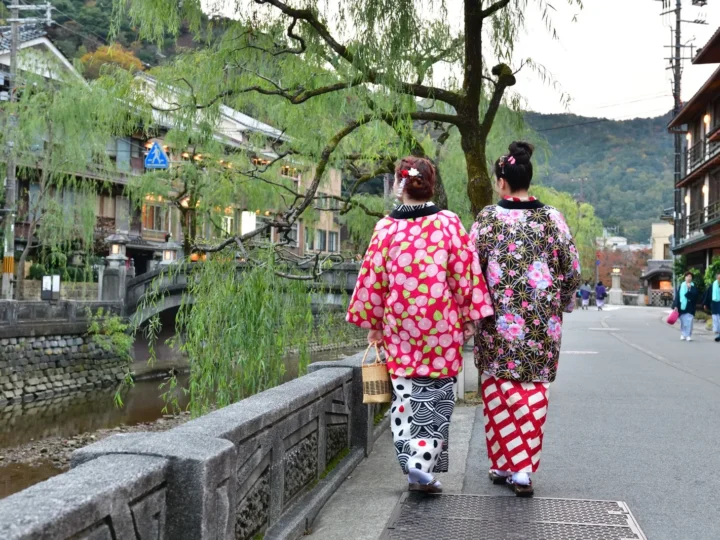
Featured image: KOBE TOURISM BUREAU (faces blurred for privacy)
Arima Onsen at a Glance
In This Guide
- Why Visit Arima Onsen?
- Arima Onsen Day Trip Route
- Map of the Route
- How to Get to Arima Onsen from Osaka
- Begin at Nene Bridge
- Autumn Option: Zuihoji Park
- Catch and Eat Trout at Arima Trout Pond
- Masu Masu Koi Koi Shrine
- Local Food Stops
- Historic Streets and Tenjin Spring
- Bathing at Kin no Yu
- Should You Stay Overnight?
- Choose the Right Route
- Practical Tips
- Frequently Asked Questions
Why Visit Arima Onsen?
Arima Onsen is often described as one of Japan’s oldest hot-spring towns. Its long history matters, but age alone is not what makes it a rewarding day trip. The real appeal is how much variety fits into a relatively compact mountain settlement.
Within one day, you can move between steaming spring sources, narrow wooden shopfronts, a public bathhouse, small temples, a trout-fishing pond and forested walking paths. Unlike a large resort complex, Arima still feels like a town that grew around its water.
The hot springs are traditionally divided into two recognizable types:
This itinerary finishes at Kin no Yu, where day visitors can experience kinsen without staying at a ryokan. Before bathing, however, the route explores the less expected side of Arima: catching your own lunch, finding a tiny matchmaking shrine and trying snacks made by businesses rooted in the town.
Who Will Enjoy This Day Trip Most?
Arima is particularly well suited to repeat visitors to Kansai, couples, families and travelers who want a calmer alternative to another full day of city sightseeing.
It also works for first-time visitors who are curious about Japanese hot springs but are not ready to book a complete ryokan stay. A public bath gives you the essential experience with less cost and commitment.
Travelers with limited mobility should plan carefully. The central shopping streets are compact, but Arima Trout Pond and Zuihoji Park involve uphill walking. The standard route is easier when Zuihoji Park is treated as an optional seasonal addition rather than a compulsory stop.
A Practical Arima Onsen Day Trip Route
The schedule below is the recommended year-round route. It gives Arima Trout Pond enough time to feel like a genuine activity rather than a rushed photo stop, while leaving the afternoon open for food, old streets and a bath.
Visiting during autumn?
Add Zuihoji Park before the trout pond and arrive around 8:45–9:00. Do not simply squeeze the park into the standard schedule—allow at least 45–60 minutes for the uphill walk, foliage and return journey.
Map of the Route
The map separates the year-round walking route, local food stops and the optional autumn detour to Zuihoji Park. Save it before leaving Osaka so you can quickly compare the standard and seasonal routes.
Open the Full Arima Onsen Day Trip Map
How to Get to Arima Onsen from Osaka
For most travelers, the train is currently the most dependable way to reach Arima Onsen from central Osaka. The tourism association gives a general estimate of around one hour from Osaka, but the multi-transfer railway journey often needs more buffer. Allow roughly 70–90 minutes depending on your departure station and connections.
Recommended Train Route from Osaka Station
The route involves several transfers, but the stations are clearly signed. The final section on the Kobe Electric Railway feels noticeably different from central Osaka as the tracks climb into the greener northern side of Kobe.
Check the Official Arima Onsen Transportation Guide
What About the Direct Bus from Osaka?
At the time of this article’s August 5, 2026 review, all Arima Express services departing from and arriving in the Osaka area were suspended until further notice. Direct services between Arima Onsen and Sannomiya or Shin-Kobe continued to operate.
Do not build a tightly timed day trip around an old Osaka bus timetable found in a previous travel article. Check the operator’s current service page before travel. Unless the Osaka departures have resumed, use the train route above.
Check Current Arima Express Bus Information
Starting from Namba or Southern Osaka
From Namba, travel toward Osaka–Umeda or Sannomiya before continuing through Tanigami. The fastest option depends on the railway closest to your accommodation, so compare the complete journey rather than looking only at the first train.
Local planning tip
Do not schedule your first paid activity immediately after your expected arrival. Transfers can introduce delays, and the walk through Arima is more enjoyable when you are not checking the time every five minutes.
Begin at Nene Bridge
From Arima Onsen Station, walk toward the center of town and you will soon reach Nene Bridge. Its bright red railings stand above the Arima River, close to the main transport stops and the entrance to the older streets.
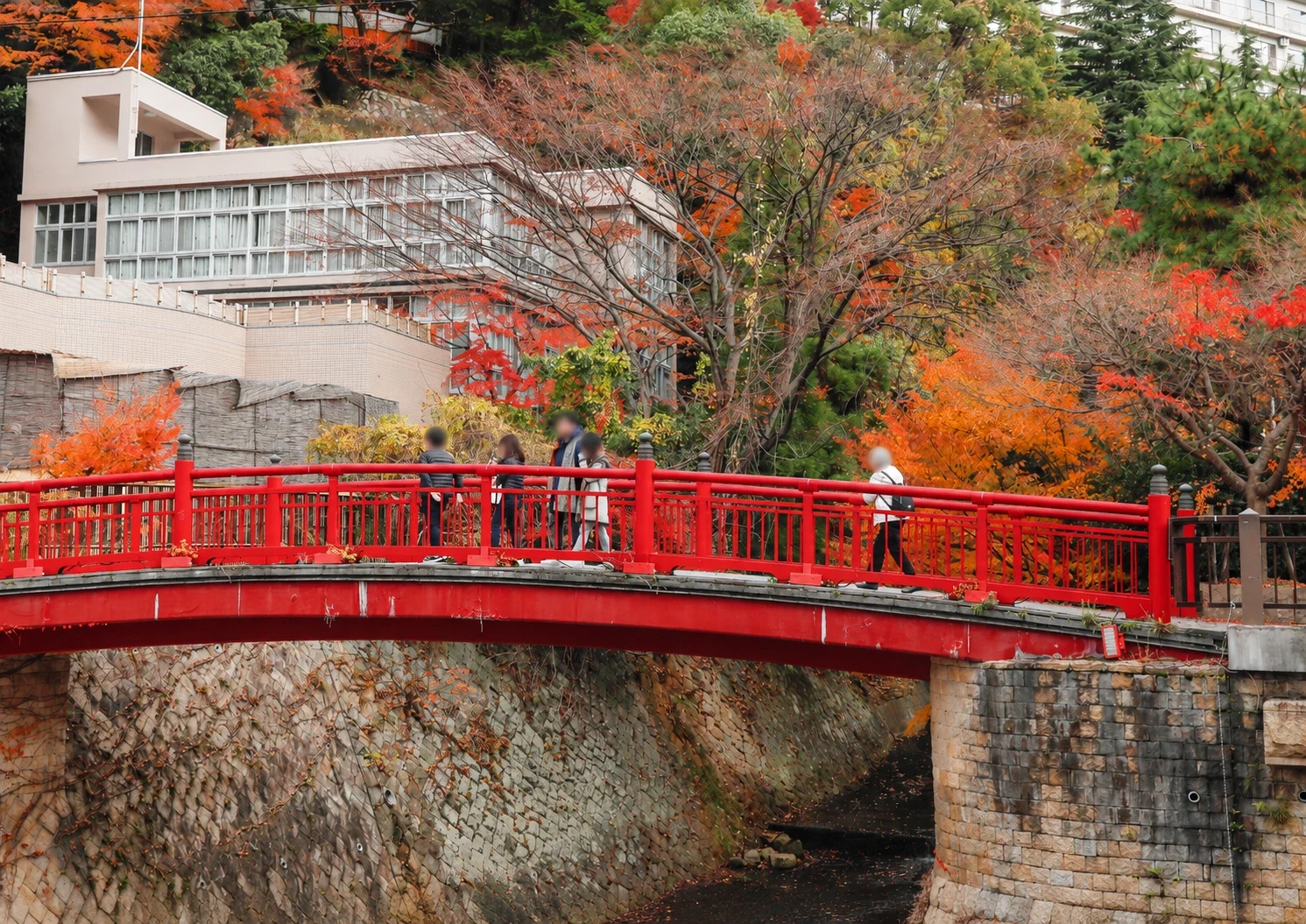
Photo: KOBE TOURISM BUREAU (faces blurred for privacy)
The bridge is named after Nene, the wife of Toyotomi Hideyoshi. The couple is closely connected with Arima’s history, and references to them appear throughout the town in bridge names, statues, streets and seasonal events.
You do not need a long stop here. Use the bridge as a visual introduction, then continue toward the town’s sloping streets. The main route heads toward Arima Trout Pond, while the autumn version first turns uphill toward Zuihoji Park.
Nene Bridge Official Information
|
Google Maps
Autumn Option: Zuihoji Park
Zuihoji Park is one of Arima Onsen’s strongest seasonal attractions, but it should not be treated as a compulsory stop throughout the year.
The park occupies the former site of Zuihoji Temple on the higher eastern side of the hot-spring town. It is especially known for its maples and late-autumn color, along with historical associations with Toyotomi Hideyoshi.
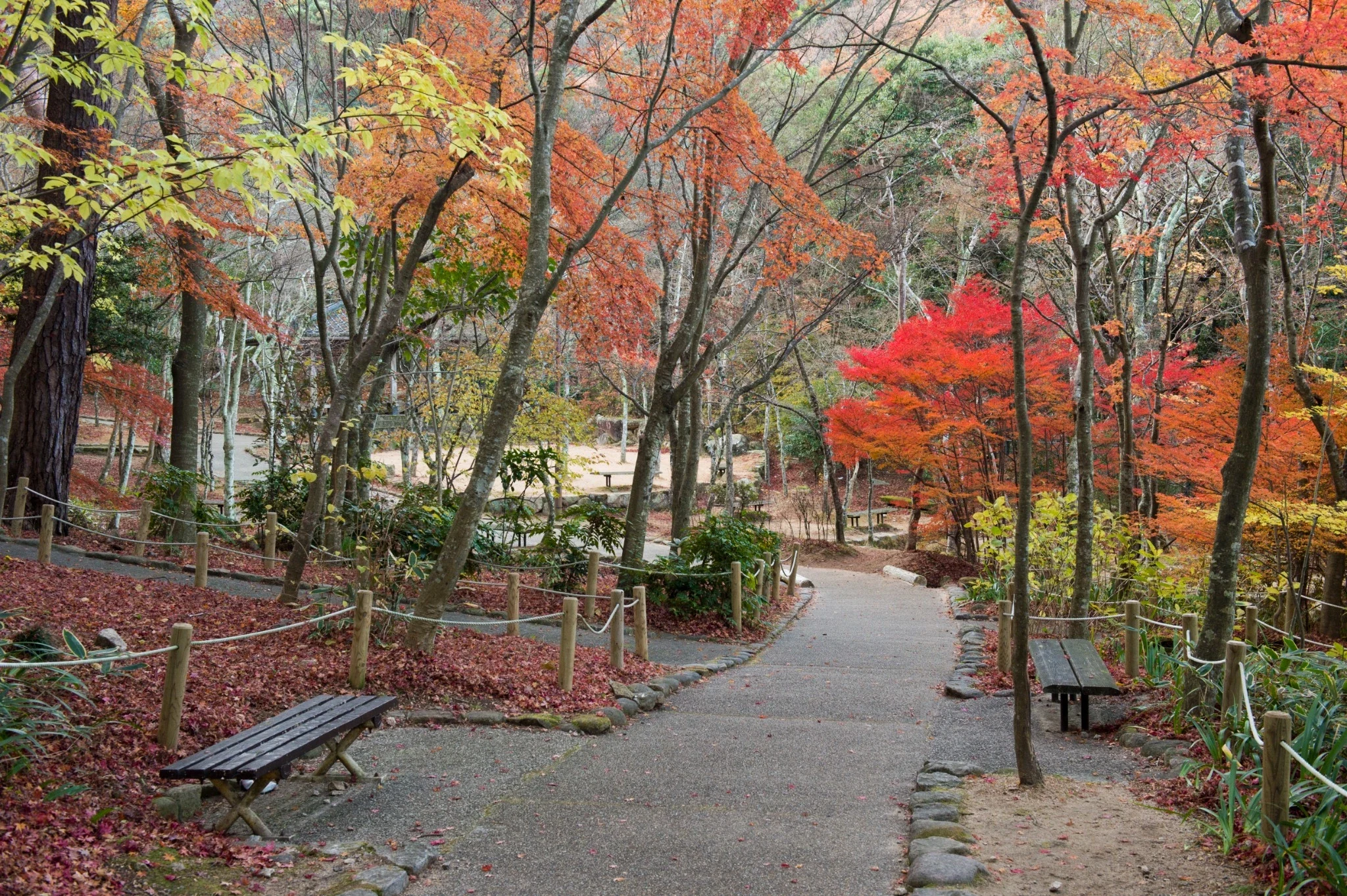
Photo: KOBE TOURISM BUREAU
When Should You Add Zuihoji Park?
The walk is uphill and adds both distance and fatigue before the rest of the itinerary. Travelers trying to complete Zuihoji Park, Arima Trout Pond and every shop in the town center may find that the day becomes more hurried than relaxing.
A better autumn strategy is to visit the park early, keep the food stops small and leave enough time for Kin no Yu in the afternoon.
Zuihoji Park Official Information
|
Google Maps
Catch and Eat Rainbow Trout at Arima Trout Pond
Arima Trout Pond is the most unusual stop on this itinerary and the main reason this route feels different from a standard hot-spring day trip.
From central Arima Onsen, follow the uphill road toward the greener southern edge of town. The pond is around a 15-minute walk from Arima Onsen Station. The route is straightforward, but the incline is noticeable, especially if you have already visited Zuihoji Park.
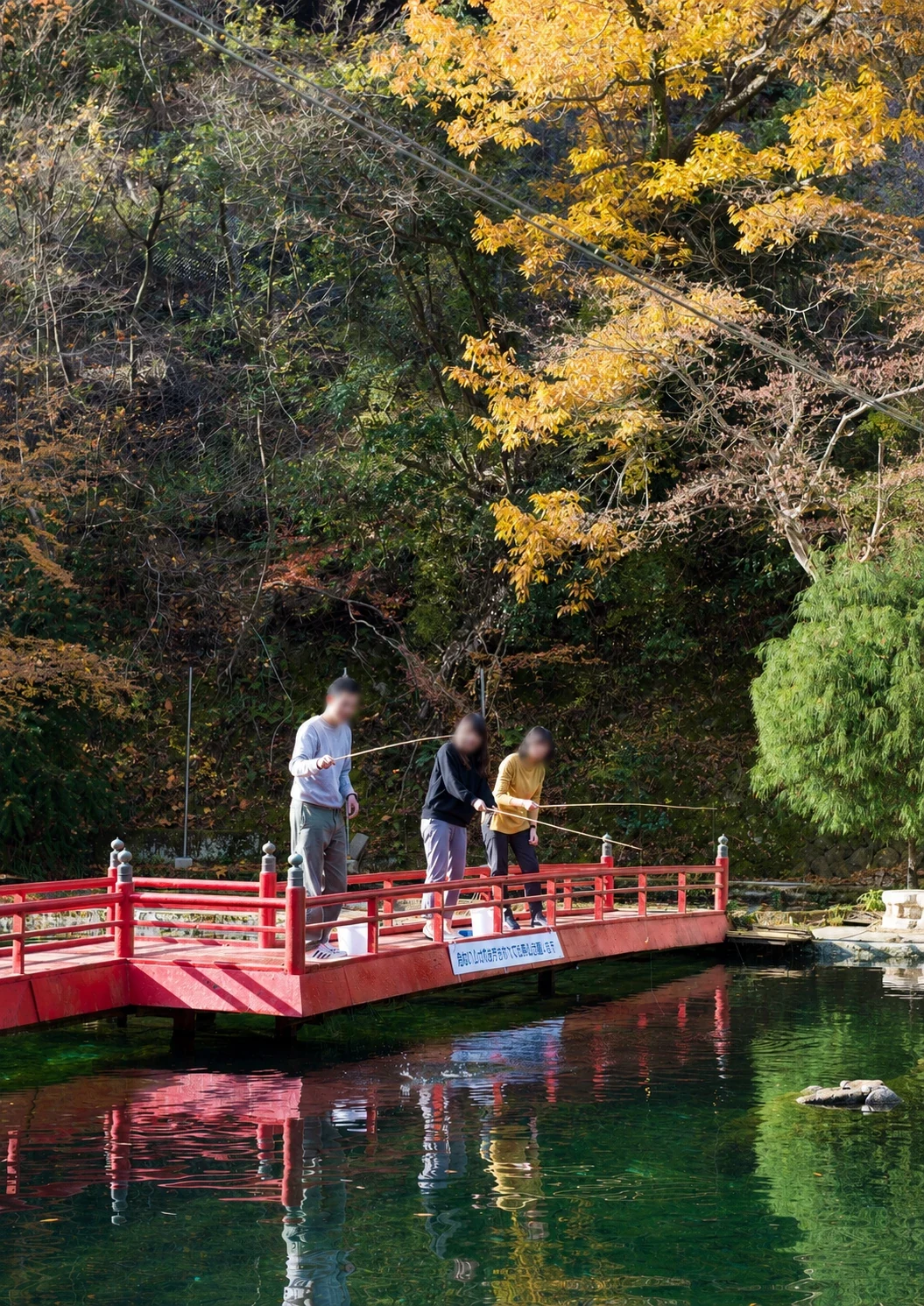
Photo: KOBE TOURISM BUREAU (faces blurred for privacy)
The system is designed for beginners. You rent a rod, catch small rainbow trout and eat karaage prepared at the on-site restaurant, Masu no Chaya. The facility notes that, because of the cooking process, the trout served may not be the exact fish you caught.
You do not need previous fishing experience. The pond is compact, the equipment is provided and the activity is much more approachable than arranging a separate fishing excursion outside the town.
Arima Trout Pond Prices and Hours
Regular closing days are generally Wednesday and Thursday from March through November, and Wednesday through Friday from December through February. The pond opens on public holidays and may close on a later day instead. It is generally open every day during spring and summer school holidays and Golden Week, while year-end dates and New Year’s Day have separate closures. Check the official calendar before traveling.
How filling is the trout meal?
Three small trout make a satisfying snack or light lunch for many visitors, but the portion is not the same as a full restaurant meal. Keep the later croquette stop optional and decide after you have eaten.
What the Experience Is Actually Like
The fishing itself can be quick, especially when the trout are active. The longer part of the visit may be waiting for the food and sitting down to eat.
The trout are served as karaage. Eat slowly and remain careful around the head and any firmer bones.
The experience is suitable for couples, families and travelers who want something more interactive than moving between viewpoints. It also provides a natural break before returning to the busier center of the hot-spring town.
The official reel shows the fishing experience and how the trout are served after cooking.
Check Arima Trout Pond Hours and Prices
|
Google Maps
Visit Masu Masu Koi Koi Shrine
Before leaving the trout pond, look for the small matchmaking shrine inside the grounds. Masu Masu Koi Koi Shrine was established in 2012 and is dedicated to Okuninushi, a deity commonly associated with relationships and matchmaking.
The shrine’s memorable name is built around Japanese wordplay. Masu refers to trout, while koi can evoke love, carp and the sound of the command “come,” depending on how it is written.
Visitors can find heart-shaped ema prayer plaques and relationship-themed charms. The shrine is small, so allow around 10–15 minutes rather than treating it as a separate major attraction.
Do not make a separate trip only for the shrine
Its charm comes from discovering it as part of the trout-pond experience. Visit it after fishing or while waiting for your meal.
Masu Masu Koi Koi Shrine Official Information
|
Google Maps
Return to Town for Two Local Food Stops
After the trout pond, walk back toward central Arima Onsen. The route is mostly downhill, making the return noticeably easier.
Rather than arranging a large restaurant lunch immediately after eating the trout, this itinerary uses two small food stops. One represents Arima’s traditional sweet culture; the other connects the town with Kobe’s well-known beef and butcher-shop tradition.
Try the Five-Second Fresh Tansan Senbei
Tansan senbei are thin, crisp crackers closely associated with Arima Onsen. Their simple, lightly sweet flavor makes them an easy souvenir, but Yunohanado Honpo’s Taiko-dori store offers a version that cannot be packed into a box and taken home.
At the shop, a craftsperson removes a freshly baked cracker directly from the iron mold. The cracker is still warm and flexible for only a few seconds. The first bite can be soft, but the texture quickly changes into the familiar crisp senbei.
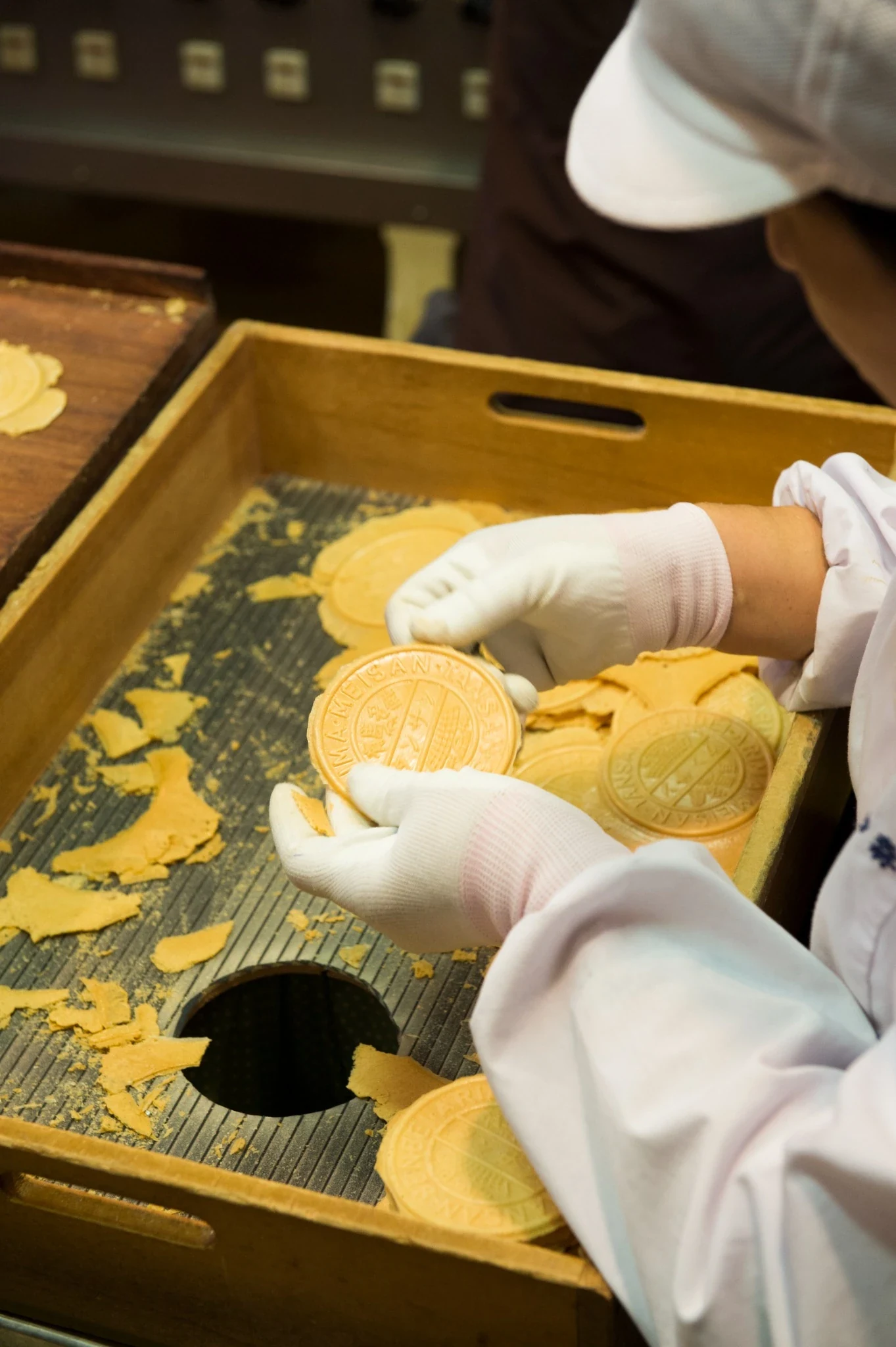
Photo: KOBE TOURISM BUREAU
The shop calls it a “five-second” fresh tansan senbei. The phrase is not a conventional food-expiration warning. It describes the extremely short period during which you can experience the unusual soft texture before the cracker hardens.
Eat the first bite immediately instead of spending too long arranging a photograph. By the time the camera is ready, the texture may already have changed.
The fresh version can depend on the shop’s baking schedule and availability. Arriving earlier in the day gives you a better chance than leaving it until shortly before closing.
Fresh Tansan Senbei Official Information
|
Google Maps
Add a Hot Croquette from Takenaka Meat Shop
For a savory contrast, stop at Takenaka Meat Shop, a long-established local butcher specializing in Kobe beef and Japanese black beef.
The standard croquette is the practical choice for a quick snack. Its filling emphasizes the familiar sweetness of potato, while the crisp fried coating makes it especially satisfying during cooler weather.
Travelers who want a stronger local-beef connection can look for the limited Arima Croquette, made with Kobe beef and Japanese black beef.
The standard croquette and the Arima Croquette serve slightly different purposes. Choose the standard version for a simple, inexpensive snack. Choose the Arima version when trying a beef-focused local item matters more than keeping the food budget low.
If you ate all three trout at Arima Trout Pond, do not force this stop into the schedule. Share one croquette, return later or skip it entirely. The itinerary is meant to feel leisurely, not like a food challenge.
Takenaka Meat Shop Official Information
|
Google Maps
Walk Through the Historic Streets to Tenjin Spring
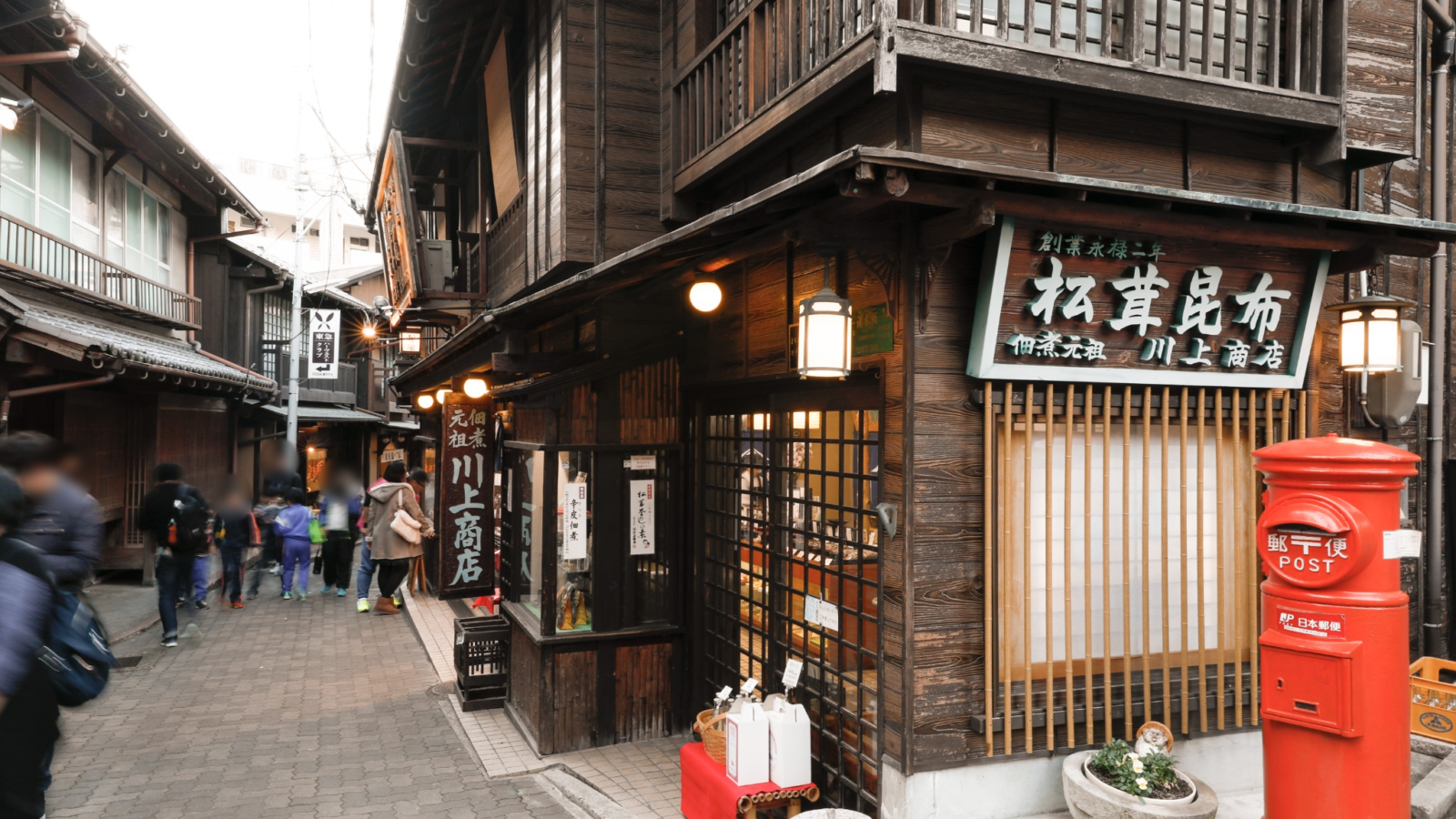
With the food stops complete, slow the pace and explore the lanes around central Arima Onsen. This part of the day does not require a strict sequence. The pleasure comes from moving between narrow slopes, wooden shopfronts, small temples and visible traces of the water beneath the town.
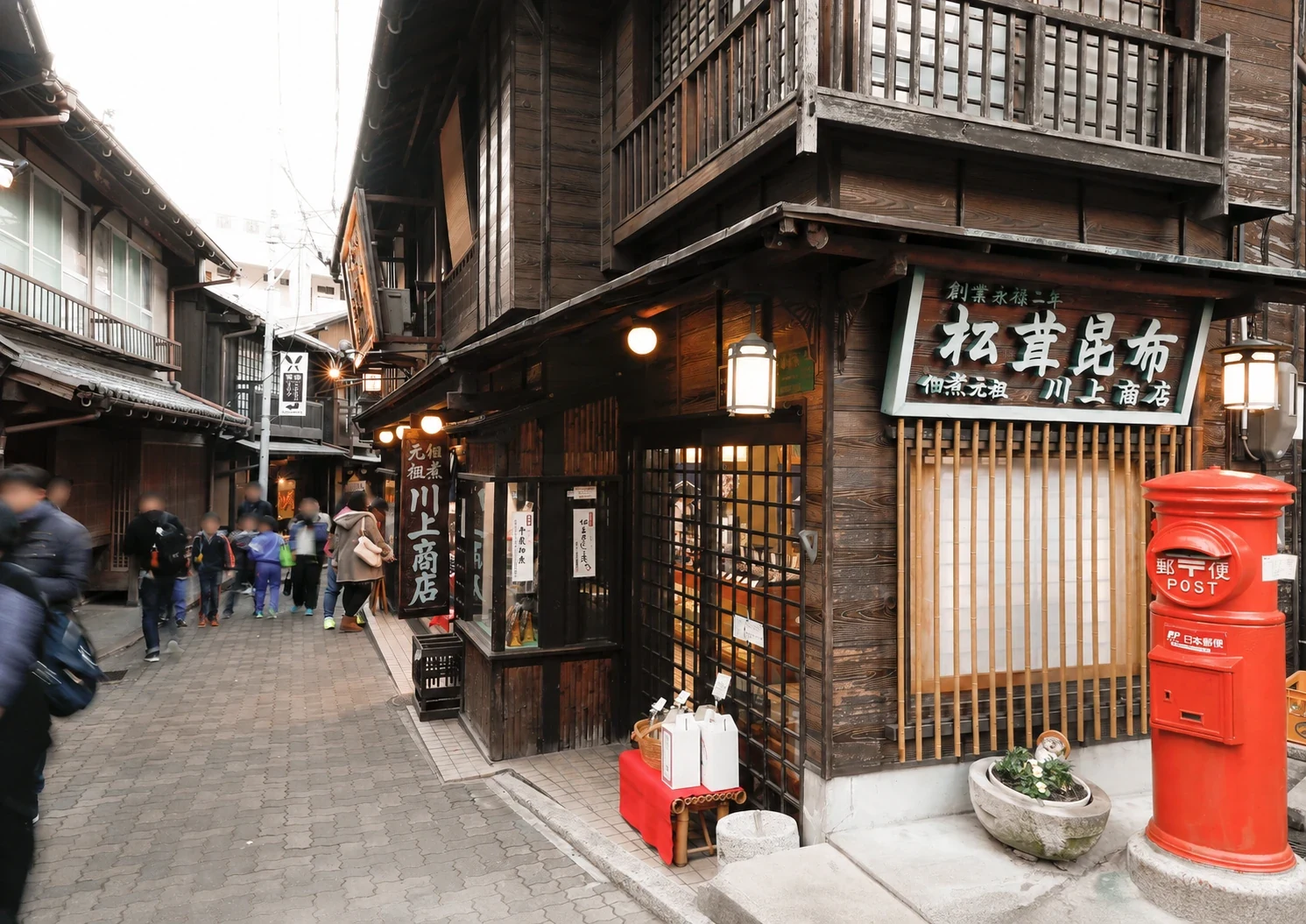
Photo: KOBE TOURISM BUREAU (faces blurred for privacy)
One of the most useful details for understanding Arima is that its hot water is not hidden entirely inside hotels and bathhouses. Several spring sources can be seen around the town.
Tenjin Spring is among the most recognizable. It stands within the grounds of Arima Tenjin Shrine and draws iron-rich, salty spring water from below.
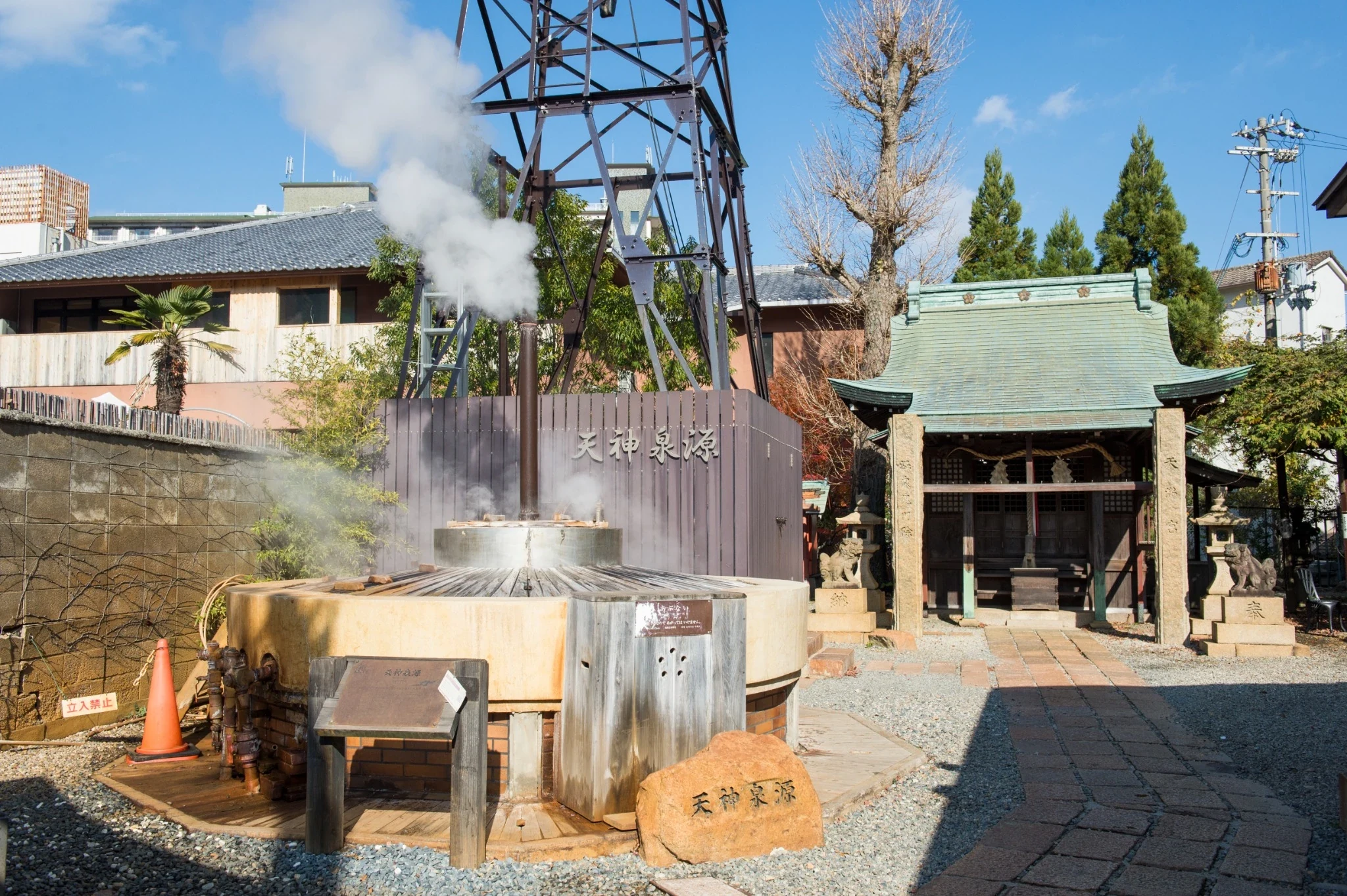
Photo: KOBE TOURISM BUREAU
You may hear the spring before you fully see it. Steam rises near the structure while the equipment produces a steady bubbling or pumping sound, making the source feel active rather than decorative.
The spring is not a place to touch or sample the water. Observe it from the designated area.
Why the Water Turns Reddish Brown
Arima’s kinsen contains iron and sodium chloride. When the iron-rich water reaches the surface and comes into contact with air, it oxidizes and develops the rusty brown color associated with the town’s golden spring.
This explains why the water inside Kin no Yu looks dramatically different from the clear water many travelers expect from a Japanese bath.
Allow time to wander
The map is useful for finding Tenjin Spring, but do not follow it so rigidly that you miss the smaller lanes. This is the section where a short wrong turn can become part of the experience.
Tenjin Spring Official Information
|
Google Maps
Finish with a Bath at Kin no Yu
After fishing, walking uphill and exploring the historic streets, finish the main itinerary at Kin no Yu.
Kin no Yu is a public bathhouse in the center of Arima Onsen and one of the easiest ways for day visitors to experience the town’s famous kinsen without booking a hotel or ryokan.
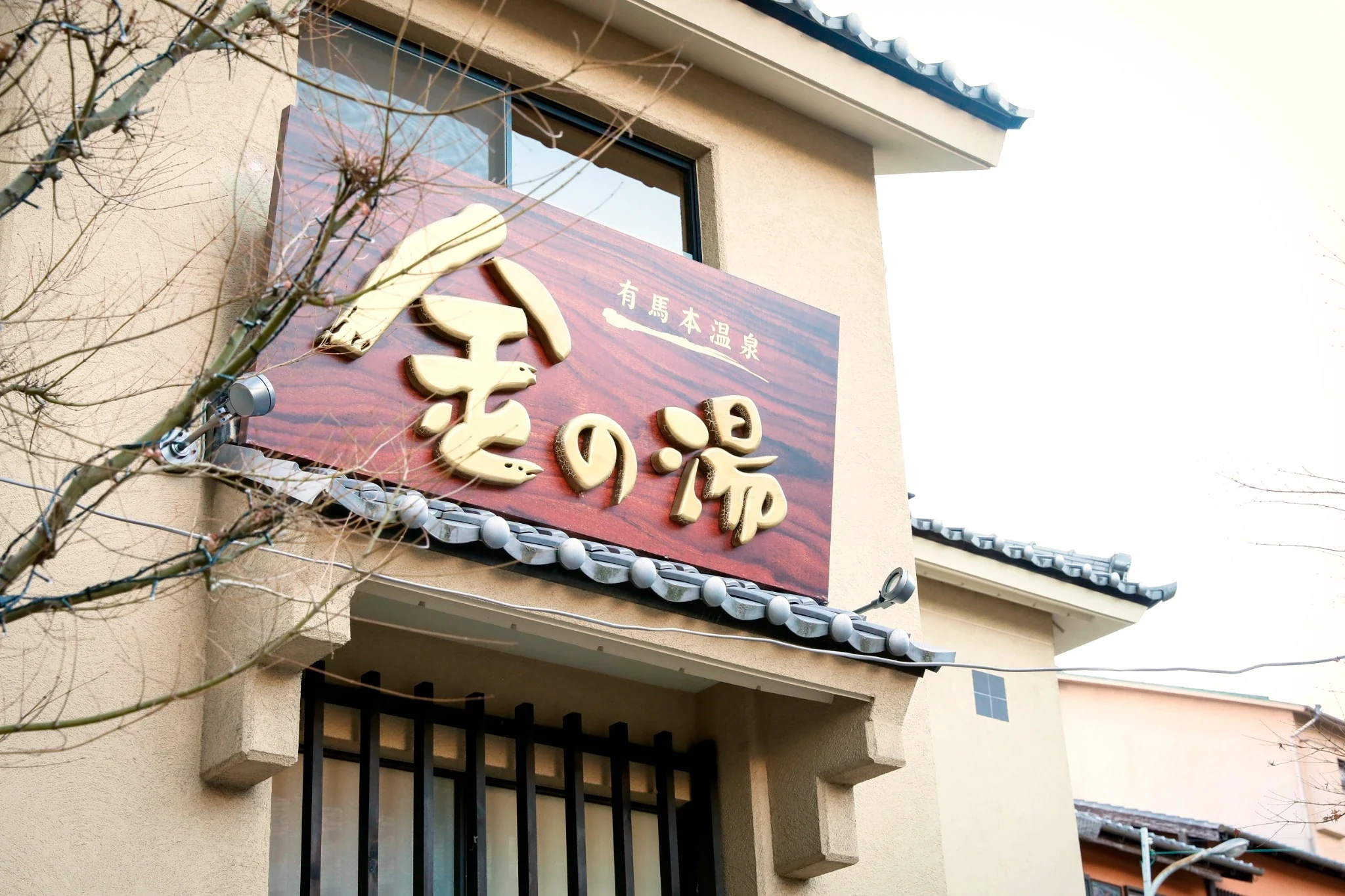
Photo: KOBE TOURISM BUREAU
The bathwater has a dense reddish-brown appearance and a noticeably salty mineral character. It can look opaque enough that you cannot clearly see the bottom of the bath, so enter slowly and use the handrail where available.
Kin no Yu Hours and Admission
Body soap, rinse-in shampoo and hair dryers are provided. Towels and other basic bath items are sold at the facility, but bringing a small towel from your accommodation is an easy way to reduce cost and waste.
Basic Onsen Etiquette
The kinsen can feel intense because of its heat, salt and mineral content. Begin with a short soak, sit out for a few minutes and return only if you feel comfortable. Drink water afterward, particularly in summer.
What If You Do Not Want to Enter the Bath?
A free footbath is located beside Kin no Yu and follows the bathhouse’s operating hours and closing days. It provides a simple alternative for travelers who are short on time or uncomfortable using a public bath.
The footbath can become busy during weekends and foliage season. Keep your visit reasonably short when others are waiting, and dry your feet before putting your shoes back on.
Check Current Kin no Yu Information
|
Google Maps
Should You Stay Overnight in Arima Onsen?
A day trip is enough to experience Arima Onsen’s main attractions. You can fish at Arima Trout Pond, explore the historic streets, try local snacks and bathe at Kin no Yu before returning to Osaka in the late afternoon.
An overnight stay becomes worthwhile when the accommodation itself is part of the experience rather than simply a place to sleep.
The town becomes quieter after many day visitors leave. Staying overnight also removes the need to watch the return schedule while bathing or eating dinner.
However, do not book a ryokan only because you think a day trip is impossible. The route in this guide is designed to cover the essential Arima experience comfortably in one day.
Thinking about staying overnight?
Compare ryokan and hotel options around Arima Onsen before choosing between a day trip and an overnight stay.

Hotel prices, room types, meal plans and availability change by date. Check the property’s current bathing rules, cancellation terms and exact location before booking.
Choose the Right Version of This Arima Itinerary
The standard route works throughout the year, but not every traveler should follow exactly the same schedule. Choose the version that matches the season and how much uphill walking you want to do.
Standard Route: The Best Balance
Choose the standard route when the trout pond and hot-spring experience matter more than seasonal sightseeing. It leaves enough time to sit down for the cooked trout, wander through the old streets and bathe without rushing.
Autumn Route: Start Earlier
During the foliage period, arrive around 8:45–9:00 and visit Zuihoji Park before the central town becomes busy. After the park, keep the later food stops flexible. You may need to choose between a long café break and visiting every planned shop.
Active Route: Possible, but Not Relaxing for Everyone
Zuihoji Park and Arima Trout Pond are in different uphill areas. Combining both is realistic for active travelers, but the repeated slopes make the day considerably more demanding.
Do not choose this route simply to collect every pin on the map. Arima is more enjoyable when you leave room for an unexpected shop, a short rest or a longer soak.
Practical Tips for Visiting Arima Onsen
Wear Shoes Suitable for Hills
Arima Onsen is compact but noticeably hilly. The walks to Zuihoji Park and Arima Trout Pond involve slopes, and the historic center includes narrow lanes and occasional steps.
Ordinary comfortable walking shoes are sufficient for the main route. Fashion shoes with smooth soles are less practical, especially after rain or during the colder months.
Check Closing Days Before Leaving Osaka
The main stops do not all close on the same day. Arima Trout Pond has seasonal closing schedules, while Kin no Yu normally closes on the second and fourth Tuesday. Public holidays and vacation periods may change normal operations.
Check the official pages again shortly before traveling rather than assuming every attraction will be open because the town itself is accessible.
Do Not Carry Large Luggage
This route includes hills, narrow streets and a public bath. Leave large suitcases at your Osaka accommodation or another suitable storage facility and carry only a day bag.
Bring a Small Towel
A towel is required when bathing at Kin no Yu. Towels and other basic items are available for purchase, but bringing a small towel from your hotel is convenient.
Keep the towel out of the bathwater and use it for drying yourself lightly before returning to the changing area.
Keep Some Cash Available
Major facilities may support cashless payments, but small food purchases, prayer plaques and older shops are easier when you have some yen available.
Do not depend on one mobile-payment service for the entire day.
Allow Extra Time on Weekends and in Autumn
Cooking time at the trout pond, queues for snacks and admission to the public baths can all take longer during busy periods.
Build flexibility into the afternoon rather than booking a tightly timed return journey immediately after the planned bath.
Check Bathing Rules Directly When Necessary
Public-bath rules can change, and individual accommodation policies may differ from Kin no Yu. Travelers with tattoos, accessibility requirements or other specific concerns should confirm the current rules directly with the facility before visiting.
Rain Does Not Ruin the Entire Day
Light rain can make the old streets atmospheric, and Kin no Yu remains a good final stop. However, Zuihoji Park becomes less appealing in poor conditions, and outdoor fishing may be less comfortable.
On a wet day, skip the park, shorten the trout-pond visit if necessary and spend more time around the shops, spring sources and bathhouse.
Plan More Kansai Day Trips
Arima Onsen works especially well for travelers using Osaka as a base. Continue planning with these Local Steps Japan guides:
Frequently Asked Questions
Is Arima Onsen worth a day trip from Osaka?
Yes. Arima Onsen is a strong day trip for travelers who want hot springs, traditional streets and a slower atmosphere without traveling far from Osaka. The trout pond and local food stops give the day more variety than a simple bathhouse visit.
How long does it take to reach Arima Onsen from Osaka?
The official tourism guide gives a general estimate of around one hour from Osaka. For the multi-transfer train route, allow roughly 70–90 minutes depending on your departure station and connections. Check a live route planner on the morning of travel.
Can you visit Arima Onsen without staying overnight?
Yes. Kin no Yu and Gin no Yu are public bathhouses, so you do not need to reserve a ryokan to experience the hot springs. The main streets, spring sources, food shops and Arima Trout Pond can also be visited during a day trip.
Do you need to reserve Arima Trout Pond?
Regular fishing visits are not reservation-only. During busy periods, you may need to wait. Groups of ten or more should contact the facility in advance.
Which is better: Kin no Yu or Gin no Yu?
Choose Kin no Yu for a first visit because it uses Arima’s distinctive iron-rich, reddish-brown golden spring water. Choose Gin no Yu when you prefer the clear silver spring or want a second bath experience. A combined ticket is available, but visiting both can make a day-trip schedule feel rushed.
Can you enjoy Arima Onsen without entering a public bath?
Yes. You can visit Arima Trout Pond, explore the historic streets, see the spring sources, try local snacks and use the free footbath beside Kin no Yu. However, bathing provides the clearest sense of what makes the town special.
What is the best season for an Arima Onsen day trip?
Arima can be visited throughout the year. Autumn is the most visually impressive season because of the foliage at Zuihoji Park, while winter suits the hot-spring atmosphere particularly well. Spring and summer are good for greener scenery and longer daylight.
Final Thoughts
An Arima Onsen day trip should not feel like a race between famous hot-spring facilities.
The town is at its best when the day includes several different rhythms: the activity of catching trout, the humor of a tiny matchmaking shrine, the quick texture change of fresh tansan senbei, the steam rising from a spring source and the quiet of the bath at the end.
For most visitors, the standard route is enough. Add Zuihoji Park when the autumn scenery genuinely matters to you, not simply because it appears on a list of attractions.
Arrive with comfortable shoes, check the current closing days and leave enough flexibility to slow down. That is what turns Arima from a short hot-spring stop into one of the most satisfying local day trips from Osaka.
Local Steps Japan route summary
Catch and eat trout, explore the old streets, try one or two local snacks and finish at Kin no Yu. Add Zuihoji Park only when the season and your energy level make the uphill detour worthwhile.
Image Credits
The featured image and the following article images are used with credit to KOBE TOURISM BUREAU:
- Arima Onsen historic streets — featured image and article image
- Nene Bridge
- Zuihoji Park in autumn
- Arima Trout Pond
- Tansan senbei production
- Tenjin Spring
- Kin no Yu
Instagram embed: official reel from Arima Trout Pond, @arima_masuike_fv.
Facility hours, admission fees, closing days and transportation information were reviewed on August 5, 2026. Details can change, particularly during public holidays, maintenance periods and seasonal events. Always confirm essential information with the official facility before traveling.