Nara is often reduced to one familiar image: tourists feeding crackers to deer in the park. The deer are certainly part of the experience, but they are only the beginning.
This one-day route from Osaka combines Nara’s most famous sights with traditional sweets, historic temple grounds, local food, and the old merchant streets of Naramachi. It is designed for travelers who want to see the classic highlights without spending the entire day following the same crowded path.
You will still meet plenty of deer, but you will also taste freshly made yomogi mochi, walk through one of Japan’s most important Buddhist temple complexes, see the Great Buddha at Todai-ji, try traditional Yoshino kudzu cuisine, and slow down among the wooden townhouses of old Nara.
Best for: First-time or repeat visitors looking for a fuller Nara day trip beyond the deer.
Starting point: Kintetsu Nara Station
Trip length: Around 8–9 hours in Nara
Transport: Train from Osaka, followed by mostly walking
Recommended start: Leave Osaka around 8:00–8:30 a.m.
If you are still choosing between Nara and another destination, compare the best day trips from Osaka for travel times, transfers and the kind of day each place offers.
Why This Nara Route Is Different
Many Nara day trips rush directly from the station to the deer and Todai-ji before returning to Osaka. This route keeps those essential sights but adds the parts of Nara that make the city feel more personal.
The morning begins with a small local food stop near the station, followed by the historic grounds of Kofuku-ji. From there, the route gradually enters Nara Park and Todai-ji before turning south for lunch and an afternoon walk through Naramachi.
Everything on the route is reasonably close together, so there is no need to spend the day repeatedly boarding buses. Comfortable shoes are still important: expect a full day of walking, with plenty of opportunities to stop along the way.
How to Get to Nara from Osaka
For this itinerary, Kintetsu Nara Station is the most convenient arrival point. It is closer to Kofuku-ji, Nara Park, and the start of this walking route than JR Nara Station.
From Osaka-Namba Station
Take a Kintetsu Rapid Express bound for Kintetsu Nara. The direct journey generally takes around 35–40 minutes, making Nara one of the easiest day trips from central Osaka.
The regular Rapid Express is usually the practical choice. The Limited Express can be slightly faster, but it requires an additional limited-express ticket and rarely saves enough time to make a major difference on this route.
From Umeda or Osaka Station
Travel to Osaka-Namba and transfer to the Kintetsu Nara Line, or use the JR Yamatoji Rapid Service from Osaka Station to JR Nara Station. The JR route can be convenient for Japan Rail Pass users, but JR Nara Station is farther from the main temple and park area.
If Nara is one of your main day trips, Namba is especially convenient because of the Kintetsu connection. If you are also planning Kyoto, Kobe or Himeji, it is worth choosing where to stay in Osaka around the full route, not just one day.
Local tip: Arriving at Kintetsu Nara Station keeps the first part of the day simple. Nakatanidou and Kofuku-ji are both within an easy walk of the station.
Nara Day Trip Map
The map below includes every major stop in this itinerary, from Kintetsu Nara Station to the historic streets of Naramachi.
Nara Day Trip at a Glance
The times are intentionally flexible. Nara is best enjoyed at a relaxed pace, so treat this schedule as a practical guide rather than a strict timetable.
Quick Information
Trip Length
Around 8–9 hours
Walking
Approximately 8 km
Best Starting Station
Kintetsu Nara Station
Best Time to Visit
Morning (before 10:00 a.m.)
Main Highlights
Todai-ji, Nara Park, Kofuku-ji, Nakatanidou, Tengyokudo, Naramachi
Travel Style
Self-guided walking itinerary
9:25 a.m. — Start with Fresh Yomogi Mochi at Nakatanidou
From Kintetsu Nara Station, walk through Higashimuki Shopping Street toward Nakatanidou. The shop is only about five minutes from the station and makes an easy first stop before entering the temple district.
Nakatanidou is best known online for its rapid mochi-pounding, but the speed is not simply a performance for visitors. According to the shop, pounding the rice while it is still hot helps create mochi that is both soft and pleasantly elastic.
Its signature sweet is yomogi mochi: green mugwort-flavored rice cake filled with sweet red-bean paste and dusted with roasted soybean flour. The mochi is soft and chewy, with an earthy aroma from the yomogi, gentle sweetness from the bean paste, and a nutty finish from the kinako.
The flavors are simple and nostalgic rather than overly rich. Nakatanidou emphasizes carefully selected ingredients, including glutinous rice, red beans, kinako, and yomogi, allowing the natural character of each ingredient to come through.
The mochi tastes best soon after it is made, while it is still especially soft and slightly warm. It is an easy snack to eat on the spot before continuing toward Kofuku-ji.
Good to know
The mochi-pounding demonstrations do not follow a fixed timetable. The shop makes additional batches according to demand, so arriving at a particular time does not guarantee that you will see the pounding.
The shop may close early when its products sell out. Check its official website or Instagram for current business hours and closing days before visiting.
View Nakatanidou on Google Maps
10:00 a.m. — Walk Through Kofuku-ji Temple
From Nakatanidou, it takes only a few minutes to reach Kofuku-ji. The temple’s open grounds form a natural gateway between central Nara and Nara Park, making it an ideal first historical stop.
Kofuku-ji was closely connected to the influential Fujiwara family and remains one of Nara’s most important temple complexes. Unlike a single enclosed attraction, its buildings are spread across an open area that you can walk through freely.
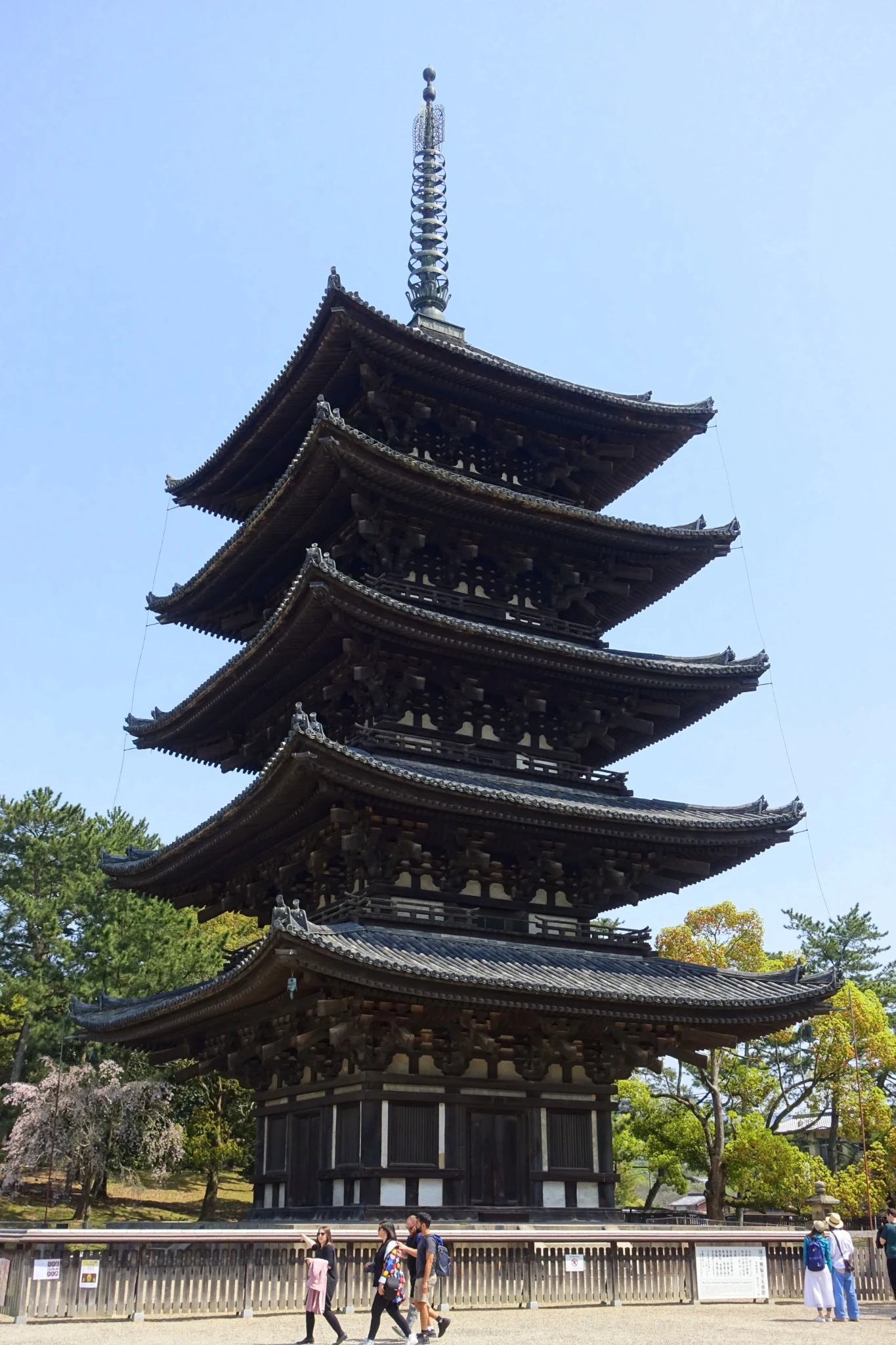
The five-story pagoda has long been one of Nara’s most recognizable landmarks. The temple grounds are still worth visiting for their history and atmosphere, even when the familiar pagoda view is obstructed.
Important for 2026: Kofuku-ji’s five-story pagoda is undergoing major preservation and repair work. Scaffolding and protective covering may obstruct the view shown in older photographs, so do not plan this stop around getting a clear pagoda photo.
Instead, focus on the atmosphere of the grounds and the reconstructed Central Golden Hall. Travelers interested in Buddhist art can also visit the National Treasure Hall, which displays important statues associated with the temple.
Allow roughly 30–45 minutes for a relaxed walk through the grounds. Spending longer is worthwhile if you enter the paid halls, but this itinerary does not require visiting every building.
View Kofuku-ji Temple on Google Maps
10:45 a.m. — Meet the Deer in Nara Park
From Kofuku-ji, continue east into Nara Park. The transition is gradual: temple grounds open into broad lawns, wooded paths, and areas where deer move freely between visitors.
The deer in and around Nara Park are protected wild animals rather than pets, even though many have become comfortable around people and will approach anyone carrying shika senbei, the special crackers sold throughout the park.
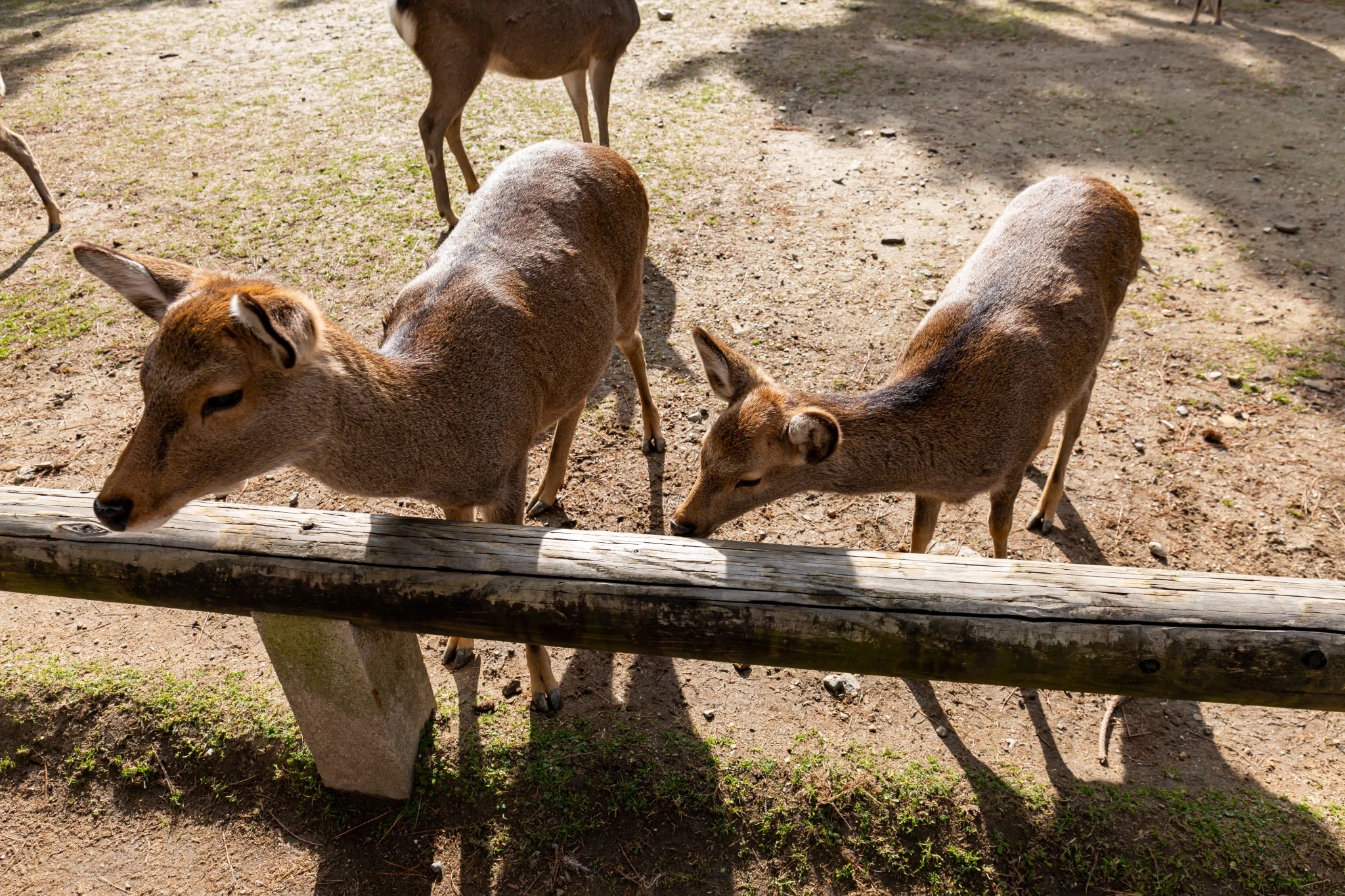
Feeding the deer is one of Nara’s best-known experiences, but a little preparation makes it much more enjoyable. Buy only the official deer crackers from a licensed stall and keep the full stack out of sight while offering them one at a time.
Some deer bow before receiving a cracker, but the behavior should not be treated as a guaranteed performance. Once the deer notice the crackers, they may gather quickly, nudge your hands, or gently tug at bags and clothing if they think you still have food.
How to feed the deer safely
- Feed them only official shika senbei—not human food.
- Offer one cracker at a time and keep the rest out of sight.
- When you are finished, show both empty hands so the deer can see that no food remains.
- Never tease, chase, grab, or corner a deer.
- Keep maps, tickets, plastic bags, and other loose items away from their mouths.
Extra care is needed around small children, who may feel overwhelmed when several deer approach at once. During the fawning season, keep your distance from mothers and young deer and never attempt to touch them.
You do not need to spend a long time feeding deer to enjoy the park. About 30–45 minutes is enough to walk through the lawns, take photographs, and experience the atmosphere before continuing toward Todai-ji.
11:30 a.m. — Visit Todai-ji and the Great Buddha
From the park, follow the flow of visitors toward Todai-ji. The approach passes through the monumental Nandaimon Gate, where two powerful guardian statues stand inside the wooden structure.
The gate is worth slowing down for. Many visitors hurry directly toward the Great Buddha Hall, but the scale and weathered details of Nandaimon provide one of the most impressive first encounters with the temple.
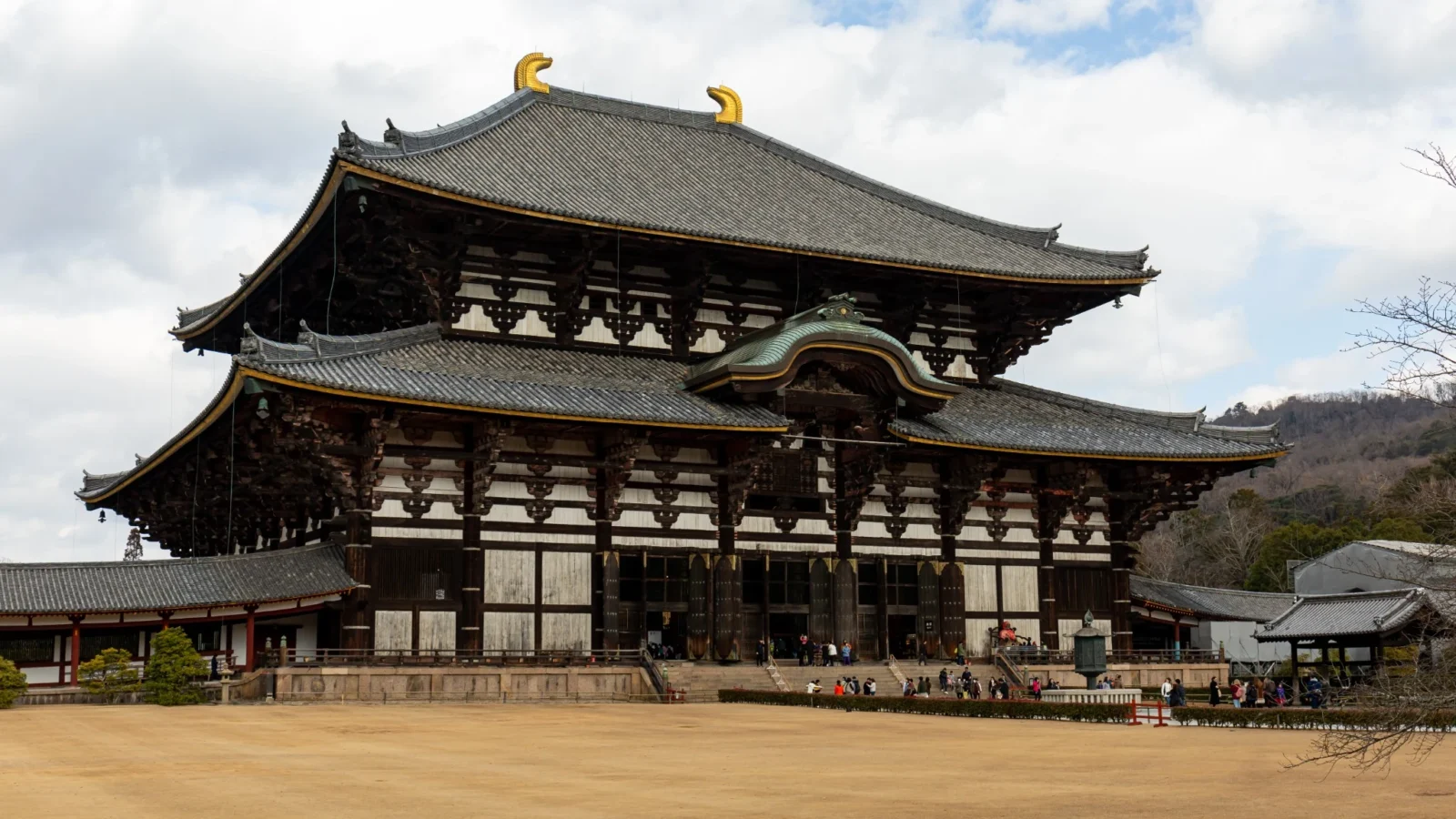
Beyond the gate stands the Daibutsuden, or Great Buddha Hall. The present building is smaller than earlier versions lost to fire, yet it remains enormous and dominates the open courtyard in front of it.
Inside sits the temple’s Great Buddha, a monumental bronze representation of Vairocana Buddha. Even travelers who have already visited many Japanese temples often find the scale of the statue striking when they first enter the hall.
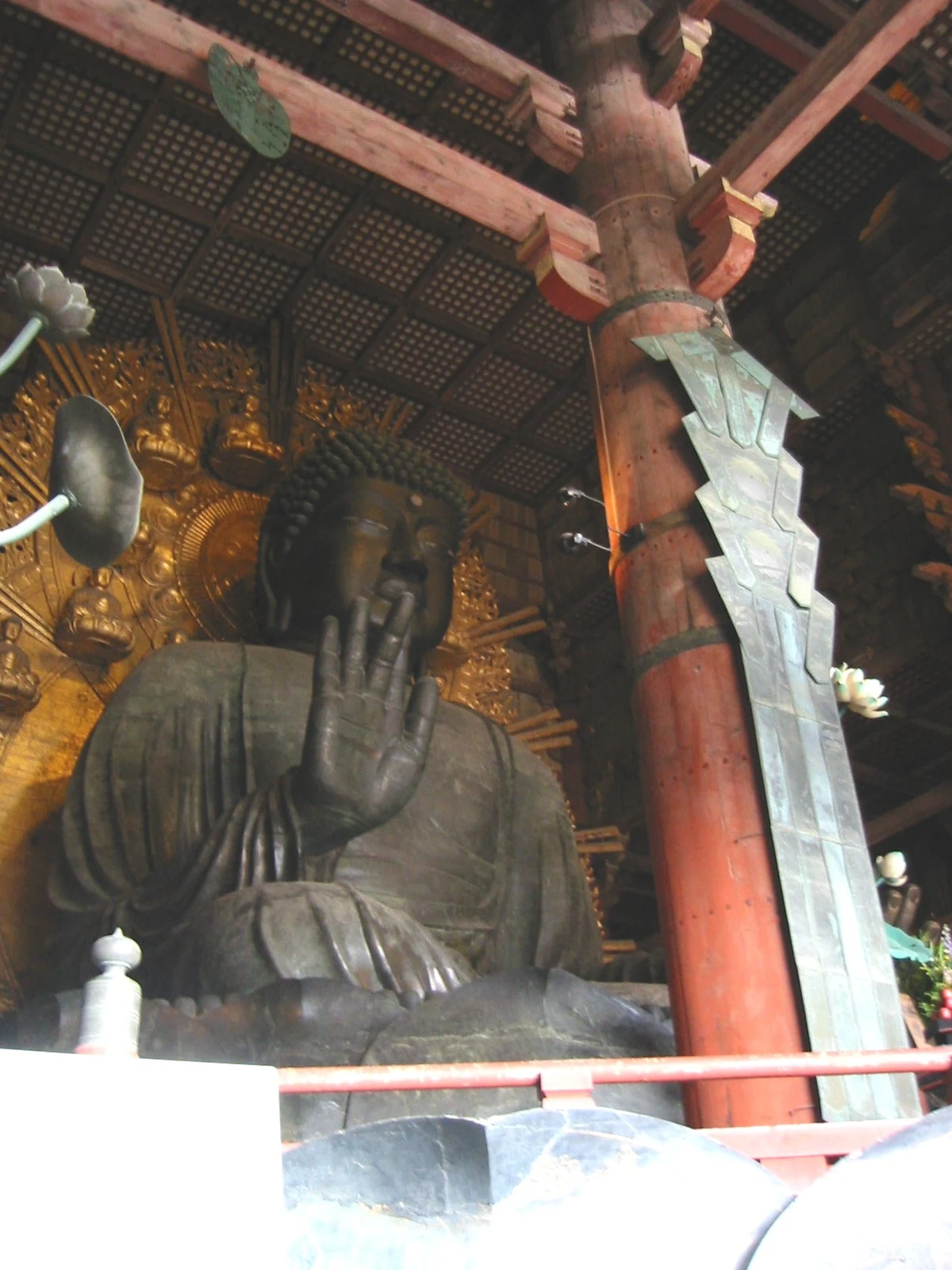
Walk around the interior rather than stopping only in front of the statue. The hall contains additional Buddhist figures, architectural models, and displays that help show how the temple complex changed through repeated destruction and reconstruction.
One famous feature is a wooden pillar with a narrow opening near its base. Traditionally, passing through it is associated with receiving good fortune or enlightenment in a future life. The opening is very small, and trying it can create a line, so it is perfectly reasonable to skip it during a busy visit.
Todai-ji practical information
Opening hours, admission fees, and accepted payment methods can change. Check the official Todai-ji website shortly before your visit rather than relying only on older travel guides.
Allow about 60–75 minutes for Nandaimon, the approach, and the Great Buddha Hall. Travelers who enjoy temple architecture can extend the visit toward Nigatsudo, which offers a more elevated and quieter view over Nara, but doing so will add roughly 30–45 minutes to the route.
View Todai-ji Temple on Google Maps
1:00 p.m. — Lunch at Tengyokudo Nara Honten
After leaving Todai-ji, walk toward the west side of the temple grounds for lunch at Tengyokudo Nara Honten. Its location makes it a convenient stop before turning south toward Naramachi.
Tengyokudo specializes in Yoshino hon-kudzu, high-grade kudzu starch traditionally associated with Nara. The company uses kudzu in both savory dishes and Japanese sweets, giving travelers a chance to try the ingredient in several different forms.
The Nara main store has a calm and polished atmosphere that offers a welcome break from the busy park area. The space works well for solo travelers, couples, and small groups without feeling overly formal.
For a full lunch, look for a set that combines several forms of kudzu, such as kudzu noodles, sesame tofu, a thickened savory dish, or seasonal rice. Menus can change, so the exact combination may differ on the day of your visit.
The restaurant is also known for freshly prepared kuzumochi. Unlike firmer packaged sweets, freshly cooked kudzu has a soft, glossy, almost trembling texture. Its mild flavor works particularly well with fragrant kinako and rich dark sugar syrup.
What to order
Choose a kudzu lunch set when you want a complete meal, then add freshly made kuzumochi if you still have room. Portions may feel moderate rather than heavy, which makes it easier to include one of the shop’s traditional kudzu desserts.
Waiting times can vary. Some visitors are seated quickly, while weekends and peak lunch periods may require more patience. The shop also sells packaged kudzu products, giving you something to browse while waiting.
Good to know
Business hours, closing days, menus, and last-order times can change seasonally. Check the official website or Instagram before visiting, especially around public holidays.
View Tengyokudo Nara Honten on Google Maps
2:30 p.m. — Slow Down in Naramachi
After lunch, leave the busy temple area behind and head south into Naramachi, one of the most atmospheric neighborhoods in Nara.
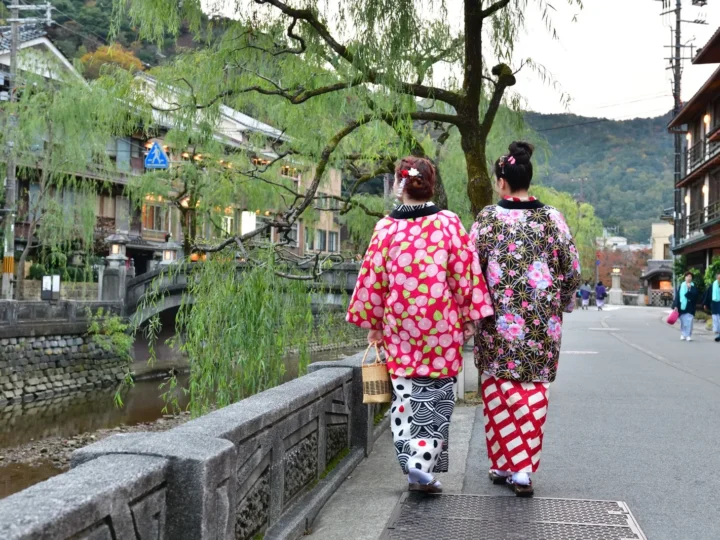
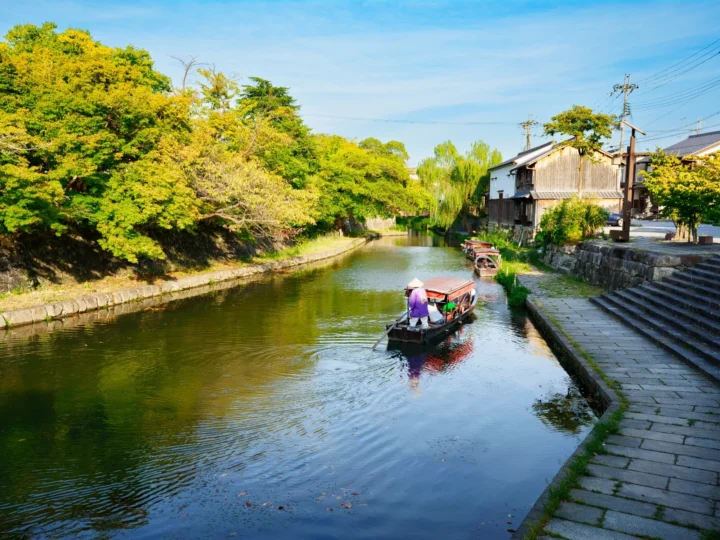
Unlike the wide paths around Nara Park, Naramachi is a network of narrow streets lined with traditional wooden townhouses, small galleries, family-run cafés, and independent craft shops. The district offers a slower and more residential atmosphere than Nara’s major temple approaches.
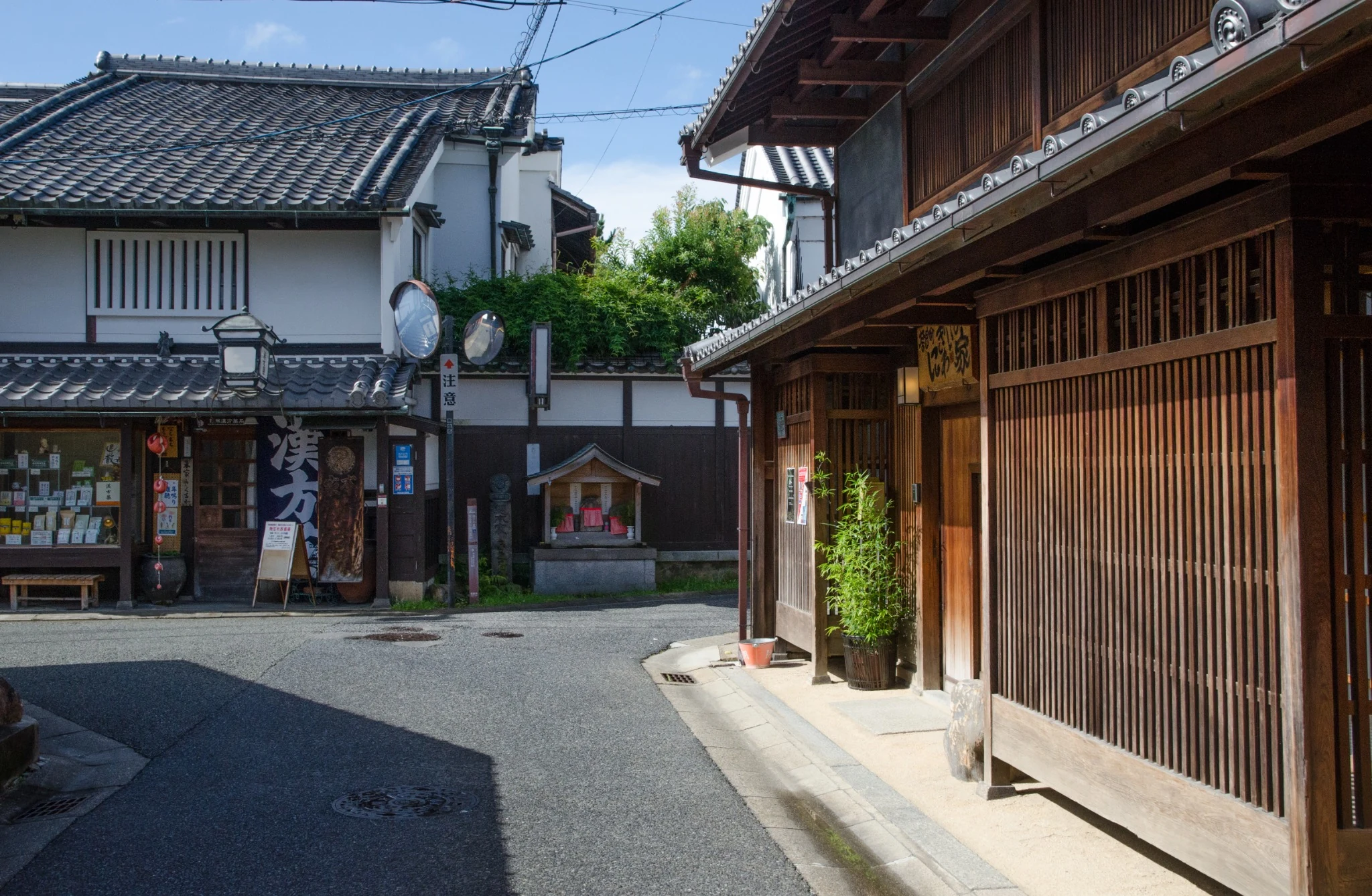
This is a place to explore without rushing. Step into small specialty stores, browse local handicrafts, or simply enjoy walking through streets that reveal a more everyday side of the city.
If you have extra time, make a few small detours while exploring the neighborhood. The Naramachi Museum presents artifacts and displays connected with daily life in old Nara, making it an easy cultural stop during the walk.
You will also come across independent craft shops selling handmade ceramics, textiles, stationery, accessories, and locally made souvenirs. Even when you are not planning to buy anything, browsing these smaller stores is one of the best ways to experience Naramachi’s creative and local character.
Compared with Kyoto’s best-known historic districts, Naramachi often feels more relaxed. It is an excellent place to slow down after visiting Nara’s major temples and park.
Local tip
Many independent museums and shops close earlier than major tourist attractions, often in the late afternoon. Visit before the end of the day and confirm individual opening hours when there is a specific place you do not want to miss.
Planning to Stay Overnight in Nara?
Although this itinerary is designed as an easy day trip from Osaka, spending one night in Nara offers a noticeably different experience.
After many tour groups leave in the late afternoon, the streets around Nara Park become quieter. Staying nearby also gives you the option of visiting the park or temple approaches early the following morning before the busiest sightseeing hours.
Hotels around Nara Park and Kintetsu Nara Station provide convenient access to the city’s major attractions while remaining close to restaurants, cafés, and the historic streets of Naramachi.
Check hotel prices near Nara Park on Agoda

Frequently Asked Questions
Is one day enough for Nara?
Yes. One full day is enough to visit Todai-ji, Nara Park, and Kofuku-ji, enjoy local food, and explore Naramachi at a reasonably relaxed pace.
Can you see the deer for free?
Yes. Nara Park itself is free to enter, and you can see the deer without buying anything. Deer crackers are optional and sold separately at authorized stalls.
Is Nara worth visiting if I have already been to Kyoto?
Yes. While both cities are known for historic temples, Nara has larger open spaces, a more relaxed atmosphere, and experiences that feel distinct from Kyoto, including the freely roaming deer and traditional Yoshino kudzu cuisine.
Should I visit Nara from Osaka or Kyoto?
Both cities provide convenient access. This route is designed for travelers staying in Osaka and works particularly well with a direct Kintetsu train from Osaka-Namba to Kintetsu Nara.
When is the best time to visit Nara?
Spring and autumn offer comfortable walking weather, but Nara can be visited throughout the year. Arriving in the morning generally provides a calmer experience around Todai-ji and Nara Park.
Do I need cash in Nara?
It is sensible to carry some cash for temple admission, deer crackers, smaller shops, and local food stalls. Payment options vary between individual attractions and businesses.
Final Thoughts
Nara deserves more than a quick stop to feed deer before returning to Osaka.
By combining historic temples, traditional sweets, regional cuisine, and the quiet streets of Naramachi, this itinerary shows another side of Japan’s ancient capital—one that feels slower, more local, and surprisingly peaceful.
Whether it is your first visit to Japan or your fifth, spending a full day in Nara offers a rewarding contrast to Osaka’s energy and Kyoto’s busiest sightseeing districts.
Continue exploring Osaka and Kansai:
-
Kobe Day Trip: The Perfect One-Day Route from Osaka
-
Himeji Day Trip: More Than Just the Castle
-
Minoh Falls: Osaka’s Easiest Nature Escape
-
Getting Around Osaka: A Practical Transport Guide
-
One-Day Osaka Food Itinerary: What and Where to Eat
-
5-Day Osaka and Kansai Itinerary
Image Credits
-
Todai-ji Great Buddha Hall — Hero image:
Balon Greyjoy,
Wikimedia Commons
.
Used under the license stated on the source page. -
Great Buddha at Todai-ji:
Ph0kin,
Wikimedia Commons
.
Used under the license stated on the source page. -
Kofuku-ji Five-story Pagoda:
Daderot,
Wikimedia Commons
.
CC0 1.0. -
Nara Park Deer:
Balon Greyjoy,
Wikimedia Commons
.
Used under the license stated on the source page. -
Naramachi Street:
Harrie,
PhotoAC
.
Used in accordance with the PhotoAC license.